
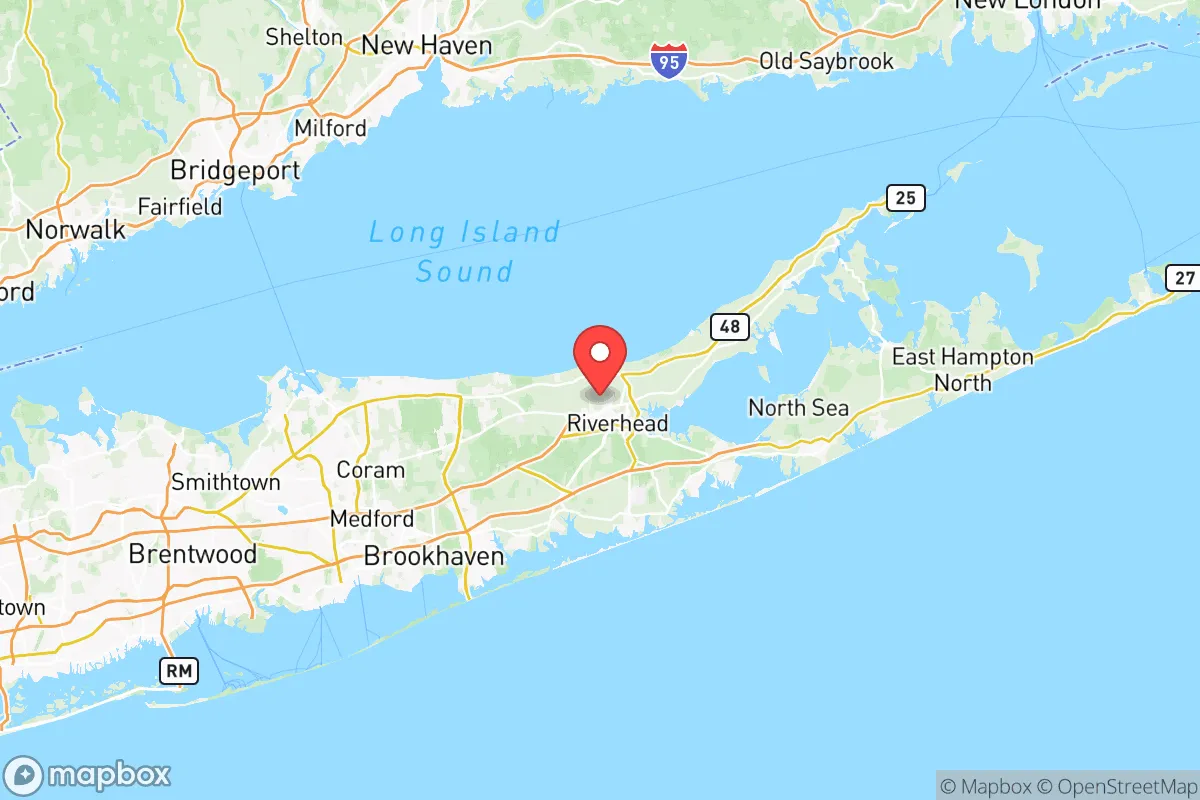
Photo: Wikipedia
Political ClimatePolitical Climate in Suffolk County
Showing district-level results — no local-only data available.
Local Political AnalysisPolitical Analysis of Suffolk County
Suffolk County, New York, has long been a bellwether for suburban political sentiment, and right now it’s leaning solidly Republican with a Cook PVI of R+4. That’s a stark contrast to the D+10 of New York City, and it reflects a deep cultural and ideological divide that’s only widened in the last decade. If you’re looking at this area, you’re seeing a place where folks are increasingly fed up with the progressive overreach coming out of Albany and Manhattan—overreaching mandates, tax hikes, and policies that feel like they’re designed for city dwellers, not for families trying to live their own lives out here.
How it compares to New York, NY
The difference between Suffolk County and New York City isn’t just a matter of a few percentage points—it’s a chasm. In the 2024 presidential election, Suffolk went for Trump by about 12 points, while New York City’s five boroughs went for Harris by a landslide. But even within Suffolk, you’ve got real variation. Towns like Smithtown, Huntington, and Brookhaven are reliably red, with precincts in St. James and Kings Park often swinging 20+ points Republican. Meanwhile, the South Fork—places like Southampton and East Hampton—leans blue, driven by second-home owners and a more transient, wealthy population. The swing precincts are in central Suffolk, around Ronkonkoma and Medford, where working-class families are fed up with rising property taxes and state mandates on everything from energy to education. Compared to NYC, where the political machine is all-in on progressive policies like cashless bail and sanctuary city status, Suffolk feels like a last stand for common sense—where people still believe in local control and personal responsibility.
What this means for residents
For residents, this political climate means a constant battle to keep government out of your backyard. You’ve got the county executive, Ed Romaine, a Republican, pushing back against state-level overreach on housing mandates and energy regulations—like the push for all-electric new construction, which would jack up costs for homeowners. But the real concern is the trajectory: as New York City’s progressive policies drive up crime and taxes, more people are moving east, and with them come voting patterns that could flip Suffolk purple or even blue in the next decade. Already, you see it in school board elections, where fights over curriculum and parental rights are heating up. For now, though, the county’s conservative lean means you’ve got a fighting chance to preserve your Second Amendment rights, keep your gas stove, and avoid the kind of overbearing COVID mandates that shut down small businesses in the city. It’s not perfect—property taxes are still brutal—but it’s a hell of a lot better than living under the thumb of Manhattan’s bureaucrats.
Culturally, Suffolk County is a world apart from New York City. Out here, the Fourth of July parades in Miller Place and Mount Sinai are packed, and the local diners are full of guys in work boots talking about fishing and the cost of heating oil. There’s a strong sense of community that resists the kind of top-down social engineering you see in the city. Policy-wise, that means Suffolk has been a leader in pushing back against state gun laws—like the SAFE Act—and in fighting for local zoning control against Albany’s “affordable housing” mandates that would cram high-density developments into suburban neighborhoods. The long-term worry is that as the county gets more diverse and more people from the city relocate here, those values could erode. But for now, if you value your freedoms and want a place where your vote actually counts against the progressive machine, Suffolk is one of the last strongholds in New York State.

State Political ClimatePolitical Climate in New York
State Political AnalysisPolitical Environment in the State
New York State has a Cook PVI of D+10, making it one of the most reliably Democratic states in the nation, but that number hides a brutal internal war. The state’s overall partisan lean is driven almost entirely by New York City and its immediate suburbs, while vast stretches of Upstate New York vote as red as the Deep South. Over the last 10-20 years, the Democratic coalition has consolidated power through supermajorities in Albany, pushing a progressive agenda that has accelerated since 2019, while rural and exurban areas have grown more conservative and resentful. If you’re a conservative considering a move here, you need to understand that your vote will be drowned out at the state level, but your local community might feel like a different country.
Urban vs. rural divide
The political map of New York is a tale of two states. New York City (Manhattan, Brooklyn, Queens, The Bronx, and Staten Island) delivers roughly 40% of the state’s vote, and it’s overwhelmingly Democratic. The city’s five boroughs are surrounded by heavily blue suburbs in Westchester, Nassau, and Suffolk counties on Long Island, though the latter two have shown some rightward drift in recent cycles. Meanwhile, the rest of the state is a sea of red. Counties like Otsego, Allegany, and Wyoming routinely vote 60-70% Republican. The real battlegrounds are the “collar counties” like Orange, Dutchess, and Ulster — places like Middletown and Poughkeepsie — where suburban sprawl meets rural conservatism. These areas have flipped from purple to light red over the past decade as New York City transplants flee high taxes and crime but bring their voting habits with them. The divide isn’t just geographic; it’s cultural. A farmer in Chautauqua County and a hedge fund manager in Buffalo’s Elmwood Village have almost nothing in common politically.
Policy environment
Albany’s policy environment is a one-party show, and it shows. The state has the highest combined state and local tax burden in the country, with a top marginal income tax rate of 10.9% and property taxes that can exceed 2% of home value annually — especially brutal in places like Rochester and Syracuse. The regulatory posture is aggressively progressive: New York passed the Climate Leadership and Community Protection Act in 2019, mandating a 100% zero-emission electricity grid by 2040, which has driven up energy costs. On education, the state has eliminated most charter school caps and expanded funding for public schools, but parental rights took a hit with the 2022 “Safe Schools” law that mandates LGBTQ-inclusive curricula and prohibits schools from notifying parents about a child’s gender identity without the child’s consent. Healthcare is heavily regulated, with a state-run health insurance exchange and strict certificate-of-need laws that limit new hospital construction. Election laws are among the most liberal: no-excuse absentee voting, early voting, and automatic voter registration are all in place. For a conservative, the policy environment feels like a constant uphill battle — your tax dollars fund programs you likely oppose.
Trajectory & freedom
New York is becoming less free by almost any measure, and the trend has accelerated since 2020. On gun rights, the state passed the SAFE Act in 2013, which banned assault weapons and high-capacity magazines, and then the 2022 Concealed Carry Improvement Act (CCIA) after the Bruen decision, which made it nearly impossible to get a carry permit in most counties by requiring “good moral character” and banning guns in a vast list of “sensitive places.” Parental rights have been eroded by the aforementioned gender identity notification ban and the expansion of “sanctuary” policies that limit cooperation with federal immigration enforcement. Medical autonomy took a hit with the 2019 Reproductive Health Act, which removed almost all restrictions on late-term abortion, but also with the state’s aggressive COVID-19 mandates — New York had some of the strictest lockdowns and vaccine mandates in the country, including a 2021 mandate for all healthcare workers that led to thousands of resignations. Property rights are under constant threat from rent control laws in New York City and the 2019 Housing Stability and Tenant Protection Act, which expanded tenant protections statewide and made it harder for landlords to evict non-paying tenants. The trajectory is clear: more regulation, higher taxes, and less individual autonomy.
Civil unrest & political movements
New York has been a flashpoint for political unrest for decades. The 2020 Black Lives Matter protests in New York City were among the largest and most destructive in the country, with over 600 arrests and millions in property damage. The state’s sanctuary policies — including the 2017 “New York is a Sanctuary State” executive order and the 2019 Green Light Law, which allows undocumented immigrants to get driver’s licenses — have made it a target for federal immigration enforcement clashes. On the right, the “New York State Rifle & Pistol Association” has been the lead plaintiff in multiple Supreme Court cases, including Bruen, and there’s a growing “secession” movement in Upstate counties like Allegany and Steuben, where some residents have floated the idea of joining Pennsylvania or forming a new state. Election integrity is a live issue: New York’s 2020 vote-by-mail expansion led to widespread allegations of fraud, though few were proven, and the state’s refusal to require voter ID remains a sore point for conservatives. A new resident in Albany or Buffalo will see regular protests outside the state capitol and city halls, often over abortion, gun rights, or immigration.
Projection
Over the next 5-10 years, New York will likely become more Democratic at the state level and more polarized locally. Demographic trends favor the left: New York City continues to attract young, progressive transplants from abroad and from other states, while Upstate’s population is aging and shrinking. The 2020 census cost the state a congressional seat, and that trend will continue. However, the exodus of conservatives from the city to places like Orange County and the Hudson Valley is flipping those suburbs redder, creating a patchwork of deep-blue cities and deep-red rural areas with little middle ground. The state’s fiscal situation is precarious — pension liabilities and debt are among the highest in the nation — which could force tax hikes or service cuts that accelerate out-migration. If you move here now, expect to live in a state where your vote for president or Senate is irrelevant, but your local school board and county legislature races might actually matter. The freedom trajectory is unlikely to reverse without a major political realignment, which doesn’t seem imminent.
For a conservative moving to New York, the bottom line is this: you can find a great community in places like Clarence (near Buffalo) or Pittsford (near Rochester) where your neighbors share your values, but you will be fighting Albany every step of the way. Your taxes will be high, your gun rights limited, and your parental authority questioned by state law. If you’re willing to be a local activist and can afford the cost of living, it’s possible to carve out a good life. If you want a state that respects your freedom, look elsewhere.
* Values derived from national, state, county, city and local statistics and may differ in a specific area. Last updated: 2026-05-12T09:32:40.000Z
Narrative content on this page is AI-generated and may contain mistakes. Verify any details that matter before acting on them.
ReloMaps may earn a commission from affiliate links at no extra cost to you.

