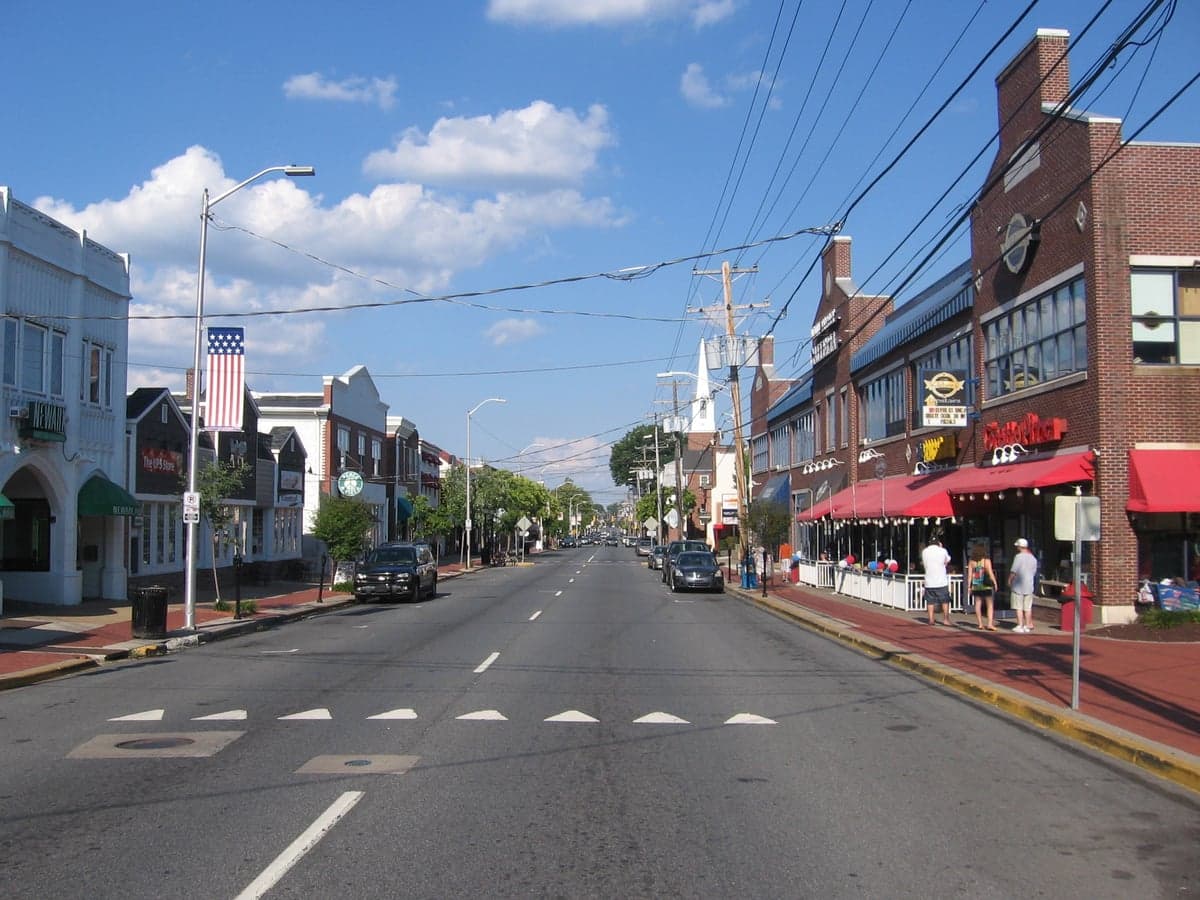
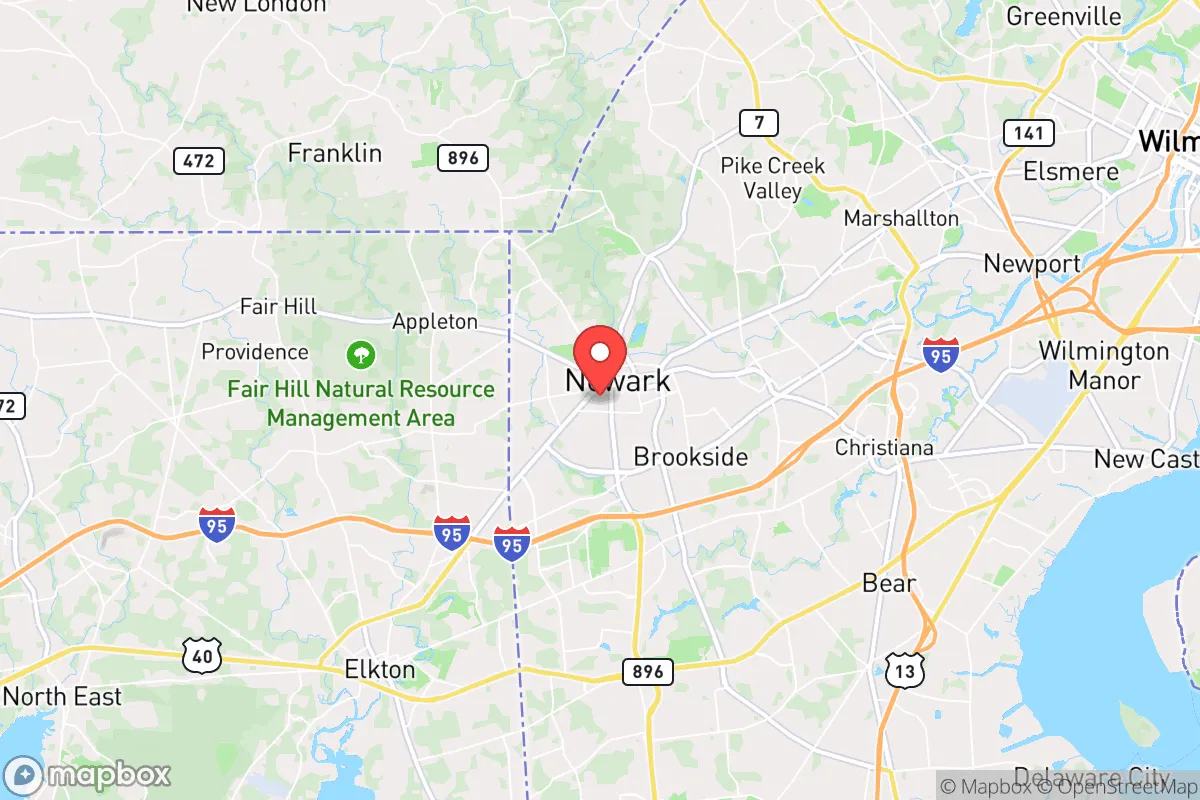
Photo: Wikipedia
Quality of Life in Newark, DE
Above-average quality of iife. The area offers a reasonable cost of living, decent mobility, and a mix of neighborhood amenities.
What does Quality of Life tell us?
Quality of Life blends cost of living, nearby amenities, socioeconomic signals, and neighborhood character. City-level scores represent the whole municipality; individual neighborhoods can differ.
What does this tell us?
Quality of Life blends cost of living, nearby amenities, socioeconomic signals, and neighborhood character. City-level scores represent the whole municipality; individual neighborhoods can differ.
Cost of Living
34% above national average
The Real Cost of Living in Newark, DE for 2026
| Tier | Individual | Family (4) |
|---|---|---|
| Survival | $26k | $48k |
| Comfortable | $69k | $102k |
| Luxury | $129k+ | $200k+ |
| Elite (Top 5%) | $157k+ | $244k+ |
70%
The Area Signal
A metric tracking the socioeconomic signals of the area.
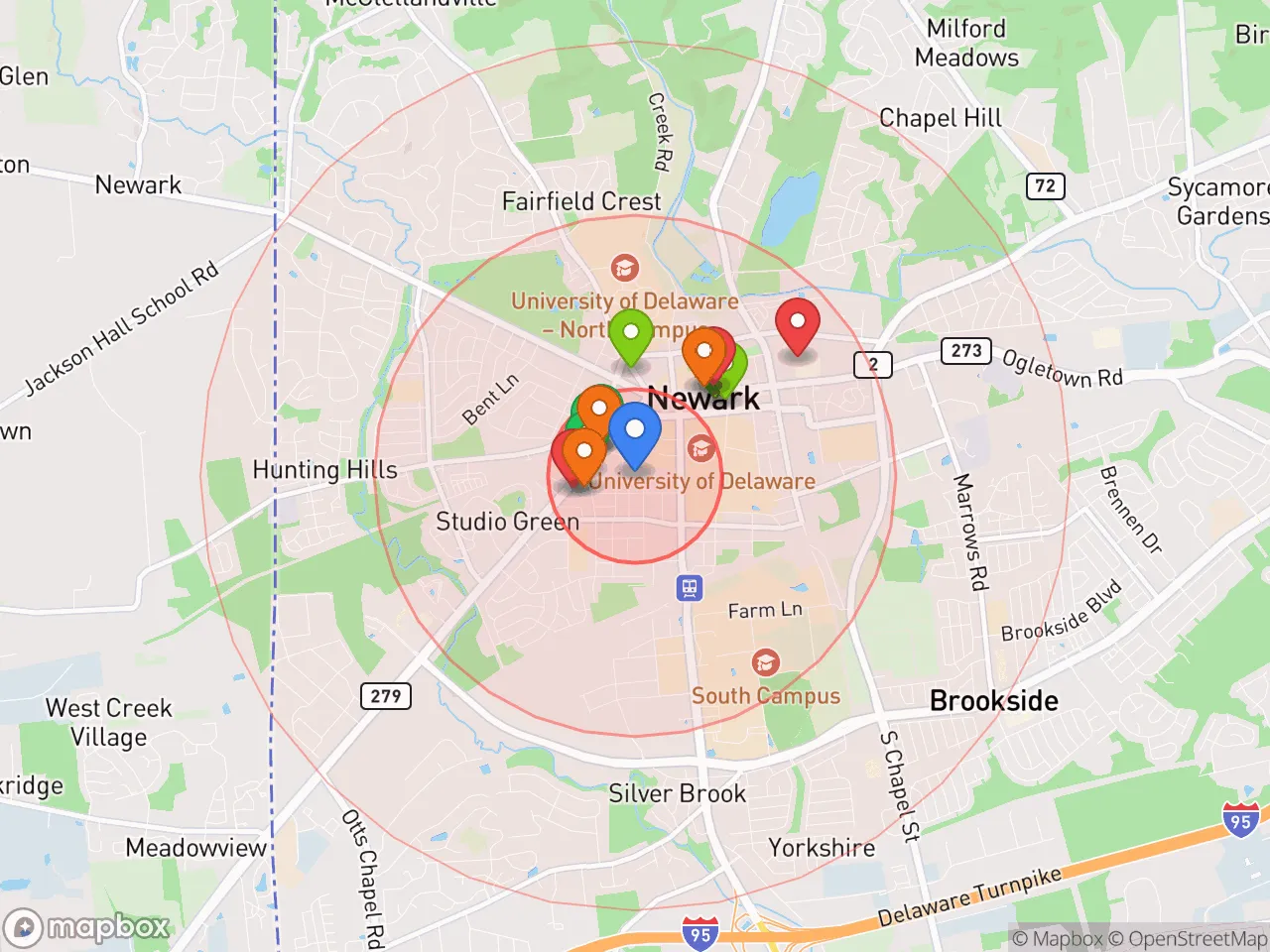
Hobbies
Explore the areaGroceries
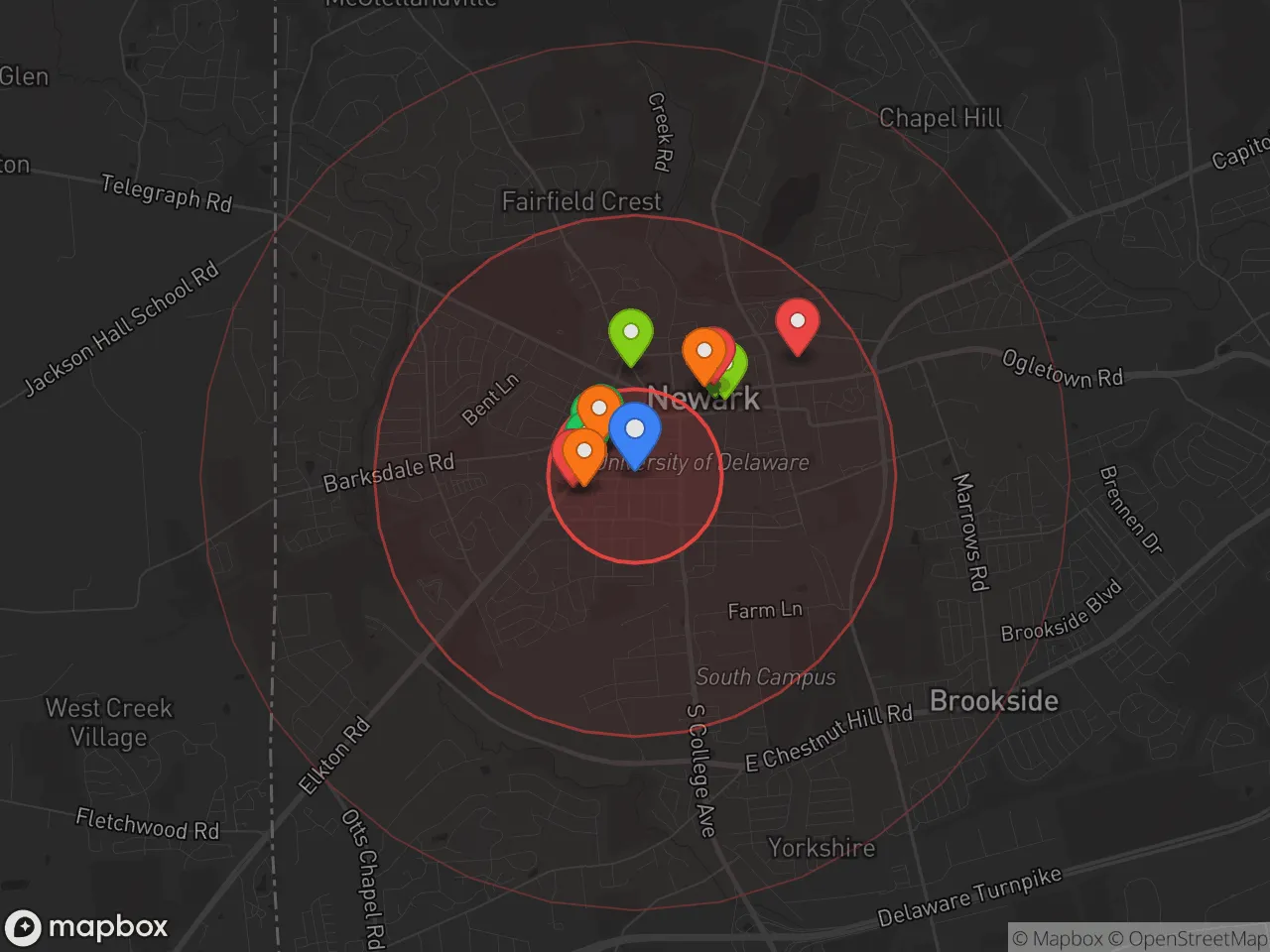
5 within 10 miles
Gas
20 within 10 miles
Hospital
13 within 20 miles
Airport
PHL — Philadelphia International
Post Office
USPS — 110 East Main Street, Newark
Critical Amenities
Quality-of-Life Analysis
Newark, Delaware, is an affluent, well-educated college town where the median household income of roughly $80,000 and a cost-of-living index of 134 (34% above the U.S. average) attract professionals, University of Delaware faculty, and families seeking top-tier schools. The population skews younger and more transient than surrounding suburbs, with a significant student presence that shapes the local economy and social rhythm. This blend of academic energy and suburban stability gives Newark a distinct quality of life that differs sharply from both Wilmington’s urban core and the rural stretches of southern New Castle County.
Cost of living, housing affordability, and how Newark compares to nearby areas
Newark’s cost-of-living index of 134 is notably higher than the national baseline, driven primarily by housing. The median home value of $357,600 is roughly 20% above the Delaware state median of $298,000, while the median rent of $1,611 is about 15% higher than the state average of $1,400. Compared to nearby Wilmington (index 115) or Elkton, Maryland (index 105), Newark is significantly pricier, though it remains cheaper than Philadelphia’s Main Line suburbs (index 150+). The average commute of just 19.6 minutes is a standout advantage — far shorter than the 30-minute regional average — allowing residents to trade longer drive times for higher housing costs. For renters, the market is tight, with vacancy rates below 4% in 2025, pushing competition for apartments near campus and Christiana Mall. Homebuyers face bidding wars on properties under $400,000, though prices soften slightly for homes above $500,000.
What daily life is like: amenities, schools, and the local rhythm
Daily life in Newark revolves around the University of Delaware campus, Main Street’s independent shops and restaurants, and a network of parks like White Clay Creek State Park and Carpenter State Recreation Area. The Christina School District serves most of Newark, with Newark High School and Shue-Medill Middle School earning above-average ratings from GreatSchools, while private options like the Tatnall School and St. Mark’s High School draw families from across the county. The local rhythm is distinctly seasonal: fall and spring are dominated by university events (football games, lectures, arts performances), while summer brings a quieter, more residential pace. Grocery access is strong, with a Wegmans, Whole Foods, and multiple farmers’ markets within a 10-minute drive. Healthcare is anchored by ChristianaCare’s Newark campus, a Level II trauma center, and the nearby Christiana Hospital, one of Delaware’s largest. For entertainment, residents drive 15 minutes to the Christiana Mall or 30 minutes to Wilmington’s Grand Opera House and Riverfront; Philadelphia is a 45-minute train ride from Newark’s Amtrak station.
Who thrives in Newark and who should look elsewhere
Newark is best suited for University of Delaware students, faculty, and staff who want walkable access to campus, as well as families who prioritize short commutes and strong public schools over lower housing costs. Empty-nesters and retirees who value cultural amenities and green space also fit well, especially in neighborhoods like Whitehall or the Highlands. Conversely, budget-conscious renters or first-time buyers will struggle with the high cost of living and may find better value in Bear (index 115) or Middletown (index 120). Those seeking a vibrant nightlife scene or dense urban energy will find Newark’s college-town pace too quiet, and remote workers who don’t need the university ecosystem may feel the premium housing costs aren’t justified. Overall, Newark offers a high quality of life for those who can afford it and align with its academic-suburban character.

Crime in Newark, DE
Generally safer than 63% of comparable U.S. locations.
Violent CrimeViolent Crime Analysis
Property CrimeProperty Crime Analysis
Crime Analysis
Newark, Delaware, reports a violent crime rate of 288.7 incidents per 100,000 residents and a property crime rate of 1,712.3 per 100,000, placing it above national averages for both categories. While the city benefits from its proximity to Wilmington and the University of Delaware, its safety profile is shaped by broader regional crime trends and the policies of New Castle County's justice system. Prospective residents should weigh these figures carefully, particularly given the area's progressive prosecutorial approach, which prioritizes rehabilitation over incarceration and may contribute to higher recidivism rates.
Crime in context
Newark's violent crime rate of 288.7 per 100,000 is roughly 20% higher than the national average of about 240 per 100,000aine, while its property crime rate of 1,712.3 per 100,000 exceeds the U.S. average of approximately 1,950 per 100,000. Compared to the state of Delaware, which reports a violent crime rate of 450 per 100,000 and a property crime rate of 2,100 per 100,000, Newark is safer than the state as a whole. However, these numbers mask a troubling trend: property crime in Newark has risen 8% since 202IE, driven largely by thefts from vehicles and package thefts near the university campus. The city's location along the I-95 corridor also makes it a transit point for criminal activity moving between Philadelphia, Baltimore, and Wilmington.
What residents experience
Residents report that property crime is the most tangible safety concern, with car break-ins and porch piracy being common complaints in neighborhoods near Main Street and the university. Violent crime is less frequent but still present, concentrated in specific areas such as the Brookside and Chestnut Hill neighborhoods. The New Castle County District Attorney's office, led by a progressive prosecutor who has implemented bail reform and diversion programs, has faced criticism for releasing repeat offenders without detention. This policy directly impacts Newark residents: a 2025 analysis by the Delaware State Police found that 40% of property crime arrests in the city involved individuals previously released under these programs. For families and professionals, this means a higher likelihood of encountering habitual offenders in their daily routines.
Neighborhood-level variation is significant. The area around the University of Delaware campus benefits from a dedicated campus police force and 24/7 patrols, resulting in lower violent crime rates but higher reports of theft and vandalism. In contrast, the southern end of Newark near the Christiana Mall and the communities along Route 896 experience more property crime, with burglary rates 30% higher than the city average. Residents in the Whitehall and Pike Creek subdivisions report the lowest crime rates, with violent crime nearly absent, though these areas are more suburban and less walkable. For those considering a move, choosing a neighborhood with strong community watch programs and avoiding properties near high-traffic commercial zones can mitigate risk, but the overarching reality is that Newark's crime landscape is shaped by policies that prioritize offender leniency over public safety.
* Values derived from national, state, county, city and local statistics and may differ in a specific area. Last updated: 2026-04-29T23:51:10.000Z
Narrative content on this page is AI-generated and may contain mistakes. Verify any details that matter before acting on them.
ReloMaps may earn a commission from affiliate links at no extra cost to you.

