Photo: Wikipedia
Strategic Assessment of Newark, DE
Multiple tactical vulnerabilities. Population density, target proximity, or disaster risk are likely compounding. A retreat property and exit planning is required.
What does the Strategic Assessment tell us?
Our Strategic Assessment grades tactical survivability of an area. Major population centers, military targets, fallout zones, natural disasters, and border exposure all drive risk — lower exposure means a more defensible position in a crisis.
This is heavily inspired by Joel Skousen's Strategic Relocation book. Highly recommended you checkout the book ($)What does this tell us?
Our Strategic Assessment grades tactical survivability of an area. Major population centers, military targets, fallout zones, natural disasters, and border exposure all drive risk — lower exposure means a more defensible position in a crisis.
This is heavily inspired by Joel Skousen's Strategic Relocation book. Highly recommended you checkout the book ($)Strategic Pillars

Key Distances
Regional Safe Places
Below is our recommended "safe zones" in Delaware and the surrounding area based on our strategic heuristics. For most people, it's unrealistic to live in a “safe zone” full-time due to work, family or other personal reasons. They tend to be more rural. However, many of these areas are perfect for second homes and retreat properties that double as a vacation home or even a short-term rental.
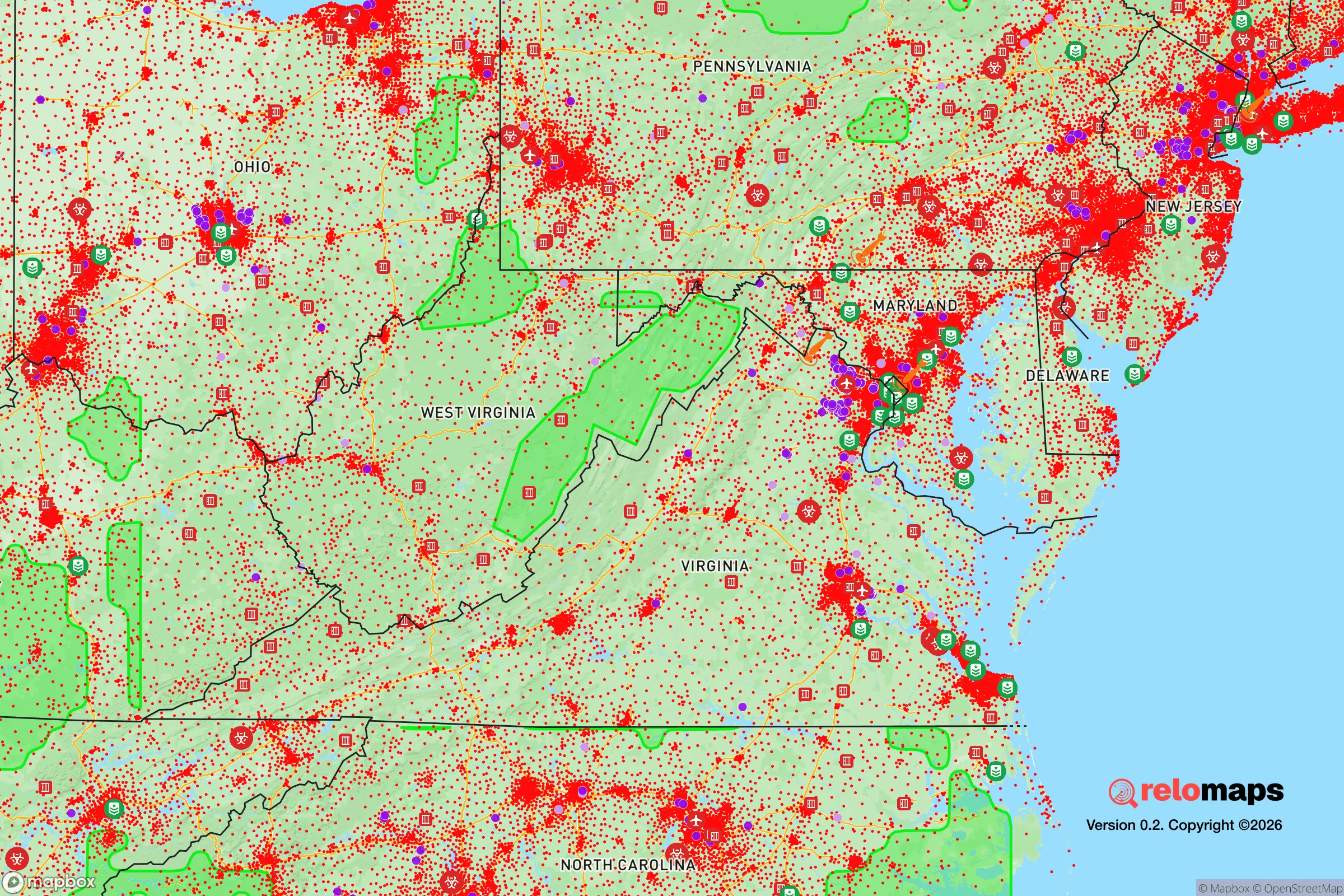
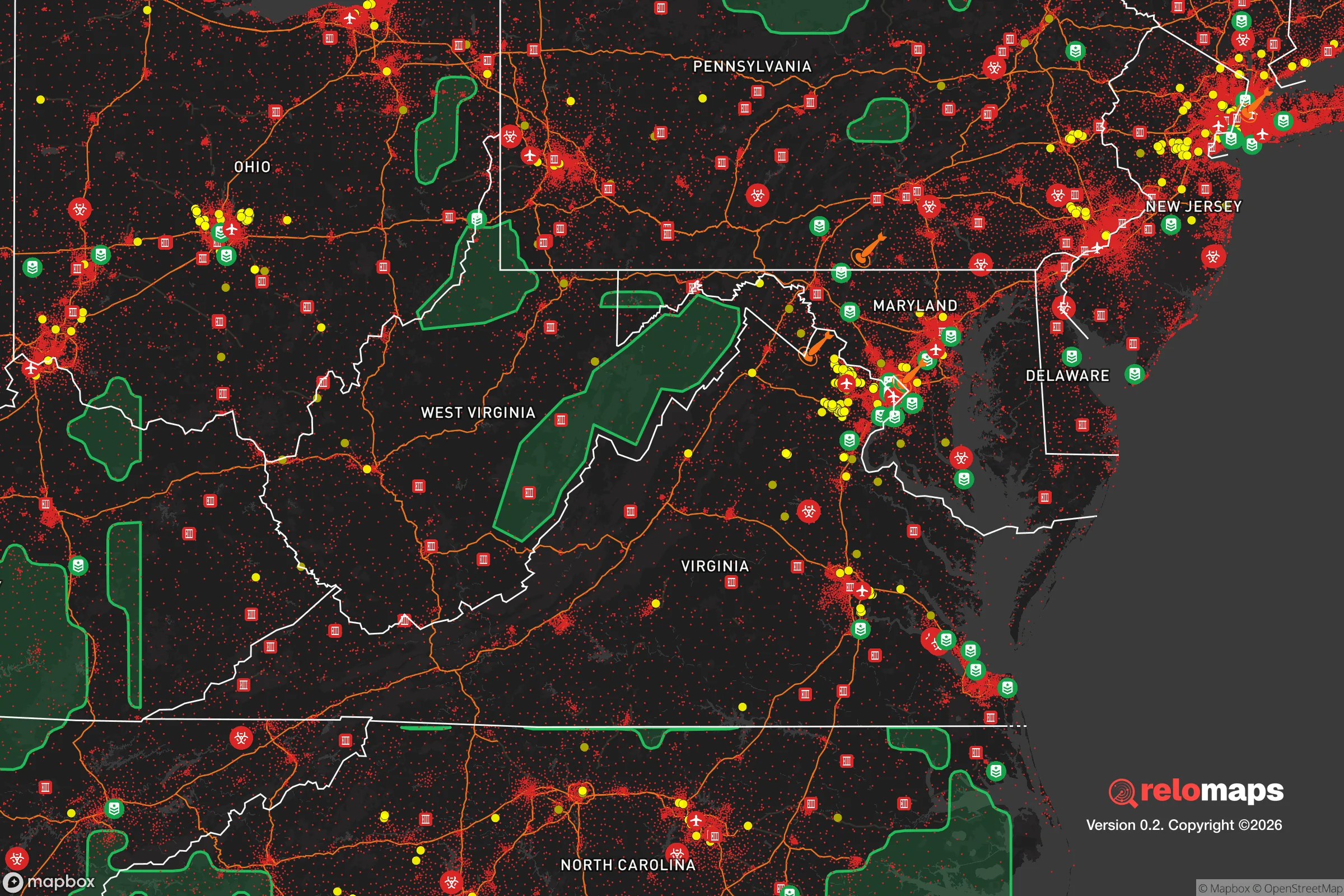


Important Note: For informational purposes only. This does not mean nothing bad ever happens in the green zones. Please use common sense. This is based on public data and modeled with AI. We tried to take a conservative approach but mistakes happen. We update this regularly as new information becomes available.
Solar Generator Recommendations
Backup power matters more here than in safer locations. We've picked three solar generators across budgets and capacity tiers — start with the budget unit if you only need a few essentials, or step up if you want to run a fridge and HVAC for days at a time.

Jackery Portable Power Station Explorer 300
Budget OptionPower on the Go: Weighing only 11 lbs, it's convenient to set up and store with book-sized foldable solar panels

BLUETTI Portable Power Station AC180
Designed for both indoor and outdoor scenarios, AC180 is highly capable as it has a robost capacity and continuous output power.

EF ECOFLOW DELTA Pro Ultra Power Station
Upgraded PickEcoFlow DELTA Pro Ultra is a whole-home energy system designed to grow with your family. Integrated with the Smart Home Panel 2, it scales to meet your evolving energy needs — keeping your home powered, intelligent, and secure through every stage of life.
We earn a commission, at no additional cost to you.
Strategic Assessment Analysis
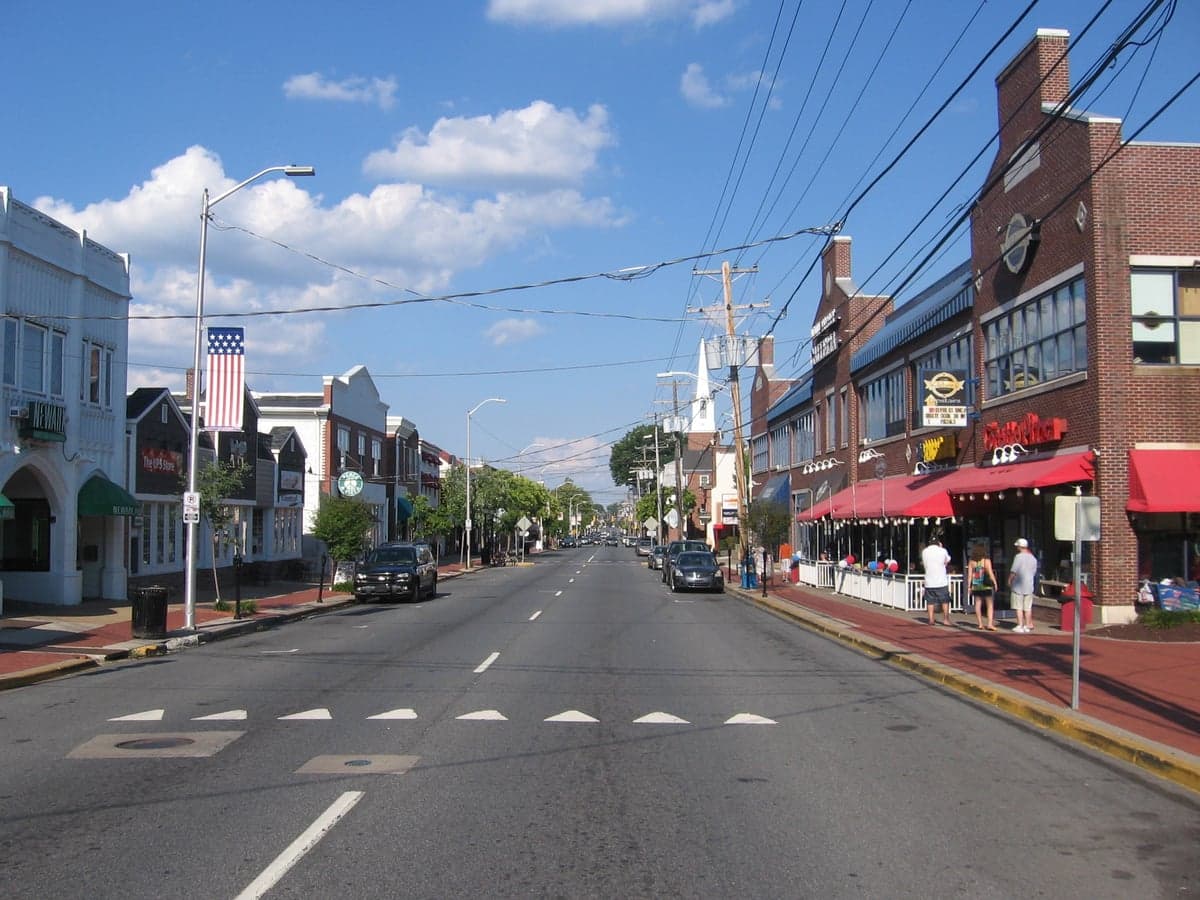
Newark, Delaware, sits in a precarious strategic position that demands a clear-eyed assessment from anyone prioritizing long-term resilience. While its location along the I-95 corridor offers immediate economic advantages)Skip, that same proximity to major urban centers like Philadelphia, Baltimore, and Wilmington introduces significant vulnerabilities in a crisis scenario. For the conservative-minded prepper or survivalist, Newark represents a calculated trade-off: access to resources and infrastructure in peacetime, balanced against heightened exposure to population-density risks and potential fallout zones during disruption. The key is understanding whether this trade-off aligns with your specific preparedness goals.
Geographic position and natural advantages for long-term stability
Newark’s geography is a double-edged sword. On the positive side, the area sits within the Piedmont region, offering slightly more varied terrain than the flat coastal plain to the east. The nearby White Clay Creek State Park and Iron Hill Park provide over 3,500 acres of wooded land, which could serve as a buffer zone or resource area for those with rural access. The climate is temperate, with reliable rainfall averaging 45 inches annually, supporting local agriculture and reducing the risk of prolonged drought compared to the Southwest. The Chesapeake and Delaware Canal, roughly 10 miles south, offers a potential waterway for transport or fishing if road networks become compromised. However, the region lacks significant natural barriers—no mountains, deserts, or large bodies of water that would naturally deter movement or provide defensible terrain. The flat to gently rolling landscape means that any organized group or displaced population could move through the area with relative ease, making Newark less ideal for a static, fortified retreat. For a relocator, the natural advantages here are moderate: decent water availability and some green space, but no standout geographic features that would make it a fortress.
Risks, exposures, and proximity to fallout-relevant landmarks
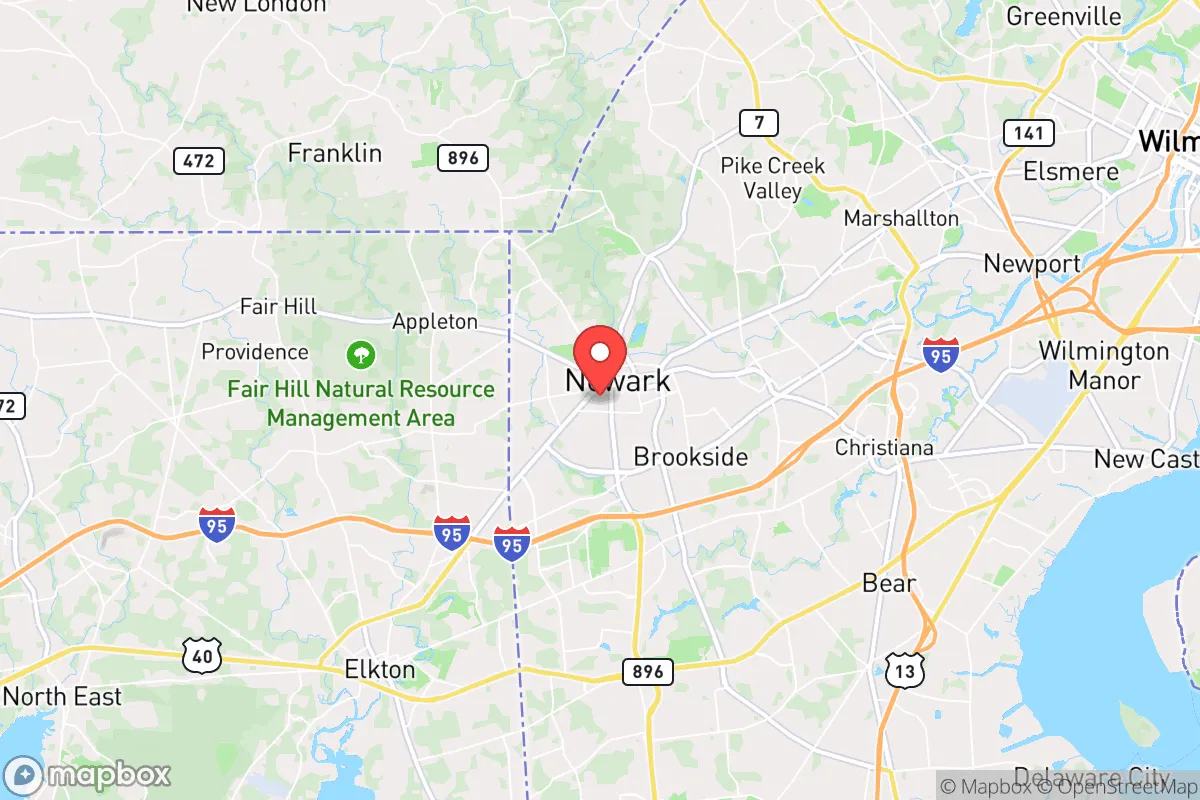
The most glaring risk for Newark is its location within the Northeast Megalopolis. It sits just 12 miles from Wilmington, 25 miles from Philadelphia, and 45 miles from Baltimore. In a scenario involving civil unrest, mass casualty events, or a major disaster, these cities would likely become epicenters of chaos, with populations spilling outward along I-95 and other major arteries. Newark itself has a population of roughly 33,000, but the University of Delaware adds another 24,000 students, faculty, and staff—a transient population that could become a liability if the university shuts down and people attempt to leave en masse. The university’s research facilities, including those with chemical and biological materials, present a secondary risk if they were compromised during a breakdown of order. Additionally, the nearby Salem Nuclear Generating Station in New Jersey, about 20 miles downwind, is a significant fallout concern. Prevailing winds from the west-southwest could carry a plume directly over Newark in the event of a release. The DuPont Experimental Station in Wilmington, a major chemical research site, is another potential hazard. For the prepper, these proximity risks mean that Newark is not a bug-out destination—it’s a location that would require immediate evacuation if a major event occurred in any of the surrounding urban or industrial zones.
Practical resilience for a relocator: food, water, energy, and defensibility
Assessing Newark’s practical resilience requires a hard look at its infrastructure dependencies. The city relies on the City of Newark Water System, which draws from the White Clay Creek and a network of wells. In a prolonged power outage, electric pumps would fail unless backup generators are in place—something that is not guaranteed for residential areas. The local grid is part of the PJM Interconnection, which has faced strain during extreme weather events like 2021’s Winter Storm Uri. For energy independence, solar adoption is feasible but limited by tree cover in older neighborhoods and homeowner association restrictions in some subdivisions. Natural gas is common for heating, but a disruption to the pipeline network would leave many without heat in winter. Food resilience is weak: Newark has a handful of grocery stores, but they rely on just-in-time delivery. The Newark Farmers Market operates seasonally, and local farms like Coverdale Farm Preserve offer some produce, but the area is not a breadbasket. For a relocator, the defensibility of a typical suburban home is low—close-set houses, multiple points of entry, and limited sightlines. The University of Delaware campus itself could become a contested area if law enforcement is stretched thin. The best practical advice for someone considering Newark is to treat it as a temporary staging point, not a permanent retreat. Stockpiling at least a 90-day supply of food and water, securing a backup power source like a propane generator, and having a pre-planned evacuation route west toward the Appalachian foothills are non-negotiable steps.
The overall strategic picture for Newark is one of calculated risk. It offers the economic and social benefits of a college town with access to major job markets, but those same advantages become liabilities in a crisis. For the conservative prepper who values community and infrastructure during stable times but is willing to relocate quickly when the situation deteriorates, Newark could work as a base of operations. However, for anyone seeking a location with natural defensibility, low population density, and minimal exposure to fallout or urban unrest, the trade-offs here are too steep. The smartest approach is to view Newark as a hub for gathering resources and intelligence, with a secondary property or bug-out location in a more remote area like western Maryland or central Pennsylvania serving as the true fallback. If you are willing to stay mobile and maintain a low profile, Newark can be managed. If you are looking for a place to dig in and ride out the storm, look further inland.

* Values derived from national, state, county, city and local statistics and may differ in a specific area. Last updated: 2026-04-29T23:51:10.000Z
Narrative content on this page is AI-generated and may contain mistakes. Verify any details that matter before acting on them.
ReloMaps may earn a commission from affiliate links at no extra cost to you.

