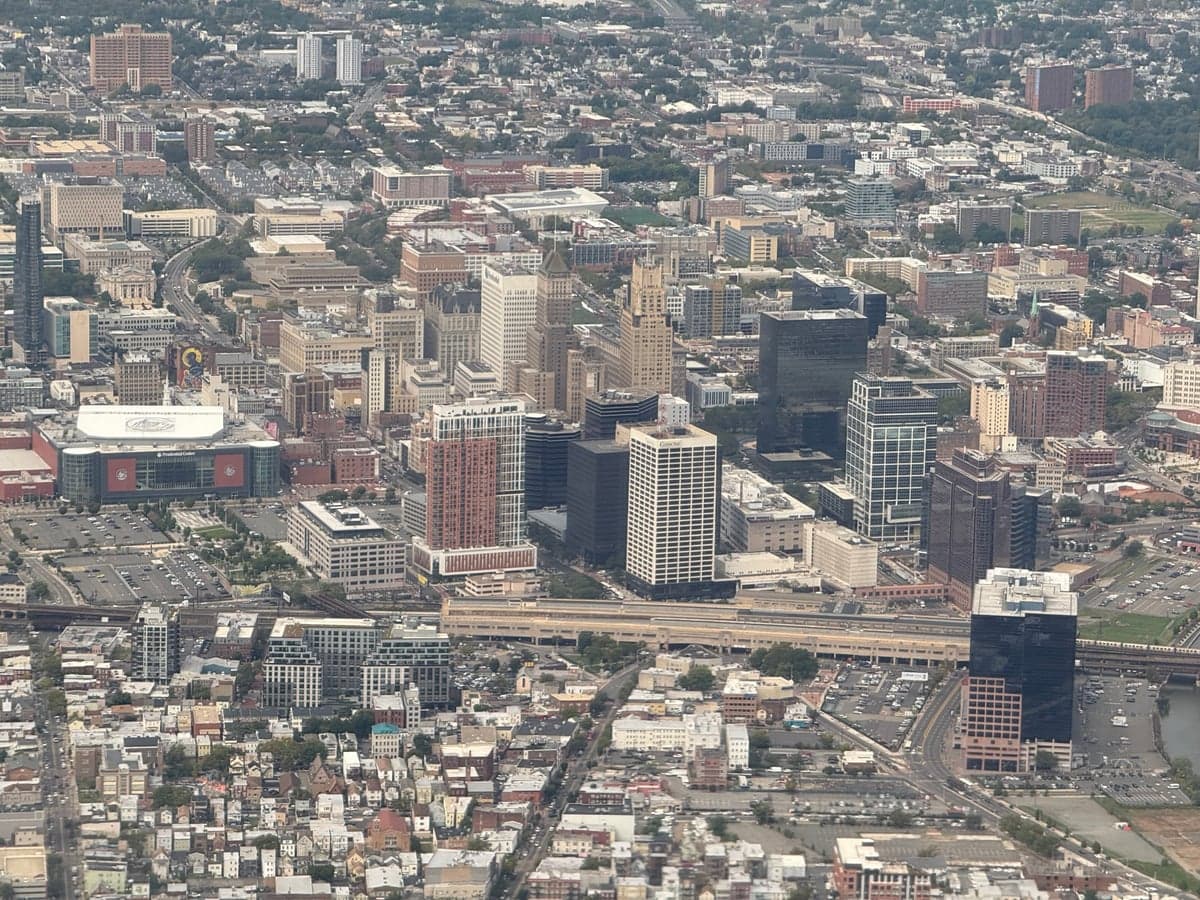
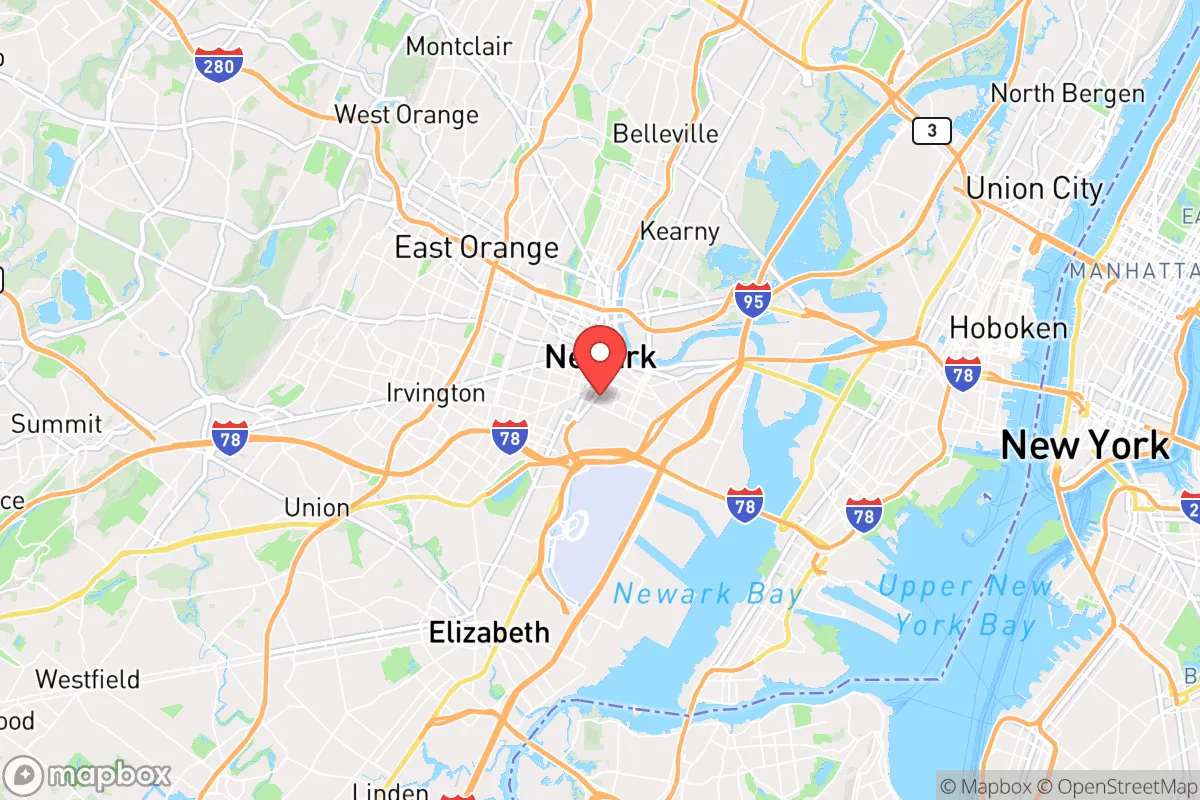
Photo: Wikipedia
Strategic Assessment of Newark, NJ
High tactical risk. This location is likely close to major population centers, strategic targets, or sits in a high-disaster corridor. A retreat property and careful exit planning is required.
What does the Strategic Assessment tell us?
Our Strategic Assessment grades tactical survivability of an area. Major population centers, military targets, fallout zones, natural disasters, and border exposure all drive risk — lower exposure means a more defensible position in a crisis.
This is heavily inspired by Joel Skousen's Strategic Relocation book. Highly recommended you checkout the book ($)What does this tell us?
Our Strategic Assessment grades tactical survivability of an area. Major population centers, military targets, fallout zones, natural disasters, and border exposure all drive risk — lower exposure means a more defensible position in a crisis.
This is heavily inspired by Joel Skousen's Strategic Relocation book. Highly recommended you checkout the book ($)Strategic Pillars

Key Distances
Regional Safe Places
Below is our recommended "safe zones" in New Jersey and the surrounding area based on our strategic heuristics. For most people, it's unrealistic to live in a “safe zone” full-time due to work, family or other personal reasons. They tend to be more rural. However, many of these areas are perfect for second homes and retreat properties that double as a vacation home or even a short-term rental.
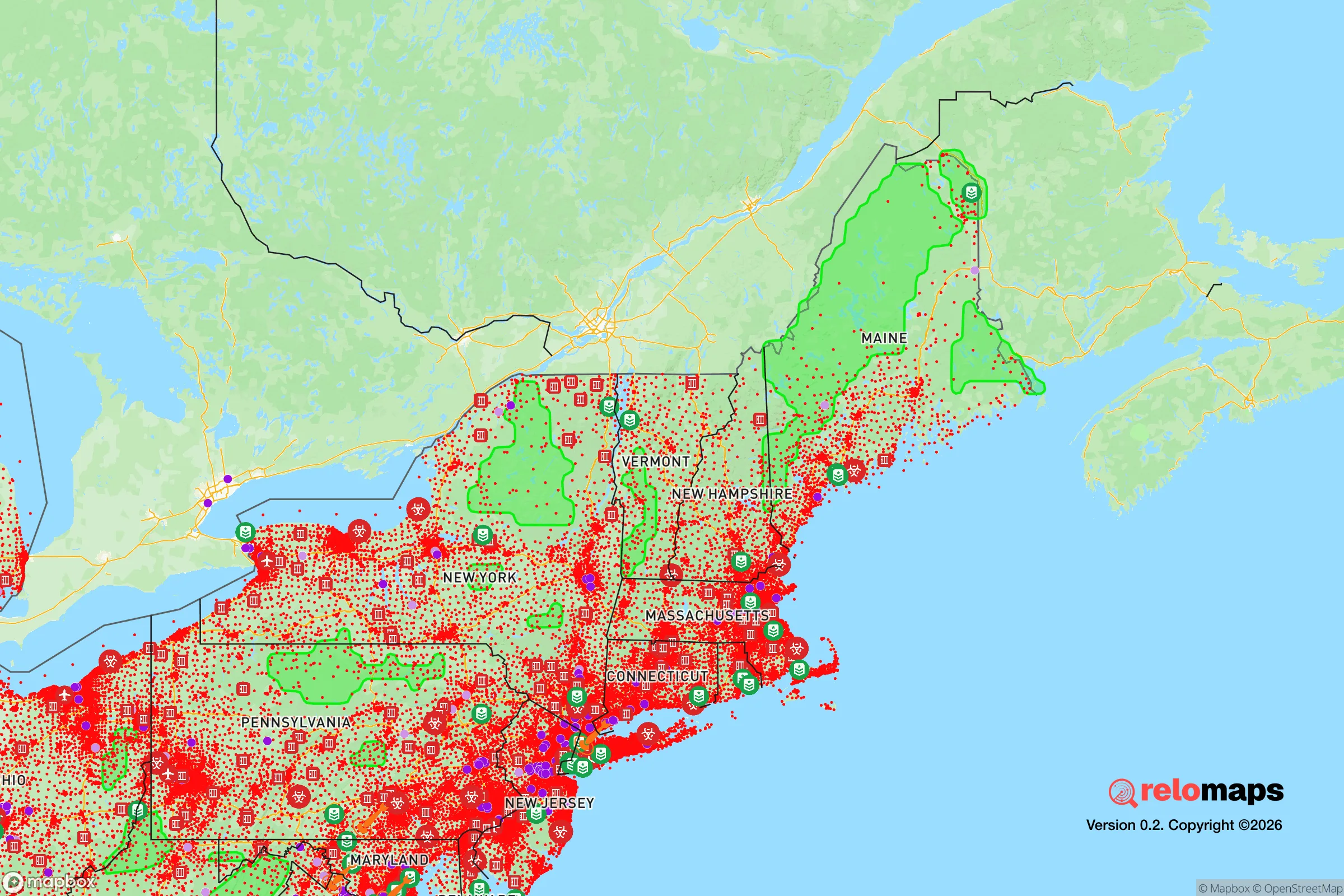
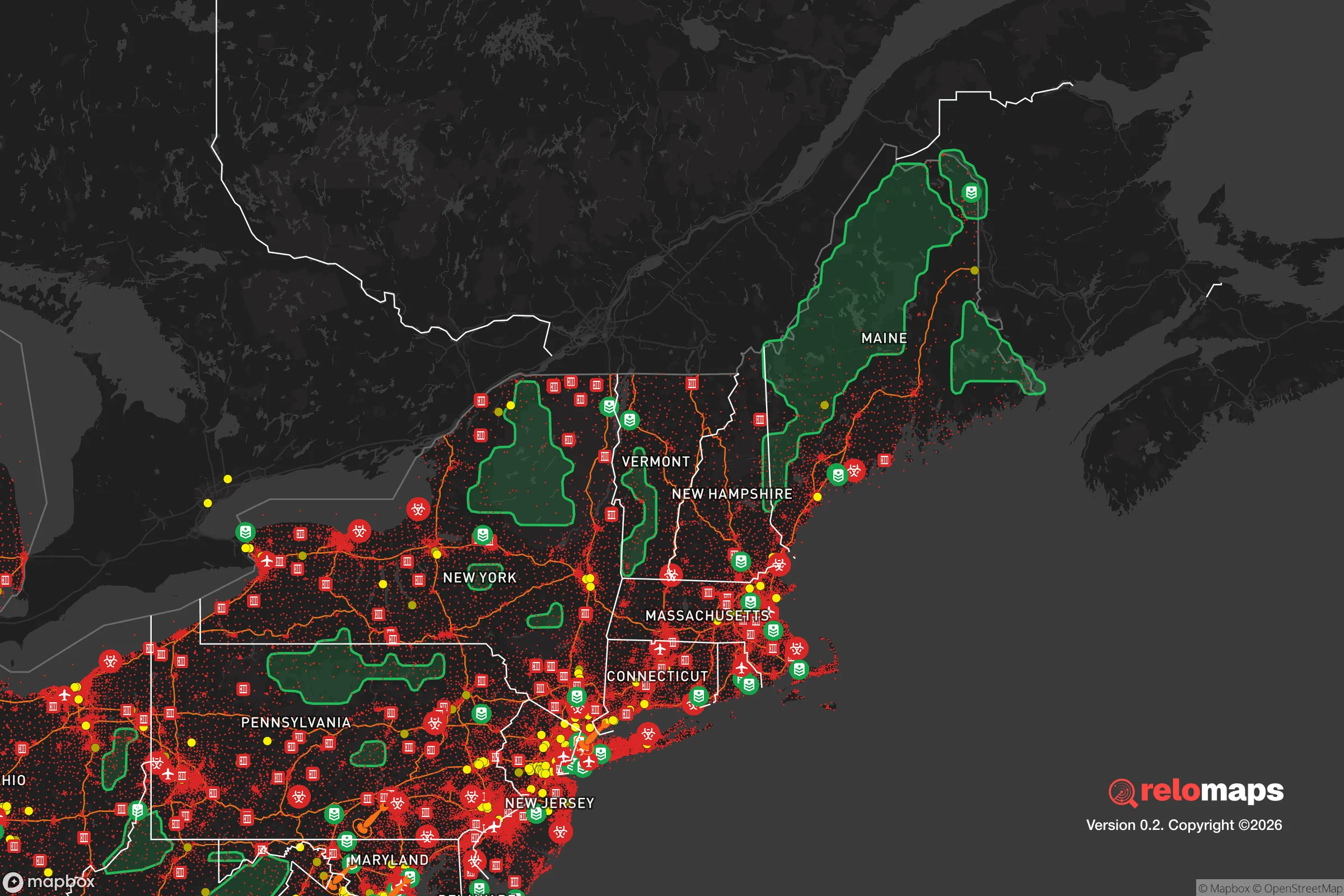


Important Note: For informational purposes only. This does not mean nothing bad ever happens in the green zones. Please use common sense. This is based on public data and modeled with AI. We tried to take a conservative approach but mistakes happen. We update this regularly as new information becomes available.
Solar Generator Recommendations
Backup power matters more here than in safer locations. We've picked three solar generators across budgets and capacity tiers — start with the budget unit if you only need a few essentials, or step up if you want to run a fridge and HVAC for days at a time.

Jackery Portable Power Station Explorer 300
Budget OptionPower on the Go: Weighing only 11 lbs, it's convenient to set up and store with book-sized foldable solar panels

BLUETTI Portable Power Station AC180
Designed for both indoor and outdoor scenarios, AC180 is highly capable as it has a robost capacity and continuous output power.

EF ECOFLOW DELTA Pro Ultra Power Station
Upgraded PickEcoFlow DELTA Pro Ultra is a whole-home energy system designed to grow with your family. Integrated with the Smart Home Panel 2, it scales to meet your evolving energy needs — keeping your home powered, intelligent, and secure through every stage of life.
We earn a commission, at no additional cost to you.
Strategic Assessment Analysis
Newark, New Jersey, presents a complex strategic picture for the conservative prepper or survivalist. While its location offers undeniable logistical advantages in terms of transportation and access to resources, its position as a densely populated, politically progressive urban core within a high-tax, heavily regulated state introduces severe vulnerabilities that outweigh most benefits for those prioritizing long-term resilience and self-sufficiency. The city’s proximity to New York City and major infrastructure hubs makes it a high-probability target for both civil unrest and fallout-related events, requiring a brutally honest assessment of risk versus reward.
Geographic position and natural advantages: A logistical hub with a strategic downside
Newark sits at the crossroads of the Northeast Corridor, with Newark Liberty International Airport, the Port of Newark-Elizabeth (one of the busiest container ports on the East Coast), and major rail and highway arteries like the New Jersey Turnpike and I-78. For a relocator focused on pre-positioning supplies or maintaining a low-profile supply chain, this access is a double-edged sword. On one hand, you can move goods in and out rapidly. On the other, this same infrastructure makes Newark a chokepoint that will be targeted or gridlocked during any major disruption. The city’s natural geography—flat, low-lying land along the Passaic River and Newark Bay—offers no defensive high ground. Flooding from storm surge or heavy rain is a recurring hazard, as seen during Hurricane Sandy and Ida. The surrounding region, including the Watchung Mountains and the Pine Barrens, provides some natural buffer zones, but Newark itself is a concrete basin with limited natural water sources or arable land. The city’s water supply comes from the Pequannock River watershed, a system vulnerable to contamination or sabotage. For a prepper, the lack of defensible terrain and reliance on external water infrastructure are significant negatives.
Risks, exposures, and proximity to fallout-relevant landmarks
Newark’s greatest liability is its proximity to high-value, high-risk targets. It lies roughly 10 miles from Manhattan, 15 miles from the Port of New York and New Jersey, and within a 50-mile radius of multiple nuclear power plants (Indian Point, Oyster Creek, and Salem). In a scenario involving a nuclear detonation, EMP, or radiological dispersal device, Newark would be in the immediate fallout zone or suffer cascading infrastructure collapse. The city’s dense population—over 300,000 people in just 26 square miles—means that any mass casualty event, whether from terrorism, civil unrest, or a pandemic, would overwhelm local hospitals and emergency services. The city’s crime rate, while improved in recent years, remains high relative to national averages, with property crime and gang activity posing a persistent threat to personal security. In a societal breakdown scenario, Newark’s proximity to Newark Bay and the Passaic River also means that chemical plants, refineries, and industrial facilities along the waterfront could become secondary hazards. The city’s political leadership leans heavily progressive, with policies that may deprioritize law enforcement or emergency preparedness in favor of social programs—a concern for those who value self-reliance and rapid response capabilities.
Practical resilience for a relocator: Food, water, energy, and defensibility
For a single individual or family looking to establish a resilient base, Newark presents severe practical challenges. Food security is virtually nonexistent within city limits; there are no significant agricultural zones, and the city relies entirely on trucked-in supplies from regional distribution centers. In a prolonged disruption, grocery shelves would empty within 48 hours. Water security is equally fragile—the municipal system is aging and vulnerable to both cyberattacks and physical sabotage. A prepper would need to stockpile at least two weeks of water per person, which is logistically difficult in a typical apartment or rowhouse. Energy resilience is poor; the grid is old and prone to outages, and solar or generator setups are often restricted by building codes or HOA-like regulations in many neighborhoods. Defensibility is the weakest point. Newark’s urban layout—dense row houses, narrow streets, and limited sightlines—makes it nearly impossible to secure a perimeter. The city’s high population density means that any unrest would quickly become a mob scenario, with limited escape routes. The best-case scenario for a relocator is to use Newark as a temporary staging point for a more defensible rural property in western New Jersey or Pennsylvania, not as a permanent base. If you must live here, prioritize a top-floor apartment with a single entry point, maintain a low profile, and build a network of trusted neighbors—but understand that the city’s layout works against you.
The overall strategic picture for Newark is one of high risk and low resilience for the conservative prepper. Its logistical advantages are real but are overshadowed by its vulnerability to fallout, civil unrest, and infrastructure collapse. The city’s density, political climate, and proximity to major targets make it a poor choice for long-term survival or self-sufficiency. For those committed to the area, the smartest move is to treat Newark as a transient hub for work or supply runs, while maintaining a primary retreat in a less exposed, more defensible location—ideally 50 to 100 miles inland, away from major population centers and critical infrastructure. The cost of living and taxes in New Jersey further erode any financial buffer, making it harder to invest in the gear, land, or training that true preparedness demands. In short, Newark is a place to pass through, not to dig in. If you’re serious about strategic relocation, look west or north to the rural counties of Sussex or Warren, or across the border into Pennsylvania’s Pike or Monroe counties, where the terrain, politics, and community dynamics align better with a prepper’s priorities.

* Values derived from national, state, county, city and local statistics and may differ in a specific area. Last updated: 2026-04-30T05:24:19.000Z
Narrative content on this page is AI-generated and may contain mistakes. Verify any details that matter before acting on them.
ReloMaps may earn a commission from affiliate links at no extra cost to you.

