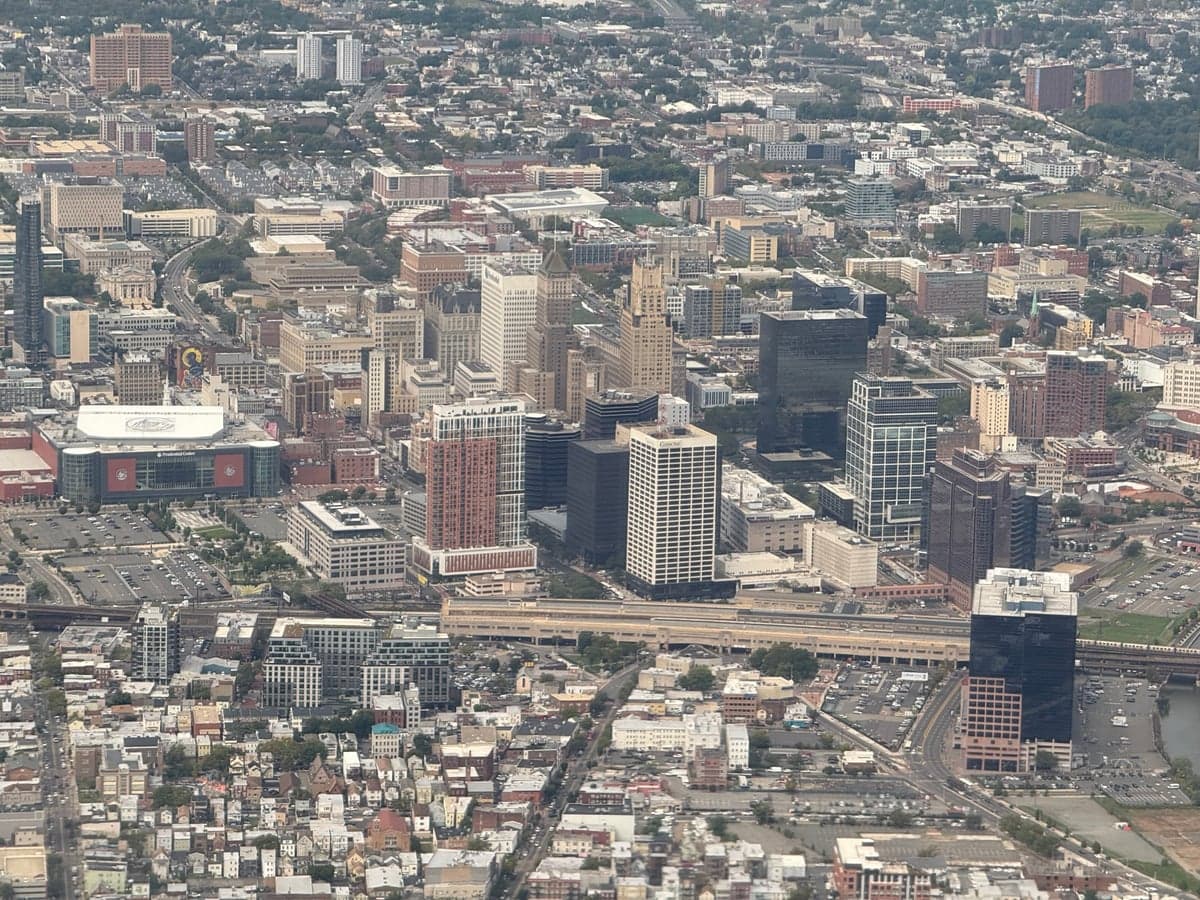
Photo: Wikipedia
Quality of Life in Newark, NJ
A livable area that tracks near national norms for affordability, walkability, and neighborhood health.
What does Quality of Life tell us?
Quality of Life blends cost of living, nearby amenities, socioeconomic signals, and neighborhood character. City-level scores represent the whole municipality; individual neighborhoods can differ.
What does this tell us?
Quality of Life blends cost of living, nearby amenities, socioeconomic signals, and neighborhood character. City-level scores represent the whole municipality; individual neighborhoods can differ.
Cost of Living
17% above national average
The Real Cost of Living in Newark, NJ for 2026
| Tier | Individual | Family (4) |
|---|---|---|
| Survival | $21k | $40k |
| Comfortable | $65k | $95k |
| Luxury | $87k+ | $136k+ |
| Elite (Top 5%) | $111k+ | $172k+ |
51%
Hobbies
Explore the areaGroceries
0 within 10 miles
Gas
0 within 10 miles
Hospital
0 within 20 miles
Airport
EWR — Newark Liberty International
Post Office
Critical Amenities
Quality-of-Life Analysis
Newark, New Jersey presents a complex quality-of-life picture shaped by its status as New Jersey's largest city and a major economic hub, with a cost of living index of 117 (17% above the national average) that reflects its proximity to New York City and its role as a transportation and business center. The city's population is notably diverse, with a significant mix of long-standing families, recent immigrants, and a growing number of young professionals and students drawn by institutions like Rutgers University-Newark and the New Jersey Institute of Technology. While Newark offers urban energy and cultural depth, its affordability relative to nearby Manhattan and Jersey City makes it a pragmatic choice for those seeking city life without the highest premiums.
Cost of living and housing affordability compared to nearby cities
Newark's cost of living is significantly lower than in neighboring Manhattan or Hoboken, but it remains above the national average. The median home value of $337,800 is roughly half the median in Jersey City and a fraction of New York City's, making homeownership more attainable for middle-income buyers. Median rent sits at $1,330, which is notably below the $2,000+ averages seen in nearby urban centers, though rental prices have risen steadily since 2020. The average commute time of 33.2 minutes is slightly above the national average of 27 minutes, largely because many residents commute via NJ Transit or PATH trains to jobs in Manhattan or other parts of the region. Property taxes in Newark are high, as is typical for New Jersey, but the city's lower home prices partially offset this burden compared to wealthier suburbs like Montclair or Maplewood.
Daily life, amenities, and what families should know about schools
Newark offers a dense urban lifestyle with walkable neighborhoods like the Ironbound district, known for its Portuguese and Brazilian restaurants, and the revitalized Downtown area near the Prudential Center arena. The city's public school system, Newark Public Schools, has seen gradual improvement under state oversight, with several magnet and charter schools—such as Science Park High School and Newark School of the Arts—earning strong reputations. Parks include Branch Brook Park, famous for its cherry blossoms, and the sprawling Weequahic Park. For daily errands, residents rely on a mix of national chains and local markets, though some neighborhoods lack full-service grocery stores, a common challenge in urban food deserts. The Newark Museum of Art and the New Jersey Performing Arts Center provide cultural anchors, while the city's three major train stations (Newark Penn, Broad Street, and Newark Airport) offer direct access to the broader region.
Newark is best suited for individuals and families who value urban convenience, cultural diversity, and lower housing costs relative to the New York metro area, but who can tolerate higher crime rates than suburban alternatives and a public school system that remains uneven in quality. Young professionals working in Manhattan or Newark's own growing finance and tech sectors will find the commute manageable and the rent savings substantial. Families should research specific school options carefully, as outcomes vary widely by neighborhood. Those seeking a quiet, car-dependent suburban lifestyle will likely find Newark too dense and gritty, but for residents who embrace its energy, transit connectivity, and affordability, the city offers a compelling quality-of-life trade-off.

Crime in Newark, NJ
WARNING: The crime statistics are unreliable for this jurisdiction. Local authorities have either not reported or under reported their data to the FBI. This could be due to bad intentions, incompetence or technical issues. Regardless, we suggest skepticism.
Significantly higher crime rates than 77% of comparable U.S. locations.
Violent CrimeViolent Crime Analysis
Property CrimeProperty Crime Analysis
Crime Analysis
Newark, New Jersey, presents a challenging safety landscape, with violent crime rates that are significantly higher than both the state and national averages. The city reported a violent crime rate of 156.7 per 100,000 residents, which is roughly 1.5 times the national average and notably above New Jersey's overall rate. Property crime, at 1048.2 per 100,000, also exceeds national benchmarks, though the gap is narrower than for violent offenses. These figures place Newark among the higher-crime cities in the Northeast, a reality shaped by its dense urban environment, economic disparities, and the policies of its local justice system.
Crime in context
Newark's crime statistics must be understood within the broader context of New Jersey's progressive judicial and prosecutorial environment. The state and Essex County have adopted numerous reforms aimed at reducing incarceration and prioritizing rehabilitation, including bail reform, decriminalization of certain offenses, and diversion programs for non-violent offenders. While these policies are designed to address systemic inequities, they have a direct and measurable impact on public safety. Progressive district attorneys and judges in the region frequently reduce charges, offer plea deals that minimize jail time, and release repeat offenders on minimal or no bail. This approach, while sympathetic to offenders, results in more criminals returning to the streets quickly, undermining deterrence and increasing the risk of recidivism. For residents, this means a higher likelihood of encountering individuals with active warrants or a history of violent behavior, as the justice system prioritizes leniency over accountability.
What residents experience
Daily life in Newark is marked by a heightened awareness of personal safety. Violent crime, including aggravated assault, robbery, and homicide, is concentrated in specific neighborhoods and often linked to gang activity and drug markets. Property crime, such as burglary, theft, and motor vehicle theft, is more widespread and affects residents across the city. Car thefts are a particular concern, with Newark consistently ranking among the highest in New Jersey for vehicle theft rates. Residents report that visible police presence is inconsistent, and response times can be slow in high-crime areas. The progressive policies of the Essex County Prosecutor's Office mean that even when arrests are made, many offenders are quickly back on the street, eroding trust in the justice system and creating a sense of impunity among criminals.
Neighborhood-level variation
Safety in Newark varies dramatically by neighborhood. The Ironbound district, a densely populated Portuguese and Brazilian enclave near Newark Liberty International Airport, is generally considered safer, with lower crime rates and a strong sense of community policing. In contrast, areas like the Central Ward, South Ward, and parts of the West Ward experience significantly higher rates of violent crime, particularly shootings and homicides. Neighborhoods near public housing complexes and major drug corridors, such as those along Bergen Street and Springfield Avenue, are the most dangerous. While some gentrifying areas near the downtown core and the Prudential Center have seen modest improvements, the overall risk remains elevated. Prospective residents should research specific blocks and consult local crime maps, as safety can change within a few streets. The city's liberal judicial environment means that even in safer neighborhoods, the risk of encountering repeat offenders from other parts of the city remains a concern.
* Values derived from national, state, county, city and local statistics and may differ in a specific area. Last updated: 2026-04-30T05:24:19.000Z
Narrative content on this page is AI-generated and may contain mistakes. Verify any details that matter before acting on them.
ReloMaps may earn a commission from affiliate links at no extra cost to you.

