Photo: Wikipedia
Demographics of Newport, RI
Affluence Level in Newport, RI
A middle-class area roughly in line with national averages across income, home values, education, and employment.
People of Newport, RI
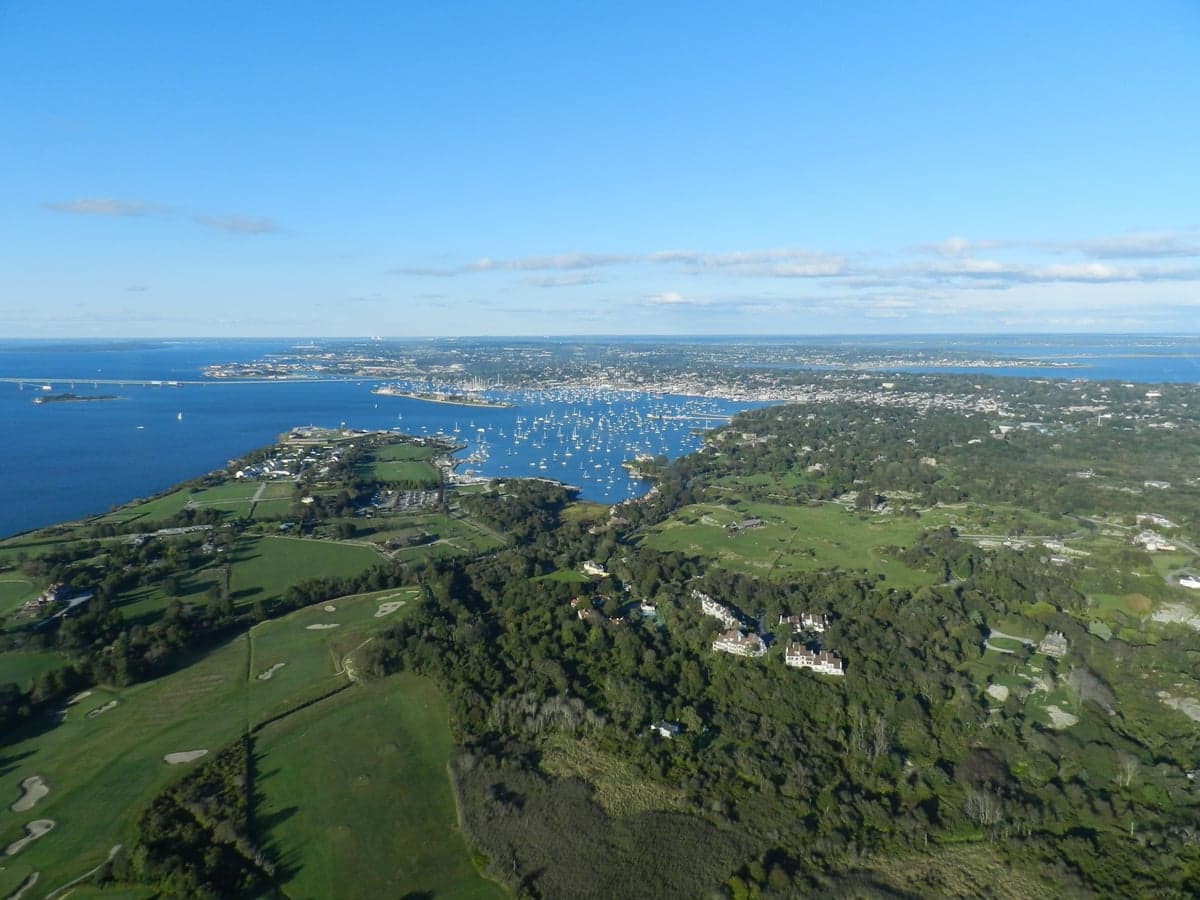
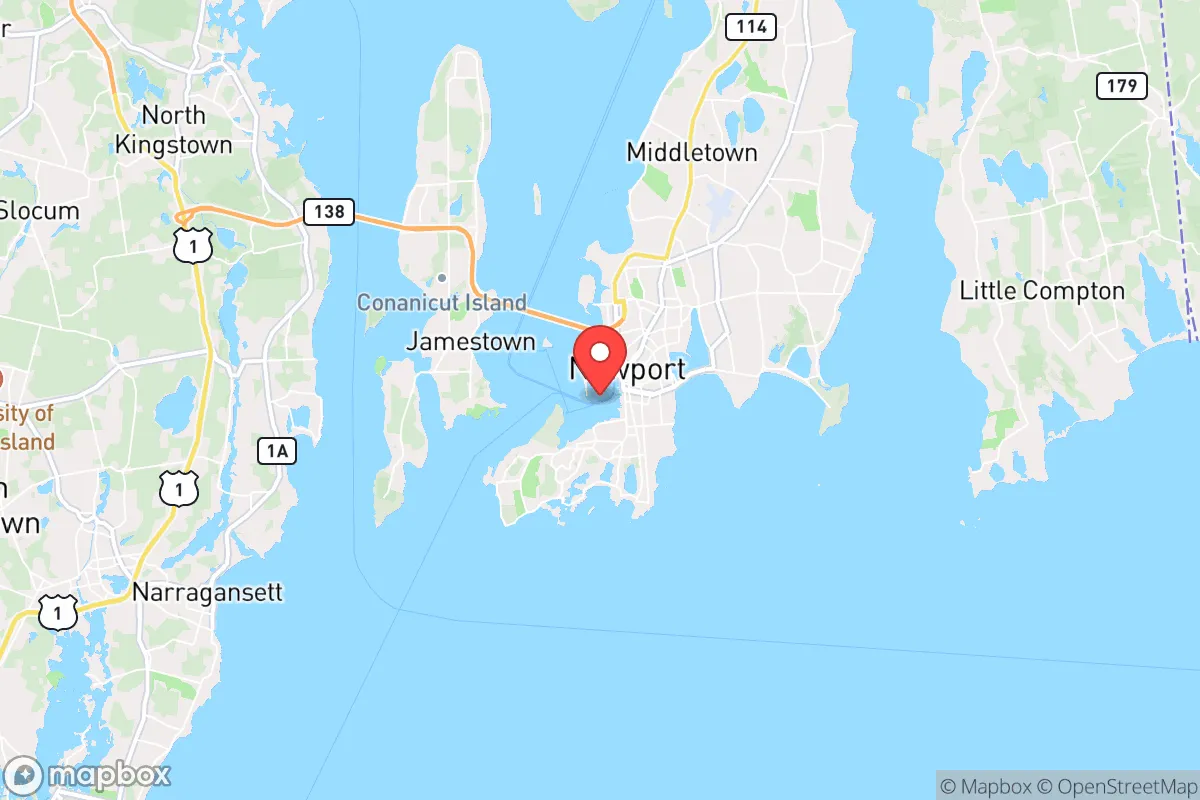
Newport, Rhode Island, is a historic coastal city of 25,029 residents with a distinctive character shaped by centuries of maritime trade, military presence, and tourism. Its population is notably older and more educated than the national average, with 55.5% holding a college degree, yet it remains predominantly white (73.6%) with a growing Hispanic community (10.6%) and smaller Black (7.1%), East/Southeast Asian (1.6%), and Indian-subcontinent (1.4%) populations. The city’s identity is a blend of Gilded Age opulence, Navy tradition, and working-class resilience, concentrated in distinct neighborhoods that reflect its layered settlement history.
How the city was settled and grew
Newport was founded in 1639 by religious dissenters from the Massachusetts Bay Colony, including Anne Hutchinson and William Coddington, who sought greater religious freedom. The original settlers clustered around the harbor in what is now the Historic Hill neighborhood, building a prosperous port that rivaled Boston and New York by the 18th century. The city’s early growth was driven by maritime commerce—shipbuilding, whaling, and the infamous triangular trade—which attracted a mix of English merchants, African slaves, and free Black mariners. By the 19th century, Newport became a summer playground for America’s industrial elite, who erected palatial “cottages” along Bellevue Avenue and Ocean Drive, drawing wealthy families from New York and Philadelphia. The U.S. Navy established a major presence in the late 1800s, building the Naval War College and a fleet base that brought thousands of officers and enlisted personnel to neighborhoods like The Point and Fifth Ward, creating a stable middle-class population that endured through the mid-20th century.
Modern era (post-1965)
The post-1965 era brought significant demographic shifts to Newport, driven by the decline of the Navy’s footprint and the rise of tourism and service industries. The 1973 closure of the Newport Naval Base (though the War College and training commands remained) led to a population drop from over 34,000 in 1960 to roughly 24,000 by 1980, as military families relocated. In their place, a wave of domestic in-migration—retirees, second-home buyers, and creative-class professionals—moved into the historic housing stock of Historic Hill and Kay-Catherine neighborhoods, pushing up property values and displacing some long-term residents. The Hispanic population, now 10.6%, began growing in the 1990s, with many families settling in the more affordable North End near the city’s industrial corridor and along Broadway, working in hospitality, landscaping, and construction. The Black population (7.1%) remains concentrated in the Fifth Ward and parts of Broadway, reflecting historic settlement patterns from the early 20th century. East/Southeast Asian residents (1.6%) and Indian-subcontinent residents (1.4%) are smaller but visible in professional and academic roles tied to the Naval War College and Salve Regina University, often living in the Bellevue Avenue area. The foreign-born share is just 4.3%, well below the national average, indicating that Newport’s diversity is driven more by domestic migration than international immigration.
The future
Newport’s population is trending toward greater homogenization by income and education, even as its racial and ethnic diversity slowly increases. The city’s high housing costs—median home values exceed $600,000—are pricing out younger families and working-class residents, pushing them to nearby towns like Middletown or Portsmouth. The Hispanic community, concentrated in the North End, is growing steadily but not explosively, with second-generation families assimilating into the broader population. The Black population has plateaued, while East/Southeast Asian and Indian-subcontinent communities remain small and professional, unlikely to form large ethnic enclaves. The biggest demographic force is the influx of affluent retirees and remote workers, who are drawn to Newport’s historic charm and coastal lifestyle, accelerating the city’s shift from a working-class Navy town to a high-end tourism and second-home destination. Over the next 10-20 years, Newport will likely become whiter, older, and wealthier at the core, with diversity concentrated in the North End and along Broadway, while the historic districts become increasingly exclusive.
For someone moving to Newport now, the city offers a unique blend of history, natural beauty, and cultural amenities, but it is a place where economic opportunity is increasingly tied to tourism, education, and professional services rather than manufacturing or the military. The population is stable in size but shifting in character—less blue-collar, more white-collar, and more segmented by neighborhood. New arrivals should expect a tight housing market, a strong sense of local identity, and a community that values its historic preservation and coastal access above rapid growth.

* Values derived from national, state, county, city and local statistics and may differ in a specific area. Last updated: 2026-04-30T01:47:55.000Z
Narrative content on this page is AI-generated and may contain mistakes. Verify any details that matter before acting on them.
ReloMaps may earn a commission from affiliate links at no extra cost to you.

