
Photo: Wikipedia
Quality of Life in Newport, RI
A high quality of life with strong walkability, manageable living costs, healthy neighborhood signals, and solid amenity access.
What does Quality of Life tell us?
Quality of Life blends cost of living, nearby amenities, socioeconomic signals, and neighborhood character. City-level scores represent the whole municipality; individual neighborhoods can differ.
What does this tell us?
Quality of Life blends cost of living, nearby amenities, socioeconomic signals, and neighborhood character. City-level scores represent the whole municipality; individual neighborhoods can differ.
Cost of Living
78% above national average
The Real Cost of Living in Newport, RI for 2026
| Tier | Individual | Family (4) |
|---|---|---|
| Survival | $26k | $48k |
| Comfortable | $130k | $191k |
| Luxury | $151k+ | $234k+ |
| Elite (Top 5%) | $235k+ | $365k+ |
44%
The Area Signal
A metric tracking the socioeconomic signals of the area.
Hobbies
Explore the areaGroceries
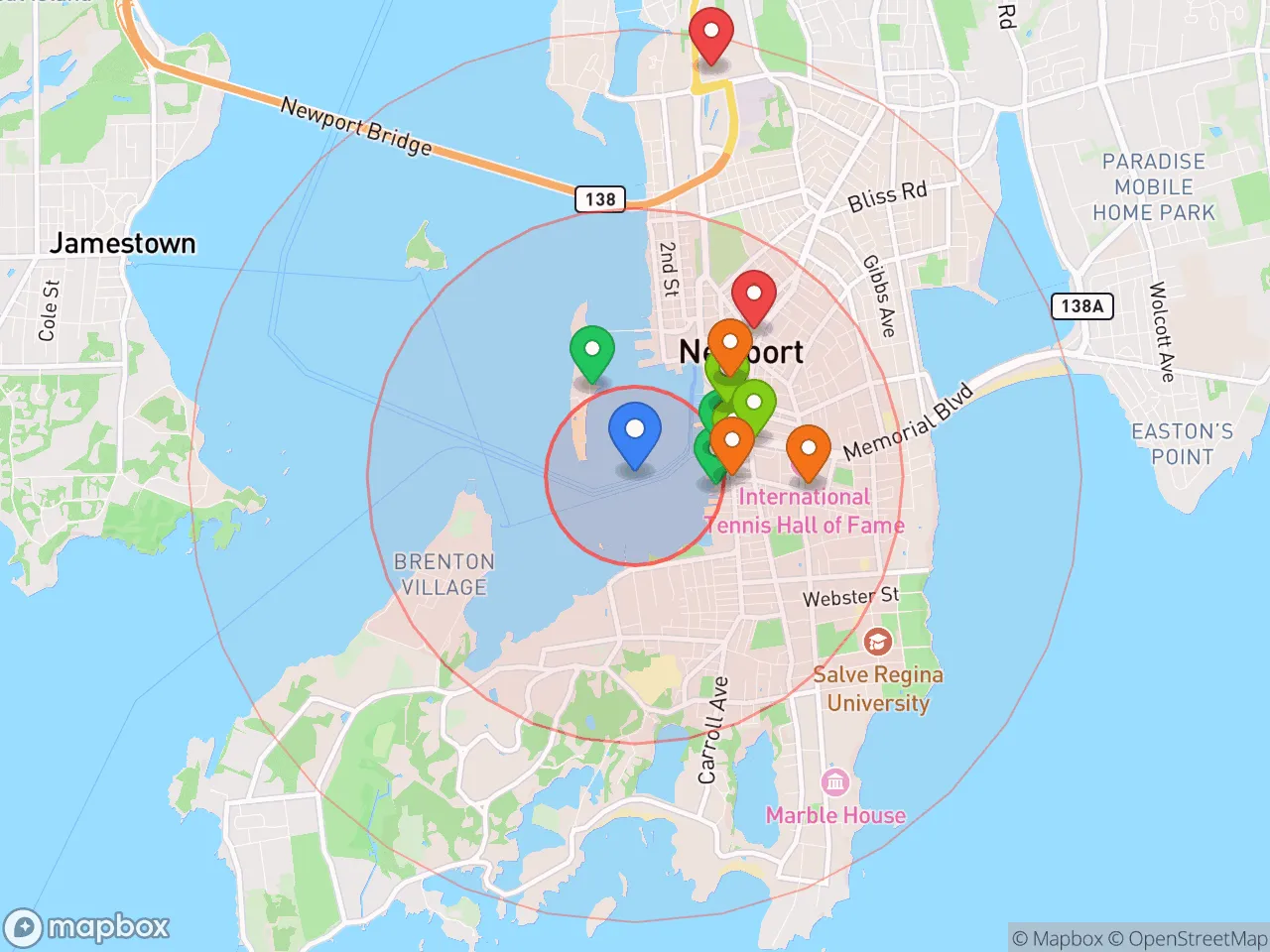
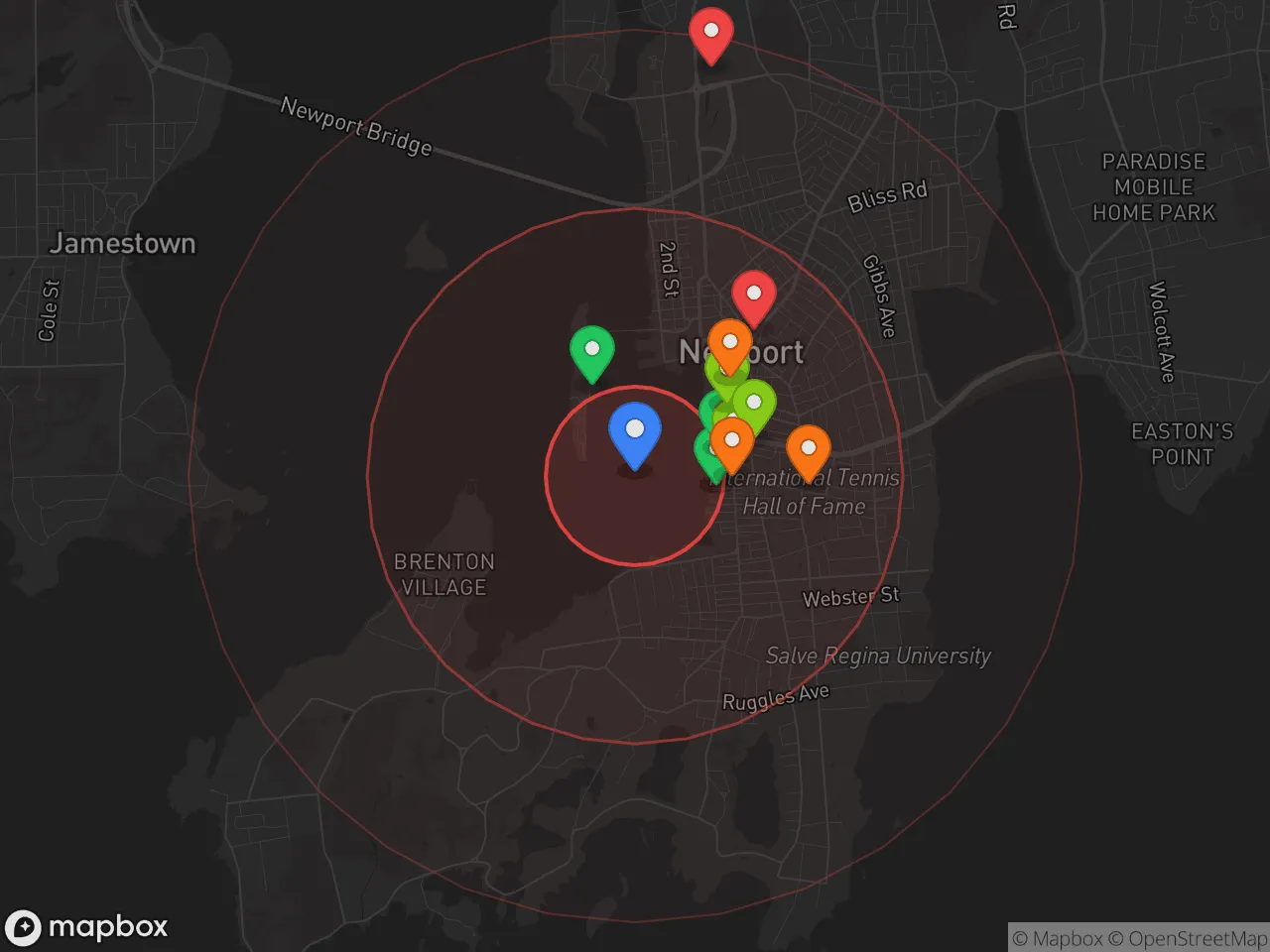
4 within 10 miles
Gas
20 within 10 miles
Hospital
8 within 20 miles
Airport
JFK — John F. Kennedy International
Post Office
USPS — 320 Thames Street, RI
Critical Amenities
Quality-of-Life Analysis
Newport, Rhode Island, is a historic coastal city where affluence is woven into the daily landscape, drawing a mix of wealthy second-home owners, Navy personnel stationed at Naval Station Newport, and professionals commuting to Providence or Boston. With a cost of living index of 178—well above the national average of 100—the city caters primarily to those with high disposable incomes, though its median rent of $1,612 offers a slightly more accessible entry point for renters compared to neighboring coastal enclaves like Barrington or Bristol.
Cost of living, housing affordability, and how Newport compares to nearby areas
Newport’s cost of living is 78% higher than the U.S. average, driven largely by a median home value of $669,500, which is roughly double the national median. This places Newport in a similar price bracket to Providence’s East Side but significantly below Boston’s metro area, where median home values often exceed $800,000. Renters fare somewhat better: the median rent of $1,612 is about 15% above the national median but remains lower than in nearby Portsmouth or Middletown, where single-family rentals can push past $2,000. The average commute time of 19.4 minutes is notably short for the region—far less than the 30-minute average for Providence or the 45-minute slog typical of Boston suburbs—meaning residents save both time and transportation costs. However, property taxes in Newport County are among the highest in Rhode Island, with an effective rate around 1.2%, adding roughly $8,000 annually on a median-priced home. For buyers, this means affordability is tight unless household income exceeds $150,000, while renters at the median can expect to spend about 30% of a $65,000 income on housing.
What daily life is like for families, amenities, and local schools
Daily life in Newport revolves around its walkable downtown, the Cliff Walk, and a dense concentration of cultural amenities that rival much larger cities. The city’s public schools, part of the Newport Public Schools district, serve about 2,400 students, with Rogers High School and Thompson Middle School both rated below the state average on standardized tests, prompting many affluent families to opt for private options like St. George’s School or Pennfield School. For families, the trade-off is clear: strong community programming—such as the Newport Recreation Department’s youth sports leagues and the free summer concert series at King Park—offsets the academic concerns. The city also boasts the Newport Public Library, a 24/7 hub with extensive children’s programming, and the YMCA of Greater Newport, which offers after-school care and swim lessons. Groceries and dining are pricier than the national average, with a gallon of milk often costing $4.50 and a restaurant meal averaging $20 per person, but the abundance of farmers’ markets (like the Aquidneck Growers Market) helps offset costs for those who cook at home. The rhythm of life is seasonal: summers bring tourist crowds and traffic on Thames Street, while winters are quieter, with locals dominating the scene at spots like the Fastnet Pub or the Newport Vineyards tasting room.
Newport is best suited for professionals, retirees, and Navy-affiliated families who value coastal living, walkability, and cultural density over low housing costs or top-tier public schools. Those with a household income above $120,000 will find the city comfortable, while renters and younger workers may need roommates or a longer commute to make the numbers work. The city’s short commute, historic charm, and robust amenity base make it a compelling choice for anyone who prioritizes lifestyle over square footage, but it is not a budget-friendly option for the average American household.

Crime in Newport, RI
Lower crime rates than 84% of comparable U.S. locations.
Violent CrimeViolent Crime Analysis
Property CrimeProperty Crime Analysis
Crime Analysis
Newport, Rhode Island, presents a mixed safety profile for prospective residents. While the city's violent crime rate of 185.3 incidents per 100,000 residents is notably lower than the national average, its property crime rate of 1,181.7 per 100,000 significantly exceeds both state and national benchmarks. This divergence means that while violent confrontations are relatively uncommon, the risk of theft, burglary, and vehicle break-ins is a tangible daily concern for those living in or visiting the historic coastal city.
Crime in context
Newport's violent crime rate sits well below the U.S. average of roughly 380 per 100,000, placing it in a safer tier for personal safety compared to many similarly sized New England communities. However, the property crime rate is a clear outlier. At nearly 1,182 per 100,000, it is roughly 50% higher than the national property crime rate and substantially above the Rhode Island state average. This elevated property crime figure is a key metric for anyone evaluating the city, as it reflects a higher likelihood of experiencing theft or vandalism. The city's status as a major tourism and event destination (e.g., the Newport Folk Festival, America's Cup) contributes to seasonal spikes in these crimes, particularly in densely trafficked areas like Thames Street and the waterfront.
What residents experience
For daily life, the practical impact of Newport's crime data is most felt through property-related incidents. Residents commonly report issues with unlocked vehicle break-ins, bicycle theft, and package theft from porches. While violent crime is rare, it is not absent, with incidents typically concentrated in specific areas and often tied to disputes among known individuals rather than random attacks on the public. A significant concern for many residents is the influence of Rhode Island's broader criminal justice policies. The state operates under a progressive legal framework, with liberal judges and district attorneys in Newport County who often prioritize diversion programs and reduced sentencing for property and drug offenses. This approach, while intended to reduce incarceration, has a direct negative consequence: it contributes to a cycle where repeat property offenders are quickly returned to the streets, undermining the sense of security for law-abiding residents and victims who see little accountability for stolen property or vandalism.
Neighborhood-level variation is pronounced. The Historic Hill and Bellevue Avenue areas generally experience lower crime rates due to higher property values, private security, and less foot traffic from transient populations. In contrast, the Broadway corridor, the North End, and areas near the Newport Housing Authority complexes report higher concentrations of both property crime and occasional violent incidents. The area around the Gateway Center (the city's transit hub) also sees elevated police activity. For anyone considering a move, focusing on street-level lighting, off-street parking, and neighborhood watch participation is more critical in Newport than in many other Rhode Island towns with lower property crime baselines.
* Values derived from national, state, county, city and local statistics and may differ in a specific area. Last updated: 2026-04-30T01:47:55.000Z
Narrative content on this page is AI-generated and may contain mistakes. Verify any details that matter before acting on them.
ReloMaps may earn a commission from affiliate links at no extra cost to you.

