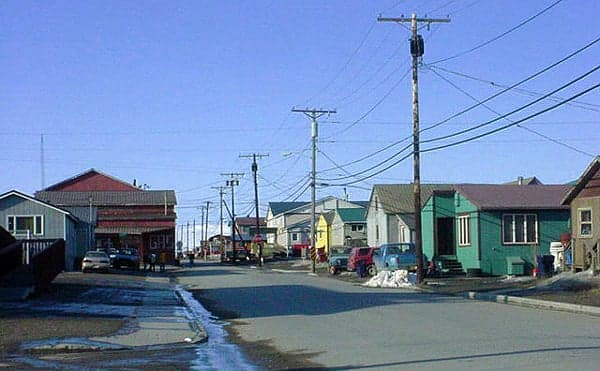
Photo: Wikipedia
Personal Sovereignty in Nome, AK
Strong independent fundamentals that actively favor personal liberty and low regulation.
What does Personal Sovereignty tell us?
Personal Sovereignty measures your capacity for self-reliance and independence with minimal government friction. Higher scores mean fewer barriers between you and the way you want to live... but it assumes you have the space you need and good neighbors.
What does this tell us?
Personal Sovereignty measures your capacity for self-reliance and independence with minimal government friction. Higher scores mean fewer barriers between you and the way you want to live... but it assumes you have the space you need and good neighbors.
State Policy
Energy independence: Net exporter (350% of energy produced in-state)
Personal Liberty
Homesteading

Personal Liberty Analysis
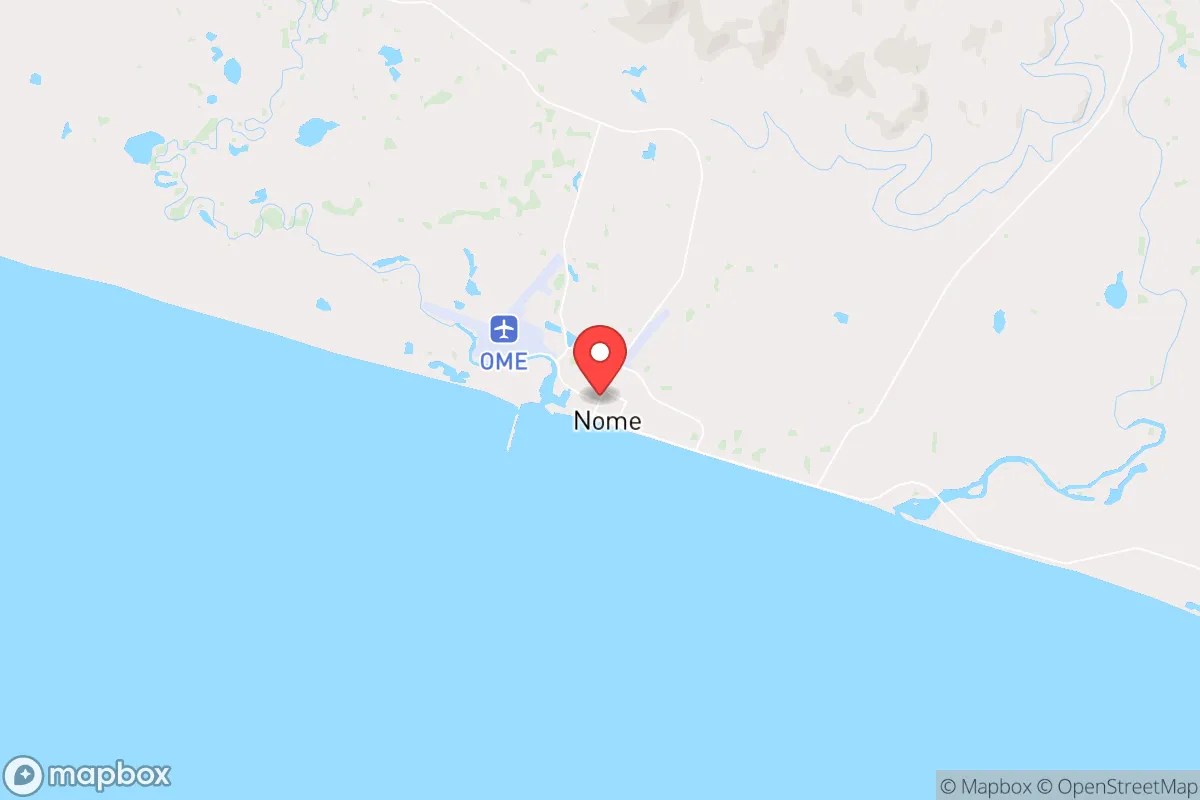
Nome, Alaska, offers a level of personal sovereignty that is increasingly rare in the Lower 48, but it comes with a unique set of trade-offs that demand serious consideration. For the strategic relocator with a survivalist or prepper mindset, the city’s remote location—accessible only by air or sea—creates a natural buffer against federal overreach and the cultural decay found in many urban centers. However, the state’s political leanings and the city’s dependence on government infrastructure mean that true autonomy requires a deliberate, self-reliant approach. This analysis breaks down the key factors—tax burden, self-defense laws, homesteading viability, and personal liberties—to help you gauge whether Nome aligns with your vision of a sovereign life.
Tax burden and regulatory posture: How Alaska’s policies affect your wallet and freedom
Alaska’s tax structure is a standout advantage for anyone seeking to minimize government intrusion into their finances. The state has no state income tax and no statewide sales tax, a direct result of its reliance on oil revenue rather than personal earnings. For a conservative audience wary of the IRS, this means your paycheck stays yours, and you won’t face the creeping tax creep common in states like California or New York. Nome itself imposes a modest 6% sales tax on most goods, but this is a local levy, not a state mandate—a trade-off for municipal services in a remote hub. Property taxes are also low, with the effective rate hovering around 1.2% of assessed value, far below the national average. Regulatory posture in Alaska is generally light-touch, especially compared to the Lower 48. The state has no “right-to-repair” restrictions on firearms or vehicles, and building codes are minimal outside of flood zones. However, Nome is subject to federal oversight due to its status as a port and its proximity to the Bering Strait, meaning environmental regulations from the EPA and NOAA can impact subsistence activities and construction. For the prepper, the key takeaway is that Alaska’s state-level policies are a green light for financial and operational autonomy, but local and federal layers still require navigation.
Self-defense and gun law specifics: What you can own and carry in Nome
Alaska is one of the most firearm-friendly states in the nation, and Nome reflects that ethos. The state has constitutional carry for both open and concealed handguns without a permit, effective since 2013. This means you can legally carry a firearm for self-defense without government permission, a critical factor for those who view the Second Amendment as a non-negotiable right. There is no state-level waiting period, no magazine capacity limit, and no “assault weapon” ban. You can own suppressors, short-barreled rifles, and machine guns with federal NFA compliance, but the state does not impose additional restrictions. Nome’s remote location and high rates of wildlife encounters—brown bears and moose are common—make firearm ownership a practical necessity, not just a philosophical stance. The city has no local ordinances that restrict carry in public spaces beyond federal prohibitions (e.g., schools, post offices). For the survivalist, this is a near-ideal legal environment. The only caveat is that Alaska’s self-defense laws require a “reasonable belief” of imminent harm, and the state does not have a “Stand Your Ground” statute codified in the same way as Florida or Texas—though case law generally favors defenders. If you’re moving from a state with restrictive gun laws, Nome offers a breath of fresh air, but you should still familiarize yourself with the nuances of Alaska’s use-of-force statutes.
Self-reliance and homesteading viability: Lot sizes, zoning, and off-grid feasibility
Nome’s geography and zoning create a mixed bag for those seeking to live off-grid or homestead. The city proper is compact, with most residential lots ranging from 5,000 to 10,000 square feet—enough for a garden and a small workshop, but not for serious self-sufficiency. Zoning is relatively permissive; there are no HOA-style restrictions on chickens, goats, or beekeeping within city limits, though you’ll need to check for nuisance ordinances. The real opportunity lies outside town, in the unincorporated areas of the Nome Census Area. Here, you can purchase land—often via state land auctions or private sales—with lot sizes of 1 to 40 acres. Zoning is essentially nonexistent, meaning you can build a cabin, dig a well, and install solar panels without permits. Off-grid feasibility is high: the region gets 24-hour daylight in summer and 24-hour darkness in winter, making solar power viable only with battery storage and a backup generator. Water is abundant from wells or nearby rivers, but you’ll need a filtration system due to permafrost and mineral content. The biggest challenge is access: most land outside Nome is only reachable by snowmobile, boat, or bush plane, which requires significant upfront investment. For the prepper, this is both a blessing and a curse—true isolation is achievable, but it demands a level of logistical planning that most people underestimate. The state’s “Right to Farm” laws protect agricultural activities, but the short growing season (60-90 days) limits what you can grow. Root vegetables, cold-hardy greens, and berries are your best bets.
Personal liberties: Parental rights, medical autonomy, speech, and property
Alaska’s constitution and legal culture generally prioritize individual liberty, but Nome’s small-town dynamics and federal presence create some friction. Parental rights are strongly protected under state law; there is no statewide vaccine mandate for schoolchildren, and parents can opt out of sex education or other curricula without hassle. Homeschooling is popular and lightly regulated—you simply file a notice with the local school district, and there are no standardized testing requirements. Medical autonomy is a mixed bag. Alaska has no state-level vaccine passport system, and the governor’s office has resisted federal health mandates. However, Nome’s reliance on the Norton Sound Health Corporation (a tribal health organization) means that federal funding influences some protocols. For example, COVID-era restrictions were enforced more strictly in the hospital than in the general community. Speech and property rights are robust: there are no hate speech laws, no “critical race theory” mandates in schools, and property taxes are low enough that eminent domain is rare. The city council is generally hands-off on private property use, though you’ll need a permit for major construction. The biggest liberty concern is the federal government’s influence over subsistence hunting and fishing, which is governed by the Alaska National Interest Lands Conservation Act (ANILCA). This can feel like overreach if you’re used to state-managed wildlife. Overall, Nome offers a high degree of personal sovereignty compared to most of the Lower 48, but the remote setting means you’re still subject to federal agencies like the BLM and NOAA.
In the broader landscape of American relocation options, Nome stands out as a haven for those who prioritize autonomy over convenience. The tax burden is minimal, gun laws are among the freest in the country, and the potential for off-grid living is real—if you’re willing to invest in the infrastructure and accept the isolation. The trade-offs are significant: extreme weather, limited medical care, and a dependence on air freight for supplies. But for the strategic relocator who views government overreach as the primary threat to freedom, Nome offers a buffer that few other places can match. It’s not a utopia—no place is—but it’s a viable option for those ready to take full responsibility for their own security and survival.

* Values derived from national, state, county, city and local statistics and may differ in a specific area. Last updated: 2026-04-19T19:33:03.000Z
Narrative content on this page is AI-generated and may contain mistakes. Verify any details that matter before acting on them.
ReloMaps may earn a commission from affiliate links at no extra cost to you.

