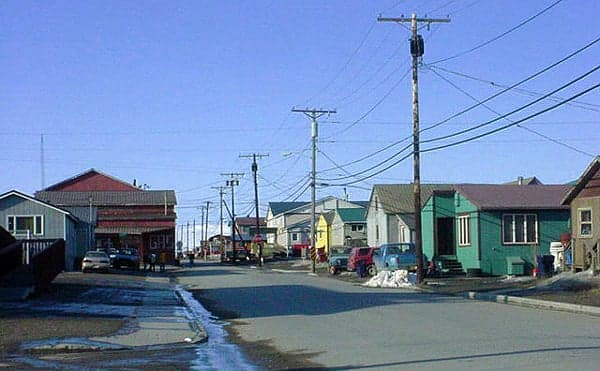
Photo: Wikipedia
Strategic Assessment of Nome, AK
Workable tactical position. Some exposure to population density or targets, but generally defensible in a crisis.
What does the Strategic Assessment tell us?
Our Strategic Assessment grades tactical survivability of an area. Major population centers, military targets, fallout zones, natural disasters, and border exposure all drive risk — lower exposure means a more defensible position in a crisis.
This is heavily inspired by Joel Skousen's Strategic Relocation book. Highly recommended you checkout the book ($)What does this tell us?
Our Strategic Assessment grades tactical survivability of an area. Major population centers, military targets, fallout zones, natural disasters, and border exposure all drive risk — lower exposure means a more defensible position in a crisis.
This is heavily inspired by Joel Skousen's Strategic Relocation book. Highly recommended you checkout the book ($)Strategic Pillars

Key Distances
Regional Safe Places
Below is our recommended "safe zones" in Alaska and the surrounding area based on our strategic heuristics. For most people, it's unrealistic to live in a “safe zone” full-time due to work, family or other personal reasons. They tend to be more rural. However, many of these areas are perfect for second homes and retreat properties that double as a vacation home or even a short-term rental.
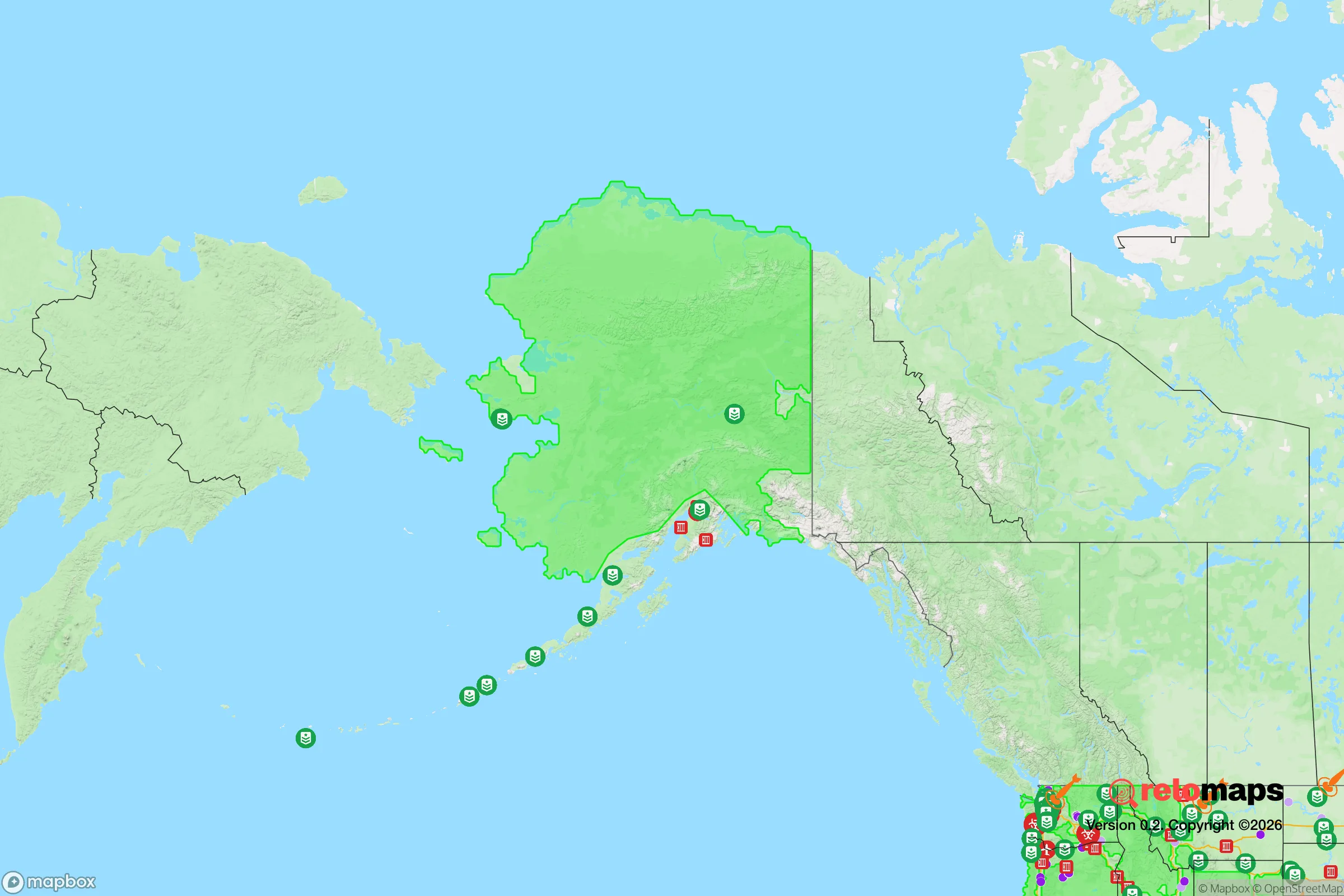
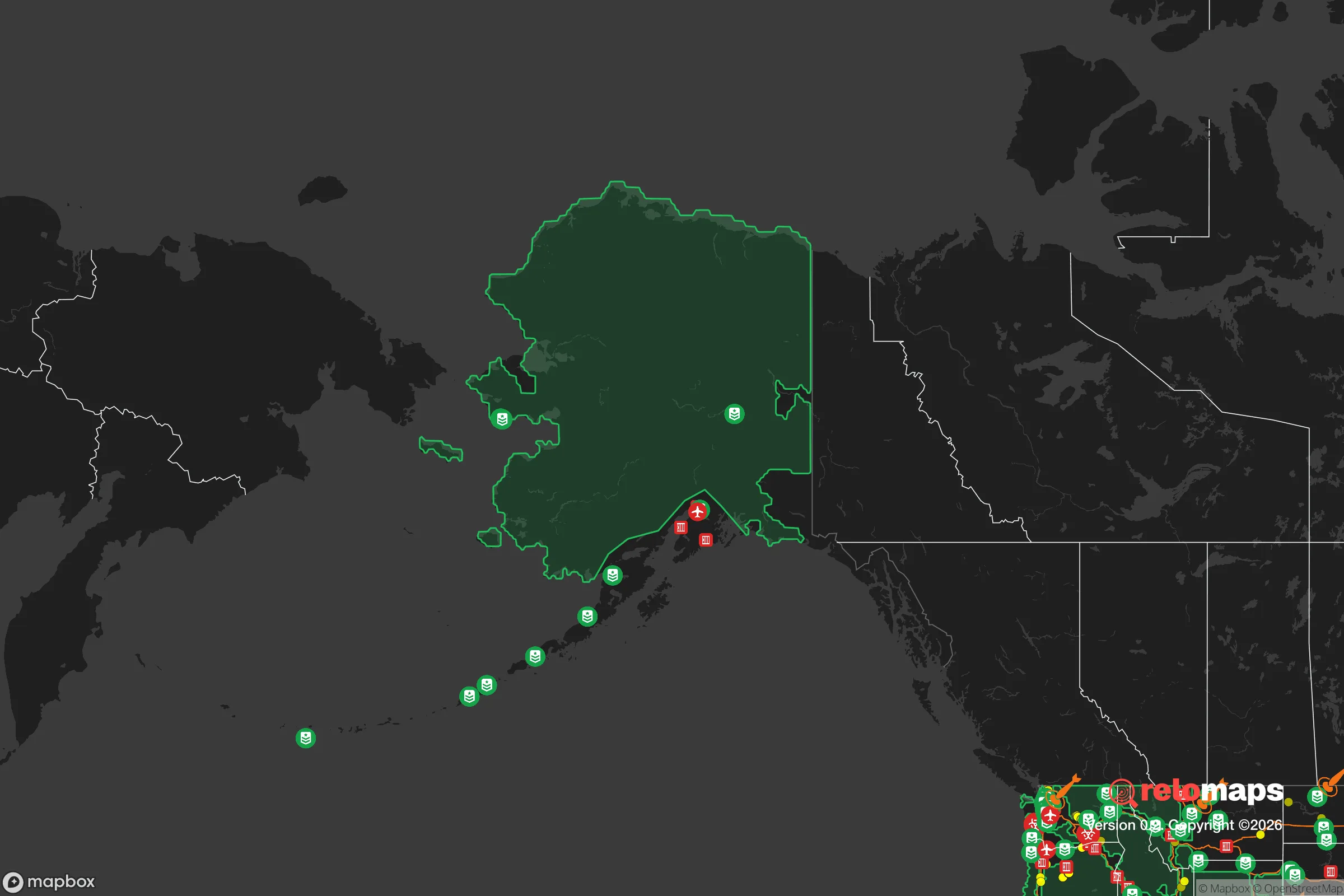


Important Note: For informational purposes only. This does not mean nothing bad ever happens in the green zones. Please use common sense. This is based on public data and modeled with AI. We tried to take a conservative approach but mistakes happen. We update this regularly as new information becomes available.
Solar Generator Recommendations
Backup power matters more here than in safer locations. We've picked three solar generators across budgets and capacity tiers — start with the budget unit if you only need a few essentials, or step up if you want to run a fridge and HVAC for days at a time.

Jackery Portable Power Station Explorer 300
Budget OptionPower on the Go: Weighing only 11 lbs, it's convenient to set up and store with book-sized foldable solar panels

BLUETTI Portable Power Station AC180
Designed for both indoor and outdoor scenarios, AC180 is highly capable as it has a robost capacity and continuous output power.

EF ECOFLOW DELTA Pro Ultra Power Station
Upgraded PickEcoFlow DELTA Pro Ultra is a whole-home energy system designed to grow with your family. Integrated with the Smart Home Panel 2, it scales to meet your evolving energy needs — keeping your home powered, intelligent, and secure through every stage of life.
We earn a commission, at no additional cost to you.
Strategic Assessment Analysis
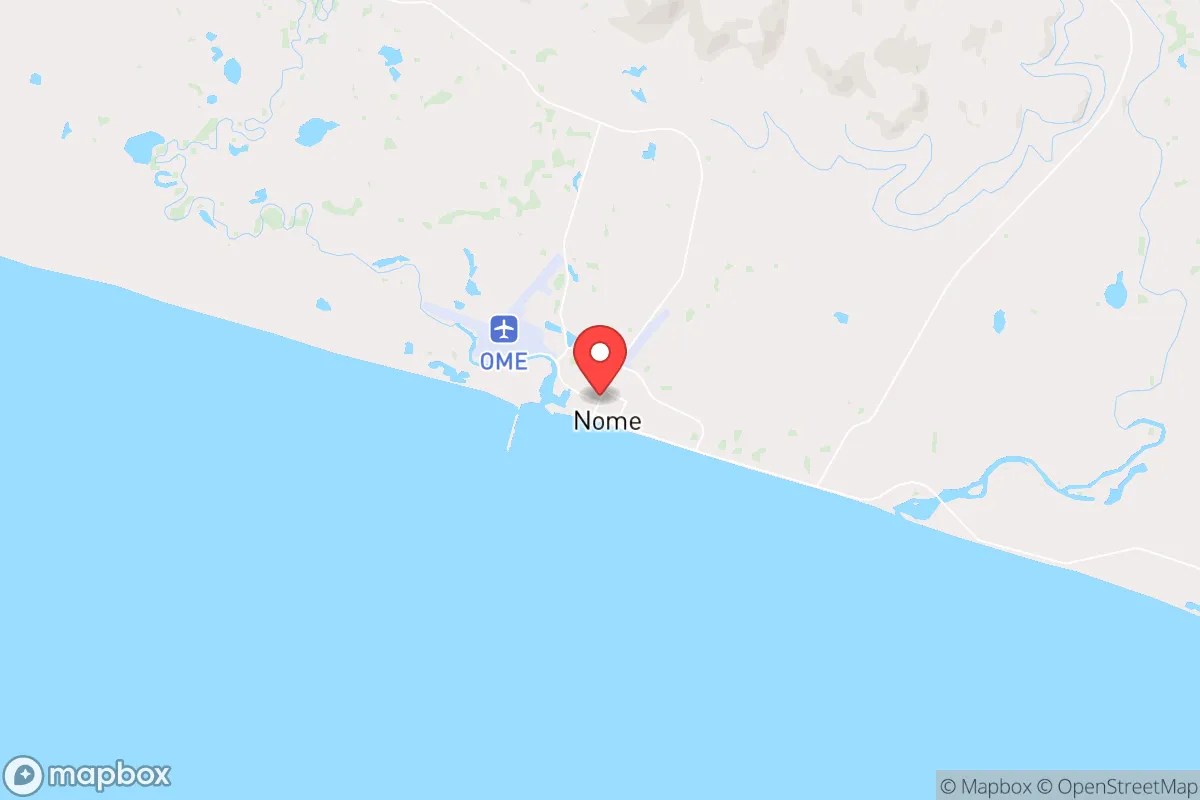
Nome, Alaska, is one of the most strategically resilient locations in the United States for those prioritizing physical distance from population centers, fallout zones, and the cascading failures of a degraded national grid. Its location on the Seward Peninsula, roughly 530 miles west of Anchorage and 160 miles east of Russia, places it far beyond the reach of any plausible civil unrest or supply chain collapse affecting the Lower 48. For a relocator operating from a survivalist mindset, Nome offers a combination of geographic isolation, harsh natural defenses, and a community that still remembers how to live without modern conveniences—but it also demands a brutal level of self-sufficiency that most preppers underestimate.
Geographic isolation and natural defensive advantages
Nome sits on the southern shore of the Seward Peninsula, jutting into the Bering Sea, with no road connections to the rest of Alaska. The only way in or out is by air (Nome Airport) or seasonal barge, which means any large-scale population movement or government-directed relocation is physically impossible. This isolation is the single greatest defensive asset. In a scenario of national unrest, Nome would be effectively invisible to the chaos unfolding in the Lower 48. The surrounding terrain is tundra and low hills, offering no cover for mechanized forces and making overland approach from the interior extremely difficult. The Bering Strait to the west is a natural moat, and the nearest major Russian military infrastructure is across the strait, but the practical threat of a ground incursion is negligible given the logistics. The real advantage is that Nome is not on any strategic target list for nuclear or EMP attack—there are no military bases, no major power plants, no missile silos, and no population density worth targeting. The closest potential fallout danger would be from a strike on Anchorage or Fairbanks, but prevailing winds and distance make that a low-probability concern. For a prepper, Nome’s location is a fortress of remoteness.
Risks, exposures, and proximity to fallout-relevant landmarks
While Nome is far from the typical targets, it is not without exposure. The primary risk is its proximity to Russia’s eastern military district, including the Chukotka Autonomous Okrug, which hosts radar installations and limited naval assets. In a full-scale conflict, the Bering Strait could become a contested zone, and Nome could see overflights or naval activity. However, the likelihood of ground combat reaching Nome is extremely low—Russia would have no reason to seize a town of 3,600 people with no strategic infrastructure. The more immediate risk is the town’s dependence on external supply chains. Nome has no rail, no highway, and no pipeline. Everything—fuel, food, medical supplies, ammunition—comes by barge in summer or by air year-round. A disruption to global shipping or a collapse of the Alaskan transportation network would leave Nome stranded within weeks. The town’s power comes from diesel generators, which means fuel is the single point of failure. If the barge doesn’t arrive, or if fuel prices spike beyond affordability, the town goes dark. For a relocator, this means you cannot rely on the local economy to sustain you. You must bring or stockpile your own fuel, food, and medicine for at least a year, preferably two. The nearest major medical facility is in Anchorage, a 90-minute flight away, and in a crisis, medevac may not be available. The risk of a mass casualty event in Nome itself is low, but the risk of being unable to evacuate or resupply is high.
Practical resilience for a relocator: food, water, energy, and defensibility
Nome’s practical resilience is a mixed bag. On the positive side, the town sits on the coast, giving access to marine protein—salmon, halibut, crab, and seal—if you have the gear and knowledge to harvest it. The surrounding tundra supports caribou, moose, and small game, and subsistence hunting is a way of life for many locals. Freshwater is abundant in the form of the Snake River and numerous lakes, but it requires treatment or boiling due to natural contaminants and the risk of giardia. The permafrost makes digging wells difficult, so most residents rely on surface water or delivered water. Energy is the Achilles’ heel. Nome’s grid is diesel-dependent, with no hydro, wind, or solar infrastructure of meaningful scale. In a collapse scenario, you would need your own solar panels, a backup generator, and enough fuel to run it for months. The long winter means solar is unreliable from November to February, so wind or a small hydro setup on a creek would be more practical. Defensibility is excellent at the micro level. The town is small enough that you can know your neighbors and form a mutual defense group. The terrain offers no cover for an approaching force, and the cold itself is a weapon—anyone not properly equipped will die in hours. The biggest vulnerability is the airport. In a crisis, the airport would be the only lifeline, and it could be contested by government forces or looters. A relocator should have a plan to secure a private airstrip or a boat for coastal escape. The community itself is tight-knit and largely self-reliant, with a strong Alaska Native culture that values preparedness and mutual aid. That culture is an asset, but it also means outsiders are viewed with suspicion until they prove themselves useful.
The overall strategic picture for Nome is one of extreme trade-offs. It offers near-total physical isolation from the collapse of the Lower 48, no strategic value to an enemy, and a climate that filters out the unprepared. For a single individual or a family willing to accept a harsh, subsistence-based lifestyle, it is one of the few places in the United States where you can truly disappear from the grid and the chaos. But the price is high: you must be fully self-sufficient in fuel, food, and medical care, and you must be prepared for a winter that lasts eight months and a summer that is little more than a brief thaw. Nome is not a bug-out location for the weekend prepper. It is a permanent relocation for those who understand that resilience is not about gear—it is about location, community, and the willingness to live without the comforts of a failing civilization. If you can handle that, Nome is as close to a fortress as you will find in North America.

* Values derived from national, state, county, city and local statistics and may differ in a specific area. Last updated: 2026-04-19T19:33:03.000Z
Narrative content on this page is AI-generated and may contain mistakes. Verify any details that matter before acting on them.
ReloMaps may earn a commission from affiliate links at no extra cost to you.

