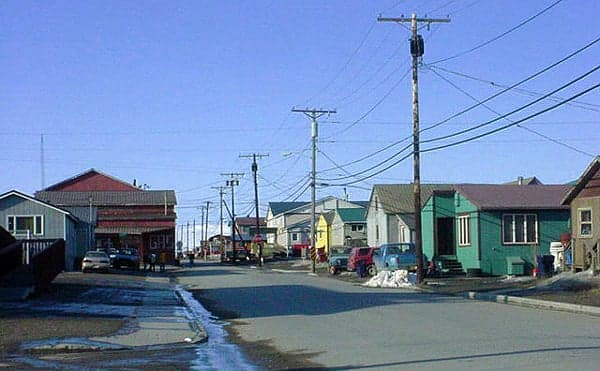
Photo: Wikipedia
Quality of Life in Nome, AK
A high quality of life with strong walkability, manageable living costs, healthy neighborhood signals, and solid amenity access.
What does Quality of Life tell us?
Quality of Life blends cost of living, nearby amenities, socioeconomic signals, and neighborhood character. City-level scores represent the whole municipality; individual neighborhoods can differ.
What does this tell us?
Quality of Life blends cost of living, nearby amenities, socioeconomic signals, and neighborhood character. City-level scores represent the whole municipality; individual neighborhoods can differ.
Cost of Living
29% above national average
The Real Cost of Living in Nome, AK for 2026
| Tier | Individual | Family (4) |
|---|---|---|
| Survival | $25k | $47k |
| Comfortable | $66k | $97k |
| Luxury | $154k+ | $239k+ |
| Elite (Top 5%) | $181k+ | $281k+ |
117%
The Area Signal
A metric tracking the socioeconomic signals of the area.


Hobbies
Explore the areaGroceries
4 within 10 miles
Gas
0 within 10 miles
Hospital
1 within 20 miles
Airport
Alaska Airlines - Nome
Post Office
USPS — Nome, AK
Critical Amenities
Quality-of-Life Analysis
Nome, Alaska, presents a unique quality-of-life profile shaped by its remote Arctic location and role as a regional hub, with a cost of living index of 129 (29% above the U.S. average) that reflects the high expense of shipping goods and energy. The population of roughly 3,700 is a blend of Alaska Native communities (predominantly Iñupiat), long-term gold rush descendants, and professionals drawn by government, healthcare, and mining jobs. This is not a place for those seeking suburban convenience; it attracts self-reliant individuals and families who value community connection, subsistence lifestyle access, and a slower pace far from the Lower 48's consumer culture.
Cost of living, housing affordability, and how Nome compares to other Alaska towns
Nome’s cost of living index of 129 is notably higher than the national baseline but sits below the most expensive Alaska cities like Bethel (index ~140) and Barrow/Utqiaġvik (index ~150). The median home value of $338,900 is surprisingly moderate for Alaska—comparable to Fairbanks ($340,000) and far below Anchorage’s $400,000+—but the catch is limited inventory and older housing stock, much of it built before 1980. Median rent of $1,567 for a two-bedroom unit is steep relative to local incomes, often consuming 35-40% of household budgets. The average commute of just 6.6 minutes is among the shortest in the nation, a direct result of Nome’s compact geography (roughly 14 square miles) and the fact that most jobs are clustered downtown or at the hospital. However, utility costs—especially heating fuel and electricity—can add $400–$600 monthly in winter, making overall affordability a challenge even for dual-income households.
Daily life, schools, and what there is to do in Nome
Daily life in Nome revolves around a tight-knit, car-dependent but walkable core. The Nome Public Schools system serves roughly 700 students across Nome Elementary, Nome-Beltz Junior/Senior High, and the K-12 Anvil City Science Academy, with graduation rates near 80%—above the state average for rural districts. Groceries are expensive (milk often tops $8/gallon) and fresh produce is seasonal, so many families supplement with subsistence fishing, berry picking, and caribou or moose hunting. Amenities include the Norton Sound Regional Hospital (the area’s primary healthcare provider), a public library, a small airport with daily jet service to Anchorage, and the iconic Nome Recreation Center with its indoor pool and ice rink. Cultural life centers on events like the Iditarod Trail Sled Dog Race finish, the Midnight Sun Festival in June, and the annual Nome-Golovin Snowmachine Race. Restaurants are limited to a handful of spots—try the Polar Cafe for breakfast or Airport Pizza for takeout—and retail is dominated by AC Value Center and Hanson’s. The rhythm is slow, with long winter nights (only 3.5 hours of daylight in December) and 24-hour summer sun, which strongly influences social schedules and outdoor activity patterns.
Nome is best suited for people who prioritize community, outdoor subsistence, and a slower pace over urban amenities, convenience, or low costs. It works well for healthcare professionals, teachers, and public-sector workers who can secure housing subsidies or employer-provided lodging, as well as for Alaska Native families with deep local roots. Retirees on fixed incomes may struggle with the high cost of goods and limited medical specialties, while young professionals seeking nightlife or career mobility will find the options thin. For those who embrace the isolation—and the 6.6-minute commute—Nome offers a quality of life defined by resilience, natural beauty, and a genuine sense of belonging that few other American towns can match.

Crime in Nome, AK
Generally safer than 64% of comparable U.S. locations.
Violent CrimeViolent Crime Analysis
Property CrimeProperty Crime Analysis
Crime Analysis
Nome, Alaska, reports a violent crime rate of 1,119.3 per 100,000 residents, a figure that is roughly three times the national average and significantly higher than the statewide rate for Alaska, which itself leads the nation in violent crime. Property crime in Nome stands at 655.2 per 100,000, a rate that is below the national average but still presents a tangible risk to residents and property owners. The overall safety picture in this remote coastal community is shaped by its isolation, seasonal population fluctuations, and the socioeconomic challenges common to many rural Alaska hub communities.
Crime in context
Nome’s violent crime rate of 1,119.3 per 100,000 places it among the higher-risk communities in Alaska, a state where violent crime rates have historically exceeded national benchmarks. For comparison, the national violent crime rate in recent years has hovered around 380 per 100,000, while Alaska’s statewide rate has often been above 800 per 100,000. The property crime rate of 655.2 per 100,000 is notably lower than the national average of approximately 1,950 per 100,000, suggesting that theft and burglary are less pervasive than in many urban areas. However, the high violent crime rate is a critical concern, particularly given the limited law enforcement resources and the vast, remote geography that complicates response times.
What residents experience
Residents of Nome report that violent incidents, including assault and sexual assault, are the most pressing safety issues, often linked to alcohol abuse and domestic disputes. The community’s small size—around 3,800 year-round residents—means that crime is not anonymous, and victims frequently know the perpetrators. Property crime, while less common, typically involves theft from vehicles, break-ins at seasonal cabins, and vandalism. The presence of progressive judicial philosophies in Alaska’s court system, particularly in rural districts, has been a point of contention. Critics argue that lenient sentencing and a focus on offender rehabilitation over public safety contribute to repeat offenses and a revolving-door justice system, which undermines victim confidence and leaves some offenders on the street to re-offend. This dynamic is especially acute in Nome, where the close-knit nature of the community can make victims reluctant to report crimes for fear of social repercussions or ineffective prosecution.
Neighborhood-level variation in Nome is limited by the town’s compact layout, but some patterns emerge. The downtown core and areas near the port and airport see higher rates of property crime, particularly during the summer months when the population swells with seasonal workers and tourists. Residential areas on the outskirts, such as those along the Bering Sea coast, tend to have lower reported crime rates but are not immune to domestic violence incidents. The Nome Police Department, with roughly a dozen officers, works in coordination with Alaska State Troopers, but coverage gaps remain, especially during severe weather that can delay response. For newcomers, understanding that violent crime is a real, if statistically concentrated, risk is essential, and proactive measures—such as securing homes, avoiding high-risk social settings, and building relationships with neighbors—are strongly advised.
* Values derived from national, state, county, city and local statistics and may differ in a specific area. Last updated: 2026-04-19T19:33:03.000Z
Narrative content on this page is AI-generated and may contain mistakes. Verify any details that matter before acting on them.
ReloMaps may earn a commission from affiliate links at no extra cost to you.

