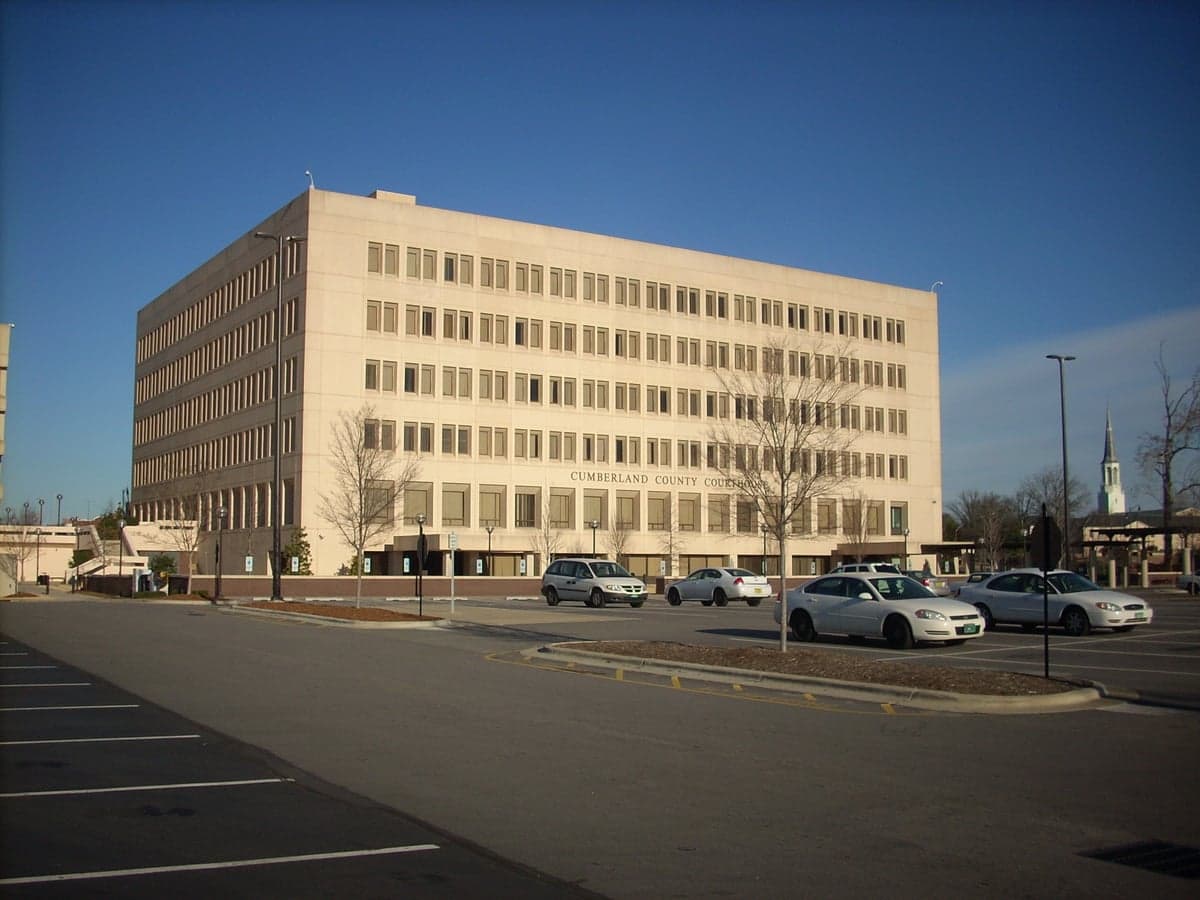
Photo: Wikipedia
Personal Sovereignty in Cumberland County
Viable for self-reliance. Generally workable, though some barriers may limit total independence.
What does Personal Sovereignty tell us?
Personal Sovereignty measures your capacity for self-reliance and independence with minimal government friction. Higher scores mean fewer barriers between you and the way you want to live... but it assumes you have the space you need and good neighbors.
What does this tell us?
Personal Sovereignty measures your capacity for self-reliance and independence with minimal government friction. Higher scores mean fewer barriers between you and the way you want to live... but it assumes you have the space you need and good neighbors.
State Policy
Energy independence: Importer (15% of energy produced in-state)
Personal Liberty
Homesteading

Personal Liberty Analysis
Cumberland County, North Carolina, offers a notably high degree of personal sovereignty compared to many urbanized areas on the East Coast, particularly for residents who value self-reliance, firearm rights, and a lighter regulatory touch. While the county is home to the city of Fayetteville and the massive Fort Liberty military installation, its political and cultural character leans distinctly toward individual autonomy, shaped by a strong military presence, a rural-urban split, and North Carolina’s generally permissive state-level legal framework. For single individuals and families seeking to maximize personal freedom—from tax burden and self-defense laws to homesteading and parental rights—Cumberland County presents a pragmatic environment where state preemption and local custom often align with a conservative-leaning ethos.
Tax burden and regulatory posture: How Cumberland County compares to surrounding areas
North Carolina’s flat state income tax rate of 4.5% (as of 2025) and a state sales tax of 4.75% (with local add-ons bringing the total in Cumberland County to 7.0%) keep the overall tax burden moderate. Property taxes in Cumberland County are assessed at a rate of approximately $0.77 per $100 of valuation, which is competitive with neighboring counties like Harnett ($0.72) and Sampson ($0.68), but notably lower than Wake County’s $0.60+ rate when factoring in higher property values. The county’s regulatory posture is generally light-touch, especially outside Fayetteville’s city limits. In towns like Hope Mills and Spring Lake, zoning is less restrictive, and business licensing is straightforward. However, inside Fayetteville proper, particularly near the downtown and Cross Creek Mall corridor, development regulations and permitting can be more involved. For those seeking the least regulatory friction, the unincorporated areas of the county—such as the rural stretches near Stedman and Godwin—offer the most freedom from municipal codes, including fewer restrictions on home-based businesses and accessory structures.
Self-defense and gun law specifics: What the Second Amendment landscape looks like in Cumberland County
North Carolina is a shall-issue state for concealed carry permits, and Cumberland County’s sheriff’s office processes permits efficiently, with typical wait times under 45 days. The county is home to a large population of active-duty and retired military personnel, which reinforces a gun-friendly culture. Open carry is legal without a permit for anyone 18 or older who can legally possess a firearm, and the state’s Castle Doctrine provides a strong legal presumption of self-defense in one’s home, vehicle, or workplace. Stand-your-ground laws apply statewide, meaning no duty to retreat in any place where the individual is lawfully present. In practice, this means that in towns like Fayetteville and Eastover, firearm ownership is common and socially accepted. The main limitation is that North Carolina does not recognize out-of-state concealed carry permits from all states, so newcomers should plan to obtain a North Carolina permit. Additionally, while private firearm sales between individuals are legal, the state does require a pistol purchase permit (or a valid concealed carry permit) for handgun transfers, which adds a minor bureaucratic step. Overall, Cumberland County ranks as one of the more permissive environments for self-defense in the Southeast, with no local ordinances that exceed state law.
Self-reliance and homesteading viability: Lot sizes, zoning, and off-grid feasibility
For those interested in homesteading or off-grid living, Cumberland County offers a wide spectrum of options, heavily dependent on location. In the rural eastern and northern parts of the county—around Stedman, Godwin, and Wade—land is affordable, with undeveloped parcels often available for $5,000–$15,000 per acre. Zoning in these unincorporated areas is agricultural (RA-20 or similar), allowing for livestock, gardens, and accessory structures without the need for special permits. Off-grid feasibility is high: North Carolina has no statewide ban on rainwater collection, and solar panel installation is straightforward, though grid-tied systems require utility approval. The main constraint is well and septic permitting, which is handled by the county health department and requires standard setbacks and testing, but is not prohibitively expensive or time-consuming. In contrast, inside Fayetteville’s city limits, lot sizes are smaller (typically 0.25–0.5 acres), and zoning restricts livestock and large outbuildings. Hope Mills and Spring Lake fall somewhere in between, with some suburban-style restrictions but still room for substantial gardening and small-scale animal husbandry. For serious homesteaders, the rural fringe of the county is the clear choice, offering a regulatory environment that supports self-reliance without excessive red tape.
Personal liberties: Parental rights, medical autonomy, speech, and property
North Carolina has a strong tradition of parental rights in education, with a Parents’ Bill of Rights enacted in 2023 that requires schools to notify parents of medical or mental health services offered to minors and to obtain consent for certain activities. In Cumberland County, this has been implemented with moderate fidelity, though the county’s school system (Cumberland County Schools) is large and urbanized, so parents in Fayetteville may encounter more bureaucratic friction than those in smaller towns like Eastover or Stedman, where local school boards tend to be more responsive to conservative concerns. Medical autonomy is more limited: North Carolina has not expanded Medicaid under the ACA (as of 2025), and the state maintains strict certificate-of-need laws that limit the number of healthcare facilities, which can reduce choice. However, the presence of Fort Liberty’s Womack Army Medical Center and several private hospitals in Fayetteville provides adequate access. Speech and property rights are strongly protected under state law, with no county-level ordinances that restrict political signage or home-based speech activities. Property rights are further reinforced by North Carolina’s status as a “right-to-work” state and its lack of statewide rent control, though Fayetteville does have a landlord-tenant ordinance that adds some procedural requirements for evictions. Overall, personal liberties in Cumberland County are robust, with the main limitations being those imposed by state-level healthcare regulations rather than local overreach.
In summary, Cumberland County offers a balanced sovereignty environment that is notably freer than many urban counties in the Northeast or West Coast, but slightly more regulated than the most libertarian-leaning rural counties in the Mountain West. For a conservative-leaning individual or family, the county’s combination of low taxes, strong gun rights, viable homesteading options in its rural towns, and solid parental rights protections makes it a pragmatic choice. The main trade-offs are the moderate regulatory friction inside Fayetteville’s city limits and the state-level healthcare restrictions, but for those willing to settle in the outlying communities—Stedman, Godwin, Wade, or Eastover—the area provides a high degree of personal autonomy at a reasonable cost of living.

* Values derived from national, state, county, city and local statistics and may differ in a specific area. Last updated: 2026-08-08T12:36:14.000Z
Narrative content on this page is AI-generated and may contain mistakes. Verify any details that matter before acting on them.
ReloMaps may earn a commission from affiliate links at no extra cost to you.

