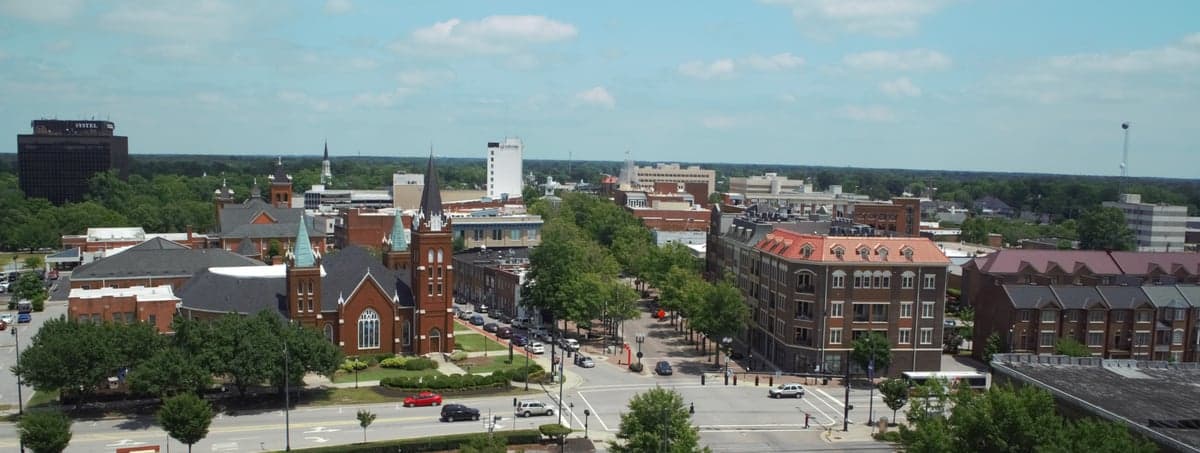
Photo: Wikipedia
Find The Best Places To Live
in Fayetteville
PRO TIP! You can paste a Zillow or Redfin link to get info on that property.
What It's Like Living in Fayetteville, NC
Fayetteville is a city that wears its military identity on its sleeve, shaped by Fort Bragg (now Fort Liberty) and the thousands of service members and families who cycle through it. With a young median age of 30.7 and a cost of living index of 85—well below the national average—it’s a place where you can stretch a paycheck further than in most U.S. cities, but you’ll also trade some polish for that affordability. The vibe is practical, down-to-earth, and transient: neighbors come and go with PCS orders, and the local economy hums along to the rhythm of the base.
Daily Rhythm: What Life Actually Looks Like
Most mornings here start early, especially for the thousands who commute to Fort Liberty or work in the defense sector. The average commute clocks in at just under 19 minutes—short by national standards—so you’re not burning hours behind the wheel. After work, you’ll find locals grabbing dinner at spots like Mash House Brewing Company (a brewpub in a converted church) or Circa 1800, a farm-to-table restaurant in the historic Haymount district. Weekend mornings mean brunch at Blue Moon Café or a walk through the Cape Fear Botanical Garden, a 77-acre oasis along the river that feels a world away from the strip malls and fast-food joints along Bragg Boulevard.
Shopping is practical: you’ve got the Cross Creek Mall for chain stores, but locals also hit the Fayetteville Farmers Market downtown for produce and crafts. The city’s median household income is $56,395, and with a median home value of $171,900, homeownership is within reach for many single individuals and young families—especially compared to Raleigh or Charlotte. The trade-off is that only 28.6% of adults hold a bachelor’s degree, so the professional white-collar scene is thinner than in the Triangle.
Sports, Community, and the Fort Liberty Connection
High school football is a big deal here—Seventy-First High School and Jack Britt High School regularly draw crowds for Friday night games, and the local sports culture is more about community pride than pro-level spectacle. The closest major sports action is in Raleigh (about an hour away), but Fayetteville has its own minor league hockey team, the Fayetteville Marksmen, who play at the Crown Coliseum. That same venue hosts concerts, monster truck rallies, and the annual Fayetteville Dogwood Festival, a spring tradition with rides, food vendors, and live music that brings out families from across the region.
The military presence isn’t just a backdrop—it’s the main character. You’ll see soldiers in uniform at grocery stores, hear aircraft overhead from Pope Army Airfield, and notice that many local businesses offer military discounts. The city’s identity is wrapped up in supporting service members, which creates a culture of respect and resilience, but also a sense of impermanence. Longtime residents often say the best part is the patriotism and the worst is the constant turnover—you make friends, and then they get deployed or transferred.
What’s There to Do: Entertainment, Outdoors, and Nightlife
Outdoor life revolves around the Cape Fear River, where you can kayak, fish, or hike the trails at Carvers Creek State Park (about 20 minutes north). The Fayetteville Skate Park and Clark Park Nature Center are popular with families, and the city’s mild winters mean you can be outside most of the year. For nightlife, downtown Haymount has a cluster of bars and breweries—Dirtbag Ales Brewery & Taproom is a favorite for craft beer fans, while Paddy’s Irish Pub draws a younger crowd on weekends. The Fayetteville Symphony Orchestra and Cape Fear Regional Theatre offer cultural options, but the arts scene is modest compared to larger cities.
The biggest annual event is the International Folk Festival, a three-day celebration of the city’s diverse cultures (influenced heavily by the military’s global reach). You’ll also find the Fayetteville Comic Con and the All American Marathon, which winds through Fort Liberty and downtown. For a quieter weekend, locals head to Pinehurst (45 minutes west) for golf or Raleigh for museums and concerts—Fayetteville is close enough to the Triangle for a day trip but far enough to feel like its own world.
Pros and Cons of Living Here
- Pro: Affordability. With a cost of living 15% below the national average, your money goes further here than in most of North Carolina. A $171,900 median home value means you can buy a decent house on a single income.
- Con: Crime. The violent crime rate is 597.7 per 100,000—well above the national average. Property crime is also a concern, especially in certain neighborhoods near the base. Most locals recommend sticking to Haymount, Vanstory Hills, or the western suburbs like Hope Mills.
- Pro: Short commute. The 18.9-minute average commute is a genuine quality-of-life win, especially if you’re working on or near Fort Liberty.
- Con: Transient population. It can be hard to build deep roots when a third of your neighbors might move within two years. The city lacks the stable, multi-generational community feel of a place like Greensboro or Wilmington.
- Pro: Military community. If you’re a veteran or active-duty family, you’ll find built-in support networks, military-friendly employers, and a shared sense of purpose.
- Con: Limited nightlife and dining. Options are decent for a city of 209,692, but don’t expect the variety or quality of a major metro. The restaurant scene skews toward chain and comfort food.
Weather here is classic North Carolina: hot, humid summers (90°F+ with thunderstorms), mild winters (rarely below freezing), and a long spring and fall. Hurricanes are a risk, but Fayetteville is far enough inland that you mostly get heavy rain and wind, not storm surge. Schools are a mixed bag—Cumberland County Schools serve the city, and while some schools (like Terry Sanford High) have strong reputations, others struggle with funding and performance. Many families with means opt for private schools or homeschool, especially in the military community.
Fayetteville isn’t for everyone. If you want a polished, fast-growing city with a booming tech scene and a vibrant downtown, look at Raleigh or Charlotte. But if you value affordability, a short commute, and a community that genuinely respects service and sacrifice, it’s a place where you can build a solid, unpretentious life. The city’s quirks—the constant hum of aircraft, the way everyone asks “what unit are you with?” instead of “what do you do?”—are part of its character. You either get it, or you don’t.

Similar small cities to Fayetteville
* Values derived from national, state, county, city and local statistics and may differ in a specific area. Last updated: 2026-04-21T19:18:20.000Z
Narrative content on this page is AI-generated and may contain mistakes. Verify any details that matter before acting on them.
ReloMaps may earn a commission from affiliate links at no extra cost to you.

