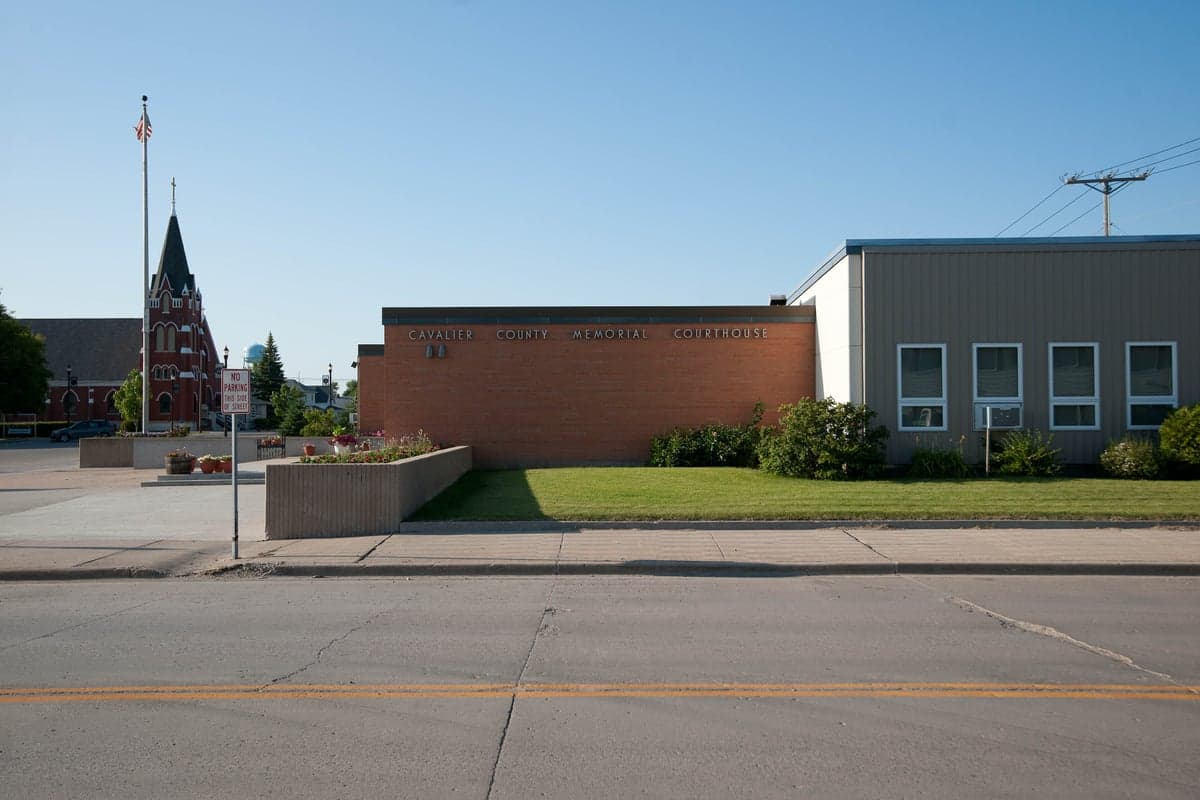
Photo: Wikipedia
Political ClimatePolitical Climate in Cavalier County
Showing state-level results — no local-only data available.
Local Political AnalysisPolitical Analysis of Cavalier County
Cavalier County is about as reliably Republican as it gets in North Dakota, and that's saying something for a state that hasn't gone blue for a presidential candidate since 1964. The county's Cook Partisan Voting Index (PVI) sits at R+18, identical to the state as a whole, meaning it's a solid 18 points more Republican than the national average. If you look at the 2024 presidential race, Donald Trump likely carried the county by a margin north of 70%, with only a handful of precincts showing any real Democratic resistance. This isn't a recent shift, either—it's been a conservative stronghold for decades, with the only real political drama being the occasional primary challenge from the far right or a local school board race.
How it compares
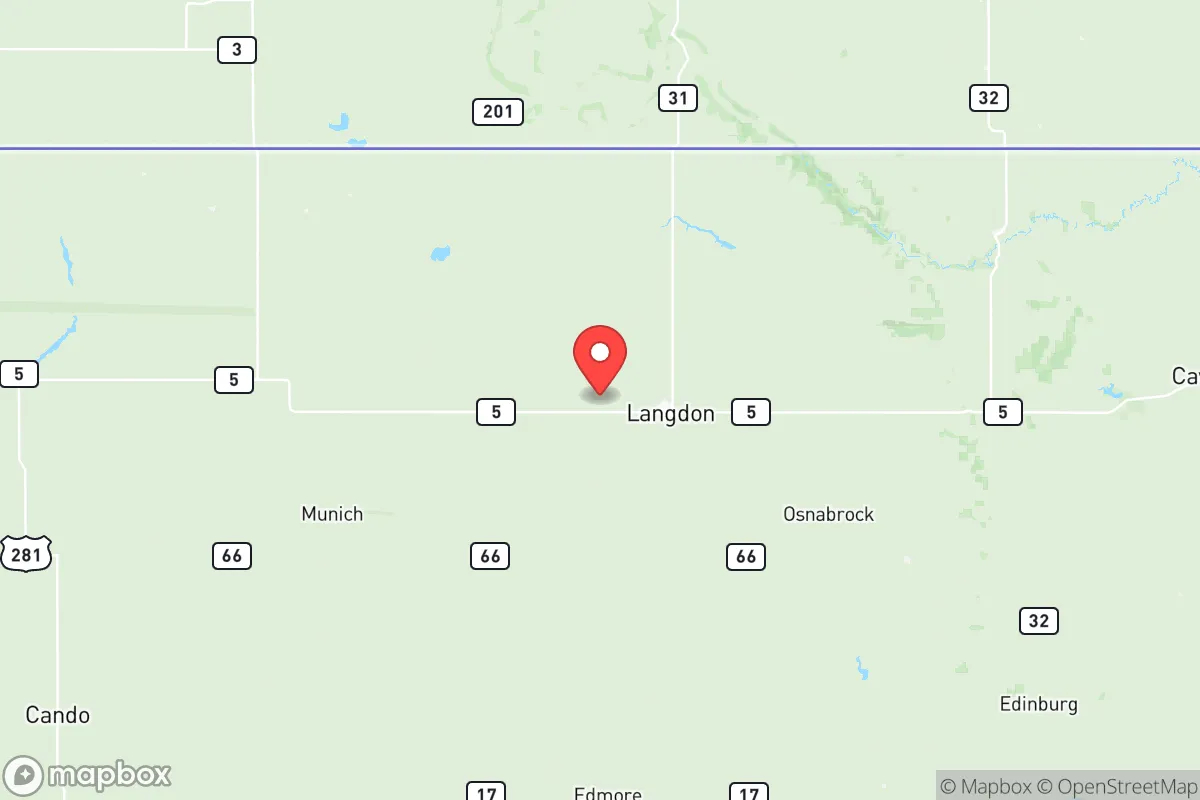
While Cavalier County's R+18 PVI matches North Dakota's statewide number, the comparison gets interesting when you zoom in on the county's internal dynamics. The county seat, Langdon, tends to be the most moderate area, with a few precincts that might only go 60-40 Republican—still red, but not the deep crimson you see in the rural townships. In contrast, small towns like Milton, Osnabrock, and Loma are reliably deep red, often voting 80% or more for GOP candidates. The swing precincts, if you can call them that, are around the Langdon area, where a mix of government workers and a few younger families might vote for a moderate Democrat in a local race, but that's about it. Statewide, North Dakota's R+18 is driven by the oil boom counties in the west and the conservative farming communities in the east, so Cavalier County fits right in—no real surprises here.
What this means for residents
For folks living here, the political climate means a government that generally stays out of your personal business, which is a big part of why people stay. You don't see the kind of overreach you hear about in places like Minneapolis or Fargo—no mask mandates that last for months, no heavy-handed business closures, and no push for progressive policies that infringe on your Second Amendment rights or your ability to run your farm the way you see fit. Property taxes are a constant gripe, but the county commission and state legislature are both firmly in the hands of conservatives who at least pay lip service to keeping them in check. The downside is that if you're not a conservative, you might feel a bit isolated—there's not much of a progressive community here, and the local churches and civic groups tend to reflect that. But for most residents, that's a feature, not a bug.
One cultural distinction worth noting is the county's strong agricultural identity, which shapes its politics more than any national trend. The local Farm Bureau and co-ops are powerful, and they lean heavily Republican, especially on issues like land rights, water usage, and federal regulations. You won't find much support for green energy mandates or carbon taxes here—people see that as government overreach that would hurt their bottom line. The nearest city of any size is Grand Forks, about 90 miles south, and even that's a conservative-leaning area compared to the national average. If you're looking for a place where the government respects your personal freedoms and doesn't try to micromanage your life, Cavalier County is about as good as it gets in North Dakota. Just don't expect much political diversity—it's a solid red county, and it's likely to stay that way for the foreseeable future.

State Political ClimatePolitical Climate in North Dakota
State Political AnalysisPolitical Environment in the State
North Dakota is about as solidly Republican as a state gets, with a Cook PVI of R+18 that makes it one of the most reliably conservative corners of the country. The dominant coalition here is a mix of rural agricultural voters, energy-sector workers from the Bakken oil fields, and a growing number of conservative transplants fleeing high-tax states like California and Illinois. Over the last 10-20 years, the state has actually shifted further right, not left—driven by the oil boom that brought in a younger, more libertarian-leaning workforce and by a steady exodus of the few progressive-leaning residents from the college towns. If you're looking for a place where conservative values aren't just tolerated but baked into the culture, this is it.
Urban vs. rural divide
The political map breaks down predictably but with a few surprises. The two biggest metros, Fargo and Bismarck, are both solidly red, but Fargo has a small but vocal progressive pocket around North Dakota State University that occasionally flips a city council seat or two. Bismarck, as the state capital, is even more conservative, with a heavy concentration of state employees and energy lobbyists who keep things reliably right. The real action is in the rural counties: Williams County (Williston) and McKenzie County (Watford City) have become Republican strongholds thanks to the oil patch, voting 80%+ for Trump in 2020. Meanwhile, Grand Forks is a bit of an outlier—the University of North Dakota gives it a slightly more moderate tilt, but it still votes red by double digits. The only reliably blue dots are on the Native American reservations like Turtle Mountain and Standing Rock, but their populations are small and don't move statewide elections. The divide isn't really urban vs. rural in the way you see in other states—it's more like "very conservative" vs. "extremely conservative."
Policy environment
North Dakota's policy environment is a conservative dream. There's no state income tax—just a flat 2.9% corporate tax and a 5% top rate on individual income that's being phased down. Property taxes are moderate, and the state has a massive Legacy Fund (a sovereign wealth fund from oil revenues) that keeps budgets flush without needing to raise taxes. Education policy is heavily local-control, with school choice options expanding through charter schools and a robust open enrollment system. Healthcare is a mixed bag: the state expanded Medicaid under the Affordable Care Act in 2013, which some conservatives still grumble about, but there's no state-level mandate or single-payer push. Election laws are tight—voter ID is required, same-day registration is not allowed, and mail-in voting is restricted to those with an excuse. The legislature passed a constitutional carry law in 2017, meaning no permit needed to carry a concealed firearm. Abortion is heavily restricted, with a trigger law that banned the procedure after Roe fell, and there's a near-total ban with exceptions only for rape, incest, and life of the mother. If you're looking for a state that respects the Second Amendment, protects the unborn, and keeps taxes low, North Dakota checks every box.
Trajectory & freedom
North Dakota is actually becoming more free, not less, which is rare in 2026. The state legislature has been on a roll: in 2023, they passed HB 1473, which prohibits any government entity from enforcing federal gun laws that don't exist in state statute—a direct nullification-style move. They also passed SB 2151, which bans any vaccine mandate by private employers or government entities, and HB 1205, which protects parental rights in education by requiring schools to get parental consent before teaching anything related to sexual orientation or gender identity. On the property rights front, the state has fought off attempts to impose statewide zoning mandates, keeping land use decisions local. The only concerning trend is a slight uptick in local sales taxes in places like Fargo and Bismarck to fund infrastructure, but that's a far cry from the tax hell of the coasts. Medical freedom is strong—there's no state-level mask or vaccine mandate, and the legislature has explicitly banned any future mandates tied to emergency declarations. If you value personal autonomy, this state is moving in the right direction.
Civil unrest & political movements
North Dakota is remarkably stable compared to the rest of the country. The biggest flashpoint in recent memory was the Standing Rock protests in 2016-2017, where thousands of activists from around the country descended on Cannon Ball to protest the Dakota Access Pipeline. That was a chaotic, multi-month standoff that saw heavy police presence and some property damage, but it was driven largely by outside agitators—local residents were mostly pro-pipeline. Since then, things have calmed down. There's a small but active progressive movement in Fargo that organizes around climate and racial justice issues, but they're a fringe group with little electoral success. On the right, the North Dakota Republican Party is split between establishment conservatives and a more populist, libertarian wing, but both factions agree on the core issues. Immigration politics are quiet—the state has a tiny foreign-born population (about 4%), and there's no sanctuary city movement. Election integrity is a hot topic, but the state's strict laws have kept controversies minimal. A new resident would notice that political conversations are civil and that most people agree on the basics: low taxes, gun rights, and limited government.
Projection
Over the next 5-10 years, North Dakota is likely to stay deeply conservative, but with some demographic shifts worth watching. The oil boom is maturing, and production is plateauing, which means the influx of young, male, libertarian-leaning workers may slow. At the same time, remote work is bringing in a trickle of left-leaning professionals to Fargo and Bismarck, but it's not enough to flip anything. The bigger trend is out-migration from rural counties—places like Towner and Cavalier are losing population, which concentrates political power in the already-conservative metros. The state's Legacy Fund will keep taxes low for decades, and the legislature shows no sign of moderating. If anything, expect more preemption laws that block local governments from passing progressive ordinances—the state already does this on gun control and vaccine mandates. A new resident moving in now should expect to find the same conservative culture in 2035, just with better internet and more craft breweries. The only wildcard is the Native American vote, which could grow if tribal enrollment increases, but it's a long shot to change the overall lean.
For a conservative individual or family looking to relocate, North Dakota offers a rare combination of political stability, personal freedom, and economic opportunity. You won't find the culture wars of the coasts here—just a state that minds its own business, keeps taxes low, and respects your rights. The winters are brutal, but the politics are a breath of fresh air. If you're tired of fighting losing battles in blue states, this is a place where your vote actually counts and your values are the norm, not the exception.
* Values derived from national, state, county, city and local statistics and may differ in a specific area. Last updated: 2026-05-15T16:40:06.000Z
Narrative content on this page is AI-generated and may contain mistakes. Verify any details that matter before acting on them.
ReloMaps may earn a commission from affiliate links at no extra cost to you.

