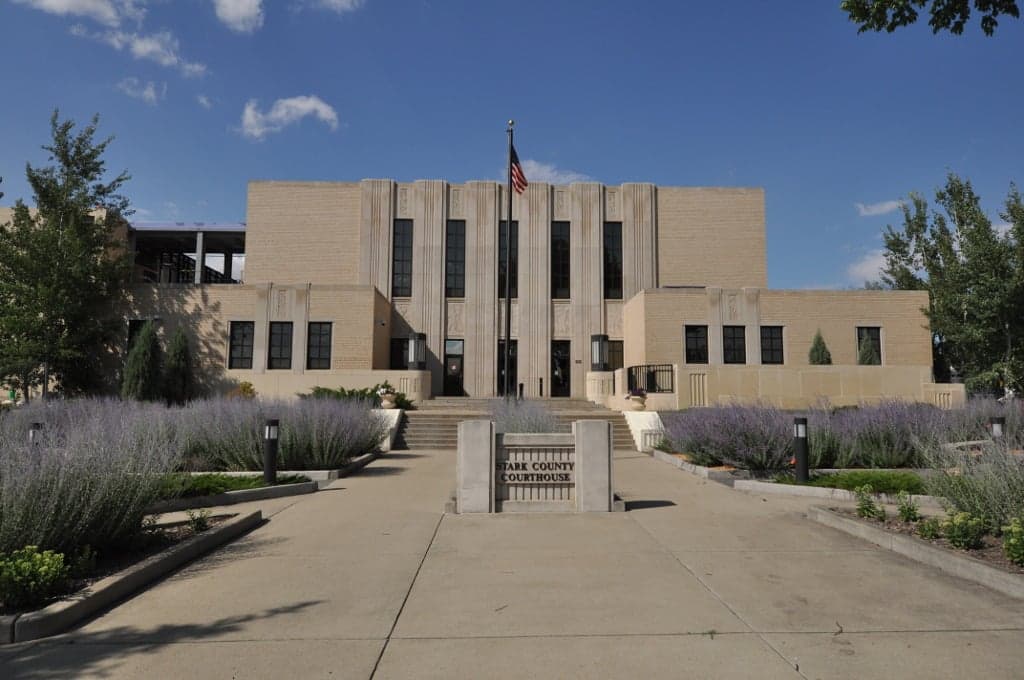
Photo: Wikipedia
Personal Sovereignty in Stark County
Viable for self-reliance. Generally workable, though some barriers may limit total independence.
What does Personal Sovereignty tell us?
Personal Sovereignty measures your capacity for self-reliance and independence with minimal government friction. Higher scores mean fewer barriers between you and the way you want to live... but it assumes you have the space you need and good neighbors.
What does this tell us?
Personal Sovereignty measures your capacity for self-reliance and independence with minimal government friction. Higher scores mean fewer barriers between you and the way you want to live... but it assumes you have the space you need and good neighbors.
State Policy
Energy independence: Net exporter (500% of energy produced in-state)
Personal Liberty
Homesteading

Personal Liberty Analysis
Stark County, North Dakota, anchored by Dickinson, offers one of the lightest-touch governance environments in the Upper Midwest — a place where the regulatory floor is low, the tax ceiling is lower, and the prevailing ethos leans heavily on individual initiative. For a single person or family weighing personal sovereignty, the county delivers a distinctly hands-off posture compared to urban centers like Fargo or Bismarck, with local governments in Dickinson, Richardton, and Belfield generally deferring to state preemption on firearms, property use, and taxation. The trade-off is a colder, more remote setting, but the autonomy dividend is real and measurable.
Tax burden and regulatory posture: how Stark County compares to the rest of North Dakota
North Dakota’s tax structure is among the most favorable in the nation for those who value keeping their own earnings, and Stark County sits squarely within that framework. There is no state income tax — a fact that immediately separates the state from neighbors like Minnesota and Montana — and the state sales tax is 5%, with Dickinson adding a local option that brings the combined rate to roughly 7.5%. Property taxes in Stark County are moderate by national standards, with the effective rate hovering around 1.1% of assessed value, though the county’s oil-and-gas mineral wealth has historically subsidized local services, keeping mill levies lower than they might otherwise be.
Regulatory posture at the county level is pragmatic rather than prescriptive. Stark County’s zoning authority is limited primarily to unincorporated areas, and even there, enforcement is complaint-driven rather than proactive. Dickinson, the county seat and only real city of size, maintains a conventional municipal code, but its planning department processes permits quickly — most residential building permits clear in under two weeks. The surrounding townships and small communities like South Heart and Gladstone operate with minimal formal regulation; in many cases, a landowner can erect a shop, fence a pasture, or park an RV without any permit at all. The state’s “Right to Farm” statute further shields agricultural operations from nuisance lawsuits, a meaningful protection for anyone raising livestock or running a small acreage.
Self-defense and gun law specifics: what the Second Amendment looks like in Stark County
North Dakota is a constitutional carry state, and Stark County law enforcement — including the Dickinson Police Department and the Stark County Sheriff’s Office — operates with a clear, consistent interpretation of that law. Permitless carry is legal for anyone 18 or older who can legally possess a firearm, both openly and concealed, with no training requirement and no purchase permit for rifles, shotguns, or handguns from private sellers. The state does not maintain a firearm registry, and there are no magazine capacity limits, no assault weapon bans, and no waiting periods beyond the federal background check for dealer sales.
What sets Stark County apart from more restrictive pockets of the state is the cultural and administrative reality on the ground. The county sheriff’s office has publicly stated it will not enforce federal firearm regulations it deems unconstitutional, a posture shared by many rural North Dakota sheriffs. Stand-your-ground protections are codified in state law, meaning there is no duty to retreat in any place where a person is lawfully present. Use-of-force training is widely available through local ranges like the Dickinson Shooting Society, and the county’s gun-friendly culture extends to businesses — many Dickinson restaurants and retail stores post no signage restricting carry. For a family relocating with firearms, Stark County presents one of the most friction-free environments in the nation.
Self-reliance and homesteading viability: lot sizes, zoning, and off-grid feasibility
Homesteading in Stark County is not a lifestyle choice so much as a default condition of the landscape. The county spans roughly 1,300 square miles with a population density of about 22 people per square mile, leaving vast stretches of open prairie where self-sufficiency is the only option. Unincorporated land outside Dickinson’s city limits carries no minimum lot size for agricultural use, and a 5-acre parcel can be purchased for $15,000 to $30,000 depending on proximity to water and road access. The communities of Taylor and Lefor, both tiny and unincorporated, offer the most permissive environments — no zoning, no building codes, and no inspection requirements for owner-built dwellings.
Off-grid feasibility is genuinely high, with caveats. The county’s average annual wind speed of 12-14 mph makes small-scale wind generation practical, and solar insolation, while not Arizona-level, is sufficient for year-round battery-backed systems. Water is the limiting factor; groundwater in the area can be high in minerals, and drilling a well typically runs $15,000 to $25,000. Septic systems require a county permit, but the standards are basic — a percolation test and a licensed installer — and composting toilets are not prohibited. Dickinson’s city limits impose more conventional requirements, including building permits and inspections, but even there, the code is less onerous than in larger North Dakota cities. For those willing to haul water or invest in a well, off-grid living in Stark County is legal, practical, and largely unbothered by local government.
Personal liberties: parental rights, medical autonomy, speech, and property
North Dakota’s legal framework in Stark County tilts decisively toward individual discretion in family and medical matters. Parental rights are explicitly protected under state law, with a statutory presumption that parents have the primary authority to direct their children’s education, healthcare, and religious upbringing. The state does not mandate any specific vaccines for school attendance beyond standard childhood immunizations, and religious and philosophical exemptions are available. Medical autonomy is similarly broad: North Dakota does not require a prescription for most over-the-counter medications, and the state’s scope-of-practice laws allow naturopathic and direct-primary-care arrangements without the gatekeeping common in coastal states.
Free speech protections are robust, with no state-level hate speech laws and a public forum culture that tolerates a wide range of political expression. Property rights are arguably the strongest pillar of personal sovereignty in the county. North Dakota’s eminent domain laws are among the most restrictive in the nation, requiring a demonstrated public use and full market compensation, and Stark County has seen no controversial takings in recent memory. The state’s trespass laws are strict, requiring explicit permission for entry onto posted land, which gives landowners a strong hand in controlling access. Dickinson’s city government is small and accessible — city commission meetings are open, and citizens regularly speak on agenda items without the procedural hurdles common in larger municipalities.
Relative to the rest of the country, Stark County ranks in the top tier for personal sovereignty. The combination of no income tax, constitutional carry, permissive land-use rules, and strong parental and property rights places it alongside rural counties in Texas, Idaho, and Wyoming as a destination for those who prioritize autonomy. It is not a libertarian utopia — the state still collects sales tax, the county enforces basic septic and building standards, and the climate demands real self-reliance — but for a single individual or family seeking a place where the government is a minor presence rather than a daily factor, Stark County delivers a level of personal freedom that is increasingly rare in the contiguous United States.

* Values derived from national, state, county, city and local statistics and may differ in a specific area. Last updated: 2026-08-04T11:12:31.000Z
Narrative content on this page is AI-generated and may contain mistakes. Verify any details that matter before acting on them.
ReloMaps may earn a commission from affiliate links at no extra cost to you.

