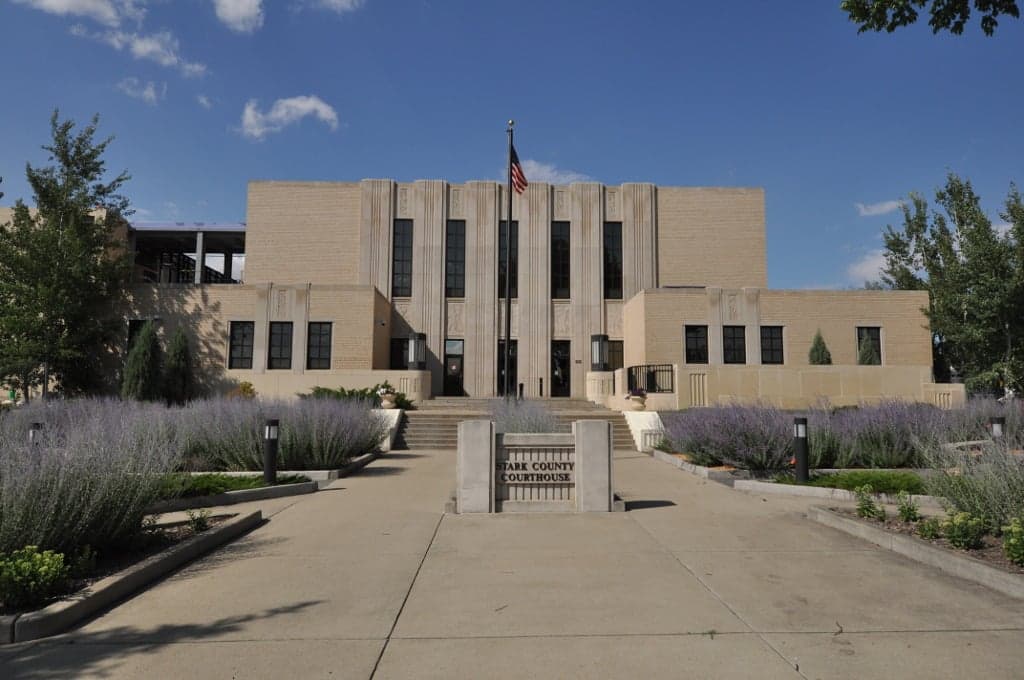
Photo: Wikipedia
Political ClimatePolitical Climate in Stark County
Showing state-level results — no local-only data available.
Local Political AnalysisPolitical Analysis of Stark County
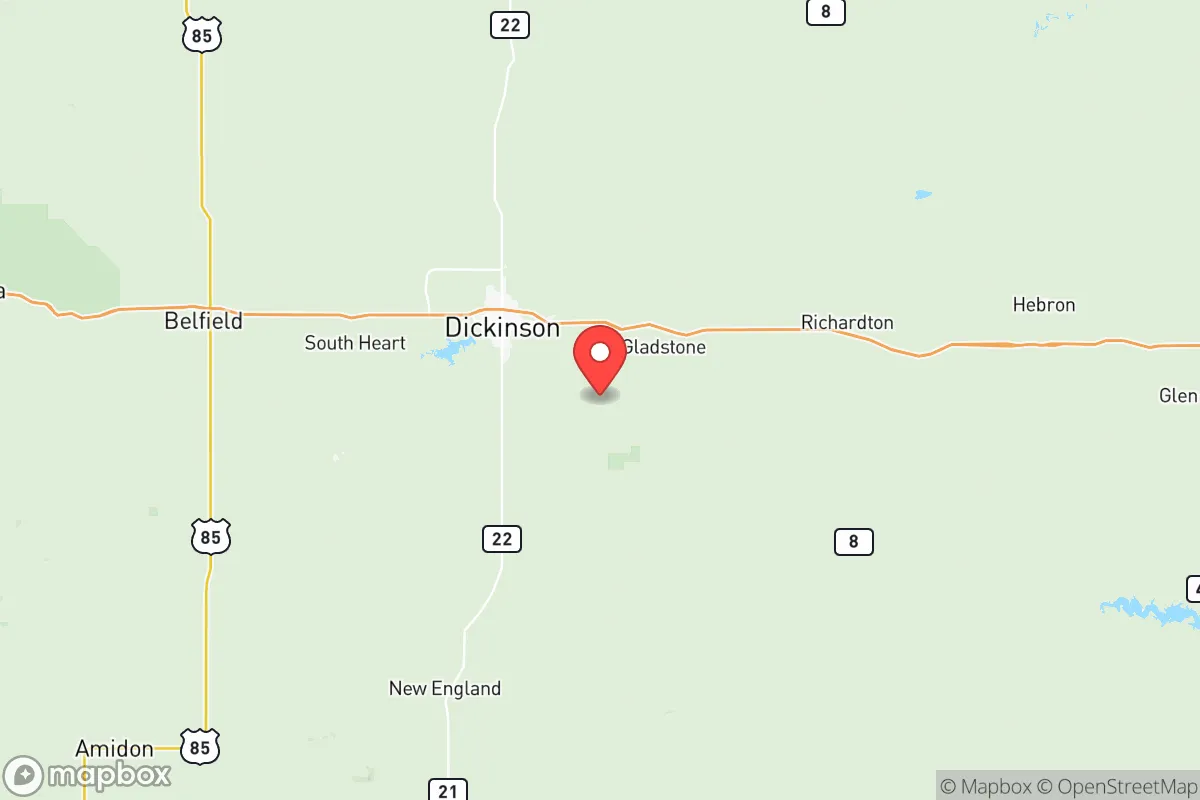
Stark County, North Dakota, is a deeply conservative stronghold, with a Cook Partisan Voting Index of R+18, making it one of the most reliably Republican counties in the state. The county has voted for the GOP presidential candidate by margins exceeding 40 points in recent elections, a trend that has only solidified since the 2010s. While the county seat, Dickinson, is the economic and political hub, the surrounding towns like Belfield, South Heart, and Richardton all lean heavily red, with no significant blue precincts to speak of. The only slight variation is in Dickinson's core neighborhoods near the university, where a handful of precincts might dip to a 60-40 split, but even those are solidly Republican.
How it compares
Stark County's R+18 rating places it well to the right of North Dakota as a whole, which is itself a reliably red state. While the state's Cook PVI is not officially calculated, North Dakota has voted for the Republican presidential candidate by an average of 36 points since 2000, meaning Stark County is roughly 10-15 points more conservative than the state average. This is a stark contrast to the state's few blue-leaning areas, like the college towns of Grand Forks and Fargo, where precincts can swing 55-45 Democratic. In Stark County, you won't find that kind of split—even the most moderate precincts here are still comfortably Republican. The county's politics are more in line with the state's rural western oil patch, where energy policy and property rights dominate the conversation, rather than the more moderate, agriculture-focused eastern counties.
What this means for residents
For conservative residents, Stark County is a comfortable place where their views on energy development, gun rights, and limited government are the mainstream. The local Republican Party is active, and candidates rarely face serious primary challenges from the left. For liberal residents, the reality is more isolating. There is no organized Democratic presence in the county, and progressive candidates often struggle to get on the ballot. Socially, it can be difficult to find like-minded neighbors, especially in smaller towns like Belfield or Richardton, where political discussions are often assumed to be conservative. However, the county's strong economy, driven by the Bakken oil fields, means that policy debates here are less about ideology and more about practical outcomes—like how to manage infrastructure growth or housing costs. Both sides can agree that the county's boom-and-bust cycle is the real political issue, even if they disagree on solutions.
Culturally, Stark County is distinct from the rest of North Dakota in its embrace of the oil industry. While the eastern part of the state is more tied to agriculture and the state's university system, Stark County's identity is wrapped up in energy. This means local politics are heavily influenced by the oil and gas sector, with a strong pro-business, anti-regulation bent. The county's residents are also more transient than the state average, with many workers moving in from out of state for oil jobs, which has created a more diverse—but still conservative—population. The county's strong Catholic and Lutheran heritage also shapes its social conservatism, particularly on issues like abortion and religious freedom. For anyone moving here, the key takeaway is that Stark County is not just another red dot on the map—it's a place where the politics are as rugged and practical as the landscape itself.

State Political ClimatePolitical Climate in North Dakota
State Political AnalysisPolitical Environment in the State
North Dakota has been a reliably Republican state for over a century, but the flavor of that conservatism has shifted dramatically in the last 20 years. The state hasn't voted for a Democratic presidential candidate since Lyndon Johnson in 1964, and Donald Trump carried it by 36 points in 2024. What was once a prairie populist brand of Republicanism—fiscally cautious, socially moderate, and heavily reliant on farm subsidies—has morphed into a solidly conservative, culturally aligned red state, driven by the oil boom in the Bakken and a steady influx of out-of-state workers who brought their politics with them.
Urban vs. rural divide
The political map of North Dakota isn't a simple city-versus-country split like you'd see in Texas or Colorado. The two largest metros, Fargo and Bismarck, are both Republican-leaning, but they vote differently. Fargo, home to North Dakota State University and a growing tech sector, is the state's most competitive area—Cass County went for Trump by only 11 points in 2024, a far cry from the statewide margin. The city's younger, college-educated workforce and its sizable Somali and Sudanese refugee communities make it the only place in the state where Democrats can realistically win legislative seats. Bismarck, the state capital, is more reliably red, anchored by state government workers and the energy industry lobby, but it's not the fire-breathing conservative hub you might expect—it's more Chamber of Commerce Republicanism.
The real conservative engine is the western half of the state. Williston, Watford City, and Dickinson have transformed from sleepy prairie towns into oil-patch boomtowns, and their politics reflect the Texas and Oklahoma transplants who moved there for pipeline and drilling jobs. These counties routinely vote 80-85% Republican. Meanwhile, the northeastern corner around Grand Forks is a political anomaly—home to the University of North Dakota and a strong Air Force presence, it leans Republican but with a libertarian streak that occasionally backs moderate Democrats. The rural counties in the southeast, places like Wahpeton and Oakes, are deeply conservative but historically pragmatic, more concerned with farm policy and grain prices than culture war issues.
Policy environment
North Dakota's policy environment is defined by one word: oil. The state has no income tax on individuals, no corporate income tax, and a sales tax that hovers around 5% in most cities. The Legacy Fund, a constitutional oil-tax savings account established in 2010, has grown to over $10 billion, and the legislature has been debating how to spend the interest—recently approving property tax relief and infrastructure spending. The regulatory posture is aggressively pro-business, particularly for energy extraction, with the Department of Mineral Resources designed to fast-track permits rather than slow them down.
On social policy, the state has moved right in recent years. The 2023 legislative session passed a near-total abortion ban with exceptions only for rape, incest, and the life of the mother, and the state's trigger law went into effect immediately after Dobbs. Education policy has shifted toward school choice, with a 2023 bill creating a $10 million scholarship fund for private school tuition. Election laws are moderately restrictive—voter ID is required, same-day registration is not available, and mail-in voting is limited to absentee ballots with an excuse. The state has no ballot initiative process, which means policy changes flow entirely through the legislature, giving the Republican supermajority near-total control.
Recent policy direction
The last three legislative sessions have pointed in a clear direction: cultural conservatism layered on top of economic libertarianism. In 2023, the legislature passed a permitless carry law for firearms, eliminating the requirement for a concealed carry license. The same session saw a ban on gender-affirming care for minors, a law requiring schools to notify parents of any student's "gender identity" changes, and a prohibition on transgender athletes competing in women's sports. On the speech and privacy front, the state passed a law in 2021 requiring social media platforms to disclose their content moderation policies, and in 2023 it banned TikTok from state devices.
Property rights have been a flashpoint, particularly around the Summit Carbon Solutions pipeline project, which would capture CO2 from ethanol plants and pipe it to western North Dakota for underground storage. The legislature passed a law in 2023 allowing the company to use eminent domain for the pipeline's right-of-way, sparking fierce opposition from landowners in the eastern part of the state who feel their property rights are being trampled by corporate interests. On voting, the state has tightened absentee ballot rules and requires a social security number or driver's license for voter registration. Medical freedom took a hit with the abortion ban, but the state has not restricted access to ivermectin or other off-label COVID treatments, and it was one of the first states to ban vaccine mandates in 2021.
Civil unrest & political movements
North Dakota's most famous political flashpoint was the Standing Rock protests in 2016-2017, when thousands of activists camped near the Fort Yates area to oppose the Dakota Access Pipeline. The protests drew national attention, resulted in over 800 arrests, and left a lasting scar on the state's relationship with its Native American population. The state's response—heavy police presence, water cannons in freezing temperatures, and a controversial 2017 law criminalizing trespassing near critical infrastructure—was widely criticized nationally but largely supported locally.
Today, the political movements are quieter but persistent. The state has a small but active libertarian wing within the Republican Party, centered around Minot and the Air Force base there, that pushes back on social issues while supporting gun rights and tax cuts. On the left, the Democratic-NPL (Nonpartisan League) party is a shell of its former self—it once dominated state politics in the early 20th century with a populist agenda of state-owned banks and mills, but it now holds only a handful of legislative seats. Immigration politics are muted compared to border states, but the refugee resettlement program in Fargo has created tension, with some local Republicans calling for limits while employers in the meatpacking and agriculture industries push for more workers. There's no serious secession or nullification movement, but the state has passed resolutions asserting its sovereignty under the 10th Amendment, particularly regarding federal land management and environmental regulations.
Projection
Over the next 5-10 years, North Dakota's politics will likely stay deeply red, but the internal dynamics will shift. The oil boom has flattened out, and the state's population growth has slowed to near zero—young people are still leaving for Minneapolis, Denver, and Seattle. The in-migration that did happen was largely conservative-leaning, so the state isn't becoming more purple; it's becoming more uniformly Republican. The Legacy Fund will continue to grow, and the legislature will face increasing pressure to cut property taxes further, which could create a fiscal crunch if oil prices drop. The cultural conservatism will likely intensify as the rural population ages and the urban areas in Fargo and Grand Forks grow slightly more diverse. A new resident moving in now should expect a state where the political conversation is dominated by energy policy, property taxes, and rural issues, with culture war debates simmering beneath the surface but rarely boiling over.
For a new resident, the practical takeaway is straightforward: if you're conservative, you'll find a state where your values are reflected in law and where the political infrastructure is built to keep it that way. If you're liberal, you'll be in a small minority, but you won't face hostility in daily life—North Dakotans are famously polite and neighborly, and political disagreements rarely spill into personal relationships. The state's low taxes, strong economy, and safe communities are the real draws, and the politics are a predictable cost of admission. Just know that the legislature moves fast when it wants to, and the cultural conservatism is not just rhetoric—it's law.
* Values derived from national, state, county, city and local statistics and may differ in a specific area. Last updated: 2026-08-04T11:12:31.000Z
Narrative content on this page is AI-generated and may contain mistakes. Verify any details that matter before acting on them.
ReloMaps may earn a commission from affiliate links at no extra cost to you.

