Photo: Wikipedia
Personal Sovereignty in Norwalk, CT
Viable for self-reliance. Generally workable, though some barriers may limit total independence.
What does Personal Sovereignty tell us?
Personal Sovereignty measures your capacity for self-reliance and independence with minimal government friction. Higher scores mean fewer barriers between you and the way you want to live... but it assumes you have the space you need and good neighbors.
What does this tell us?
Personal Sovereignty measures your capacity for self-reliance and independence with minimal government friction. Higher scores mean fewer barriers between you and the way you want to live... but it assumes you have the space you need and good neighbors.
State Policy
Energy independence: Importer (5% of energy produced in-state)
Personal Liberty
Homesteading

Personal Liberty Analysis
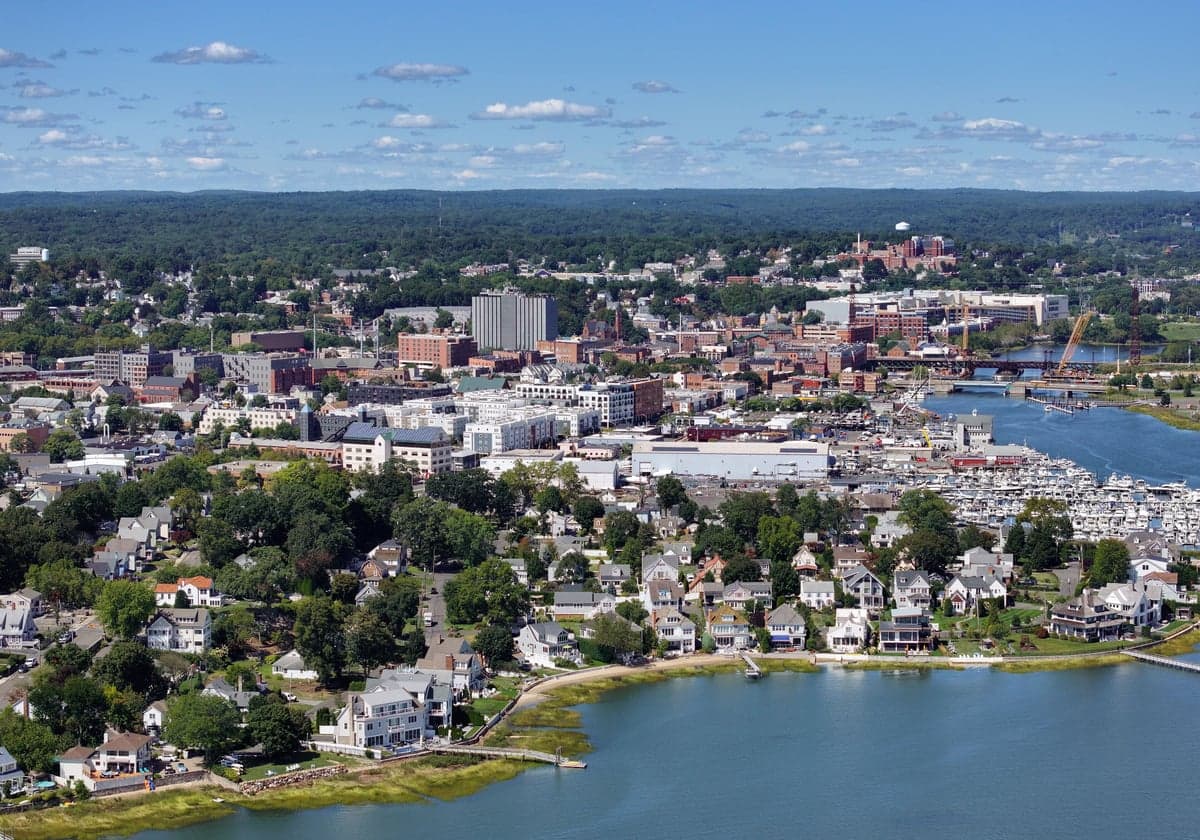
For the liberty-minded individual or family evaluating Norwalk, Connecticut, the personal sovereignty environment is a study in tension: the city offers a dense, resource-rich coastal setting with strong community networks, but it operates under one of the most interventionist state governments in the Northeast. Connecticut’s regulatory climate, tax structure, and firearm laws impose significant constraints on personal autonomy, making Norwalk a location where self-reliance requires careful navigation of state-level overreach rather than outright freedom. The practical reality is that while day-to-day life here can be comfortable, the legal framework is stacked against the survivalist or prepper mindset, demanding a strategic approach to preserving independence.
Tax burden and regulatory posture: what it costs to live free in Fairfield County
Connecticut’s tax burden is among the highest in the nation, and Norwalk residents feel it directly. The state levies a progressive income tax with rates climbing to 6.99%, and Norwalk adds a local property tax rate of roughly 2.4% of assessed value — meaning a median home valued at $450,000 carries an annual property tax bill near $10,800. For a family trying to build savings for self-sufficiency, this is a significant drain. Sales tax is 6.35%, and while groceries and prescription drugs are exempt, nearly every other purchase — including preparedness gear, tools, and building materials — is taxed. The regulatory posture is equally burdensome: Connecticut has some of the strictest environmental and building codes in the region, which can complicate any off-grid or homesteading project. Permitting for solar panels, rainwater collection, or even a backyard shed can involve multiple layers of municipal and state approval. For the prepper, this means that every step toward self-reliance is met with paperwork and fees, a deliberate friction that discourages independence.
Self-defense and gun law specifics: navigating a restrictive legal landscape
Connecticut’s firearm laws are among the most restrictive in the country, and Norwalk offers no local relief. The state requires a permit to purchase any handgun or long gun, and that permit demands an 8-hour safety course, fingerprinting, and a background check that can take weeks. Magazines are capped at 10 rounds, and a 2023 law banned the open carry of firearms entirely, even for permit holders. The state also maintains a registry of all firearm purchases, a database that many liberty-minded individuals view as a precursor to confiscation. Self-defense in the home is legally recognized under the "castle doctrine," but Connecticut does not have a "stand your ground" law — there is a duty to retreat in public spaces if safely possible. For the survivalist, this means that carrying a firearm for personal protection outside the home is heavily restricted, and any defensive use of force will be scrutinized by a state legal system that is not friendly to gun owners. The practical takeaway: if self-defense is a priority, Norwalk is a challenging environment, and many residents choose to keep a low profile while complying with the letter of the law.
Self-reliance and homesteading viability: lot sizes, zoning, and off-grid feasibility
Norwalk is a dense, suburban city with an average lot size of about 0.15 acres in its older neighborhoods, and newer developments rarely exceed a quarter-acre. This makes traditional homesteading — raising livestock, growing substantial food crops, or storing large quantities of supplies — nearly impossible within city limits. Zoning codes are strict: chickens are allowed only with a permit and limited to four hens (no roosters), and beekeeping requires registration. Rainwater collection is technically legal but must comply with state health codes that effectively discourage large-scale systems. Off-grid living — solar panels with battery storage, composting toilets, or well water — is heavily regulated; the city requires connection to municipal water and sewer for any habitable structure. For the prepper, this means that true self-reliance requires moving to the outskirts of Norwalk or into neighboring towns like Wilton or New Canaan, where lot sizes increase to 1-2 acres and zoning is more permissive. Within Norwalk itself, the focus must shift to urban preparedness: stockpiling supplies, building community networks, and securing a defensible home rather than pursuing land-based independence.
Personal liberties: parental rights, medical autonomy, speech, and property
Connecticut’s state government has a long history of asserting authority over personal decisions, and Norwalk residents are subject to that reach. Parental rights have been eroded in recent years: the state mandates comprehensive sex education in public schools, and parents cannot opt their children out of LGBTQ-inclusive curriculum. Medical autonomy is similarly constrained — Connecticut has some of the strictest vaccine mandates in the country, including for school attendance, and during the COVID-19 pandemic, the state imposed prolonged business closures and mask mandates that were among the longest in the nation. Free speech is protected under the First Amendment, but local ordinances in Norwalk restrict where and how protests can occur, and the state has a "bias crime" law that can be used to escalate charges for speech deemed hateful. Property rights are also limited: the state’s strict environmental regulations can restrict what homeowners do with their land, including tree removal, wetland alteration, and even certain landscaping changes. For the liberty-minded individual, these policies represent a steady encroachment on personal sovereignty, and many residents choose to engage in "quiet resistance" — complying publicly while maintaining private autonomy.
In the broader context of the Northeast, Norwalk offers a relatively high standard of living and strong community ties, but it is not a haven for those seeking maximum personal sovereignty. Compared to states like New Hampshire or even parts of upstate New York, Connecticut’s tax burden, gun laws, and regulatory environment are significantly more restrictive. For the survivalist or prepper who values autonomy above all else, Norwalk is a place to build wealth and connections while planning an eventual exit to a more liberty-friendly jurisdiction. For those who choose to stay, the strategy must be one of careful compliance, strategic stockpiling, and building a resilient local network — because the state will not grant you freedom; you have to carve it out yourself.

* Values derived from national, state, county, city and local statistics and may differ in a specific area. Last updated: 2026-04-30T03:22:21.000Z
Narrative content on this page is AI-generated and may contain mistakes. Verify any details that matter before acting on them.
ReloMaps may earn a commission from affiliate links at no extra cost to you.

