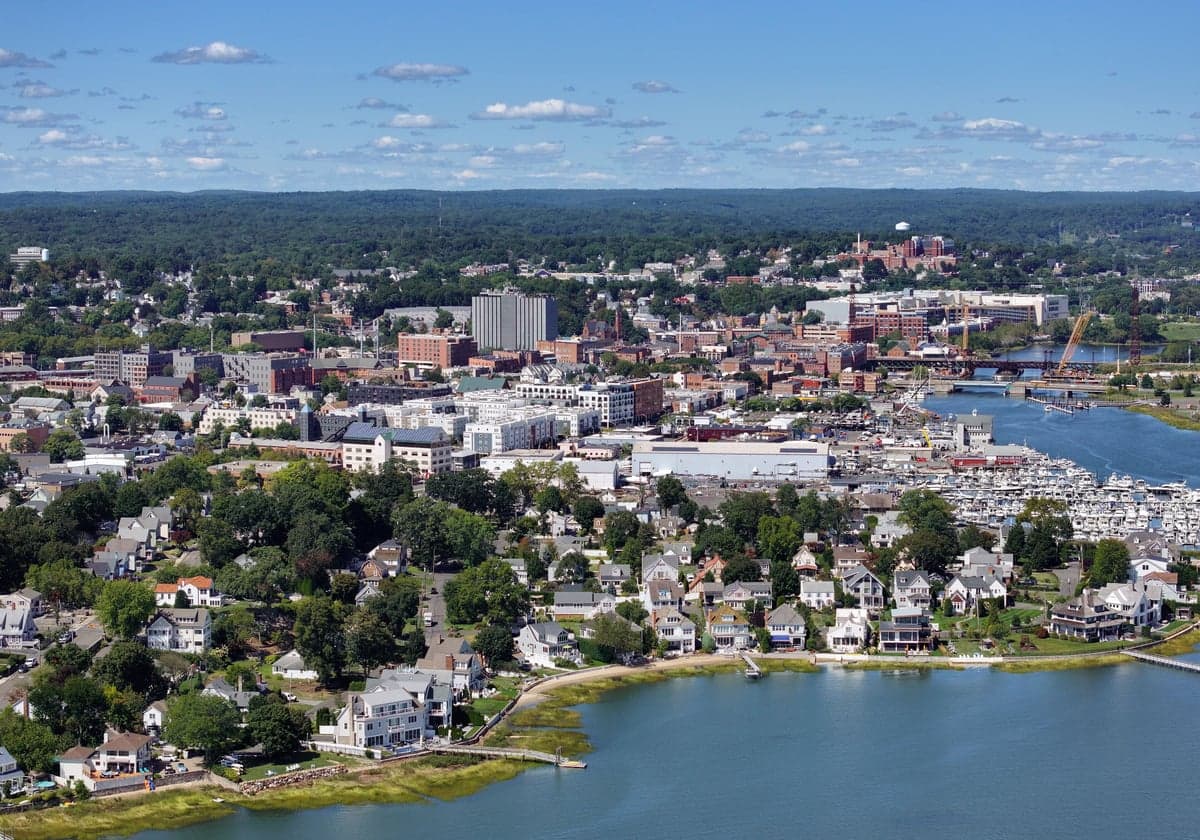
Photo: Wikipedia
Political ClimatePolitical Climate in Norwalk, CT
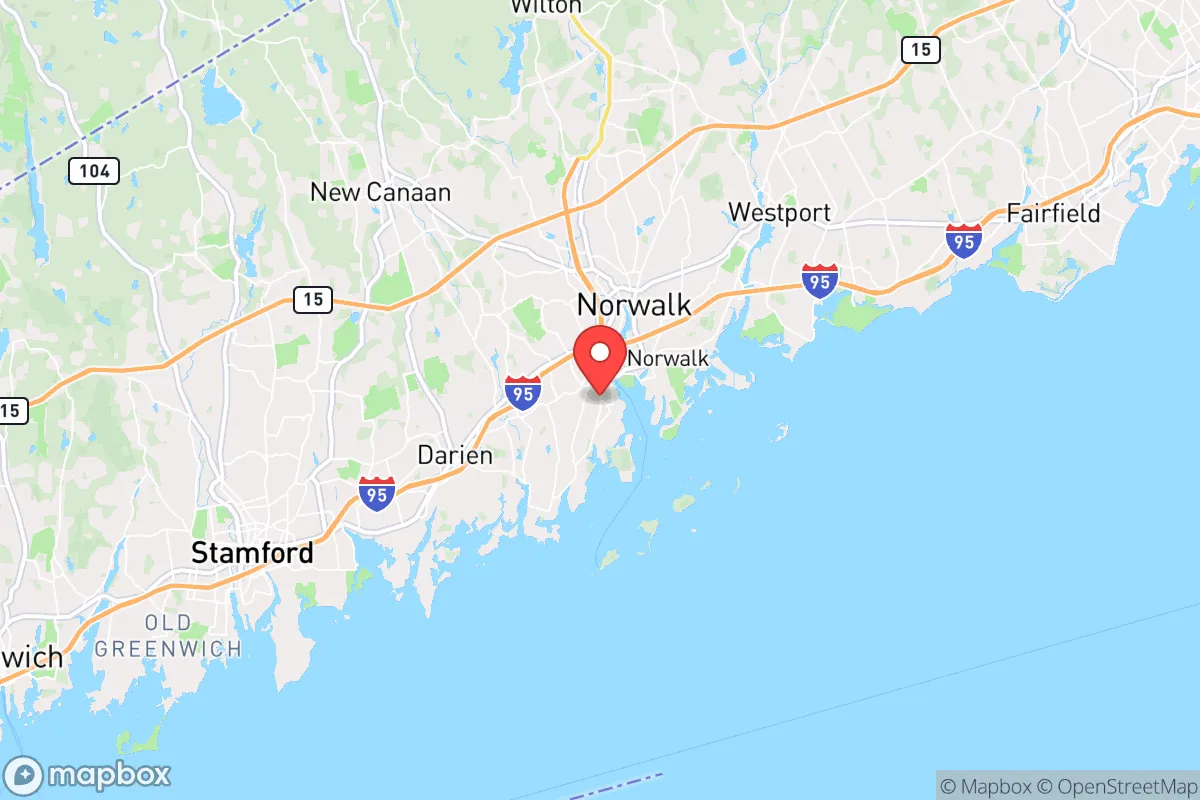
District shown is the primary district for this city’s centroid. Cities may span multiple districts.
Local Political AnalysisPolitical Analysis of Norwalk, CT
Norwalk, Connecticut, leans heavily Democratic, with a Cook PVI of D+13, meaning the city votes about 13 points more Democratic than the national average. That’s a pretty solid blue lock, and it’s been trending that way for a while now. If you’re looking at the political landscape here, you’re seeing a place that’s shifted noticeably leftward over the past decade, especially in local elections and school board races, where progressive candidates have been winning more seats. It’s not quite as deep blue as Bridgeport to the east, but it’s a far cry from the more balanced or even conservative-leaning towns just a few miles north, like Wilton or New Canaan.
How it compares
When you stack Norwalk up against its neighbors, the contrast is pretty stark. Head north into Wilton or Weston, and you’ll find towns that still vote reliably Republican in state and local races, with a strong independent streak. Even Darien and New Canaan, just across the line, have a much more conservative feel on taxes and property rights. Norwalk, by contrast, has embraced a more urban, progressive agenda—think higher density housing mandates, more public spending on social programs, and a city council that’s increasingly willing to raise taxes to fund it. The D+13 rating puts it in the same league as Stamford, but Stamford has a more business-friendly reputation. Norwalk’s politics feel more activist, with a focus on equity initiatives and climate goals that sometimes rub longtime residents the wrong way.
What this means for residents
For someone who values personal freedom and keeping government out of your wallet, Norwalk’s direction is a real concern. Property taxes have been climbing steadily, and the city has been aggressive about pushing through new regulations—like stricter rent control measures and mandates for affordable housing in every new development. That sounds good on paper, but it often means less choice for homeowners and more red tape for small businesses. The school system has also seen a shift, with more emphasis on social-emotional learning and diversity training, which some parents feel comes at the expense of core academics. If you’re a conservative or even a moderate, you might find yourself feeling like your voice is getting drowned out in town hall meetings, where progressive activists tend to dominate the conversation.
Looking ahead, the trend doesn’t seem to be reversing. The city’s population is getting younger and more diverse, and the political energy is squarely on the left. Long-term, you can expect more of the same: higher taxes, more government programs, and a continued push for policies that prioritize collective goals over individual rights. For now, if you’re thinking about moving here, just know that Norwalk is a place where the political climate is actively shaping daily life—and not always in ways that sit well with folks who just want to be left alone to live their lives. It’s a friendly city, but the politics can feel like a heavy hand on the scale.

State Political ClimatePolitical Climate in Connecticut
State Political AnalysisPolitical Environment in the State
Connecticut has long been a solidly blue state in presidential elections, with Democrats winning the state by double digits in every cycle since 1992, but the picture is more nuanced than the statewide numbers suggest. The state’s political center of gravity is dominated by the wealthy, highly educated suburbs of New York City in Fairfield County and the urban strongholds of Hartford, New Haven, and Bridgeport, which together produce massive Democratic margins. Over the last 10-20 years, the state has shifted left on cultural issues while maintaining a reputation for high taxes and heavy regulation, creating a growing tension between the coastal liberal establishment and the more conservative, working-class interior. For a conservative-leaning individual or family, the key question is whether the state’s pockets of traditional values and fiscal restraint can outweigh the dominant progressive machinery.
Urban vs. rural divide
The political map of Connecticut is a tale of three distinct regions. The southwestern corner, anchored by Stamford, Greenwich, and Norwalk, is a Democratic stronghold driven by commuters to New York City and a high concentration of white-collar professionals who lean left on social issues but are more moderate on fiscal matters. The central corridor, including Hartford, New Haven, and Waterbury, is heavily Democratic thanks to unionized government workers, university communities, and minority populations. In contrast, the eastern and northwestern parts of the state—places like Litchfield County, Tolland County, and the Quiet Corner around Windham—are far more conservative, often voting Republican by 10-20 points in local races. The 2020 presidential election saw Fairfield County deliver a 35-point margin for Biden, while Windham County went for Trump by 5 points. The divide is not just rural vs. urban; it’s also about economic dependence on the state’s bloated public sector versus private-sector independence. Towns like Simsbury, Avon, and Glastonbury in the Hartford suburbs are purple, often swinging between moderate Republicans and Democrats, but they are increasingly trending left as young professionals move in.
Policy environment
Connecticut’s policy environment is a cautionary tale for conservatives. The state has one of the highest combined state and local tax burdens in the nation, with a progressive income tax that tops out at 6.99% and property taxes that are among the highest per capita in the U.S. The regulatory posture is heavy: the state has a strict gun control regime, including a ban on many semi-automatic rifles and a 10-round magazine limit, passed after the Sandy Hook tragedy. Education policy is dominated by powerful teachers’ unions, with per-pupil spending among the highest in the country but mediocre outcomes in urban districts like Bridgeport and New Haven. Healthcare is heavily regulated, with a state-run exchange and mandates that drive up premiums. Election laws are among the most liberal in the nation, with no-excuse absentee voting, early voting, and automatic voter registration, which critics argue erodes ballot integrity. The state also has a sanctuary policy that limits cooperation with federal immigration enforcement, a point of contention in towns like Danbury where immigration enforcement has been a flashpoint.
Trajectory & freedom
Over the last decade, Connecticut has become less free by nearly any measure. The 2023 passage of Public Act 23-53 expanded gun restrictions further, banning open carry and raising the purchasing age for long guns to 21, a direct infringement on Second Amendment rights. Parental rights have been eroded by the state’s adoption of a “safe harbor” law that allows minors to access gender-affirming care without parental consent, a move that has sparked outrage in conservative towns like Litchfield and Woodbury. Medical autonomy took a hit with the state’s strict COVID-19 vaccine mandates for healthcare workers and school employees, which were among the most aggressive in the Northeast. Property rights are constrained by a powerful state-level land use appeals process that can override local zoning decisions, a tool used to force higher-density housing in suburban towns. On the tax front, the state has flirted with a wealth tax and continues to resist meaningful spending restraint, with the state budget growing by over 20% in the last five years. The only bright spot for conservatives was the 2023 repeal of the state’s death penalty, which was already defunct, and a modest income tax cut for the middle class that was largely offset by fee increases.
Civil unrest & political movements
Connecticut has seen its share of political flashpoints. The 2020 Black Lives Matter protests in New Haven and Hartford were large but largely peaceful, though they led to calls to defund the police that were rejected by most local governments. The state’s sanctuary policies have fueled tension in Danbury, where a 2019 ICE raid led to protests and counter-protests, and in New Britain, where a growing immigrant population has shifted the city’s politics left. On the right, the “We the People” movement and local Republican town committees have become more active, particularly in Litchfield County, where they have organized against school curriculum changes and vaccine mandates. Election integrity remains a hot-button issue: the 2020 election saw a surge in absentee ballots, and while no widespread fraud was proven, the lack of voter ID requirements and the use of drop boxes have left many conservatives skeptical. The state’s Office of the Attorney General, led by Democrat William Tong, has been aggressive in suing the federal government over immigration and environmental policies, a move that galvanizes both supporters and detractors.
Projection
Looking ahead 5-10 years, Connecticut’s trajectory is concerning for conservatives. Demographic trends are working against them: the state’s population is aging and shrinking, with the biggest losses in the more conservative eastern and northwestern counties, while the liberal southwestern corner continues to grow. In-migration from New York City is accelerating, bringing more progressive voters to Fairfield County and the Hartford suburbs. The state’s fiscal situation is precarious, with massive unfunded pension liabilities that will likely force either tax increases or service cuts, both of which will accelerate the exodus of middle-class families. The Republican Party is increasingly marginalized, holding no statewide offices and only a minority in the legislature, and internal divisions between moderates and Trump-aligned conservatives have weakened its ability to mount a credible challenge. The most likely scenario is that Connecticut becomes even more solidly blue, with policies that further restrict gun rights, expand government healthcare, and increase taxes on the wealthy. For a conservative moving in now, the expectation should be that the state will continue to drift left, and the best you can hope for is to find a local community—like Litchfield, Woodbury, or the rural towns of Tolland County—where you can live relatively undisturbed by state-level overreach.
For a new resident, the bottom line is this: Connecticut offers beautiful scenery, good schools in certain suburbs, and proximity to New York and Boston, but it comes at a steep price in terms of taxes, regulation, and cultural alignment. If you value low taxes, gun rights, parental control over education, and a limited government, this state will be a constant source of frustration. Your best bet is to target towns like Litchfield, Woodbury, or the rural corners of Tolland and Windham counties, where local politics are more conservative and you can find a like-minded community. But be prepared for the state government to continue pushing policies that feel increasingly out of step with your values, and factor that into your long-term plans. Connecticut is not a state that is trending toward freedom—it’s a state where you’ll need to fight to preserve what little you have left.
* Values derived from national, state, county, city and local statistics and may differ in a specific area. Last updated: 2026-04-30T03:22:21.000Z
Narrative content on this page is AI-generated and may contain mistakes. Verify any details that matter before acting on them.
ReloMaps may earn a commission from affiliate links at no extra cost to you.

