Photo: Wikipedia
Political ClimatePolitical Climate in Ocean View, DE
District shown is the primary district for this city’s centroid. Cities may span multiple districts.
Inherited from parent state — no local data available.
Local Political AnalysisPolitical Analysis of Ocean View, DE
Ocean View, Delaware, has a Cook PVI of D+8, meaning it leans significantly more Democratic than the national average, but that number doesn't tell the whole story for a longtime resident. The political climate here has shifted noticeably over the past decade, moving from a quiet, mostly conservative-leaning beach town into a place where progressive policies are increasingly taking hold, especially in local governance and zoning decisions. If you've been here since the early 2000s, you've watched the old guard of fiscal conservatives and property-rights advocates slowly get outnumbered by newcomers from the Mid-Atlantic corridor who bring a different set of priorities.
How it compares
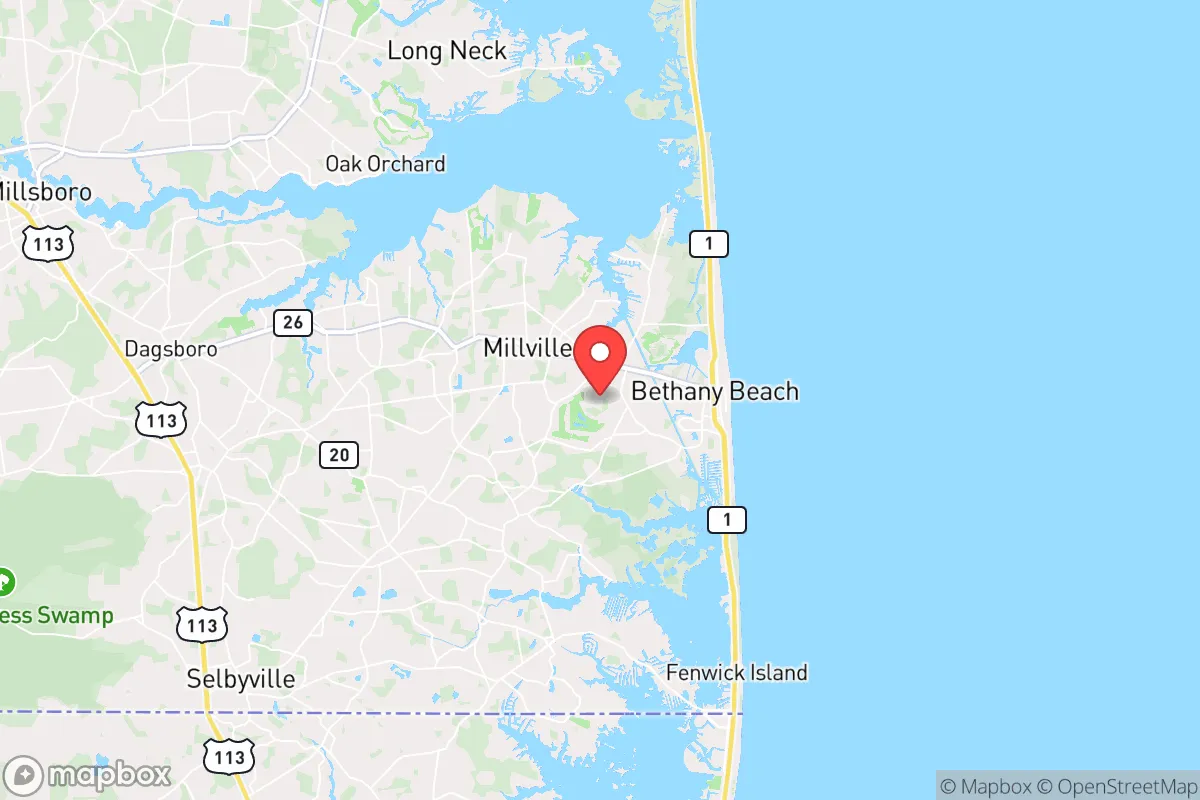
To understand Ocean View's politics, you have to look at the surrounding area. Drive ten miles west to Millsboro or Georgetown, and you're in solidly red territory—those towns vote Republican by wide margins and have a much stronger "leave us alone" attitude about development and taxes. Head north to Bethany Beach or Rehoboth Beach, and you'll find even bluer politics, with more aggressive environmental regulations and a heavier hand on short-term rentals. Ocean View sits in the middle, but the D+8 rating reflects that it's now closer to the beach towns than the inland farming communities. The contrast is stark: in Sussex County as a whole, the rural precincts still vote red, but Ocean View's precincts have flipped blue in the last two cycles, driven by retirees and remote workers who want more government services and stricter land-use rules.
What this means for residents
For someone who values personal freedoms and limited government, the trend here is concerning. The most visible example is the increasing regulation of property rights—new ordinances around rental caps, noise complaints, and building setbacks have been pushed through by a council that's less friendly to individual homeowners. You used to be able to do what you wanted with your lot, within reason, but now there's a growing appetite for "community standards" that feel like government overreach. The tax burden has also crept up, with the town's budget growing faster than the population, funding things like bike lanes and public art that many longtime residents see as nice-to-haves, not necessities. If you're a conservative, you'll find yourself voting against most local ballot measures just to keep the status quo from eroding further.
What daily life is like for families
On the ground, the political shift hasn't ruined daily life—yet. The schools are still decent, the beaches are clean, and most neighbors keep to themselves. But you'll notice the cultural change at town hall meetings, where the conversation has moved from "how do we keep taxes low?" to "how do we make Ocean View more inclusive and sustainable?" That language rubs a lot of folks the wrong way. The local Republican club is still active, but its influence is waning, and candidates who run on a platform of cutting red tape and protecting property rights have a harder time winning seats. In the long term, if the trend continues, expect more zoning restrictions, higher fees, and a general drift toward the kind of progressive governance that's already common in Rehoboth. For now, it's still a nice place to live—but you have to keep an eye on the ballot box.

State Political ClimatePolitical Climate in Delaware
State Political AnalysisPolitical Environment in the State
Delaware has long been a blue state in presidential elections, voting for Democrats by double digits since 2008, but its political climate is far more nuanced than the statewide totals suggest. The state is dominated by the heavily populated, progressive-leaning New Castle County, which includes Wilmington and its suburbs, while the more rural and conservative Kent and Sussex counties to the south have been steadily gaining population and political influence. Over the past 20 years, the overall partisan lean has shifted leftward due to in-migration from the Northeast and a growing suburban professional class, but the southern counties have become a reliable red stronghold, creating a sharp urban-rural divide that defines Delaware politics today.
Urban vs. rural divide
The political map of Delaware is essentially a tale of three counties. New Castle County, home to over 55% of the state's population, is the engine of Democratic power. Wilmington, the largest city, is a deep-blue urban core, while its affluent suburbs like Greenville and Hockessin lean left due to highly educated, white-collar professionals. In contrast, Kent County, anchored by Dover, the state capital, is a political battleground—Dover itself is moderately Democratic, but the surrounding farmland and small towns like Smyrna and Milford are reliably conservative. Sussex County, the southernmost and fastest-growing region, is the GOP's stronghold. Towns like Georgetown, Seaford, and Laurel vote heavily Republican, driven by agricultural communities, retirees, and a growing population of conservative-leaning transplants from Maryland and Pennsylvania. The coastal resort areas like Rehoboth Beach and Lewes are more moderate, with a mix of retirees and LGBTQ+ communities that lean Democratic, but they don't offset the deep-red inland precincts. The 2020 election saw Joe Biden win Delaware by 19 points, but Sussex County voted for Trump by 12 points, and Kent County was nearly even. This divide is only widening as New Castle County becomes denser and more progressive, while Sussex County's growth is fueled by people fleeing higher taxes and regulations elsewhere.
Policy environment
Delaware's policy environment is a mixed bag for conservatives. The state has no sales tax, which is a major plus, but its income tax rates are among the highest in the nation, with a top marginal rate of 6.6% on income over $60,000. Property taxes are relatively low, averaging around 0.6% of home value, but they vary widely by county. The regulatory posture is decidedly progressive: Delaware was one of the first states to enact a near-total ban on abortion after Roe v. Wade fell, and it has some of the strictest gun laws in the country, including a ban on "assault weapons" and high-capacity magazines passed in 2022. Education policy is dominated by the teachers' union, with school choice limited to a few charter schools in Wilmington and Newark. The state has also embraced mail-in voting and same-day registration, which conservatives view as eroding election integrity. On the plus side, Delaware has no inheritance tax and a relatively business-friendly corporate law structure—over 60% of Fortune 500 companies are incorporated here—but that benefits large corporations more than small businesses or individuals. The overall regulatory climate leans left, with a strong emphasis on environmental mandates and labor protections that can feel stifling to those accustomed to freer markets.
Trajectory & freedom
Delaware is becoming less free by any objective measure, especially for conservatives. The 2022 gun control package, which included a ban on "assault weapons" and a 10-round magazine limit, was a major blow to Second Amendment rights. In 2023, the state passed a law requiring a permit to purchase a handgun, effectively creating a de facto registry. On medical freedom, Delaware was aggressive in its COVID-19 response, with some of the longest-lasting mask mandates and vaccine passport requirements in the region. Parental rights have been eroded by the state's adoption of "comprehensive sex education" standards that include LGBTQ+ topics in elementary school, with no opt-out provision for parents. Property rights are under pressure from a growing push for rent control in New Castle County and a statewide land-use planning process that favors dense, transit-oriented development over suburban sprawl. The state's tax burden has not decreased; in fact, the 2023 budget included a 10% increase in spending, funded by higher-than-expected revenue from remote work and corporate taxes. The trajectory is clear: more regulation, higher taxes, and less personal autonomy, particularly for gun owners and parents who want to control their children's education.
Civil unrest & political movements
Delaware has seen relatively little civil unrest compared to larger states, but there have been notable flashpoints. In 2020, Wilmington experienced several nights of protests and looting following George Floyd's death, leading to a heavy National Guard presence. The state's sanctuary policies are limited—Delaware does not have a formal "sanctuary state" law, but New Castle County has a policy of not cooperating with ICE detainers, which has drawn criticism from conservatives. Election integrity has been a hot-button issue: in 2020, Delaware's use of universal mail-in ballots (expanded due to COVID) led to a lawsuit from the state GOP, and in 2024, the legislature made mail-in voting permanent, which many conservatives see as a recipe for fraud. Organized political movements are active but not dominant. The Delaware GOP is a small but vocal presence, with a strong grassroots base in Sussex County that holds regular rallies and candidate forums. On the left, progressive groups like the Delaware Working Families Party have pushed for rent control and a $15 minimum wage, which passed in 2022. Immigration politics are less charged here than in border states, but the issue of undocumented workers in the poultry industry—a major employer in Sussex County—has sparked tensions between growers and immigrant advocates. Overall, the political climate is less volatile than in neighboring Pennsylvania or Maryland, but the underlying divisions are real and growing.
Projection
Over the next 5-10 years, Delaware is likely to become more progressive, not less. The demographic trends are clear: New Castle County is growing denser and more diverse, with a steady influx of young professionals from the Northeast who vote Democratic. Sussex County is growing too, but its new residents are a mix of conservative retirees and moderate coastal dwellers, which may not be enough to flip the state. The state's reliance on corporate tax revenue from Delaware-incorporated companies makes it less sensitive to economic downturns, but it also insulates politicians from the need to cut spending or reduce taxes. Expect more gun control, more environmental regulations (including a potential ban on natural gas hookups in new construction), and continued expansion of mail-in voting. The one wild card is the state's aging population—Delaware has one of the oldest median ages in the country, and older voters tend to be more conservative on some issues, but they are also more likely to vote for incumbents regardless of party. For a conservative moving in now, the realistic expectation is that the state will continue to drift left, with the southern counties becoming an increasingly isolated red enclave. The best bet for like-minded individuals is to settle in Sussex County, particularly in towns like Millsboro or Dagsboro, where the local government is still conservative and the cost of living is lower.
For a new resident, the bottom line is this: Delaware offers low property taxes and no sales tax, but you'll pay for it with high income taxes and a growing regulatory burden that restricts your freedom on guns, education, and medical choices. If you're a conservative looking for a place where your values are respected, the southern part of the state is your best bet, but don't expect the state government to be on your side. The political climate is increasingly hostile to traditional conservative principles, and the trend is not your friend. Move here for the beaches and the low property taxes, but be prepared to fight for your rights at the ballot box and in the legislature.
* Values derived from national, state, county, city and local statistics and may differ in a specific area. Last updated: 2026-04-30T03:48:28.000Z
Narrative content on this page is AI-generated and may contain mistakes. Verify any details that matter before acting on them.
ReloMaps may earn a commission from affiliate links at no extra cost to you.

