Photo: Wikipedia
Demographics of Ogden, UT
Affluence Level in Ogden, UT
A middle-class area roughly in line with national averages across income, home values, education, and employment.
People of Ogden, UT
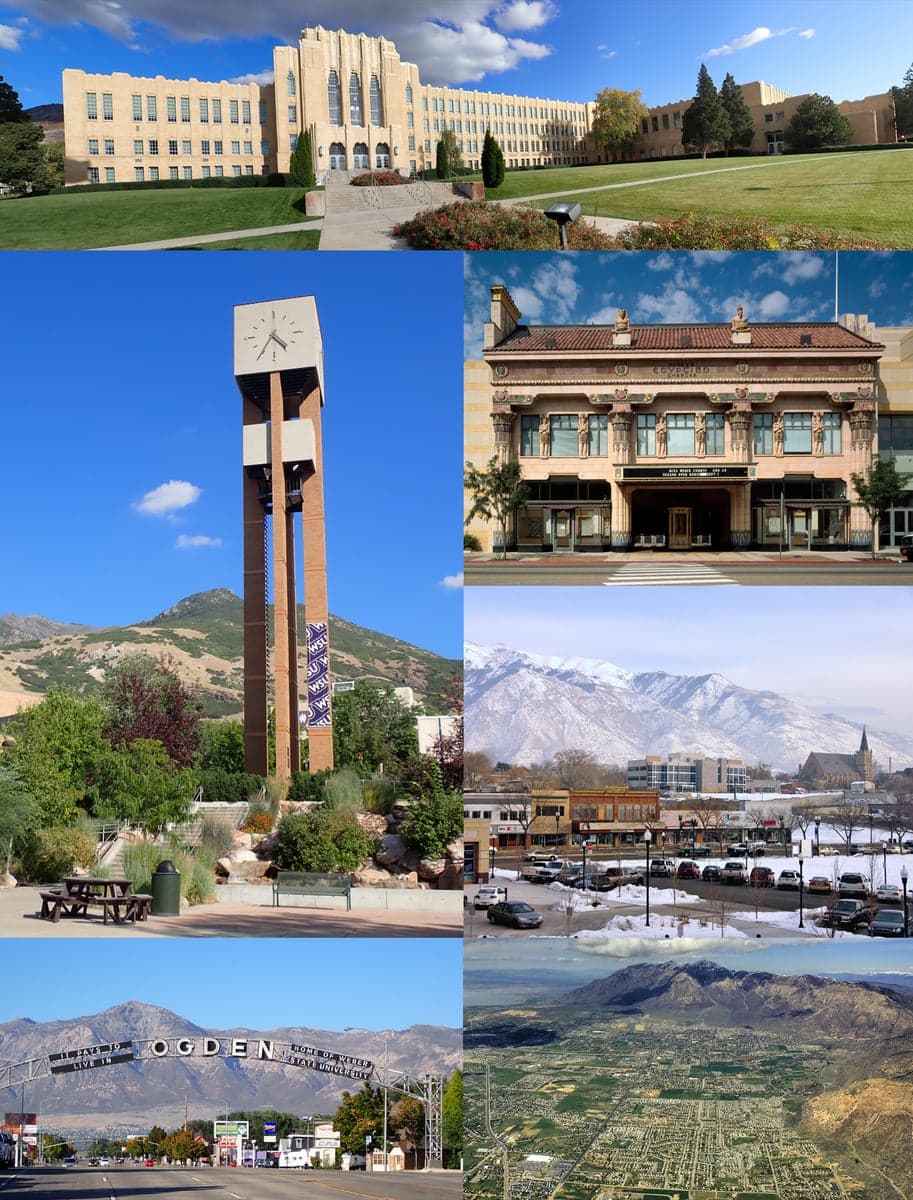
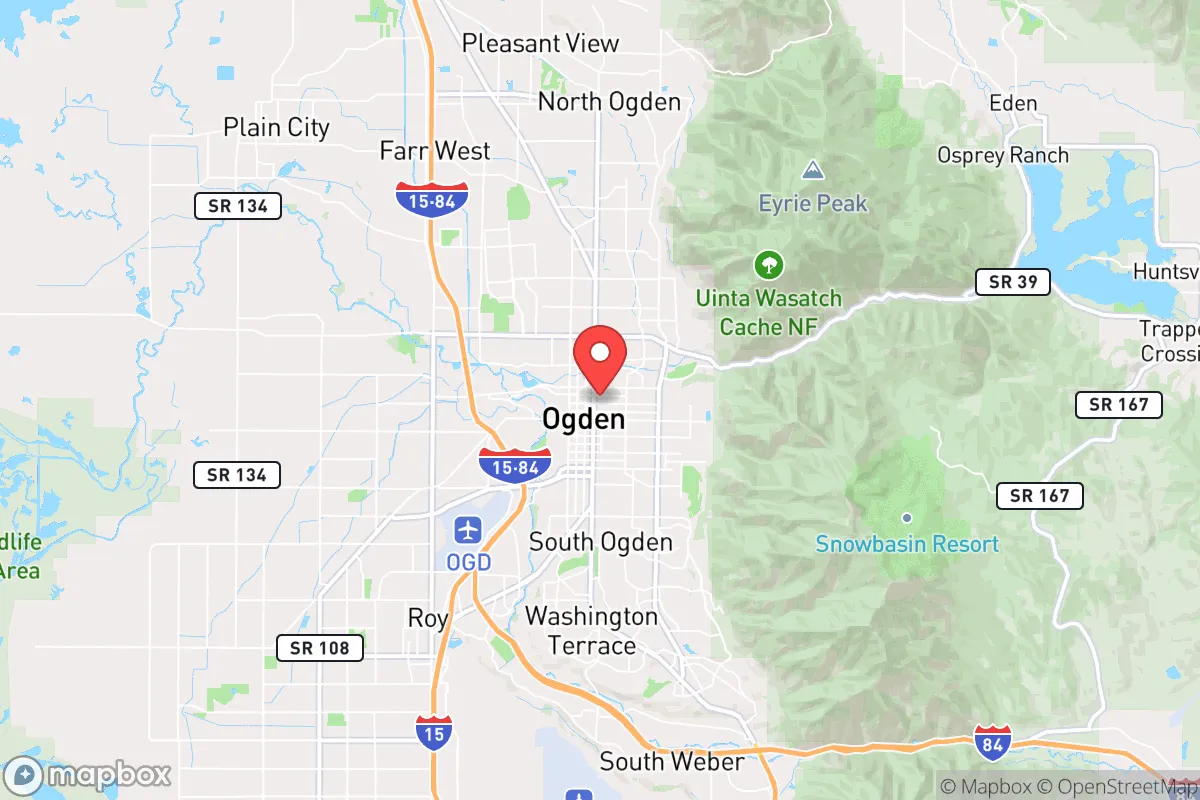
Ogden, Utah, is a city of roughly 87,000 residents that blends a historic Mormon pioneer foundation with a substantial and growing Hispanic community, creating a demographic character distinct from Utah’s more uniformly white suburbs. The city is denser and more ethnically diverse than the state average, with a white population of 61.6% and a Hispanic population of 30.5%, while the foreign-born share sits at a modest 5.7%. Ogden’s identity is shaped by its railroad and industrial past, its role as a regional hub for outdoor recreation, and a working-class resilience that sets it apart from the Wasatch Front’s more affluent enclaves. For a conservative-leaning newcomer, Ogden offers a place where traditional Western independence meets a growing, family-oriented Hispanic population that is reshaping the city’s neighborhoods and schools.
How the city was settled and grew
Ogden’s population history begins with Mormon pioneers sent by Brigham Young in the 1840s and 1850s to settle the Weber River valley. The original settlers were predominantly Anglo-American converts to the Church of Jesus Christ of Latter-day Saints, who established a farming community centered around what is now the Historic 25th Street corridor and the Downtown Ogden grid. The city’s character shifted dramatically with the arrival of the transcontinental railroad in 1869, which made Ogden a major rail hub. This brought a wave of non-Mormon laborers—Irish, Italian, Greek, and Chinese immigrants—who settled in working-class neighborhoods like East Central Ogden and the area around Washington Boulevard. The railroad also attracted a significant African American population during the early 20th century, many of whom worked as porters and mechanics, settling in the Jefferson Avenue district near the rail yards. By the mid-20th century, Ogden had a reputation as a “rough” railroad town, with a population that was more religiously and ethnically mixed than the rest of Utah.
Modern era (post-1965)
The 1965 Immigration and Nationality Act opened the door for a new wave of immigrants, and Ogden’s Hispanic population began to grow steadily. The primary driver was agricultural and industrial labor demand—Mexican and Central American migrants came to work in the region’s farms, meatpacking plants, and construction sectors. These families concentrated in West Ogden, a lower-income area west of the railroad tracks, and in the South Ogden neighborhoods near the Weber State University campus. By the 1990s, the Hispanic share of the population had risen to over 15%, and it has since doubled to 30.5%. The white population, meanwhile, has declined from roughly 80% in 1990 to 61.6% today, driven by both out-migration to newer suburbs like Pleasant View and South Ogden City, and by the aging of the original Mormon pioneer families. The East/Southeast Asian community remains small at 1.5%, concentrated in a few blocks near the Ogden Regional Medical Center, while the Black population (1.8%) is scattered but historically rooted in the Jefferson Avenue area. The Indian-subcontinent population is effectively zero, reflecting Ogden’s lack of a tech or medical-research sector that draws that group.
The future
Ogden’s population is heading toward a continued Hispanic majority, likely within the next 15–20 years, as the white population ages and younger Hispanic families have higher birth rates. The city is not homogenizing; rather, it is tribalizing into distinct enclaves. West Ogden and the area around 30th Street are becoming overwhelmingly Hispanic, while the eastern bench neighborhoods near Mount Ogden remain predominantly white and LDS. The foreign-born share (5.7%) is low compared to national averages, indicating that most Hispanic growth is now from U.S.-born children of immigrants, not new arrivals. This means the community is assimilating linguistically and culturally, with English fluency high among the second generation. The next decade will likely see Ogden become a majority-minority city, with a political shift toward more moderate or Democratic-leaning voting patterns, though the city’s conservative Mormon base will remain influential in local elections.
For someone moving to Ogden now, the city offers a rare mix in Utah: a place with genuine demographic diversity, a working-class ethos, and a growing Hispanic population that is family-centered and culturally conservative. The neighborhoods are becoming more defined by ethnicity, but the overall trajectory is toward a stable, bilingual community rather than a transient one. If you value a city with a distinct, non-suburban identity and are comfortable with a changing demographic landscape, Ogden is a solid bet for the next 20 years.

* Values derived from national, state, county, city and local statistics and may differ in a specific area. Last updated: 2026-04-21T09:14:02.000Z
Narrative content on this page is AI-generated and may contain mistakes. Verify any details that matter before acting on them.
ReloMaps may earn a commission from affiliate links at no extra cost to you.

