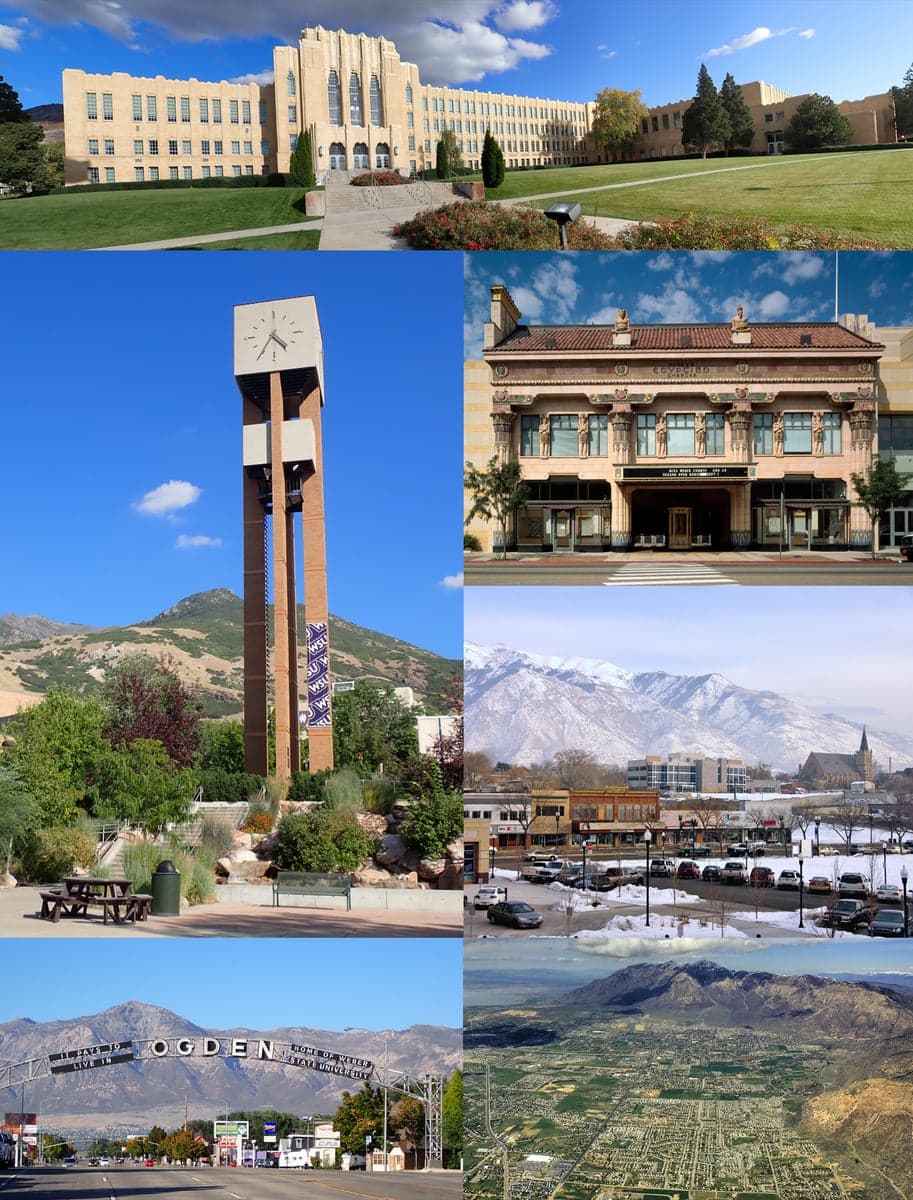
Photo: Wikipedia
Political ClimatePolitical Climate in Ogden, UT
District shown is the primary district for this city’s centroid. Cities may span multiple districts.
Local Political AnalysisPolitical Analysis of Ogden, UT
Ogden, Utah, sits in a reliably conservative corner of the country, with a Cook PVI of R+10, meaning the district votes about ten points more Republican than the national average. That’s not just a number—it reflects a community that has long valued personal responsibility, limited government, and the freedom to live life without a bunch of bureaucratic red tape. But if you’ve been around here as long as I have, you’ve seen the political winds start to shift, especially in the downtown core, where a younger, more transient crowd is pushing for policies that feel a lot more like the coastal cities folks moved here to escape.
How it compares
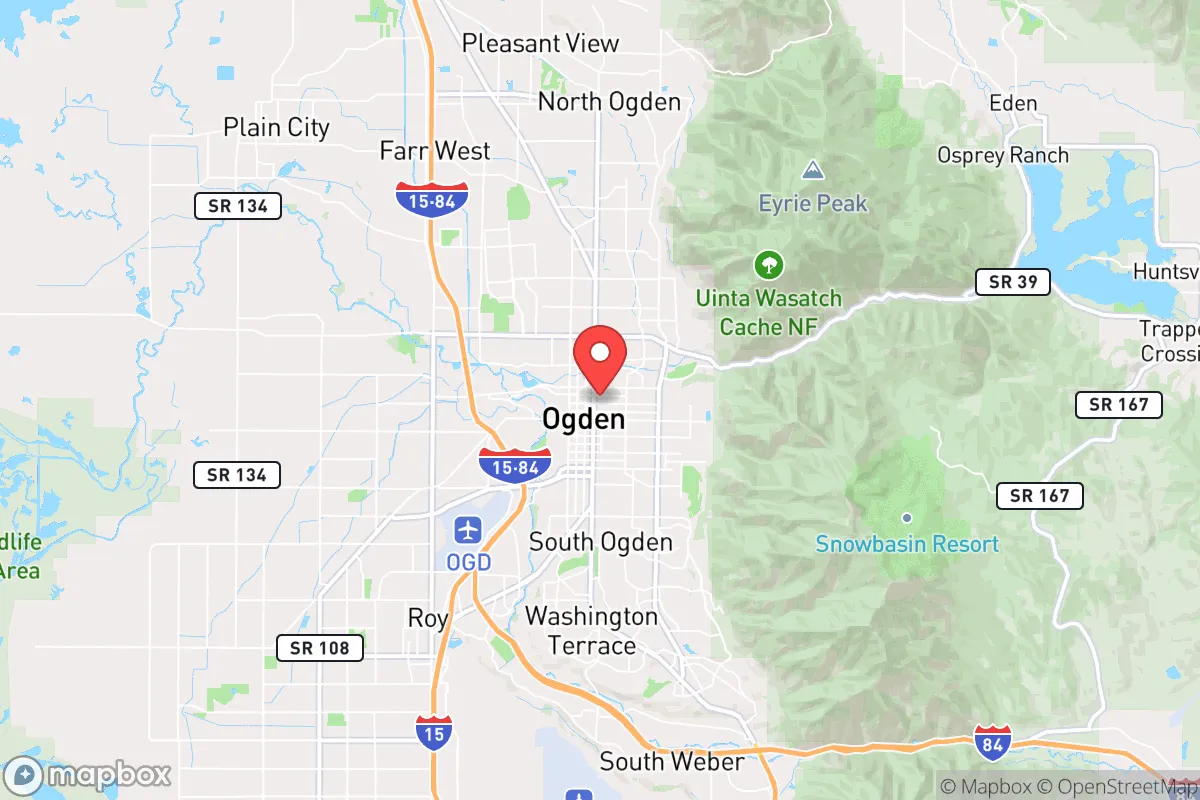
Drive twenty minutes south to Salt Lake City, and you’re in a whole different world—blue-leaning, with a city council that’s been cozying up to progressive pet projects like bike lane mandates and density zoning that tells property owners what they can and can’t do with their land. Head north to Logan or east to the more rural stretches of Morgan County, and you’ll find the old-school Utah conservatism that Ogden used to embody: low taxes, minimal interference, and a “live and let live” attitude. Ogden sits right in the middle, but the worry is that it’s sliding toward the Salt Lake model. The surrounding Weber County still votes solidly red, but the city itself has seen a creeping uptick in progressive candidates winning local seats, especially in the last two cycles. That’s a red flag for anyone who moved here to get away from government overreach.
What this means for residents
For the average Ogdenite, the political climate directly affects your wallet and your daily freedoms. Property taxes here are still reasonable compared to the Front Range or California, but there’s been chatter about new impact fees on new construction and tighter rental regulations that would give the city more control over what you can do with your own property. The Second Amendment is still respected—you won’t see the magazine bans or permit delays that plague other states—but there’s a vocal minority pushing for “sensitive places” restrictions that could chip away at that. On the plus side, the school board has held the line on curriculum transparency, and the county sheriff’s office has made it clear they won’t enforce federal overreach on things like land use or firearm registration. But you have to stay engaged. If you don’t show up to those city council meetings, the progressive activists will, and they’ll quietly rewrite the rules while you’re at work.
What makes Ogden distinct
One thing that sets Ogden apart from the rest of Utah is its blue-collar, independent streak. This isn’t a suburb of white-collar tech workers; it’s a former railroad and manufacturing town where people still value hard work and don’t appreciate being told how to live. That’s why you see a lot of pushback against things like mask mandates or business shutdowns—folks here remember the 2020 lockdowns and how they hurt small shops on Historic 25th Street. The cultural vibe is more libertarian than strictly conservative: people want lower taxes and fewer regulations, but they also want the freedom to brew their own beer, ride their dirt bikes on public land, and not have the government snooping into their personal lives. The long-term trajectory depends on whether the new arrivals—many from out of state—adopt that live-and-let-live ethos or try to import the zoning boards and permit requirements they left behind. So far, the old guard is holding, but it’s a fight worth keeping an eye on.

State Political ClimatePolitical Climate in Utah
State Political AnalysisPolitical Environment in the State
Utah has long been one of the most reliably conservative states in the nation, anchored by a dominant Republican supermajority in the legislature and a deeply ingrained culture of self-reliance and community. Over the past 20 years, the state has shifted from a solidly red, Mormon-majority stronghold to a more nuanced conservative landscape, with the Wasatch Front metros—particularly Salt Lake City and Provo—driving the bulk of the vote while rural counties remain deeply red. The last decade has seen a slight softening in the urban core, but the state’s overall partisan lean remains roughly +20 to +25 points Republican in presidential elections, a figure that has held steady even as other Western states have trended blue.
Urban vs. rural divide
The political map of Utah is a study in contrasts. The Wasatch Front, home to roughly 80% of the state’s population, is where the action is. Salt Lake County, the state’s most populous, has become a battleground of sorts: it voted for Hillary Clinton in 2016 and Joe Biden in 2020, making it the only county to go blue in a statewide race. This is driven by the city of Salt Lake itself, which has a growing progressive activist class and a sizable LGBTQ+ community, alongside a tech and startup scene that attracts younger, more secular transplants. Just 40 miles south, Utah County—home to Provo and Brigham Young University—remains a conservative powerhouse, voting +40 points Republican in 2024. The rural counties, like San Juan, Duchesne, and Daggett, are even redder, often exceeding +60 point margins. The divide isn’t just about population density; it’s cultural. The rural areas are heavily LDS, ranching, and mining communities that view the Wasatch Front’s growth with suspicion, while the urban core is increasingly diverse, secular, and politically engaged on both sides.
Policy environment
Utah’s policy environment is a model of limited government, but with a distinctly pragmatic, Mormon-influenced twist. The state has no income tax on Social Security benefits and a flat 4.65% income tax rate, which is low by national standards. Property taxes are among the lowest in the West, and the state has no inheritance or estate tax. The regulatory posture is business-friendly, with a right-to-work law and a tort reform system that caps noneconomic damages in medical malpractice cases. On education, Utah has a robust school choice program, including a new universal education savings account (ESA) program passed in 2023, which allows parents to use state funds for private school tuition, homeschooling, or tutoring. Healthcare policy is similarly conservative: the state did not expand Medicaid under the ACA until a 2018 ballot initiative forced the issue, and the legislature has since added work requirements. Election laws are secure: voter ID is required, and the state has a mail-in ballot system that is widely trusted, with signature verification and no drop-box harvesting scandals. The legislature has also passed a law banning ranked-choice voting in most local elections, a move that reflects a preference for traditional, transparent systems.
Trajectory & freedom
On the freedom front, Utah is a mixed bag, but the trajectory is generally positive for conservatives. The state has expanded gun rights significantly: in 2021, it passed constitutional carry, allowing permitless carry of concealed firearms for anyone 21 or older. In 2023, the legislature passed a law prohibiting the enforcement of federal gun regulations that violate the Second Amendment, a direct challenge to federal overreach. Parental rights have been strengthened with the passage of the “Parental Rights in Education” law, which requires schools to notify parents of any curriculum changes and prohibits instruction on sexual orientation or gender identity in K-3 classrooms. Medical autonomy has seen a major win with the 2020 passage of the “Right to Try” law, allowing terminally ill patients to access experimental treatments without FDA approval. However, there are concerning trends. The state’s health department has been aggressive in vaccine mandates for schoolchildren, and the legislature has not yet passed a broad religious freedom restoration act, leaving some room for government overreach in public health emergencies. Property rights are generally strong, but the state’s rapid growth has led to zoning battles in cities like St. George and Lehi, where local governments have imposed growth caps that some see as an infringement on private property use.
Civil unrest & political movements
Utah has seen relatively little civil unrest compared to other states, but there are flashpoints. The 2020 Black Lives Matter protests in Salt Lake City were large and occasionally violent, with the city’s mayor and police chief criticized for not protecting businesses. The state’s response was swift: the legislature passed a law in 2021 increasing penalties for rioting and blocking highways, which was seen as a necessary check on mob rule. Immigration politics are a hot-button issue. Utah has a unique “compact” approach, with a 2011 law that created a guest-worker program for undocumented immigrants, but this has been largely superseded by federal enforcement. The state has no sanctuary cities, and the legislature passed a law in 2023 requiring local law enforcement to cooperate with ICE. The “Utah Patriot” movement, a loose coalition of constitutional conservatives, has been active in rural counties like Box Elder and Cache, pushing for nullification of federal land management policies. The most visible political movement is the “Utah Parents United” group, which successfully mobilized against critical race theory and gender ideology in schools, leading to the passage of the parental rights law. Election integrity remains a non-issue here—the state’s system is widely trusted, and there have been no major controversies.
Projection
Over the next 5-10 years, Utah will likely remain a conservative state, but the urban-rural divide will deepen. The Wasatch Front’s growth is being driven by in-migration from California and other blue states, which is slowly shifting Salt Lake County toward purple territory. However, the rest of the state is doubling down on red. The LDS Church’s influence is waning among younger generations, but the cultural conservatism it fostered remains strong. The biggest risk is that the state’s economic success—driven by tech, outdoor recreation, and a low cost of living—will attract enough left-leaning transplants to flip a few legislative seats in the suburbs of Salt Lake City, like Cottonwood Heights or Holladay. But the legislature’s supermajority is safe for the foreseeable future. The real battle will be over local control: cities like Park City and Moab are becoming progressive enclaves, while rural counties are pushing for more autonomy from state mandates on land use and water rights. A new resident moving in now should expect a state that is still deeply conservative, but with a growing progressive minority that will make for lively local elections.
For a conservative-leaning individual or parent, Utah offers a rare combination of low taxes, strong gun rights, school choice, and a culture that values family and community. The state is not perfect—there are pockets of government overreach, particularly in public health and land use—but the overall trajectory is toward more freedom, not less. If you’re looking for a place where your vote counts, your kids can learn without indoctrination, and your property rights are respected, Utah is one of the best bets in the country. Just be prepared for the winters and the fact that the Wasatch Front is growing fast—traffic in Lehi and Draper is already a headache, and it’s only going to get worse. But that’s a small price to pay for living in a state that still believes in the Constitution.
* Values derived from national, state, county, city and local statistics and may differ in a specific area. Last updated: 2026-04-21T09:14:02.000Z
Narrative content on this page is AI-generated and may contain mistakes. Verify any details that matter before acting on them.
ReloMaps may earn a commission from affiliate links at no extra cost to you.

