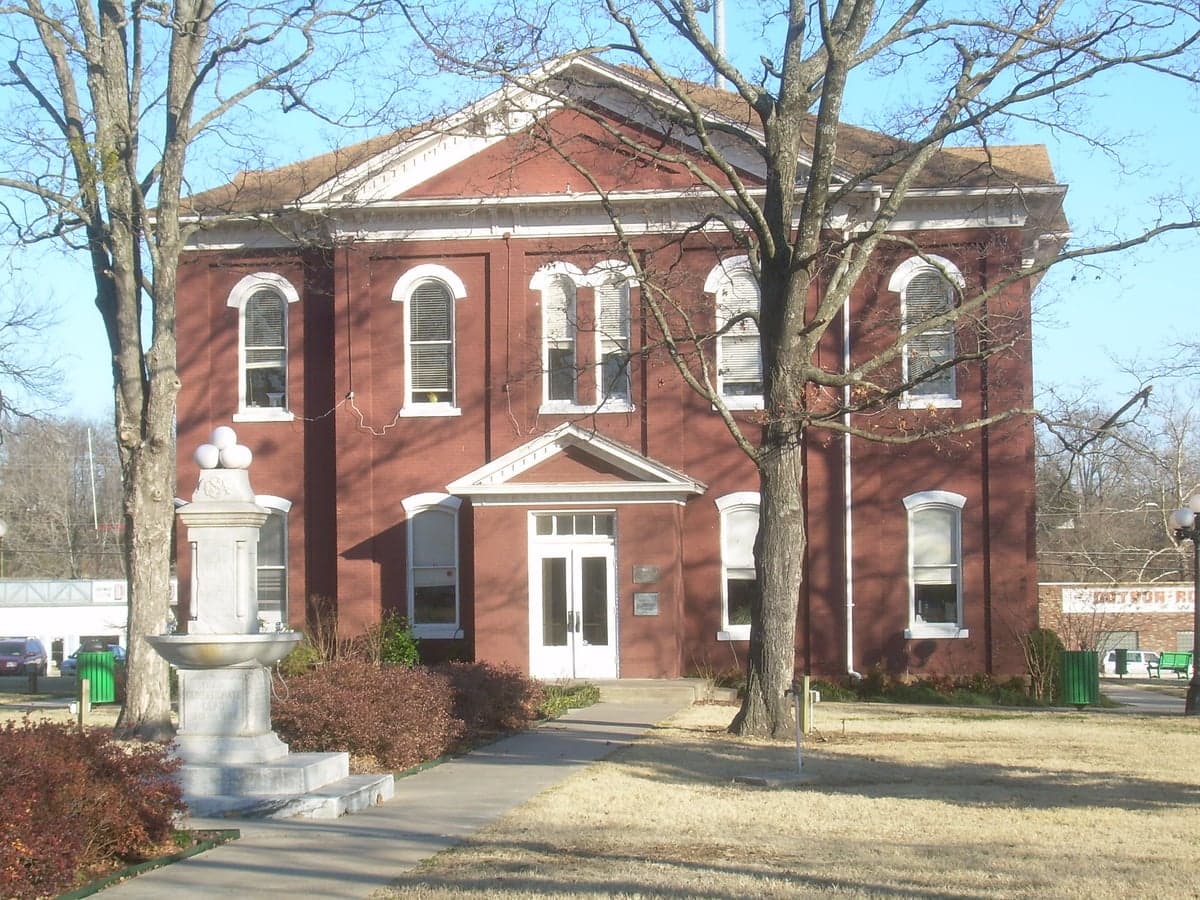
Photo: Wikipedia
Demographics of Cherokee County
Affluence Level in Cherokee County
A below-average socioeconomic profile. Incomes, home values, and educational attainment trail the U.S., with higher poverty and unemployment.
People of Cherokee County
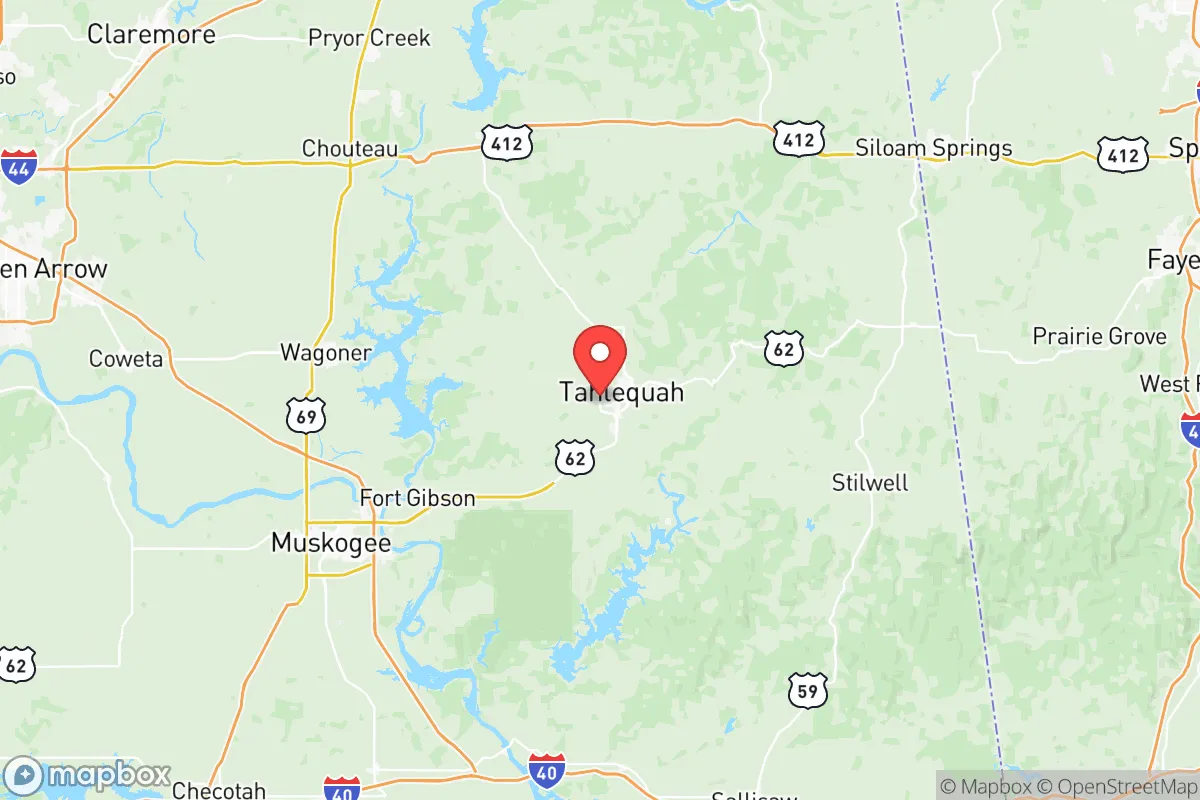
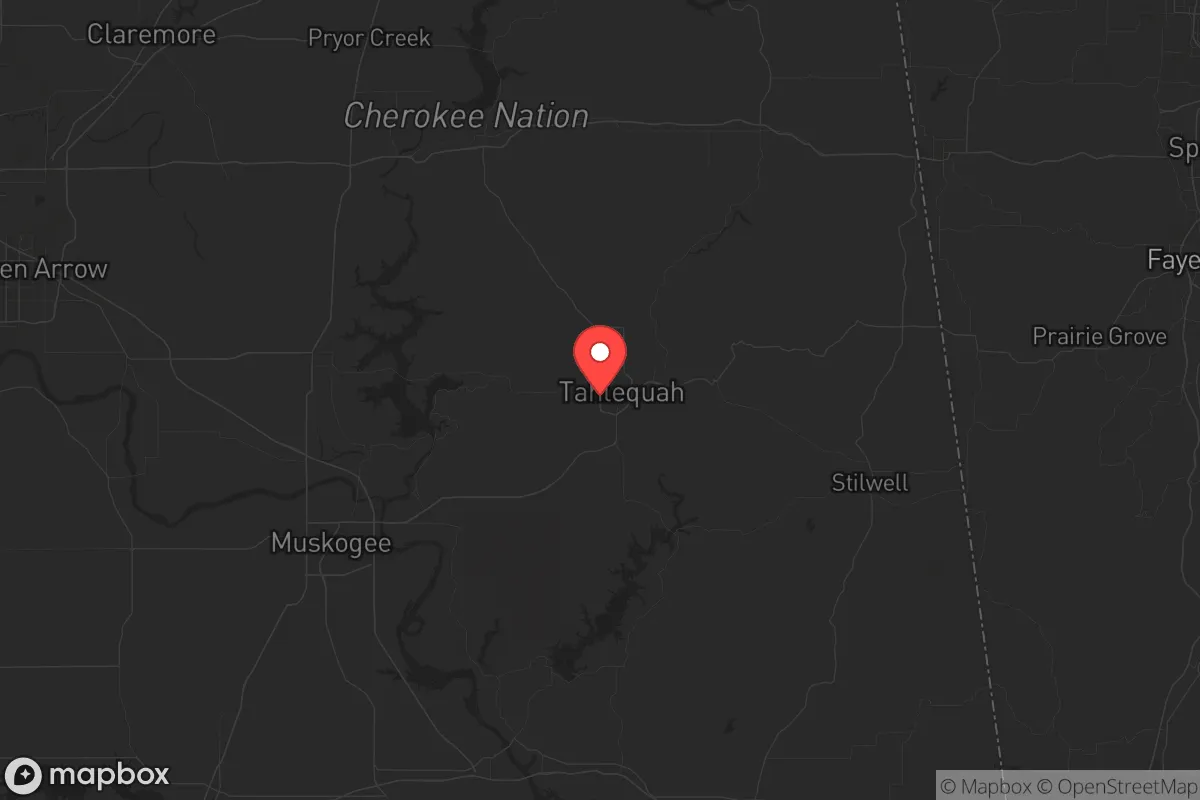
Cherokee County, Oklahoma, today is a predominantly rural, ancestrally rooted population of 47,621 residents who are overwhelmingly native-born — only 1.8% foreign-born — and nearly half (45.2%) identify as White, with a substantial Native American presence (over 30% of the county’s population, reflecting its Cherokee Nation heritage). The county’s character is defined by its small-town, family-oriented communities like Tahlequah (the county seat and capital of the Cherokee Nation), Hulbert, and Park Hill, where a blend of Cherokee cultural identity and Southern evangelical conservatism shapes daily life. With 29.4% of adults holding a college degree — slightly below the national average — and a Hispanic population of 7.7% that is the fastest-growing minority group, Cherokee County is a place where tradition runs deep but modest demographic change is underway.
Settlement & growth (pre-1960)
Long before European settlement, the land now called Cherokee County was part of the traditional territory of the Osage Nation, who used the Illinois River valley and the Ozark foothills for hunting. The first major population shift came with the forced removal of the Cherokee people from the Southeastern United States along the Trail of Tears in the late 1830s. The Cherokee Nation established its capital at Tahlequah in 1839, and the county’s early population was overwhelmingly Cherokee and mixed-race Cherokee (often of Scots-Irish descent through intermarriage with traders). The 1860s brought a small wave of White settlers — mostly farmers from Arkansas and Missouri — who were drawn by the fertile bottomlands along the Illinois River and the promise of cheap land after the Civil War.
From the 1870s through the 1890s, the federal government’s allotment policy (the Dawes Act of 1887) broke up tribal lands into individual parcels, opening the door for more White homesteaders. Towns like Hulbert (founded 1888) and Park Hill (a historic Cherokee settlement) grew as agricultural service centers for cotton, corn, and livestock. The arrival of the Kansas City Southern Railway in the 1890s spurred the founding of Moodys and Keys, small stops that shipped timber and produce. By 1900, the county’s population was roughly 60% Cherokee and mixed-race, 35% White, and 5% Black — the latter being freedmen who had been enslaved by Cherokee families before the Civil War and who remained as tenant farmers in communities like Briggs.
The early 20th century saw slow, steady growth. The discovery of oil in nearby counties in the 1910s and 1920s brought a modest influx of White laborers and speculators, but Cherokee County itself never experienced a boom — its economy remained tied to subsistence farming, timber, and the Cherokee Nation’s government. The Dust Bowl of the 1930s pushed a few hundred displaced farmers from the Oklahoma Panhandle into the county, but the population actually declined slightly during the Great Depression as young people left for cities. By 1950, the county’s population was 25,000, with Tahlequah (population 5,000) as the only incorporated town of any size.
Modern era (post-1965)
The 1965 Hart-Cellar Act had minimal direct impact on Cherokee County — the foreign-born population today is just 1.8%, compared to 13.7% nationally. Instead, the county’s modern demographic story is one of domestic migration and suburbanization. The 1970s and 1980s saw a steady outflow of young Cherokee and White residents to Tulsa (60 miles west) and Dallas-Fort Worth for jobs, but this was offset by a counterflow of retirees and second-home buyers drawn to the Illinois River and Tenkiller Ferry Lake (completed in 1952). The lake’s creation turned Park Hill and Welling into recreational hubs, attracting seasonal residents from Texas and Kansas.
The most significant post-1965 shift has been the growth of the Hispanic population, which rose from under 1% in 1990 to 7.7% today. This wave began in the 1990s, driven by labor demand in poultry processing (the Simmons Foods plant in Tahlequah opened in 1992) and construction. Hispanic families, primarily of Mexican origin, settled in Tahlequah’s south side and in mobile home parks near the plant, forming a small but visible enclave. The Black population, by contrast, has remained static at 1.4%, concentrated in the historic freedmen community of Briggs and scattered rural pockets.
Suburbanization has been modest compared to Oklahoma’s metro areas. Tahlequah grew from 10,000 in 1990 to 16,000 today, absorbing new subdivisions like Woodland Hills and Cherokee Hills, which attract commuters to Tulsa (a 50-minute drive) and retirees. The county’s Asian population (0.7%) is almost entirely tied to Northeastern State University in Tahlequah, which draws a small number of Vietnamese and Korean students and faculty. The Indian-subcontinent population (0.2%) is negligible, consisting of a handful of medical professionals at the Cherokee Nation’s W.W. Hastings Hospital.
The future
Cherokee County’s population is projected to grow slowly — to roughly 50,000 by 2035 — driven primarily by natural increase among the Cherokee and Hispanic populations and by continued in-migration of retirees to lakefront properties. The county is not homogenizing; instead, it is tribalizing into distinct enclaves. The Cherokee Nation’s growing sovereignty and economic power (it is the county’s largest employer, with over 4,000 jobs in health care, education, and gaming) is reinforcing a distinct Cherokee cultural identity, particularly in Tahlequah and Park Hill, where Cherokee language immersion schools and tribal housing programs are concentrated. The Hispanic community, while still small, is growing faster than any other group and is likely to reach 10-12% of the population by 2035, with a second generation that is increasingly bilingual and integrated into local schools and churches.
The White population, which has declined from 55% in 2000 to 45.2% today, is aging and being replaced by younger, more diverse cohorts. In-migration from coastal states is minimal — the county lacks the job base to attract significant domestic migration from outside the region. The cultural identity of the county is likely to remain conservative, evangelical, and Cherokee-centric, with the Hispanic community gradually assimilating into that framework rather than creating a separate cultural sphere. For a newcomer moving in now, Cherokee County offers a stable, low-crime, family-oriented environment where community ties are strong and demographic change is slow enough to be absorbed without friction.
Bottom line: Cherokee County is becoming a more diverse but still deeply traditional place — a rural Cherokee heartland where a growing Hispanic presence and a stable White population coexist under the umbrella of the Cherokee Nation’s cultural and economic leadership. For someone moving in, the county offers a tight-knit, affordable, and safe community with a distinctive Native American identity that is unlikely to be diluted by the modest demographic shifts ahead.

* Values derived from national, state, county, city and local statistics and may differ in a specific area. Last updated: 2026-05-12T10:28:20.000Z
Narrative content on this page is AI-generated and may contain mistakes. Verify any details that matter before acting on them.
ReloMaps may earn a commission from affiliate links at no extra cost to you.

