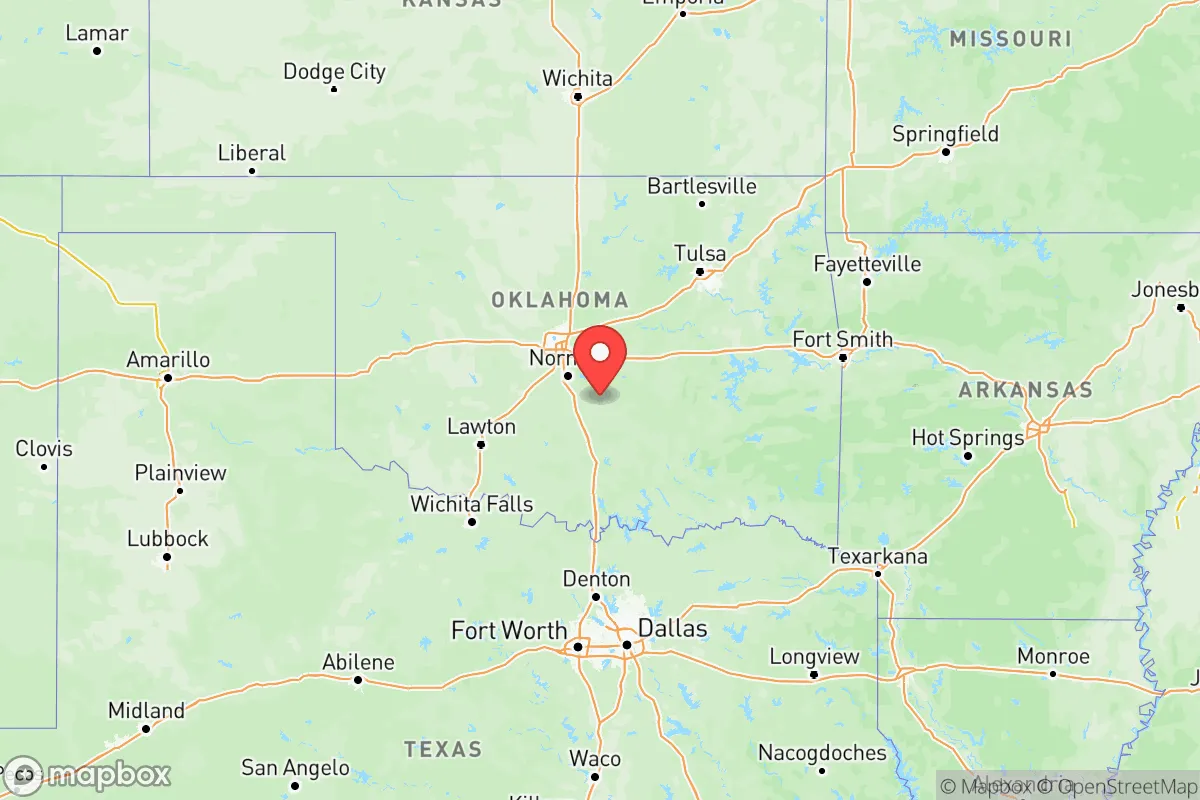
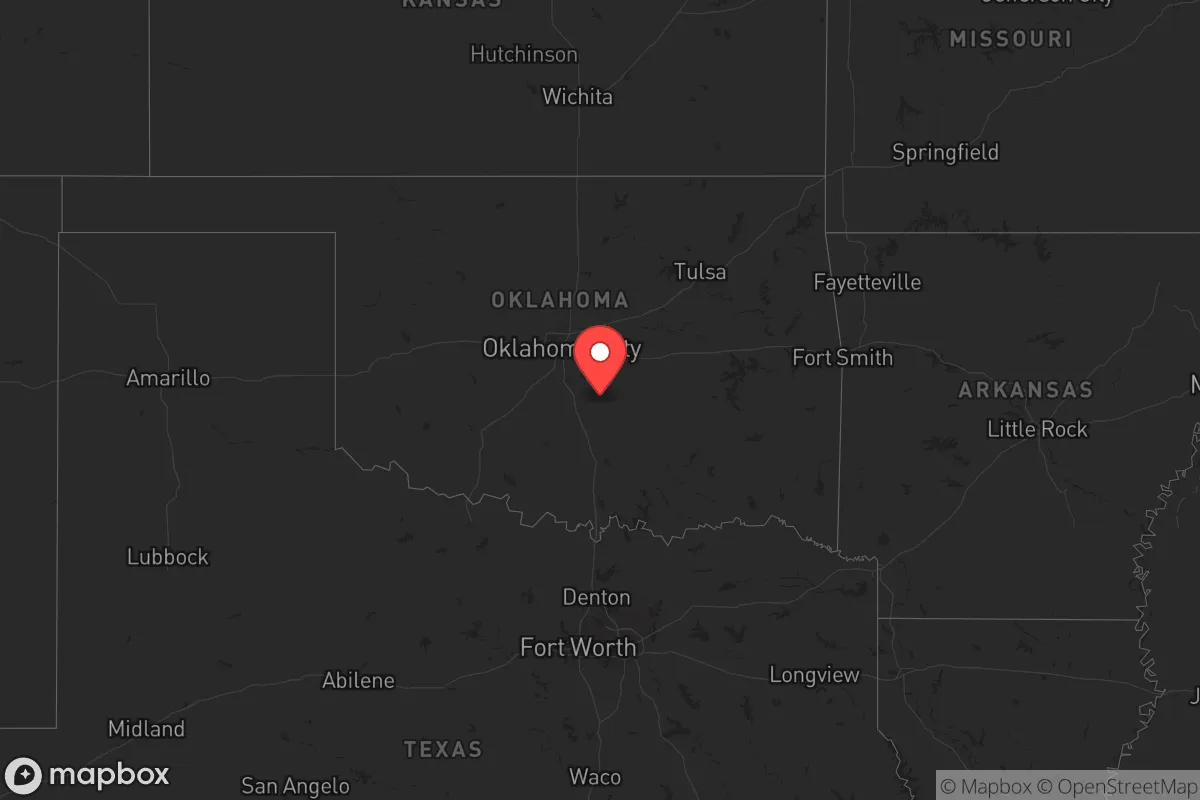
Photo: Wikipedia
Strategic Assessment of Oklahoma
Meaningful friction. Expect exposure to either population pressure, blast zones, or natural disaster risk. Consider buying a retreat property.
What does the Strategic Assessment tell us?
Our Strategic Assessment grades tactical survivability of an area. Major population centers, military targets, fallout zones, natural disasters, and border exposure all drive risk — lower exposure means a more defensible position in a crisis.
This is heavily inspired by Joel Skousen's Strategic Relocation book. Highly recommended you checkout the book ($)What does this tell us?
Our Strategic Assessment grades tactical survivability of an area. Major population centers, military targets, fallout zones, natural disasters, and border exposure all drive risk — lower exposure means a more defensible position in a crisis.
This is heavily inspired by Joel Skousen's Strategic Relocation book. Highly recommended you checkout the book ($)Regional Safe Places
Below is our recommended "safe zones" in Oklahoma and the surrounding area based on our strategic heuristics. For most people, it's unrealistic to live in a “safe zone” full-time due to work, family or other personal reasons. They tend to be more rural. However, many of these areas are perfect for second homes and retreat properties that double as a vacation home or even a short-term rental.
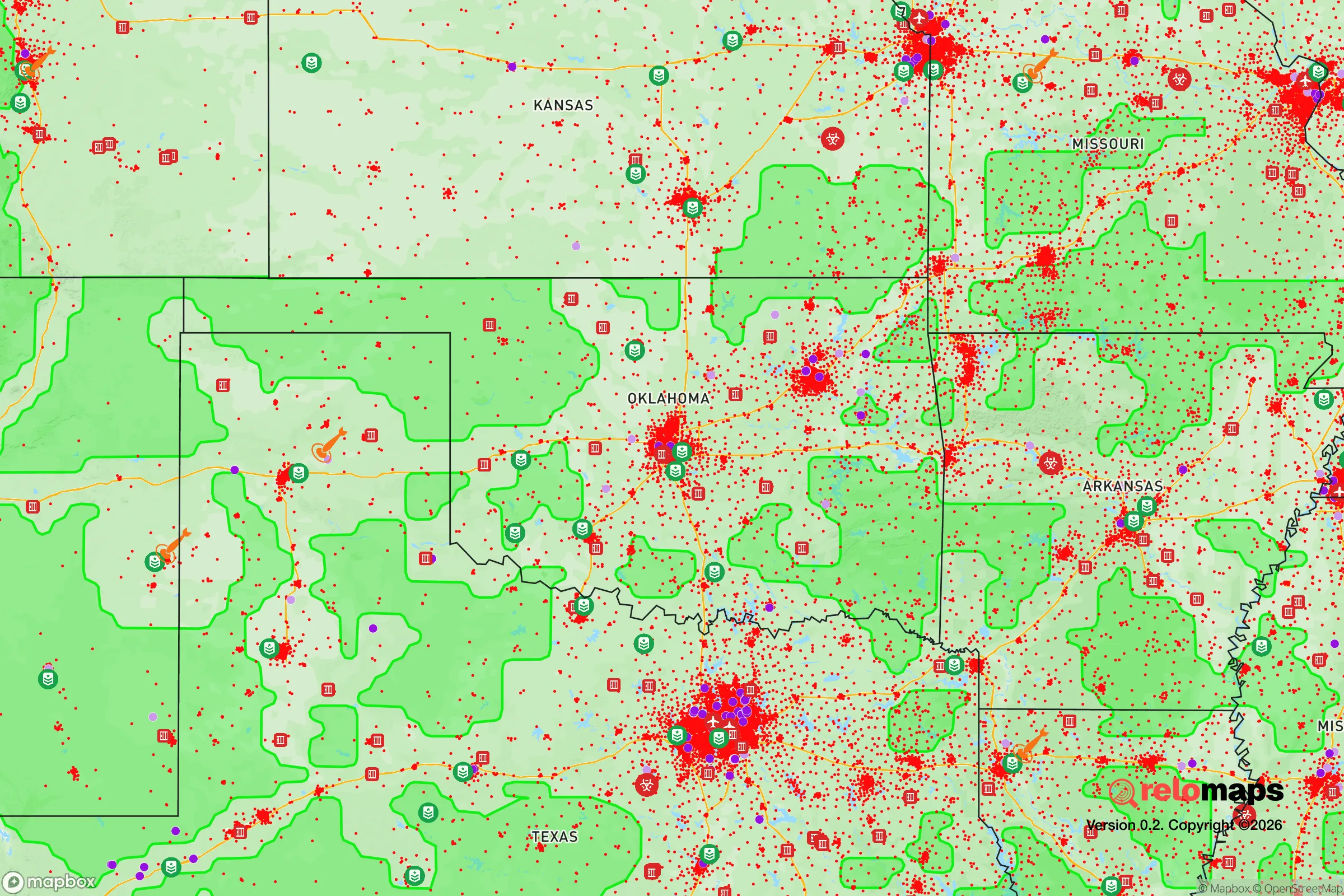
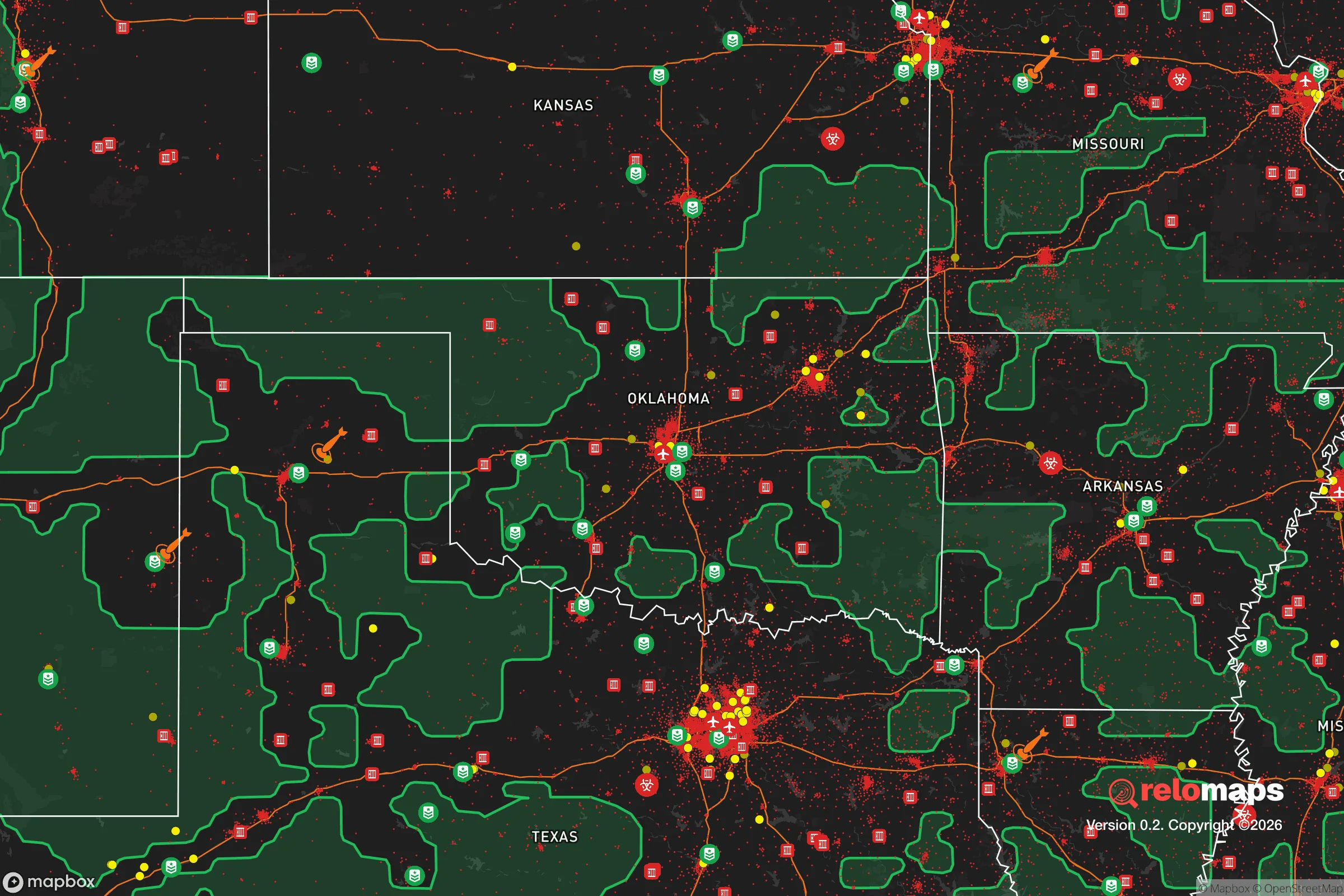


Important Note: For informational purposes only. This does not mean nothing bad ever happens in the green zones. Please use common sense. This is based on public data and modeled with AI. We tried to take a conservative approach but mistakes happen. We update this regularly as new information becomes available.
Solar Generator Recommendations
Backup power matters more here than in safer locations. We've picked three solar generators across budgets and capacity tiers — start with the budget unit if you only need a few essentials, or step up if you want to run a fridge and HVAC for days at a time.

Jackery Portable Power Station Explorer 300
Budget OptionPower on the Go: Weighing only 11 lbs, it's convenient to set up and store with book-sized foldable solar panels

BLUETTI Portable Power Station AC180
Designed for both indoor and outdoor scenarios, AC180 is highly capable as it has a robost capacity and continuous output power.

EF ECOFLOW DELTA Pro Ultra Power Station
Upgraded PickEcoFlow DELTA Pro Ultra is a whole-home energy system designed to grow with your family. Integrated with the Smart Home Panel 2, it scales to meet your evolving energy needs — keeping your home powered, intelligent, and secure through every stage of life.
We earn a commission, at no additional cost to you.
Strategic Assessment Analysis
Oklahoma offers a compelling strategic position for those prioritizing resilience, combining geographic isolation from major coastal threats with a robust internal infrastructure that supports long-term sustainability. The state’s central location places it outside the immediate blast zones of high-value targets like New York, Los Angeles, or Chicago, while its distance from the Gulf Coast reduces direct hurricane and storm-surge risks. For a conservative-leaning relocator focused on self-sufficiency and community stability, Oklahoma’s low population density, strong agricultural base, and energy independence create a foundation for weathering both natural disasters and civil unrest.
Geographic position and natural advantages for long-term security
Oklahoma sits in the southern Great Plains, a region often called “Tornado Alley,” but its real strategic value lies in its distance from the nation’s most vulnerable corridors. The state is roughly 300 miles from the Dallas-Fort Worth metroplex and over 400 miles from Houston’s refinery corridor, meaning a major event in those areas would not immediately overwhelm Oklahoma’s resources. The Oklahoma City metro area, home to about 1.4 million people, is the state’s largest population center, but it is surrounded by vast stretches of rural farmland and small towns like Enid, Stillwater, and Lawton that offer defensible, low-profile living. The state’s terrain is diverse—rolling plains, forested hills in the southeast, and the Wichita Mountains in the southwest—providing multiple options for retreat locations with natural barriers. The Red River forms the southern border with Texas, offering a natural defensive line and a reliable water source, while the Arkansas River cuts through the northeast, supporting irrigation and transport. Oklahoma’s position also places it within a day’s drive of critical military installations like Fort Sill near Lawton and Tinker Air Force Base near Oklahoma City, which could serve as stabilizing forces during widespread unrest.
Risks, exposures, and proximity to fallout-relevant landmarks
No location is without risk, and Oklahoma has specific vulnerabilities that a strategic relocator must weigh. The state is home to Cushing, Oklahoma, a small town of about 8,000 people that hosts the largest commercial crude oil storage hub in North America—over 50 million barrels of capacity. This makes Cushing a high-value target for both state actors and domestic sabotage, and a major incident there could disrupt fuel supplies across the central U.S. for months. Similarly, the Ponca City refinery and the Ardmore refinery are critical nodes in the nation’s fuel distribution network, and their proximity to population centers like Oklahoma City (about 90 miles from Ponca City) means a coordinated attack could create cascading shortages. The state also has two nuclear power plants—the Arkansas Nuclear One just across the border in Russellville, Arkansas, and the Wolf Creek Generating Station in Burlington, Kansas—both within 200 miles of Oklahoma’s eastern and northern borders. While not direct fallout zones, prevailing winds from the west mean a release from either plant could affect Oklahoma’s eastern counties. On the positive side, Oklahoma lacks major ports, international airports, or dense urban cores that would draw first-strike attention. The risk of civil unrest is lower than in coastal cities, but the state’s growing Hispanic population and urban centers like Oklahoma City and Tulsa could see localized tensions during a national crisis. Tornadoes remain the most frequent natural threat, with an average of 50-60 tornadoes per year, but modern warning systems and storm shelters are widespread—many rural homes already have underground shelters as standard practice.
Practical resilience for a relocator: food, water, energy, and defensibility
Oklahoma’s practical resilience is where it truly shines for a prepper-minded individual. The state is a net exporter of food, ranking in the top 10 nationally for wheat, cattle, and hay production. Small towns like El Reno and Chickasha are surrounded by working farms and ranches, meaning local food sources are accessible even if supply chains break down. Water is abundant in the eastern half of the state, with the Illinois River and Lake Tenkiller providing reliable surface water, while the western half relies more on the Ogallala Aquifer—a massive underground water source that also supports Texas and Kansas. For energy, Oklahoma is one of the few states that can claim near-total independence: it produces enough natural gas and wind power to meet its own needs and export surplus. The Oklahoma Gas and Electric grid is part of the Southwest Power Pool, which is less prone to cascading failures than the Eastern or Western Interconnections. For defensibility, the state’s low population density—just 55 people per square mile compared to the national average of 93—means a relocator can secure a rural property with acreage, natural cover, and limited neighbors. The Wichita Mountains Wildlife Refuge near Lawton offers rugged terrain with caves and rock formations that could serve as a bug-out location, while the Ouachita National Forest in the southeast provides dense tree cover and isolation. Property taxes are among the lowest in the nation, and Oklahoma has a strong culture of gun ownership and self-reliance, with no state-level red flag laws or magazine capacity restrictions as of 2026. The state also has a robust network of amateur radio operators and volunteer fire departments, which can be critical for communication and mutual aid during a crisis.
Overall, Oklahoma presents a balanced strategic picture for a conservative relocator seeking a resilient base. It avoids the high-risk coastal zones and major industrial targets while offering abundant natural resources, energy independence, and a culture that values preparedness. The primary trade-offs are the tornado risk and the presence of critical energy infrastructure like Cushing, but these can be mitigated with proper planning—storm shelters, fuel storage, and a retreat location at least 50 miles from major pipelines or refineries. For a single individual or family willing to invest in a rural property with a well, solar panels, and a garden, Oklahoma provides one of the most defensible and sustainable options in the continental United States. The state’s central location also allows for relatively easy relocation to other secure regions like the Ozarks or the Rocky Mountains if conditions deteriorate further. In a world where coastal cities face increasing vulnerability to both natural disasters and social collapse, Oklahoma offers a quiet, practical path forward—one that prioritizes self-sufficiency over convenience and community over chaos.

Top 10 Cities by Strategic Assessment in Oklahoma
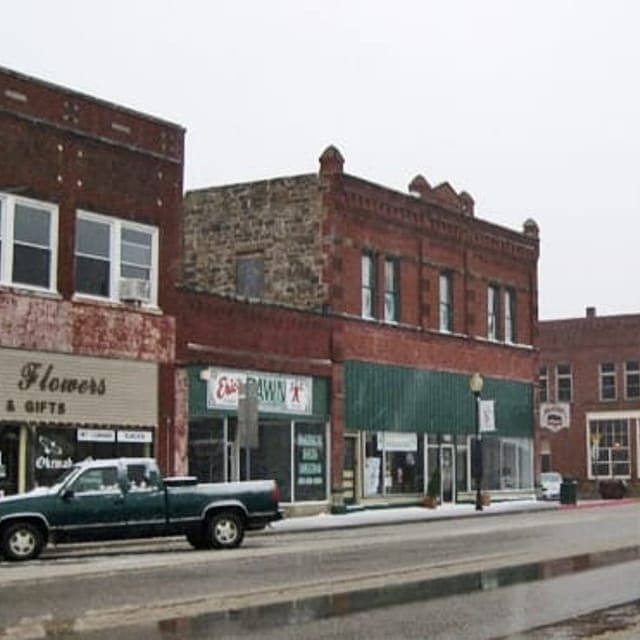
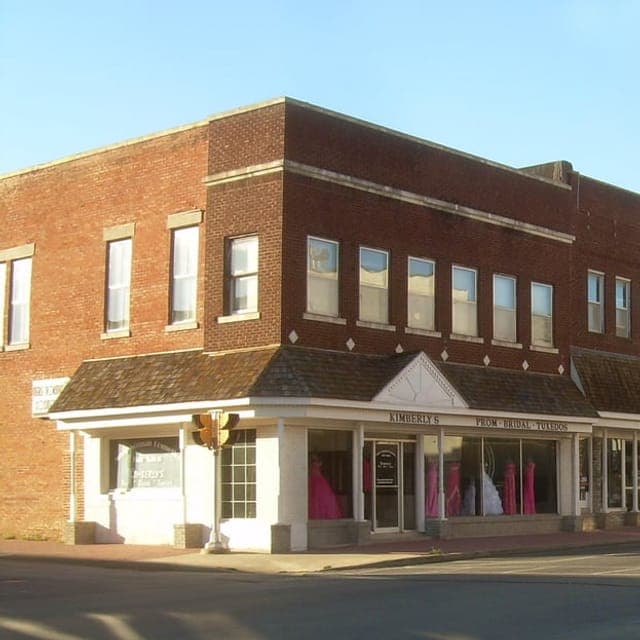
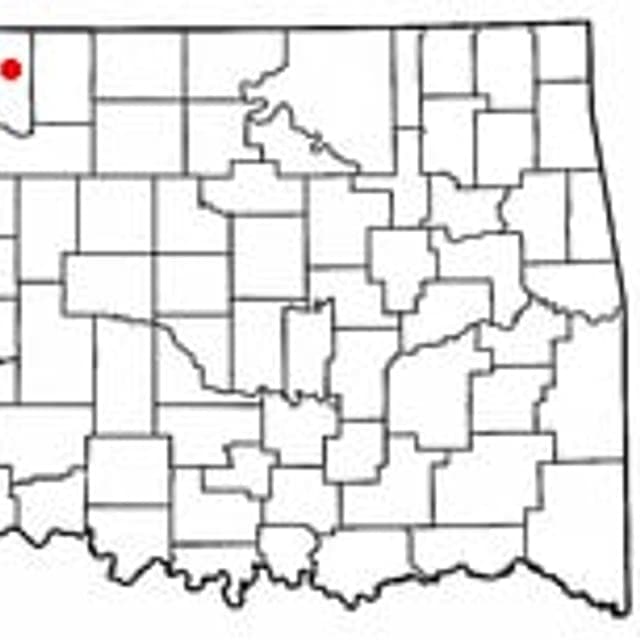
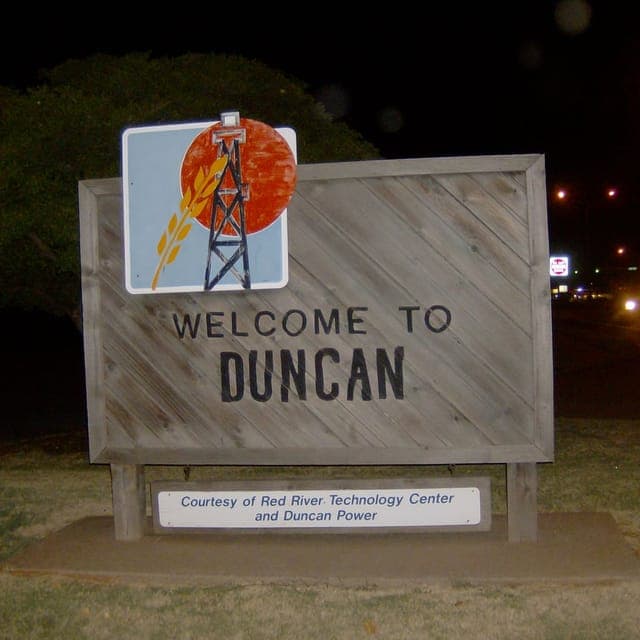
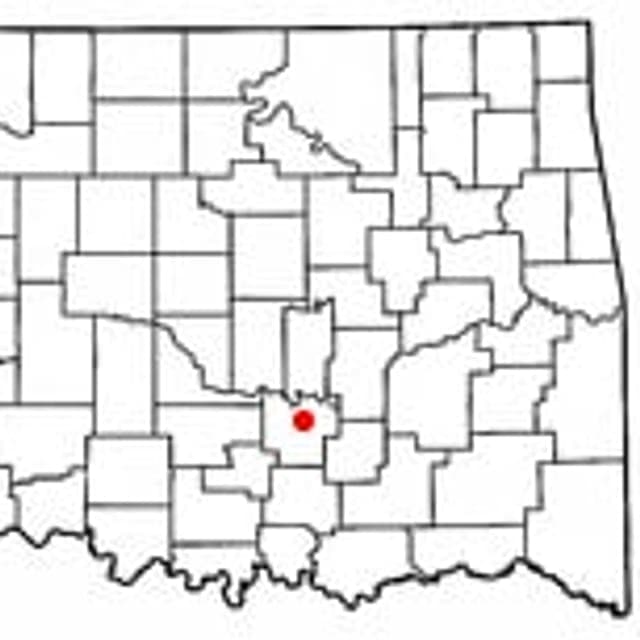
* Values derived from national, state, county, city and local statistics and may differ in a specific area. Last updated: 2026-04-14T06:28:26.000Z
Narrative content on this page is AI-generated and may contain mistakes. Verify any details that matter before acting on them.
ReloMaps may earn a commission from affiliate links at no extra cost to you.

