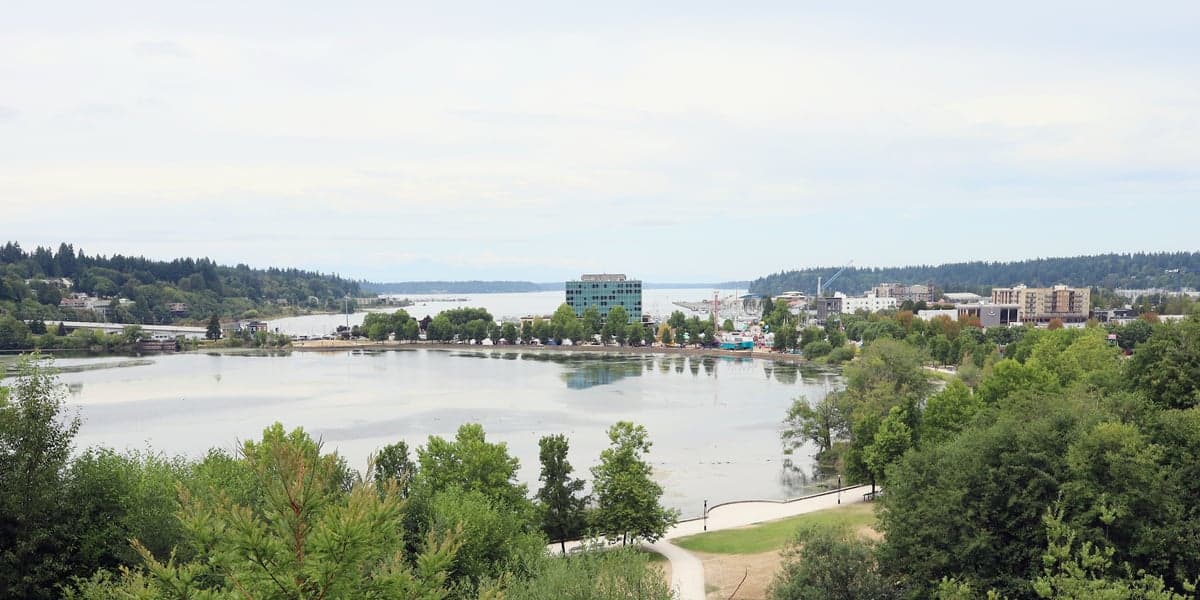
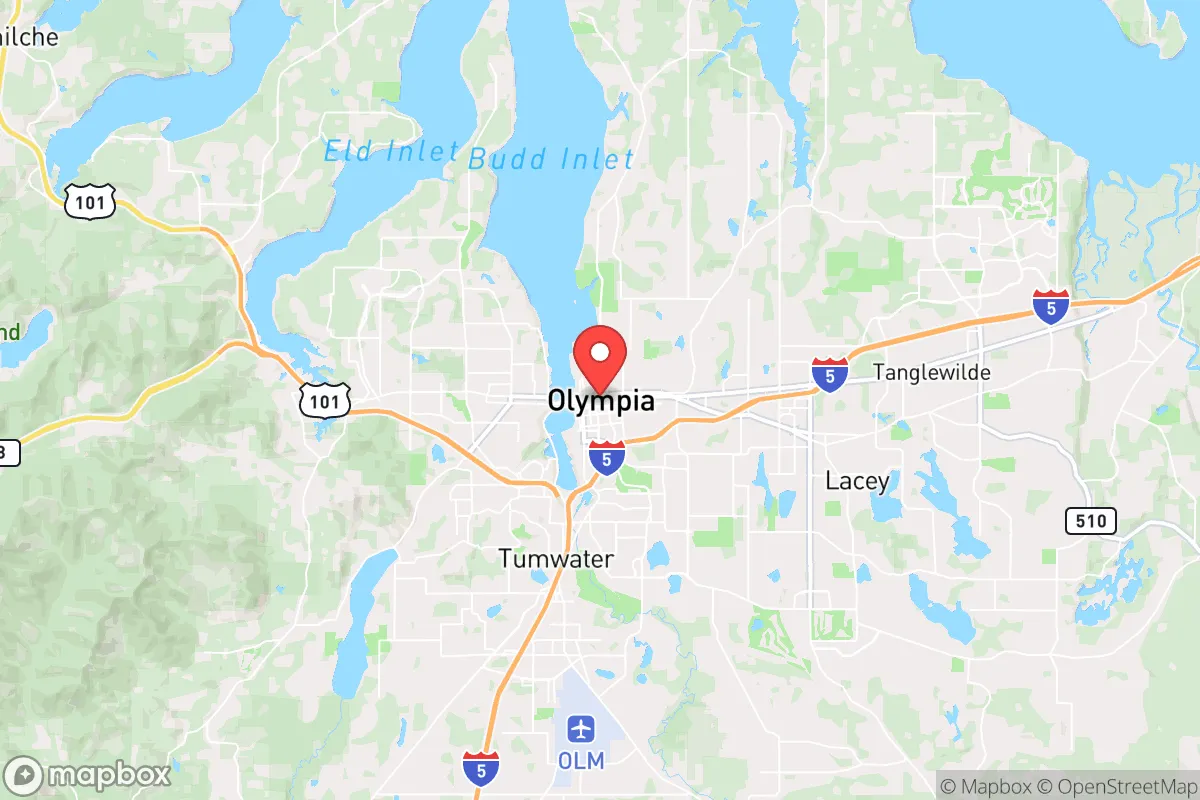
Photo: Wikipedia
Strategic Assessment of Olympia, WA
Meaningful friction. Expect exposure to either population pressure, blast zones, or natural disaster risk. Consider buying a retreat property.
What does the Strategic Assessment tell us?
Our Strategic Assessment grades tactical survivability of an area. Major population centers, military targets, fallout zones, natural disasters, and border exposure all drive risk — lower exposure means a more defensible position in a crisis.
This is heavily inspired by Joel Skousen's Strategic Relocation book. Highly recommended you checkout the book ($)What does this tell us?
Our Strategic Assessment grades tactical survivability of an area. Major population centers, military targets, fallout zones, natural disasters, and border exposure all drive risk — lower exposure means a more defensible position in a crisis.
This is heavily inspired by Joel Skousen's Strategic Relocation book. Highly recommended you checkout the book ($)Strategic Pillars

Key Distances
Regional Safe Places
Below is our recommended "safe zones" in Washington and the surrounding area based on our strategic heuristics. For most people, it's unrealistic to live in a “safe zone” full-time due to work, family or other personal reasons. They tend to be more rural. However, many of these areas are perfect for second homes and retreat properties that double as a vacation home or even a short-term rental.
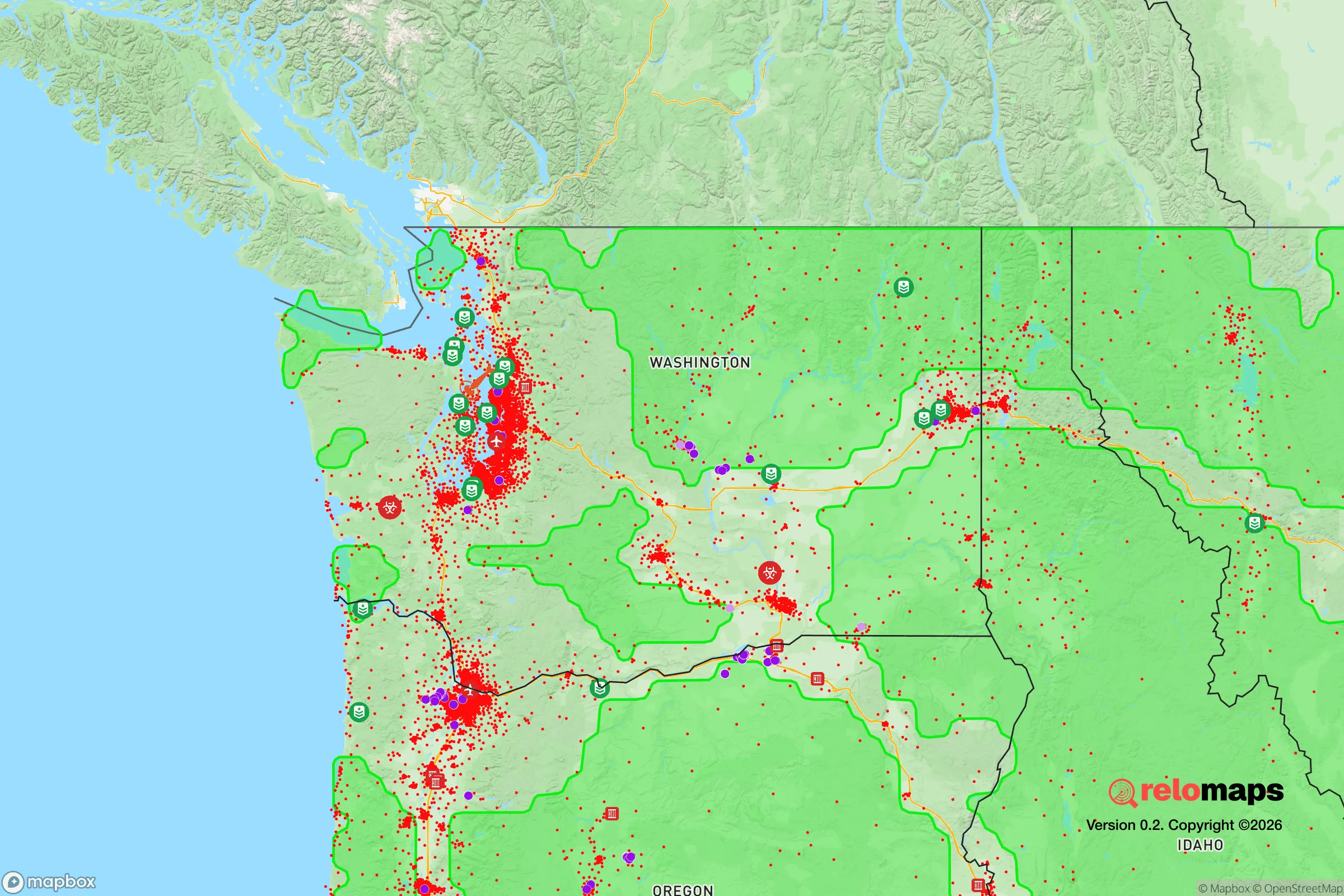
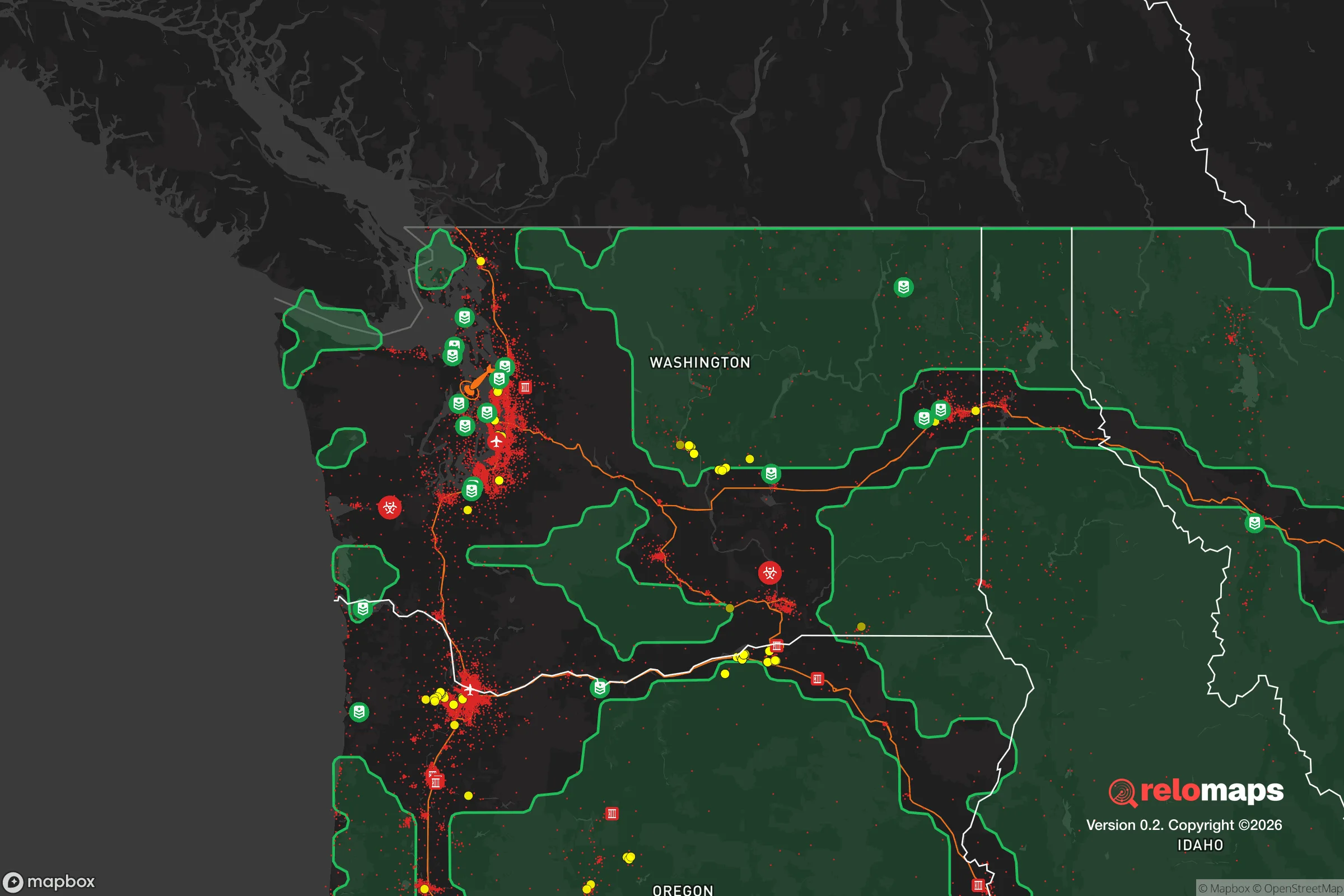


Important Note: For informational purposes only. This does not mean nothing bad ever happens in the green zones. Please use common sense. This is based on public data and modeled with AI. We tried to take a conservative approach but mistakes happen. We update this regularly as new information becomes available.
Solar Generator Recommendations
Backup power matters more here than in safer locations. We've picked three solar generators across budgets and capacity tiers — start with the budget unit if you only need a few essentials, or step up if you want to run a fridge and HVAC for days at a time.

Jackery Portable Power Station Explorer 300
Budget OptionPower on the Go: Weighing only 11 lbs, it's convenient to set up and store with book-sized foldable solar panels

BLUETTI Portable Power Station AC180
Designed for both indoor and outdoor scenarios, AC180 is highly capable as it has a robost capacity and continuous output power.

EF ECOFLOW DELTA Pro Ultra Power Station
Upgraded PickEcoFlow DELTA Pro Ultra is a whole-home energy system designed to grow with your family. Integrated with the Smart Home Panel 2, it scales to meet your evolving energy needs — keeping your home powered, intelligent, and secure through every stage of life.
We earn a commission, at no additional cost to you.
Strategic Assessment Analysis
Olympia, Washington, presents a complex strategic picture for the conservative prepper. On the surface, it’s the state capital, a hub of progressive politics, and sits within a region known for seismic instability. But a deeper look reveals a location with genuine resilience advantages—if you know where to look and what to avoid. The city’s position at the southern tip of Puget Sound, combined with its access to fresh water, fertile soil, and a moderate climate, offers a foundation for long-term sustainability. However, its proximity to major population centers, critical infrastructure, and a known volcanic threat means that any relocation here must be executed with a clear-eyed understanding of the risks and a plan to mitigate them.
Geographic position and natural advantages for long-term survival
Olympia’s geographic position is a double-edged sword, but the advantages are real. The city sits at the head of Puget Sound, giving it direct access to the Pacific Ocean via the Strait of Juan de Fuca, while also being sheltered from the worst open-ocean weather. This means you have a potential maritime escape route or supply line, a factor most inland preppers lack. The surrounding landscape is dominated by the Olympic Mountains to the west and the Cascade Range to the east, creating a natural bowl that can trap moisture but also provides defensible terrain. The region’s mild, wet climate—averaging 50 inches of rain annually—means you’ll never struggle for fresh water, and the growing season is long enough for serious food production. The soil in the nearby Nisqually River delta and the Black River valley is rich volcanic loam, capable of supporting high-yield gardens and small-scale farming. For a relocator, this means you can realistically aim for food self-sufficiency within a few years, something that’s a pipe dream in the arid West or the frozen North. The key is to secure land outside the city limits, ideally in Thurston County’s rural pockets like Rochester or Tenino, where zoning is looser and neighbors are more likely to share your worldview.
Risks, exposures, and proximity to fallout-relevant landmarks
Now for the hard truths. Olympia’s biggest strategic liability is its proximity to Joint Base Lewis-McChord (JBLM), one of the largest military installations on the West Coast, located just 20 miles north. In a major conflict or civil unrest scenario, JBLM is a prime target for a kinetic strike or a cyber attack on the power grid. The base’s presence also means that I-5, the main artery running through Olympia, will be a chokepoint for military convoys and fleeing civilians alike. Mount Rainier, a stratovolcano 50 miles east, poses a specific threat: a lahar (volcanic mudflow) could devastate the Puyallup River valley and reach the southern Sound, but Olympia itself sits on higher ground and is not in the direct lahar path. The bigger concern is ash fall, which could collapse roofs, contaminate water, and kill crops for a season. Then there’s the Olympia Fault, a shallow crustal fault running right under the city. A 6.5–7.0 earthquake on this fault would cause severe damage to the old brick buildings downtown and the state capitol complex, but modern wood-frame homes on the outskirts would fare better. The real risk is the Cascadia Subduction Zone—a magnitude 9.0 megathrust earthquake is a statistical certainty in the next 50 years. That event will liquefy the low-lying areas around Budd Inlet and the Port of Olympia, cut off road access for weeks, and trigger a tsunami that will swamp the waterfront. If you’re living in the downtown floodplain, you’re gambling with your life. The smart play is to buy property at least 100 feet above sea level and away from the major river valleys.
Practical resilience for a relocator: food, water, energy, and defensibility
For the prepper who actually moves here, the practicalities of daily life are manageable if you plan ahead. Water is abundant—the city draws from the Tolt River and the Green River watersheds, but a major quake will break those pipes. You need a well on your property, or at least a rainwater catchment system with a first-flush diverter. The average roof in Olympia can collect 600 gallons per inch of rain, so a 1,000-gallon tank is a no-brainer. Food production is realistic: the climate supports apples, berries, potatoes, and leafy greens, and you can raise chickens, goats, or even a small pig without neighbors complaining—provided you’re in the unincorporated county. The local farmers’ markets are good for barter goods, but don’t rely on them in a crisis. Energy independence is trickier. The grid is vulnerable to windstorms and seismic events, but solar works here—not as well as Arizona, but a 5kW system with battery storage will keep your fridge, lights, and well pump running through a two-week outage. Wood heat is essential; the surrounding forests provide ample fuel, but you need a wood stove with a catalytic converter to meet the county’s air quality rules. Defensibility is the weak point. Olympia is a liberal enclave, and the local government is not friendly to firearms or stand-your-ground principles. You can own guns, but magazine capacity restrictions and a 10-day waiting period apply. The best defense is to live in a low-density area with good sightlines and a tight-knit community of like-minded neighbors. The rural areas south of town, toward the Black Hills, offer the best balance of seclusion and access to supplies.
Overall, Olympia is a viable relocation target for the conservative prepper who values water, food security, and a moderate climate over low taxes and political alignment. The strategic picture is this: you’re trading the safety of the interior for the risks of the Pacific Northwest’s seismic reality and the proximity to a major military target. If you can secure land on high ground, dig a well, and build a community of trusted allies, you’ll have a solid base for weathering the coming storms. But if you’re looking for a place where you can hunker down and ignore the world, this isn’t it. The world will come to you—in the form of refugees from Seattle, ash from Rainier, or the rumble of the next big one. Be ready for that, and you’ll be fine. Ignore it, and you’ll be just another statistic in the aftermath.

* Values derived from national, state, county, city and local statistics and may differ in a specific area. Last updated: 2026-04-19T09:14:56.000Z
Narrative content on this page is AI-generated and may contain mistakes. Verify any details that matter before acting on them.
ReloMaps may earn a commission from affiliate links at no extra cost to you.

