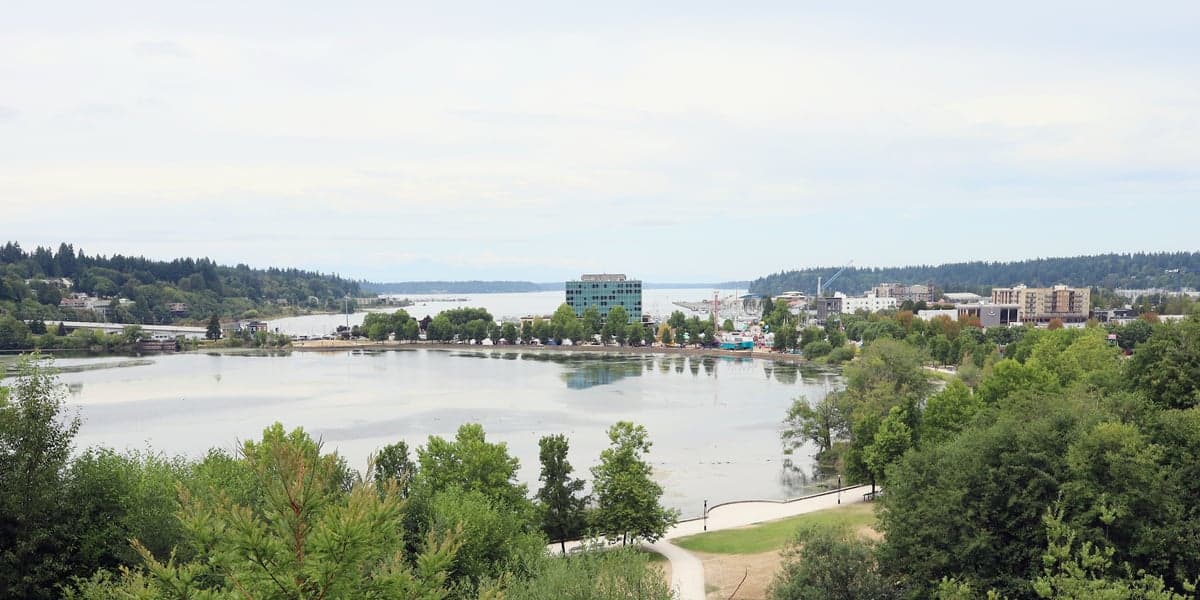
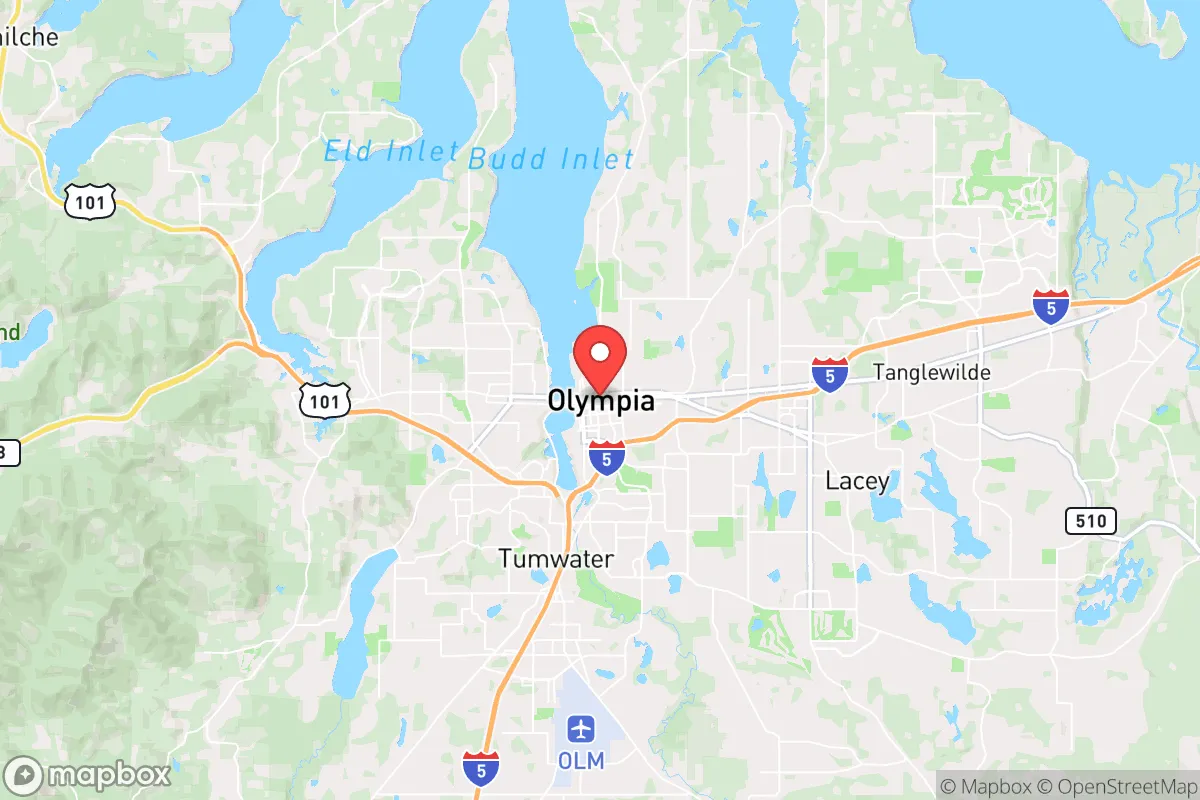
Photo: Wikipedia
Quality of Life in Olympia, WA
A high quality of life with strong walkability, manageable living costs, healthy neighborhood signals, and solid amenity access.
What does Quality of Life tell us?
Quality of Life blends cost of living, nearby amenities, socioeconomic signals, and neighborhood character. City-level scores represent the whole municipality; individual neighborhoods can differ.
What does this tell us?
Quality of Life blends cost of living, nearby amenities, socioeconomic signals, and neighborhood character. City-level scores represent the whole municipality; individual neighborhoods can differ.
Cost of Living
43% above national average
The Real Cost of Living in Olympia, WA for 2026
| Tier | Individual | Family (4) |
|---|---|---|
| Survival | $24k | $45k |
| Comfortable | $86k | $126k |
| Luxury | $125k+ | $194k+ |
| Elite (Top 5%) | $147k+ | $229k+ |
61%
The Area Signal
A metric tracking the socioeconomic signals of the area.


Hobbies
Explore the areaGroceries
5 within 10 miles
Gas
0 within 10 miles
Hospital
3 within 20 miles
Airport
SEA — Seattle-Tacoma International
Post Office
USPS — Lacey, WA
Critical Amenities
Quality-of-Life Analysis
Olympia, Washington, presents a quality of life shaped by its role as the state capital and a mid-sized Pacific Northwest city, with a population that skews educated, politically engaged, and environmentally conscious. The city's affluence is above the national average, reflected in a cost of living index of 143 (100 = US average), which places it in a moderate tier compared to the Seattle metro's extreme highs. Residents are a mix of state government employees, students at The Evergreen State College and Saint Martin's University, and professionals drawn to the area's balance of urban amenities and access to nature, creating a community that values sustainability, local food systems, and civic participation.
Cost of living, housing affordability, and how Olympia compares to nearby cities
Olympia's cost of living is significantly higher than the national average but remains notably more affordable than Seattle, where the index often exceeds 170. The median home value of $457,900 is roughly $200,000 less than the Seattle metro median, making it a practical alternative for remote workers and state employees. Median rent sits at $1,509, which is competitive for the region—comparable to Tacoma but lower than Bellevue or Redmond. However, housing costs have risen sharply since 2020, driven by an influx of buyers priced out of King County. The average commute of 20.5 minutes is a key advantage: it is shorter than the Seattle-area average of 30+ minutes, and most routes involve surface streets or I-5, which can back up but rarely gridlock. For context, a comparable home in Lacey or Tumwater (adjacent suburbs) might cost 5-10% less, while a similar property in downtown Seattle would run 60-80% more. Property taxes in Thurston County are moderate, around 0.9% of assessed value, and Washington has no state income tax, which offsets some of the housing burden for higher earners.
What daily life is like: amenities, schools, and the local rhythm
Daily life in Olympia revolves around a compact, walkable downtown anchored by the Capitol Campus, Percival Landing, and a vibrant farmers market (open year-round on weekends). The city's school system, Olympia School District, consistently ranks among the top in Washington, with Capital High School and Olympia High School both earning GreatSchools ratings of 8/10 or higher. For families, the presence of numerous parks—including the 681-acre Capitol State Forest and the 24-mile Chehalis Western Trail—means outdoor recreation is a daily option rather than a weekend trip. The local rhythm is slower than Seattle's: coffee shops like Olympia Coffee Roasting Co. are hubs for remote workers, and the arts scene includes the Washington Center for the Performing Arts and independent bookstores like Orca Books. Dining leans toward farm-to-table and Pacific Northwest seafood, with anchor restaurants like Chelsea Farms Oyster Bar and the Bread Peddler. Commute patterns are notably local: most residents work within Thurston County, and the city's bike infrastructure, while imperfect, is better than most mid-sized US cities, with a Bike Score of 58.
Olympia is best suited for people who prioritize environmental values, political engagement, and a slower pace over career intensity or nightlife. State government employees, remote tech workers, and families seeking strong public schools and low crime relative to larger cities will find the trade-offs worthwhile. Those who thrive here are comfortable with gray skies (Olympia averages 152 cloudy days per year) and value community-oriented living over urban density. It is less ideal for young professionals seeking a fast-paced social scene or for those who need a major airport within 30 minutes—Sea-Tac is about an hour north. For the right resident, Olympia offers a rare combination of capital-city amenities, access to the Puget Sound and Olympic Mountains, and a cost structure that, while high nationally, remains a relative bargain in the Seattle corridor.

Crime in Olympia, WA
Crime rates similar to the national median for U.S. locations.
Violent CrimeViolent Crime Analysis
Property CrimeProperty Crime Analysis
Crime Analysis
Olympia, Washington, reports a violent crime rate of 471.3 incidents per 100,000 residents and a property crime rate of 2,579.8 per 100,000, figures that place it above both the national average and the Washington state average for similar-sized cities. As the state capital and a hub for progressive governance, Olympia’s public safety landscape is shaped by local policies that prioritize rehabilitation over incarceration, a philosophy that critics argue contributes to higher recidivism and a visible street-level disorder. For prospective residents, understanding these crime statistics requires examining how they compare to broader trends and what daily life actually feels like in the city’s neighborhoods.
Crime in context
Olympia’s violent crime rate of 471.3 per 100,000 is roughly 35% higher than the national average of approximately 380 per 100,000, while its property crime rate of 2,579.8 per 100,000 exceeds the national average by about 20%. Compared to Washington state as a whole, Olympia’s violent crime rate is notably elevated—the state average hovers around 300 per 100,000—and its property crime rate is similarly above the statewide figure of roughly 2,200 per 100,000. These numbers place Olympia in a more challenging position than many other mid-sized Washington cities, such as Bellingham or Redmond, though it remains less dangerous than larger metros like Seattle or Tacoma. The city’s progressive district attorney and local judges, who often favor diversion programs and reduced sentencing for non-violent offenses, are frequently cited by law enforcement as a factor in these elevated rates, as lenient policies can lead to repeat offenders cycling back onto the streets.
What residents experience
In practice, Olympia residents report that property crime—particularly vehicle break-ins, bike theft, and package theft—is the most common safety concern, especially in downtown and near the Capitol campus. The city’s homeless population, concentrated along the Deschutes River and in areas like the Westside, is often associated with petty theft and public drug use, though violent confrontations are less frequent. Many locals adjust their habits by avoiding downtown after dark, securing vehicles with steering wheel locks, and using package lockers. The Thurston County Sheriff’s Office and Olympia Police Department have struggled with staffing shortages, which can slow response times for non-emergency calls. For families and professionals, the perception of safety varies sharply by neighborhood: areas like the Eastside and South Capitol tend to feel safer, while the downtown core and parts of the Westside see more visible crime.
Neighborhood-level variation is significant in Olympia. The Eastside, with its tree-lined streets and higher home values, reports violent crime rates roughly 60% lower than the city average, while the downtown area and the 4th Avenue corridor experience the highest concentration of incidents, particularly property crime. The South Capitol neighborhood, near the Capitol building, benefits from a strong police presence and active neighborhood watch groups, making it one of the safest areas. Conversely, the Westside, near the Evergreen State College, sees more drug-related activity and theft. Prospective residents should research specific blocks and consider visiting at different times of day, as the city’s safety profile is highly localized and influenced by the interplay of progressive justice policies and socioeconomic factors.
* Values derived from national, state, county, city and local statistics and may differ in a specific area. Last updated: 2026-04-19T09:14:56.000Z
Narrative content on this page is AI-generated and may contain mistakes. Verify any details that matter before acting on them.
ReloMaps may earn a commission from affiliate links at no extra cost to you.

