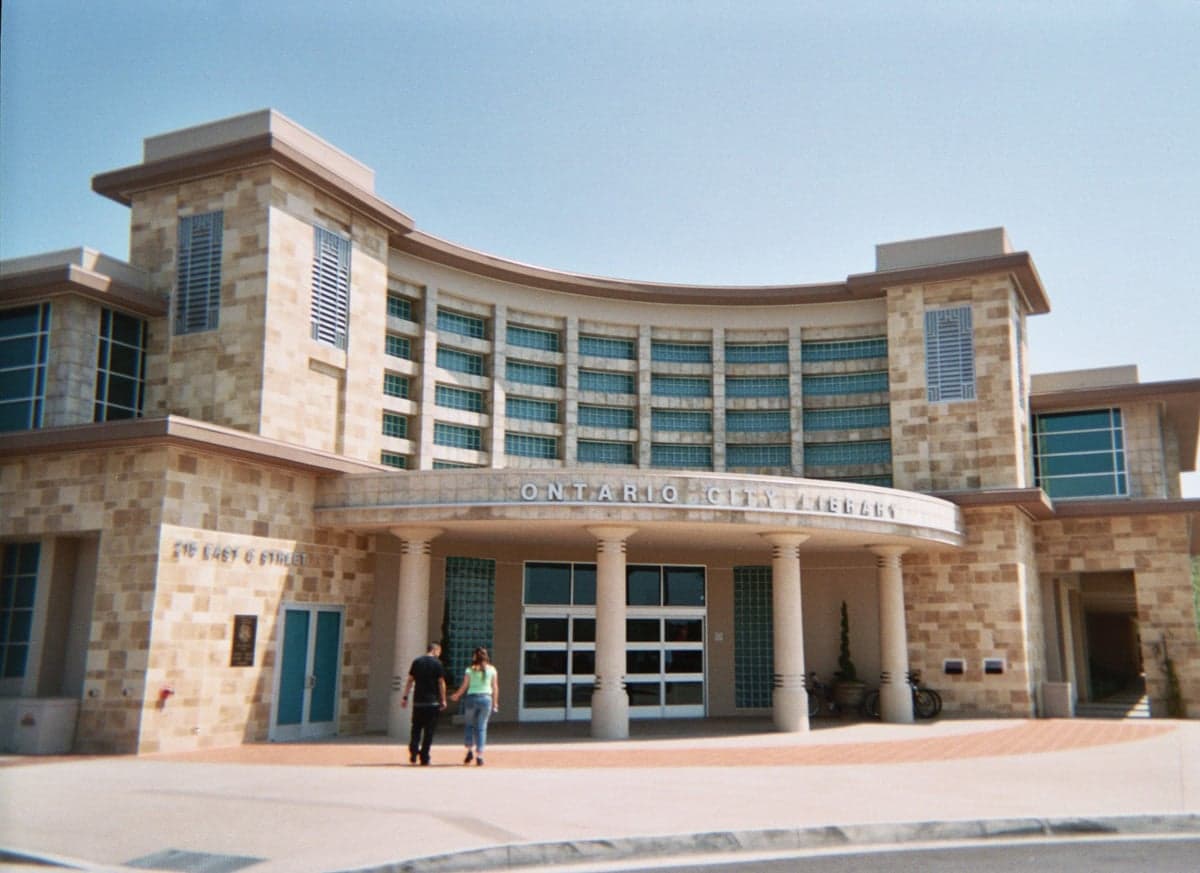
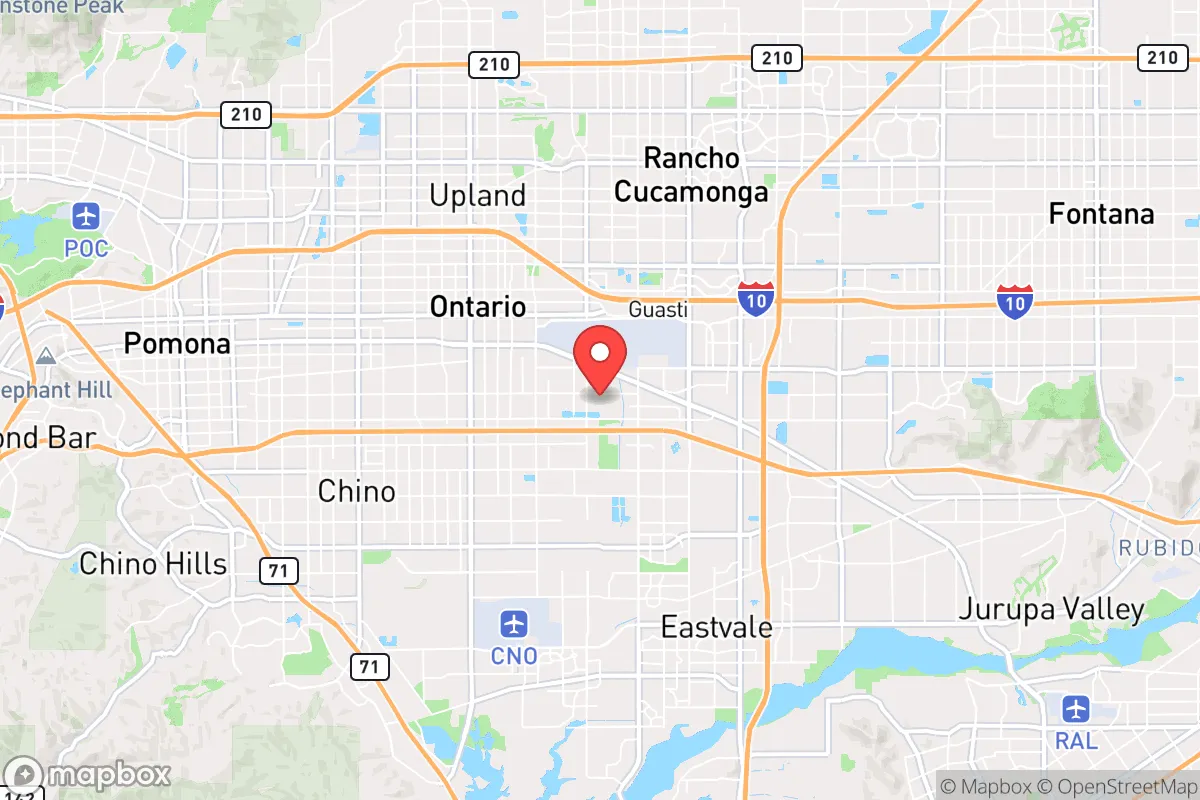
Photo: Wikipedia
Demographics of Ontario, CA
Affluence Level in Ontario, CA
A middle-class area roughly in line with national averages across income, home values, education, and employment.
People of Ontario, CA
Today, Ontario, California is a predominantly Hispanic, working- and middle-class city of 178,347 residents, where 68.3% of the population identifies as Hispanic or Latino. The city retains a distinctively family-oriented, blue-collar character, with a median age around 32 and a relatively low college attainment rate of 20.7%. Its identity is shaped by a deep Mexican-American cultural foundation, a growing East/Southeast Asian presence (7.6%), and a small but established Black community (6.0%), all layered over a historic Anglo and Italian core that has largely aged out or moved to neighboring suburbs.
How the city was settled and grew
Ontario was founded in 1882 by the Chaffey brothers, Canadian immigrants who designed it as a model agricultural colony centered on citrus and irrigation. The original population was overwhelmingly white Anglo-Protestant, drawn by the promise of small-scale farming on subdivided land. The historic Downtown Ontario district, centered on Euclid Avenue, was the commercial and civic heart of this early settlement. A second wave arrived in the early 1900s with the expansion of the Santa Fe Railroad and the opening of the Southern California Fruit Exchange; Italian immigrants settled in the North Ontario area near the rail yards, working as packers and railroad laborers. By 1940, the city was still small (roughly 14,000) and overwhelmingly white, with a tiny Mexican-origin population concentrated in the West End neighborhood near the original adobe homes and labor camps. The post-World War II boom brought more white families from the Midwest, who filled new tract homes in South Ontario and Colony Heights, drawn by the expanding Lockheed and General Electric plants at Ontario International Airport.
Modern era (post-1965)
The 1965 Hart-Cellar Act and the subsequent collapse of the Bracero program fundamentally reshaped Ontario's population. Mexican-American families, many of whom had worked the citrus groves for generations, began moving out of the West End and into the broader city. By 1980, the Hispanic share had risen to roughly 35%, and by 2000 it had crossed 60%. The Arlington neighborhood, south of the 10 Freeway, became a primary destination for these families, offering older, affordable housing stock near schools and parks. The 1990s also saw a notable influx of East/Southeast Asian immigrants, particularly Vietnamese and Filipino families, who clustered in the Mountain View area near the airport, drawn by logistics and warehousing jobs. The Black population, which peaked at around 8% in the 1990s, has since declined slightly to 6.0%, with many families moving to the Inland Empire's newer suburbs like Eastvale or Fontana. The white population has dropped sharply from over 60% in 1980 to just 13.7% today, with most remaining white residents concentrated in the older, pricier Euclid Avenue corridor and the gated communities near the Ontario Ranch master-planned development.
The future
Ontario's demographic trajectory points toward continued Hispanic majority status, with the share likely stabilizing around 70-75% over the next decade. The foreign-born share (14.0%) is moderate for the Inland Empire, suggesting that the Hispanic population is increasingly U.S.-born and assimilating into mainstream American culture. The East/Southeast Asian population (7.6%) is growing slowly, driven by new arrivals in logistics and healthcare, but is unlikely to surpass 10% without a major shift in housing affordability. The Indian-subcontinent population (0.7%) remains tiny and concentrated in professional roles near the airport. The city is not tribalizing into distinct ethnic enclaves so much as homogenizing into a broadly Hispanic, English-dominant, middle-class suburb. The Ontario Ranch development, a massive master-planned community on the city's east side, is attracting a mix of younger Hispanic families and some white and Asian professionals, but its price points ($500,000+) filter for income rather than ethnicity.
For a conservative-leaning individual or family moving in now, Ontario is a stable, family-oriented city where the dominant culture is Mexican-American but the daily language is English, crime rates are moderate, and the economy is anchored by logistics, healthcare, and the airport. The population is not growing rapidly (roughly 1-2% annually), and the city is becoming more suburban and less urban with each new tract home. It is not a place of dramatic demographic upheaval, but rather a slow, steady consolidation of the Hispanic working class into the Inland Empire's middle class.

* Values derived from national, state, county, city and local statistics and may differ in a specific area. Last updated: 2026-04-24T11:46:54.000Z
Narrative content on this page is AI-generated and may contain mistakes. Verify any details that matter before acting on them.
ReloMaps may earn a commission from affiliate links at no extra cost to you.

