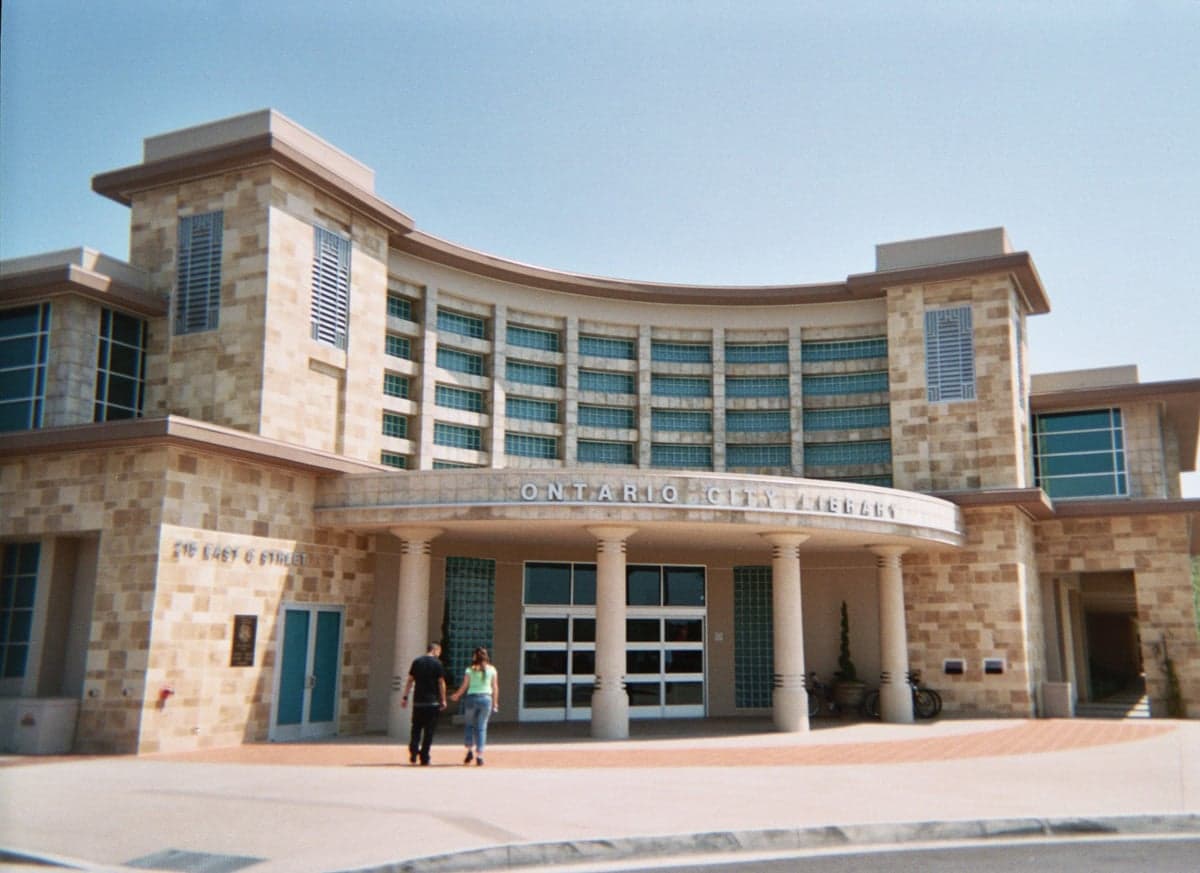
Photo: Wikipedia
Personal Sovereignty in Ontario, CA
Viable for self-reliance. Generally workable, though some barriers may limit total independence.
What does Personal Sovereignty tell us?
Personal Sovereignty measures your capacity for self-reliance and independence with minimal government friction. Higher scores mean fewer barriers between you and the way you want to live... but it assumes you have the space you need and good neighbors.
What does this tell us?
Personal Sovereignty measures your capacity for self-reliance and independence with minimal government friction. Higher scores mean fewer barriers between you and the way you want to live... but it assumes you have the space you need and good neighbors.
State Policy
Energy independence: Importer (33% of energy produced in-state)
Personal Liberty
Homesteading

Personal Liberty Analysis
Ontario, California, presents a challenging environment for personal sovereignty, particularly for those with a survivalist or prepper mindset who prioritize autonomy from government overreach. Located in San Bernardino County, this Inland Empire city operates under California’s extensive regulatory framework, which significantly limits individual freedoms in taxation, self-defense, and property use. For conservative-leaning individuals and parents seeking to minimize state intrusion, Ontario offers a mixed picture: some local resilience exists, but state-level policies consistently erode personal agency, making it a location where strategic adaptation—not full independence—is the realistic goal.
Tax burden and regulatory posture: How California’s policies affect your wallet and freedom
California’s tax structure is among the most aggressive in the nation, directly impacting personal sovereignty by reducing disposable income and forcing compliance with costly mandates. Ontario residents face a state income tax that tops out at 13.3% for high earners, one of the highest marginal rates in the country. Sales tax in Ontario is 8.75%, combining state, county, and local rates, which adds a significant surcharge to everyday purchases. Property taxes, while capped at 1% of assessed value under Proposition 13, are supplemented by Mello-Roos community facility districts that can add hundreds or thousands of dollars annually—a hidden burden that many preppers view as a form of localized taxation without direct benefit. The regulatory posture is equally restrictive: California’s California Environmental Quality Act (CEQA) can delay or kill any construction or land-use project, including personal homesteading efforts like building a shed or installing rainwater catchment. For those seeking to reduce their dependency on government services, the high cost of living and regulatory hurdles make Ontario a place where financial sovereignty is constantly under pressure.
Self-defense and gun law specifics: What you can and cannot do in Ontario
California’s firearm laws are among the strictest in the United States, and Ontario residents must navigate a dense web of restrictions that directly challenge the right to self-defense. The state requires a 10-day waiting period and a Firearm Safety Certificate for all handgun purchases, with a background check through the California Department of Justice. Semi-automatic rifles with “assault weapon” features—like pistol grips or flash suppressors—are banned, and magazines are capped at 10 rounds. Concealed carry permits (CCWs) are issued by the San Bernardino County Sheriff’s Department, which has historically been more permissive than coastal counties, but applicants must still demonstrate “good cause” and complete a training course. As of 2024, the county processes applications within 90 days on average, but the process remains costly and invasive. Open carry is prohibited in most circumstances. For preppers, this means that building a robust personal armory is legally constrained, and any defensive plan must account for limited magazine capacity and restricted weapon types. The state’s “red flag” laws also allow temporary firearm seizure based on a court order, which some view as a tool for government overreach into private gun ownership.
Self-reliance and homesteading viability: Lot sizes, zoning, and off-grid feasibility
Ontario’s urban and suburban character limits traditional homesteading, but some opportunities exist for those willing to adapt. Typical residential lots in Ontario range from 5,000 to 8,000 square feet, with newer developments often featuring smaller parcels. Zoning in most neighborhoods prohibits keeping livestock like chickens or goats without a special permit, and backyard chickens are allowed only in limited numbers (typically up to four hens, no roosters) under city ordinance. Off-grid living is effectively illegal: California requires connection to the municipal water and sewer system in most residential zones, and solar panels must be grid-tied to qualify for net metering. Rainwater collection is permitted but regulated—you can capture up to 5,000 gallons without a permit, but larger systems require approval from the Santa Ana Regional Water Quality Control Board. For preppers focused on food security, community gardens and farmers’ markets are viable, but true self-sufficiency on a standard lot is impractical. The nearby San Bernardino Mountains offer more land, but commuting to Ontario for work negates many sovereignty gains. Overall, Ontario is a location for urban prepping—stockpiling, community networking, and defensive planning—rather than rural homesteading.
Personal liberties: Parental rights, medical autonomy, speech, and property
California’s progressive policies create a landscape where personal liberties are often secondary to state mandates. Parental rights are a flashpoint: the state’s Education Code requires schools to allow transgender students to use facilities matching their gender identity without parental notification, and curriculum includes LGBTQ+ topics from kindergarten. For conservative parents, this represents a direct intrusion into family values and the right to direct a child’s upbringing. Medical autonomy is similarly constrained: vaccine mandates for school attendance remain in place, and the state has a history of enforcing public health orders during emergencies, including lockdowns and mask mandates. Free speech is protected under the First Amendment, but California’s “hate speech” laws and workplace harassment regulations can chill expression, particularly on controversial topics. Property rights are weakened by California’s rent control laws (AB 1482 caps annual rent increases at 5% plus inflation) and the California Coastal Commission’s broad authority over land use, though Ontario is inland and less affected by coastal regulations. For those who value the right to make independent decisions about health, education, and property, Ontario requires constant vigilance against state overreach.
In the broader context of personal sovereignty, Ontario, CA, ranks low compared to states like Texas, Idaho, or Montana, where tax burdens are lighter, gun laws are more permissive, and homesteading is more feasible. However, within California, Ontario offers some advantages: a relatively affordable housing market compared to coastal cities, a growing conservative presence in San Bernardino County, and proximity to rural escape routes in the Mojave Desert or Arizona. For the strategic prepper, Ontario is a base of operations—not a fortress. The key is to leverage local networks, maintain legal compliance while pushing boundaries, and have a bug-out plan for when state-level restrictions become untenable. Personal sovereignty here is not given; it must be carved out through careful planning, community building, and a willingness to adapt to a system designed to limit individual autonomy.

* Values derived from national, state, county, city and local statistics and may differ in a specific area. Last updated: 2026-04-24T11:46:54.000Z
Narrative content on this page is AI-generated and may contain mistakes. Verify any details that matter before acting on them.
ReloMaps may earn a commission from affiliate links at no extra cost to you.

