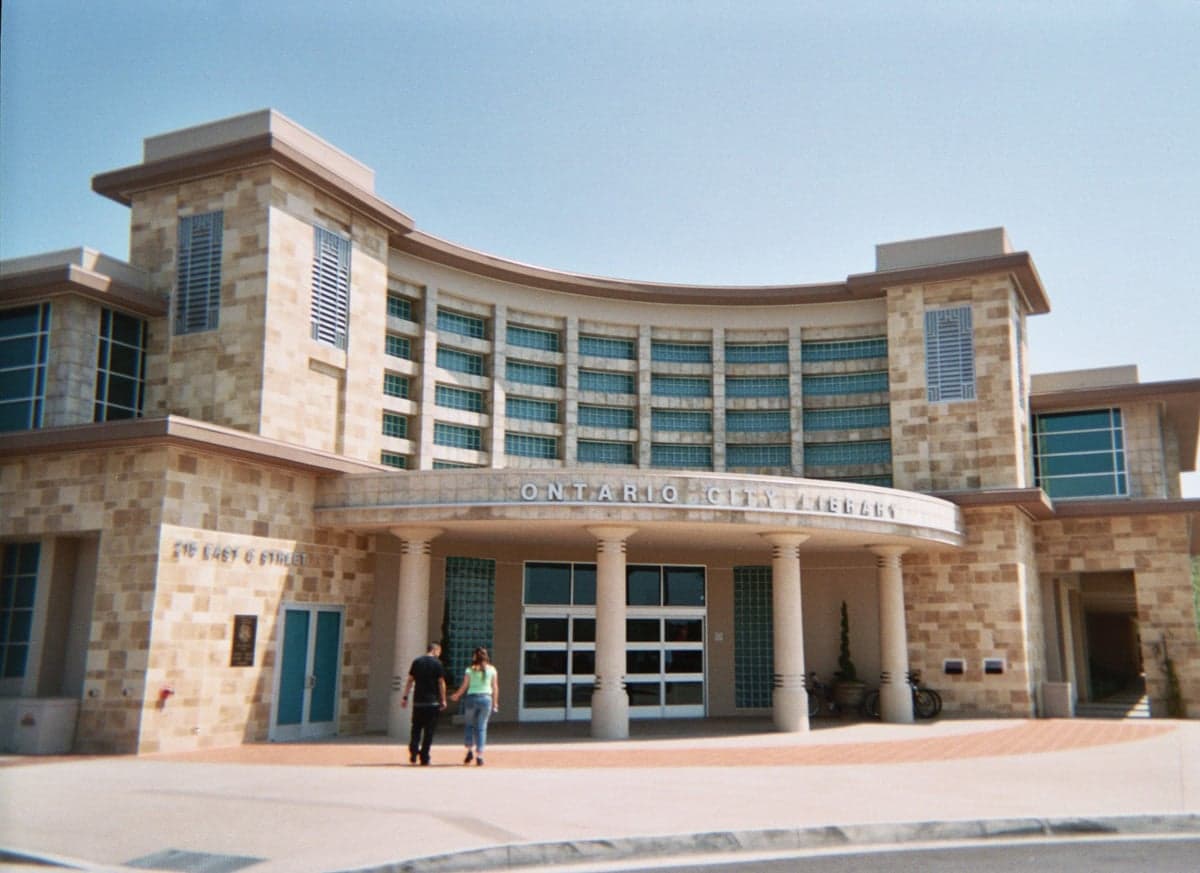
Photo: Wikipedia
Political ClimatePolitical Climate in Ontario, CA
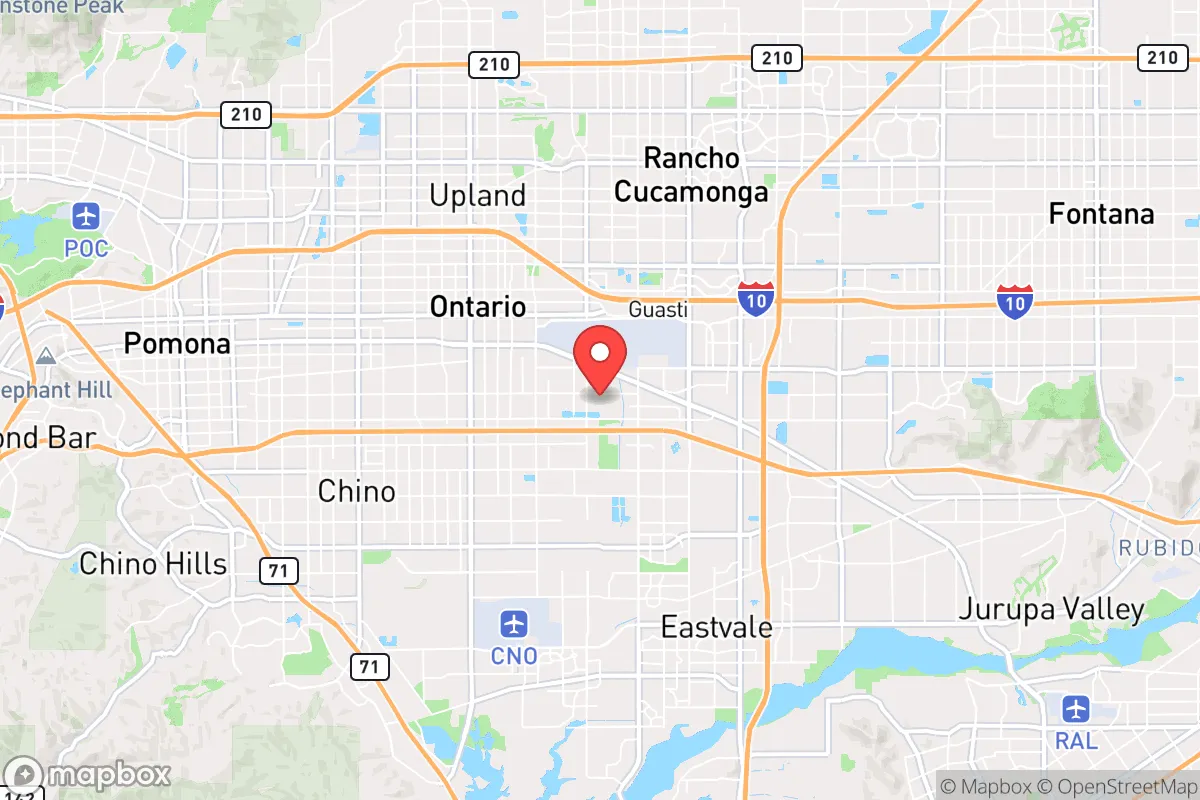
District shown is the primary district for this city’s centroid. Cities may span multiple districts.
Local Political AnalysisPolitical Analysis of Ontario, CA
Ontario, California, has shifted noticeably to the left over the past decade, and if you’ve lived here as long as I have, you’ve felt it. The city sits in San Bernardino County, but its Cook PVI of D+8 tells you it’s now a reliably Democratic stronghold—a far cry from the more balanced, independent-minded community I remember from the 1990s and early 2000s. The last few presidential cycles have seen the city vote blue by double digits, and local elections increasingly reflect that same progressive tilt. It’s not a radical shift overnight, but the trajectory is clear, and it’s one that has many of us who value personal freedom and limited government feeling a little uneasy about where we’re headed.
How it compares
Drive 15 minutes west to Chino Hills or 20 minutes north to Rancho Cucamonga, and you’ll find communities that still lean more purple—Chino Hills, for example, has a Cook PVI of R+2 and voted for Trump in 2020. Even nearby Upland, just a few miles away, is more politically mixed. Ontario, by contrast, has become the progressive anchor of the western Inland Empire. The contrast is stark: while Chino Hills residents might grumble about new housing mandates from Sacramento, Ontario’s city council has been more willing to embrace state-level progressive policies, from sanctuary city ordinances to aggressive climate action plans. If you’re looking for a place where local government pushes back against state overreach, you’re better off looking east toward Corona or south toward Temecula.
What this means for residents
For those of us who value personal freedoms—especially the right to make our own choices about healthcare, education, and how we run our businesses—Ontario’s political climate is becoming a real concern. The city has been quick to adopt California’s stricter gun laws, including local ordinances that go beyond state requirements, and there’s growing pressure on small business owners to comply with ever-expanding labor and environmental regulations. Property taxes, already high thanks to Prop 13’s limitations being chipped away, are paired with new local fees tied to “sustainability” initiatives. If you’re a parent, you’ve probably noticed the school board leaning into critical race theory and gender ideology curricula, with little room for parental opt-outs. It’s not that Ontario is a bad place to live—it’s still affordable compared to LA, and the airport is a huge plus—but the political direction feels like it’s drifting away from the common-sense, live-and-let-live values that made this area great.
On the cultural side, Ontario has a strong Latino community that historically leaned more conservative on social issues like family values and religious freedom. But younger voters here are increasingly aligning with national Democratic trends, and local leaders are catering to that shift. You’ll see more rainbow crosswalks and “Black Lives Matter” murals downtown, while the city’s once-prominent conservative veterans’ groups have less influence at city hall. The long-term outlook, if current trends hold, is more of the same: higher taxes, more regulations, and a local government that sees itself as an arm of Sacramento rather than a check on it. For now, Ontario is still a decent place to raise a family, but I’d keep an eye on the next few election cycles—if you value your freedoms, you might want to start looking at those purple towns to the west.

State Political ClimatePolitical Climate in California
State Political AnalysisPolitical Environment in the State
California is a one-party Democratic state where registered Democrats outnumber Republicans nearly 2-to-1, and the last Republican presidential candidate to carry it was George W. Bush in 1988. The dominant coalition is a mix of coastal progressives, union households, and a growing Latino electorate that leans left, while the GOP has been reduced to a rump party in most statewide races. Over the past 20 years, the state has shifted from a purple battleground—where Arnold Schwarzenegger won as a Republican in 2003—to a solidly blue supermajority, with Democrats holding every statewide office and controlling both legislative chambers by veto-proof margins. For a conservative considering relocation, the political reality is that your vote in statewide elections will be largely symbolic, though local and county-level politics can still offer meaningful representation.
Urban vs. rural divide
The political map of California is a tale of two states. The coastal metros—Los Angeles, San Francisco, San Diego, and San Jose—drive the Democratic supermajority, with San Francisco County delivering 85% of its vote to Joe Biden in 2020. Inland, the Central Valley and far northern counties are reliably red: Bakersfield (Kern County) voted +20 for Trump, and Redding (Shasta County) is a conservative stronghold where the county GOP is openly secessionist-minded. The real story is the suburbs: Orange County, once a Reagan Republican bastion, flipped to Biden in 2020 and has not looked back, while Riverside and San Bernardino counties (the Inland Empire) are trending purple but still lean Democratic in statewide races. The rural north—counties like Modoc, Siskiyou, and Lassen—vote 70-80% Republican but have negligible population. The divide isn't just geographic; it's cultural. A conservative moving to Fresno will find a more moderate environment than one moving to Santa Monica, but even in red counties, state policy is set by Sacramento, not the local sheriff.
Policy environment
California’s policy environment is aggressively progressive and heavily regulated. The state has the highest personal income tax rate in the nation (13.3% for top earners), a state sales tax that can exceed 10% with local add-ons, and some of the highest gas taxes in the country—currently 68 cents per gallon, with annual inflation adjustments. Property taxes are capped at 1% of assessed value under Prop 13, but reassessment upon sale means new buyers face much higher bills. Education policy is dominated by the teachers' unions, with the state spending over $20,000 per pupil but ranking near the bottom in NAEP scores. Healthcare is heavily regulated, with a state-run exchange (Covered California) and a recent push toward single-payer, though it hasn't passed. Election laws are among the most liberal: universal mail-in voting (made permanent in 2021), same-day registration, and no voter ID requirement. For a conservative, the policy environment feels like a constant expansion of government into daily life—from energy mandates banning gas cars by 2035 to strict rent control laws in many cities.
Trajectory & freedom
California is becoming less free by almost any measure, especially for conservatives. Recent legislation has expanded government control over personal choices: AB 5 (2019) effectively banned independent contracting for gig workers, SB 9 (2021) eliminated single-family zoning in many areas, and AB 2098 (2022) allowed medical boards to discipline doctors for "misinformation" about COVID-19—a direct threat to free speech and medical autonomy. On gun rights, California has some of the strictest laws in the nation: an assault weapons ban, a 10-day waiting period, a "may issue" concealed carry regime (though Bruen is forcing changes), and a 2023 law banning carrying in most public places. Parental rights have been eroded by AB 1955 (2024), which prohibits school districts from requiring parental notification when a child changes gender identity. Property rights are weak: rent control is expanding, and the California Environmental Quality Act (CEQA) is frequently weaponized to block new housing. The trajectory is clear: more mandates, more taxes, and less individual autonomy.
Civil unrest & political movements
California has been a flashpoint for political unrest. The 2020 George Floyd protests in Los Angeles, San Francisco, and Oakland saw widespread looting and property destruction, with some areas like the Bay Area's "autonomous zone" in Oakland lasting weeks. The state's sanctuary law (SB 54, 2017) limits local law enforcement cooperation with federal immigration authorities, making California a de facto safe haven for illegal immigration. The secession movement (Calexit) has fizzled but still has a vocal minority, while the "State of Jefferson" movement in the rural north—covering counties like Siskiyou, Modoc, and Shasta—advocates for splitting off to form a new, more conservative state. Election integrity is a persistent concern: the 2020 election saw universal mail-in ballots sent to all registered voters, and a 2021 audit of Shasta County found irregularities in ballot handling, though no widespread fraud was proven. Visible flashpoints include homeless encampments in every major city, frequent protests at state capitol buildings, and a growing tension between urban progressives and rural conservatives that feels like a cold civil war.
Projection
Over the next 5-10 years, California will likely become even more Democratic and more progressive. Demographic trends favor the left: the state's white population is shrinking, while Latino and Asian populations—both trending Democratic—are growing. In-migration from other states is net negative (California lost a congressional seat in 2020 for the first time ever), but those leaving are disproportionately conservative, while those arriving from abroad are more liberal. The state's high cost of living and tax burden will continue to drive out middle-class families and small business owners, hollowing out the tax base. Expect more progressive policies: a wealth tax (proposed but not passed), single-payer healthcare (still on the table), and further restrictions on gun rights, free speech, and parental authority. The rural-urban divide will widen, but rural areas will have even less political power as their populations shrink. A conservative moving in now should expect to live under a government that is increasingly hostile to their values, with little hope of statewide change.
Bottom line for a new resident: If you're a conservative considering California, you need to be strategic. Choose your county carefully—El Dorado County (east of Sacramento) or San Luis Obispo County offer more moderate local governance, while Los Angeles or San Francisco will be a constant political battle. You'll pay high taxes, deal with heavy regulation, and see your values marginalized in state policy. But if you're in a high-income profession, the weather and economy might still make it worth it—just know that your vote for president or governor will be a protest vote, not a deciding one. The state is not going to flip anytime soon, so plan accordingly.
* Values derived from national, state, county, city and local statistics and may differ in a specific area. Last updated: 2026-04-24T11:46:54.000Z
Narrative content on this page is AI-generated and may contain mistakes. Verify any details that matter before acting on them.
ReloMaps may earn a commission from affiliate links at no extra cost to you.

