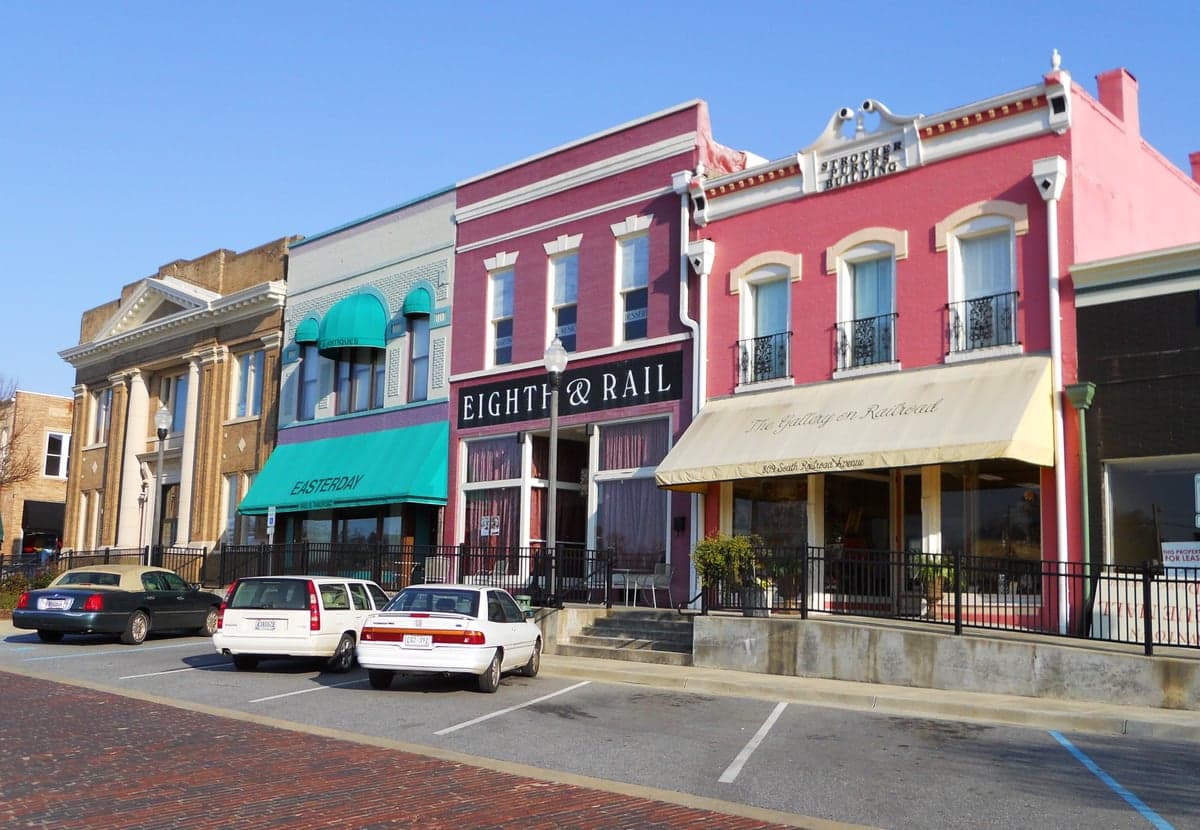
Photo: Wikipedia
Political ClimatePolitical Climate in Opelika, AL
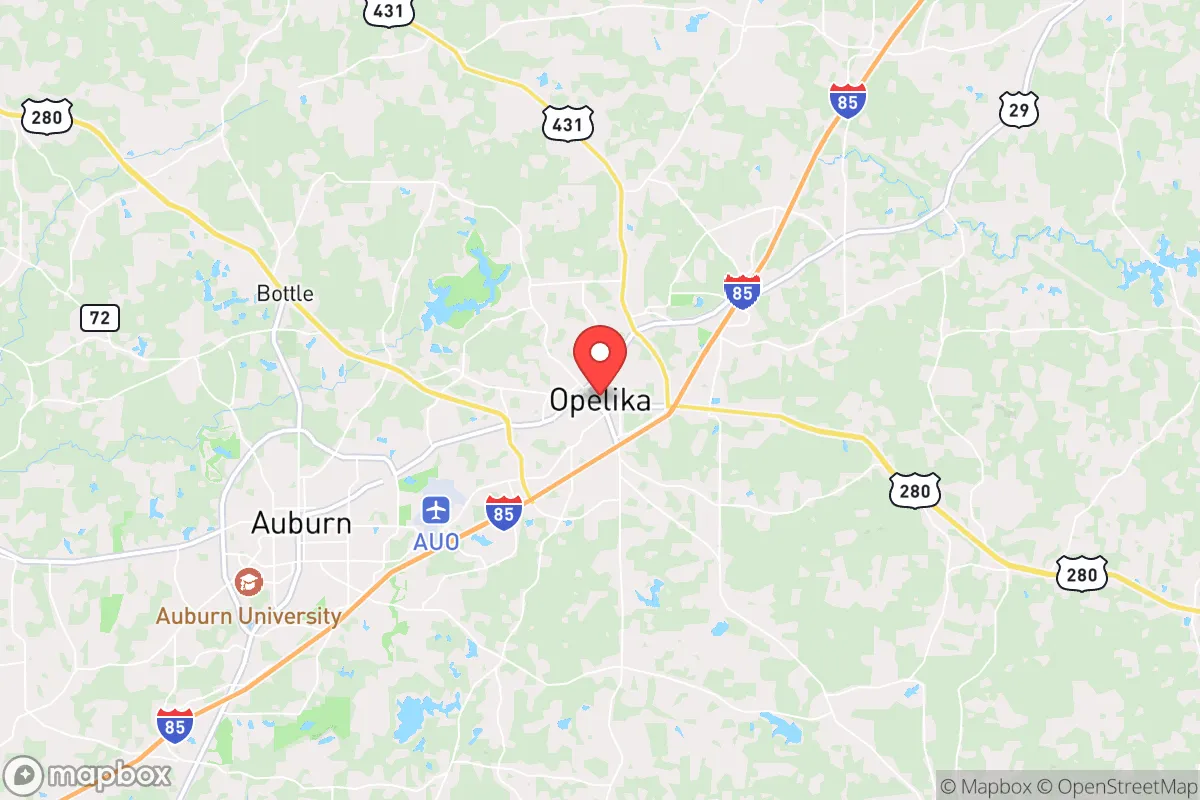
District shown is the primary district for this city’s centroid. Cities may span multiple districts.
Local Political AnalysisPolitical Analysis of Opelika, AL
Opelika is about as solidly conservative as it gets in Alabama, and that's not changing anytime soon. With a Cook PVI of R+23, this town leans Republican by a wider margin than most of the country, and the local culture reflects that. You can feel it in the way folks talk about taxes, property rights, and the Second Amendment—there's a deep-seated belief that the government should stay out of your business. The trajectory here has been steady red for decades, but I've noticed a subtle shift in the last five years or so. Some of the younger crowd moving in from Auburn or even Atlanta are bringing more progressive ideas, especially around zoning and environmental rules. It's not a flood, but it's a trickle that has me watching the city council meetings a little closer. If you're looking for a place where personal freedom is still the default, Opelika is it, but you'd better keep an eye on the school board and local elections if you want it to stay that way.
How it compares
Drive ten minutes west to Auburn, and you'll see a different world. Auburn is still conservative overall, but it's got a much stronger progressive undercurrent thanks to the university. You'll find more bike lanes, more talk about "sustainability," and a city council that's a little too eager to regulate what you can do with your own property. Opelika, by contrast, feels like the old guard—folks here remember when the county was mostly farmland, and they're not keen on letting outsiders tell them how to live. Head south to Phenix City or west to Tuskegee, and you'll see more Democratic leanings, but that's mostly about demographics and history. Opelika sits in Lee County, which is a bit of a political island: the rural parts vote hard red, while the college town votes a little softer. That R+23 rating means Opelika is pulling the county rightward, and I expect that to hold as long as the manufacturing base here stays strong. The contrast with Auburn is the one to watch—if Opelika starts adopting Auburn's zoning codes or tax policies, that's a red flag for me.
What this means for residents
For the average person living here, the political climate means you can pretty much live your life without the government breathing down your neck. Property taxes are low, there's no city income tax, and the local leadership is generally pro-business and pro-gun. You won't see mask mandates or vaccine passports being pushed here—that kind of overreach got shut down fast during the pandemic. The downside is that if you're hoping for more public transit or aggressive climate action, you're in the wrong town. The city council tends to move slow on anything that smells like regulation, which is fine by me, but it does mean infrastructure improvements can drag. For families, the schools are decent and the crime rate is low, but the political vibe is definitely "leave us alone." If you're a small business owner or a tradesperson, you'll appreciate the lack of red tape. Just don't expect the city to bail you out if you make a bad bet—personal responsibility is still the name of the game here.
One thing that sets Opelika apart is its cultural resistance to the kind of progressive policy shifts you see in places like Birmingham or Huntsville. There's no talk of defunding the police or removing historical monuments—those conversations get shut down fast. The local paper, the Opelika-Auburn News, leans center-right, and the talk radio stations are reliably conservative. But I'll be honest: the long-term trend worries me a little. As more people move here from blue states for the jobs at places like the Kia plant or the new Amazon facility, they bring their voting habits with them. So far, the old-timers have held the line, but if you're thinking of relocating here, get involved in the local GOP or at least show up to city council meetings. This town's freedom isn't guaranteed—it's earned by staying vigilant.

State Political ClimatePolitical Climate in Alabama
State Political AnalysisPolitical Environment in the State
Alabama is a deeply conservative state, with a Republican lean that has only intensified over the past two decades. The state hasn’t voted for a Democratic presidential candidate since 1976, and in 2024, Donald Trump carried it by over 30 points. The dominant coalition is a mix of rural, evangelical, and working-class voters, with the GOP holding supermajorities in both chambers of the legislature and every statewide office. The trajectory since the early 2000s has been a steady march rightward, as the last vestiges of Blue Dog Democrats in rural areas have either switched parties or been replaced by Republicans. For a conservative relocating here, the political climate is overwhelmingly favorable, though the state’s internal dynamics are more nuanced than the national headlines suggest.
Urban vs. rural divide
The political map of Alabama is a study in contrasts. The state’s largest metro, Birmingham (Jefferson County), is the only reliably blue stronghold, driven by a large African American population and a growing professional class. Jefferson County has voted Democratic in every presidential election since 2008, and it’s where you’ll find the state’s most progressive activism. Montgomery and Mobile are more competitive but still lean Republican at the county level, though their urban cores are increasingly Democratic. The real engine of the state’s conservatism is the rural and suburban expanse. Huntsville (Madison County) is a fascinating exception: a fast-growing, high-tech hub that votes reliably Republican but with a libertarian streak—less focused on social issues and more on economic freedom and defense spending. The Gulf Coast counties like Baldwin and Mobile are deeply red, driven by retirees, military families, and tourism workers. The Black Belt region—stretching from Selma to the Georgia line—is overwhelmingly Democratic and African American, but its population is declining, diluting its political influence. The real story is the suburban ring around Birmingham: Shelby County is one of the most Republican counties in the nation, with a 2024 margin of +45 for Trump. That’s where the money and the votes are concentrated.
Policy environment
Alabama’s policy environment is a conservative’s dream, with low taxes, minimal regulation, and a strong emphasis on traditional values. The state has no state-level property tax (counties and cities levy it), and the income tax is a flat 5% on most income, with a top rate of 5% on high earners. Sales tax is high—averaging around 9-10% in most cities—but that’s the trade-off for no property tax. The regulatory posture is business-friendly: Alabama is a right-to-work state, and the legislature has consistently blocked minimum wage increases at the local level. Education policy is a mixed bag: the state has a robust school choice program, including the Alabama Accountability Act, which provides tax credits for private school tuition, and a growing charter school sector. However, public school funding remains low, and the state’s rural districts struggle. Healthcare is a sore spot: Alabama did not expand Medicaid under the ACA, leaving a coverage gap for low-income adults. Election laws are secure: voter ID is required, and the state has purged inactive voter rolls. The legislature has also passed laws restricting ballot harvesting and requiring paper ballots. For a conservative, the policy environment is stable and predictable, with a government that largely stays out of your business—unless you’re trying to start a cannabis business, which remains illegal for recreational use.
Trajectory & freedom
Alabama is becoming more free in many respects, but the trajectory is uneven. On gun rights, the state is a national leader: permitless carry (constitutional carry) was signed into law in 2022, and the state has strong preemption laws preventing local governments from enacting their own restrictions. On parental rights, the legislature passed the Alabama Parental Rights Act in 2022, which prohibits schools from withholding information about a child’s health or well-being from parents, and the What is a Woman Act in 2024, which defines sex based on biological reality. Medical autonomy took a hit with the 2024 Alabama Supreme Court ruling that embryos are children under state law, which has chilled IVF access—a flashpoint for families. On speech, the state has no hate speech laws, and campus free speech is protected by state statute. Property rights are strong: there’s no statewide rent control, and eminent domain is tightly restricted. The biggest threat to freedom is the state’s heavy reliance on sales tax, which is regressive and hits low-income families hardest. But overall, the trend is toward expanding personal liberty, especially on guns and parental rights. The 2024 legislative session also saw a ban on DEI programs in public universities and state agencies, which was a clear win for free speech and merit-based hiring.
Civil unrest & political movements
Alabama has a relatively low level of visible civil unrest compared to other states, but there are flashpoints. The Black Belt has a long history of civil rights activism, and protests still occur in Montgomery and Selma around voting rights and police reform—though they are small and localized. The most organized political movements are on the right: the Alabama Republican Party is dominated by the Alabama Policy Institute and the Eagle Forum, which push for school choice, anti-abortion legislation, and election integrity. Immigration politics are a simmering issue: the state passed HB 56 in 2011, one of the strictest anti-illegal immigration laws in the country, and while some provisions were struck down, the law remains on the books. There is no sanctuary city movement in Alabama; in fact, the legislature passed a law in 2024 requiring local law enforcement to cooperate with ICE. Election integrity controversies are minimal—the state’s 2020 and 2024 elections were smooth, with no major fraud allegations. The most visible flashpoint for a new resident would be the ongoing debate over gambling: the state has no legal casinos or lottery, and the legislature has repeatedly failed to pass a gaming bill, leading to a thriving illegal gambling market in places like Birmingham and Mobile. For a conservative, the political climate is stable and orderly, with no major protests or disruptions to daily life.
Projection
Over the next 5-10 years, Alabama will likely become more conservative, not less. The state is experiencing significant in-migration from blue states like California, Illinois, and New York, but these newcomers are overwhelmingly conservative or libertarian—they’re moving for lower taxes, less regulation, and a slower pace of life. The Huntsville metro is the fastest-growing area, and its Republican lean is solidifying. The Gulf Coast is also booming, with Baldwin County growing at 3% annually. The Black Belt will continue to lose population, further diluting Democratic influence. The biggest wildcard is the potential for a gambling expansion, which could shift the political landscape by bringing in new revenue and reducing the influence of the Baptist lobby. But even if that happens, the state’s social conservatism is deeply entrenched. The 2024 ban on DEI programs and the embryo ruling suggest the legislature will continue to push cultural issues. For a conservative moving in now, expect to find a state that is more conservative in 2034 than it is today—with lower taxes, stronger gun rights, and a government that is increasingly aligned with traditional values.
Bottom line for a new resident: Alabama is a safe bet for conservatives. You’ll find a low-tax, low-regulation environment with strong protections for gun rights, parental rights, and free speech. The political climate is stable, the people are friendly, and the government largely stays out of your life. The only real trade-offs are the high sales tax and the lack of Medicaid expansion, which can be a concern if you have pre-existing health conditions. But if you’re looking for a state where your values are the majority and the trajectory is in your favor, Alabama is a solid choice. Just be prepared for the heat—both the weather and the politics.
* Values derived from national, state, county, city and local statistics and may differ in a specific area. Last updated: 2026-04-19T19:03:01.000Z
Narrative content on this page is AI-generated and may contain mistakes. Verify any details that matter before acting on them.
ReloMaps may earn a commission from affiliate links at no extra cost to you.

