Photo: Wikipedia
Political ClimatePolitical Climate in Josephine County
Showing district-level results — no local-only data available.
Local Political AnalysisPolitical Analysis of Josephine County
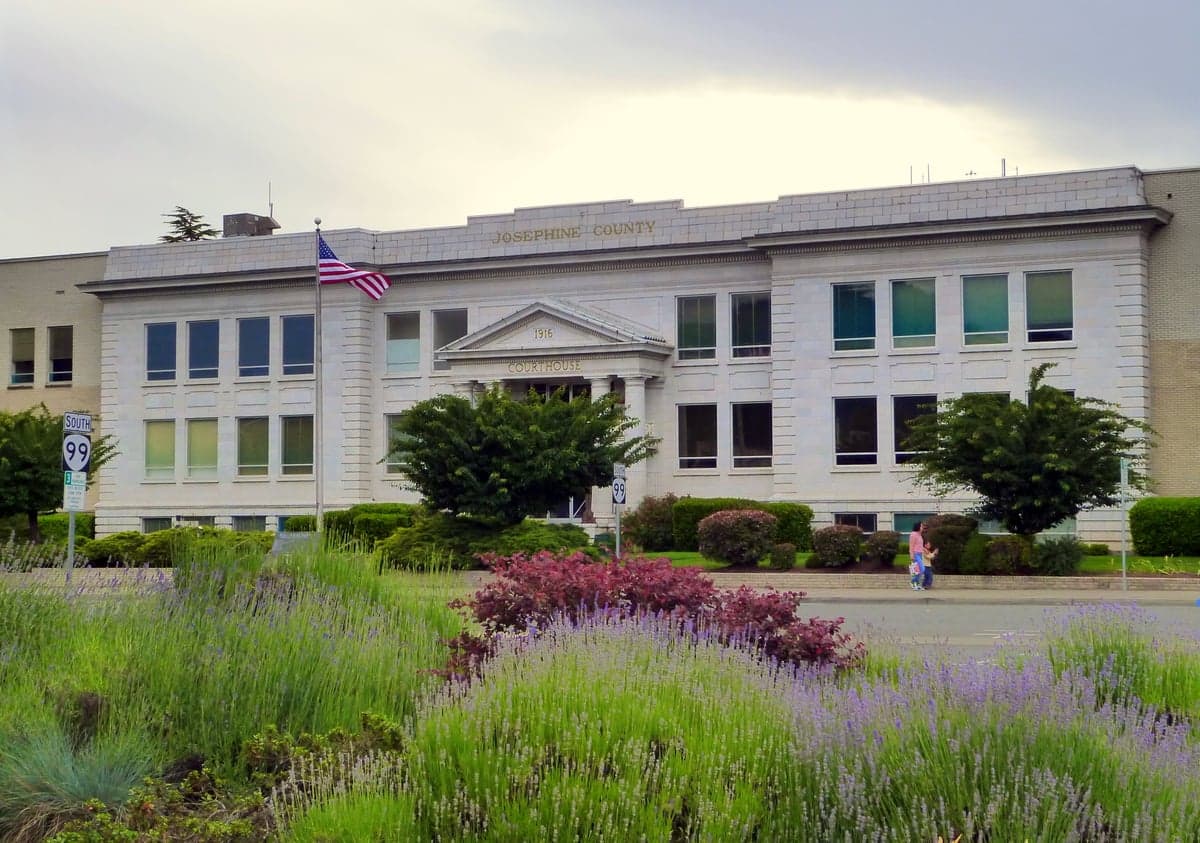
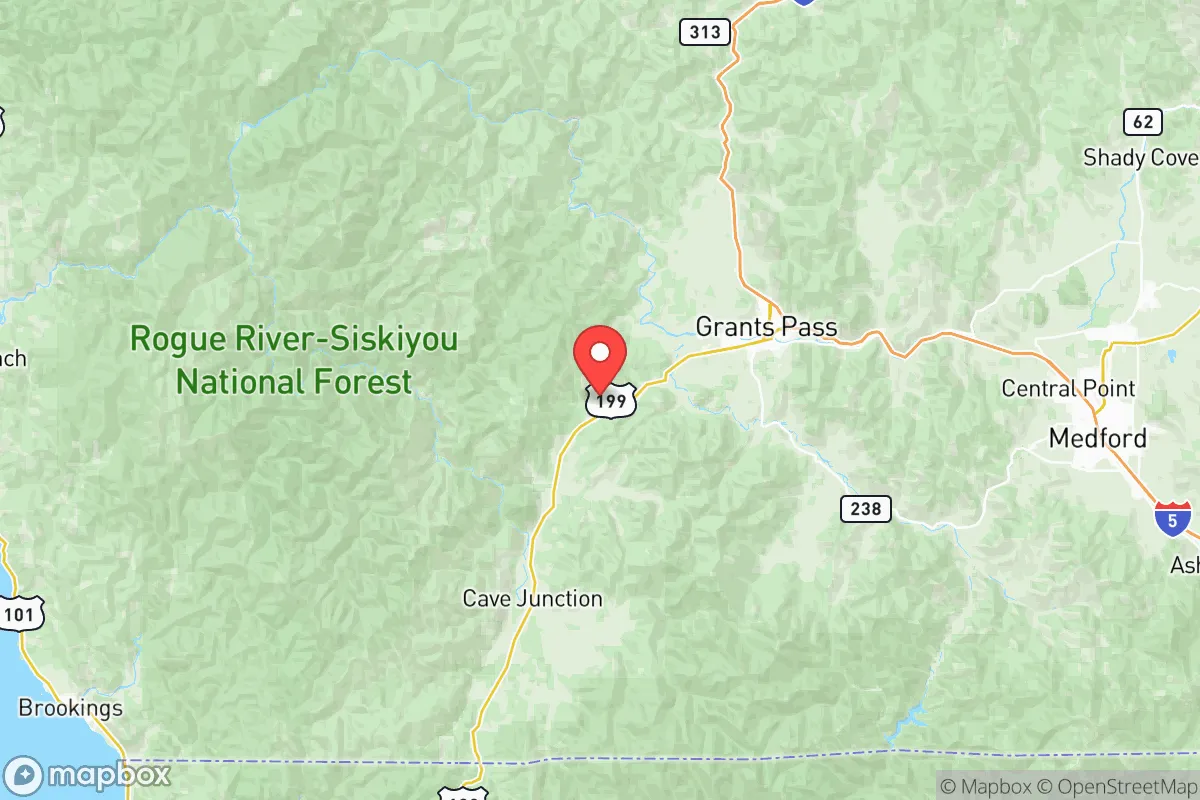
Josephine County, Oregon, has long been one of the most reliably conservative corners of the state, and that hasn't changed much. The Cook PVI sits at R+14, meaning it votes about 14 points more Republican than the national average, which is a stark contrast to the state of Oregon as a whole, which leans D+8. If you look at the presidential results, it's not even close—Trump carried the county by over 20 points in both 2016 and 2020, and that trend held in 2024. But here's the thing: it wasn't always this way. Back in the 90s and early 2000s, the county was more of a purple patch, with a strong independent streak. The shift to deep red really accelerated after 2010, driven by a mix of folks moving in from California and a growing frustration with Salem's one-size-fits-all mandates. You can see the variation within the county too—Grants Pass, the county seat, is reliably red, while Cave Junction and the Illinois Valley are even more conservative. The only real blue dots are in the more rural pockets near the coast range, like the area around Selma, where a few progressive transplants have settled, but they're outnumbered by a long shot.
How it compares
Comparing Josephine County to the rest of Oregon is like comparing a campfire to a wet blanket. The state as a whole is dominated by the Portland metro area and the Willamette Valley, which push the overall PVI to D+8. That means state-level policies—like the recent gun control measures (Measure 114), the strict land-use laws, and the push for rent control—are written by and for the urban corridor. Josephine County residents often feel like they're being governed by people who have never set foot in a logging town or a rural fire district. For example, the state's 2023 law banning flavored tobacco products was a huge hit in Portland, but in Josephine County, it was seen as another nanny-state overreach. The county's commissioners have pushed back on state mandates, including a 2024 resolution opposing the governor's emergency powers during wildfire seasons, arguing they were used to impose curfews and travel restrictions that hurt local businesses. It's a classic urban-rural divide, and Josephine County is on the front lines of it.
What this means for residents
For someone living here, the political climate means you have to be proactive about protecting your way of life. The county has a strong tradition of self-reliance—think volunteer fire departments, private well water, and off-grid living. But state-level policies are chipping away at that. The push for statewide homeless camping bans, for instance, has been a mixed bag; Josephine County already had its own ordinances, but Salem's attempts to centralize the issue have led to confusion. On the plus side, the county's conservative majority means local taxes are relatively low, and there's less appetite for new regulations on things like short-term rentals or home-based businesses. However, the flip side is that state funding for things like mental health services and road maintenance is often tied to compliance with progressive mandates, so the county sometimes has to choose between its principles and its budget. It's a constant balancing act.
If you're looking at the cultural and policy distinctions, the biggest one is probably the attitude toward land use and personal freedom. In Josephine County, the prevailing view is that your property is your castle—you should be able to build a shed, shoot a rifle on your own land, or homeschool your kids without a state bureaucrat looking over your shoulder. That's a stark contrast to the Portland mindset, where collective action and government oversight are seen as solutions. The county's strong opposition to Measure 114, which would require background checks for all ammunition purchases, is a perfect example. Locals see it as an infringement on the Second Amendment, plain and simple. Looking ahead, the trend is likely to continue: as Portland gets bluer, Josephine County will get redder. The only wildcard is whether the state's housing crisis pushes more moderate or even liberal Californians into the area, which could shift the balance in Grants Pass over the next decade. But for now, it's still a place where a "Keep Oregon Free" bumper sticker is more common than a "Hope" poster.

State Political ClimatePolitical Climate in Oregon
State Political AnalysisPolitical Environment in the State
Oregon has a Cook PVI of D+8, meaning it leans about eight points more Democratic than the national average, but that single number hides a deeply fractured political landscape. The state’s dominant coalition is a fusion of Portland metro progressives, Willamette Valley liberals, and a growing number of out-of-state transplants from California and Washington who have shifted the balance of power leftward over the past two decades. While Oregon voted for every Democratic presidential nominee since 1988, the margin has widened from single digits in the 1990s to double digits in recent cycles—a trajectory that alarms conservatives who remember when the state was a genuine battleground.
Urban vs. rural divide
The political map of Oregon is essentially a tale of two states. The Portland metro area—Multnomah, Washington, and Clackamas counties—generates roughly half the state’s population and votes overwhelmingly Democratic, with Multnomah County alone delivering a 40-point margin for Biden in 2020. The Willamette Valley corridor, stretching through Salem (Marion County) and Eugene (Lane County), reinforces this urban-liberal axis. Meanwhile, eastern and southern Oregon are solidly Republican: Deschutes County (Bend) has been a notable flip zone, shifting from reliably red to a purple battleground as California transplants poured in, though it still leans right in statewide races. Rural counties like Douglas (Roseburg), Jackson (Medford), and Klamath (Klamath Falls) routinely vote 65-70% Republican. The divide is so stark that in 2020, 26 of Oregon’s 36 counties voted for Trump, yet the state went blue by 16 points—a textbook case of geographic polarization.
Policy environment
Oregon’s policy environment is a mixed bag that increasingly tilts toward progressive control. The state has no sales tax—a rare bright spot for conservatives—but makes up for it with the nation’s sixth-highest personal income tax rate (top marginal rate of 9.9%) and high property taxes in metro areas. The regulatory posture is aggressive: Oregon was the first state to implement statewide rent control (2019’s SB 608), and its land-use planning system, unique in the nation, severely restricts rural development and property rights. On education, Oregon ranks near the bottom nationally in graduation rates (around 80%) and has seen a 30% decline in student enrollment in Portland Public Schools since 2015, driven partly by families fleeing to suburban or rural districts. Healthcare is dominated by the Oregon Health Plan, the state’s Medicaid expansion, which covers about one in four residents. Election laws are among the most liberal: Oregon was the first state to vote entirely by mail (1998), automatically registers voters at the DMV, and allows same-day registration—policies that conservatives argue reduce election integrity, though no major fraud scandals have emerged.
Trajectory & freedom
On the freedom front, Oregon has moved decisively in one direction over the past decade: less free. The 2019 Student Success Act imposed a $2 billion corporate tax hike to fund education, with little measurable improvement in outcomes. Gun rights have been under sustained assault: Measure 114, passed in 2022, requires permits to purchase firearms, bans magazines over 10 rounds, and mandates background checks for private sales—though it remains tied up in court. Parental rights took a hit with the 2021 passage of HB 3044, which prohibits school districts from notifying parents if a student requests a name or pronoun change, effectively creating a secrecy mandate. Medical autonomy was curtailed by the 2023 HB 2002, which codified abortion access and gender-affirming care as a “fundamental right,” overriding parental consent requirements for minors in some cases. Property rights have been eroded by the 2019 HB 2001, which effectively ended single-family zoning in cities over 10,000 people, allowing duplexes and triplexes in neighborhoods that were previously exclusively residential. The trend is clear: Oregon’s legislature, under Democratic supermajorities since 2018, has systematically expanded state power into areas conservatives consider private.
Civil unrest & political movements
Oregon has been a flashpoint for political unrest. The 2020 Portland protests, which ran for over 100 consecutive nights, saw federal agents deployed and millions in property damage—a spectacle that became a national symbol of progressive governance gone awry. On the right, the Oregon Citizens Alliance and later the Oregon Republican Party have pushed for secession of rural counties into a proposed “Greater Idaho,” with 11 of 36 counties having voted to explore the idea. Immigration politics are tense: Portland is a sanctuary city, and the state’s 1987 sanctuary law was strengthened in 2021 with HB 3265, which prohibits state and local law enforcement from cooperating with federal immigration authorities. Election integrity remains a sore point: the 2020 election saw Trump’s campaign file lawsuits over ballot drop-box security, though courts dismissed them. Visible flashpoints for a new resident include frequent protests in downtown Portland, graffiti on public buildings, and the stark contrast between liberal city centers and conservative rural towns where “Trump 2024” flags fly from pickup trucks.
Projection
Over the next 5-10 years, Oregon is likely to become more Democratic and more progressive, driven by two demographic forces: continued in-migration from California and Washington (both blue states) and the out-migration of conservatives to Idaho, Texas, and Montana. The Portland metro will continue to dominate state politics, while rural counties will become even more marginalized in the legislature, fueling secessionist sentiment. The Democratic supermajority will likely push for a state-level wealth tax, further gun restrictions, and a single-payer healthcare system—all of which have been introduced but not yet passed. However, the 2022 midterms offered a glimmer of hope for conservatives: the governor’s race was decided by just 3.5 points, and Republicans flipped two congressional seats, suggesting the leftward march may have a ceiling. A new resident moving in now should expect a state where their vote in statewide races is largely symbolic if they live outside the Willamette Valley, but where local government in places like Bend, Medford, or Grants Pass can still reflect conservative values.
For a conservative considering Oregon, the bottom line is this: you’ll find beautiful landscapes and a low-tax advantage on sales, but you’ll be living in a state where your political voice is increasingly drowned out by Portland’s progressive machine. If you value local control and can find a job in a red-leaning town like Roseburg or Klamath Falls, you can carve out a decent life—but don’t expect the state government to have your back. The trajectory is toward more regulation, higher taxes, and less personal freedom, and that’s not changing anytime soon.
* Values derived from national, state, county, city and local statistics and may differ in a specific area. Last updated: 2026-06-01T12:03:19.000Z
Narrative content on this page is AI-generated and may contain mistakes. Verify any details that matter before acting on them.
ReloMaps may earn a commission from affiliate links at no extra cost to you.

