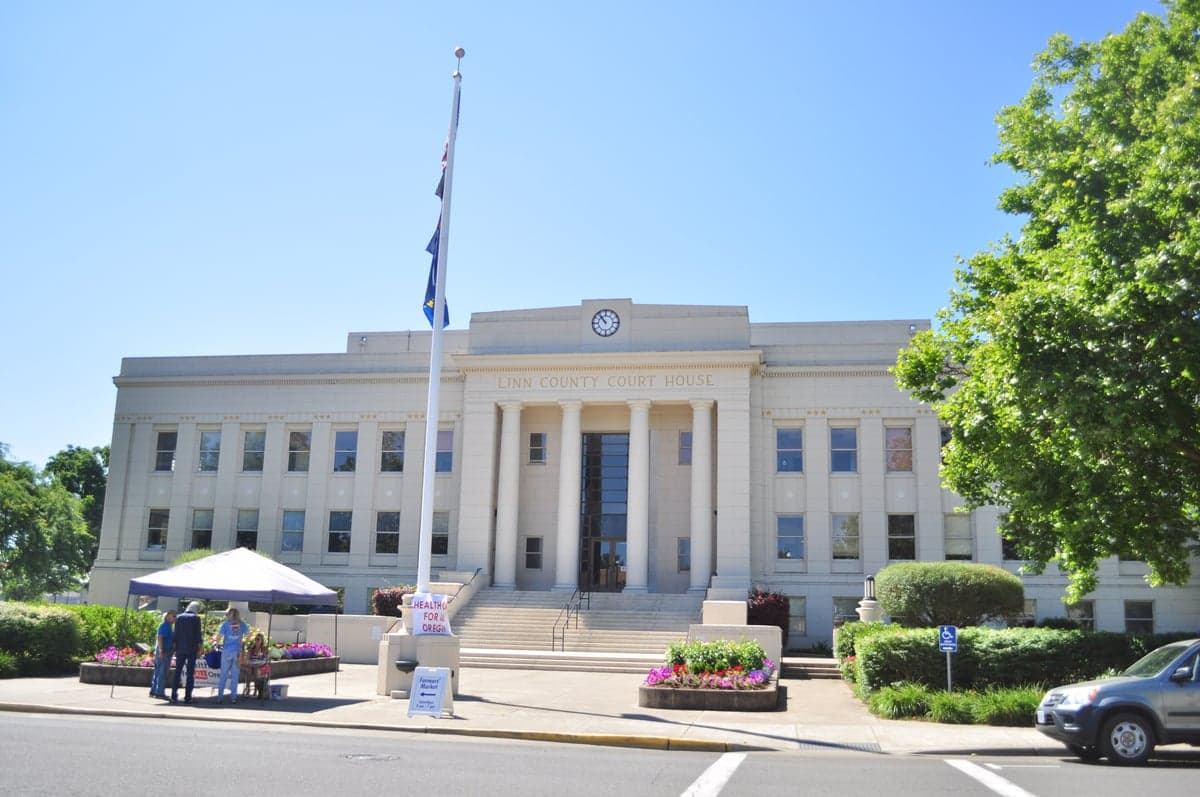
Photo: Wikipedia
Quality of Life in Linn County
A livable area that tracks near national norms for affordability, walkability, and neighborhood health.
What does Quality of Life tell us?
Quality of Life measures an area by evaluating factors like cost of living, nearby amenities, country club access, airport proximity, socioeconomic signals and neighborhood character. For large states, this is a general average — quality of life can vary dramatically between metro areas, suburbs, and rural communities within the same state.
What does this tell us?
Quality of Life measures an area by evaluating factors like cost of living, nearby amenities, country club access, airport proximity, socioeconomic signals and neighborhood character. For large states, this is a general average — quality of life can vary dramatically between metro areas, suburbs, and rural communities within the same state.
Cost of Living
15% above national average
75%
The Real Cost of Living in Linn County for 2026
| Tier | Individual | Family (4) |
|---|---|---|
| Survival | $20k | $38k |
| Comfortable | $67k | $98k |
| Luxury | $106k+ | $165k+ |
| Elite (Top 5%) | $125k+ | $194k+ |
Quality-of-Life Analysis
Linn County, Oregon, offers a broad spectrum of quality-of-life options, from the full-service city of Albany to the quiet, unincorporated crossroads of Crabtree and the remote timber towns of the Cascade foothills. The county draws a diverse mix of residents: commuters who work in the Willamette Valley's major employment centers, retirees seeking affordable riverfront property, and families priced out of Benton and Lane counties. With a cost-of-living index of 115 (100 being the U.S. average), Linn County sits below the Oregon state average of 130, making it one of the more budget-friendly options west of the Cascades.
Largest town(s) & population centers
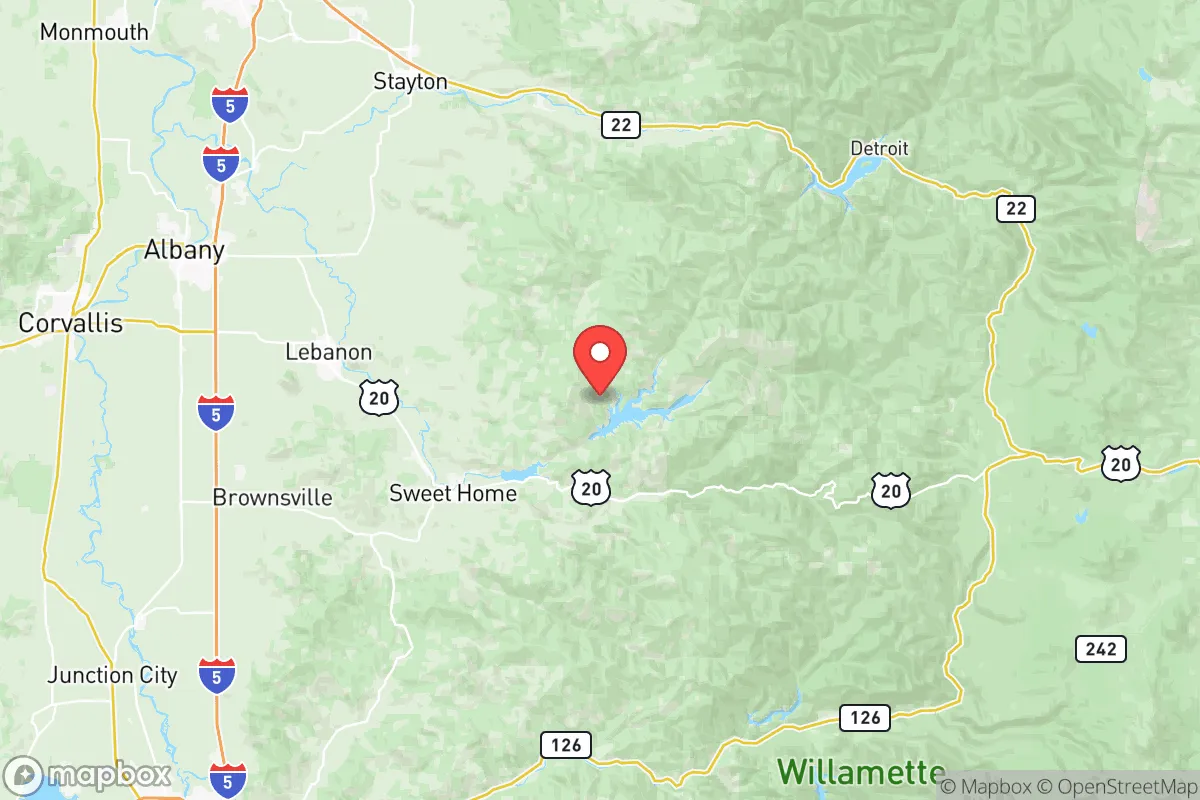
Albany, the county seat and largest city (pop. ~57,000), anchors the western edge of the county along Interstate 5. Daily life here centers on a walkable, historic downtown with the Albany Farmers' Market, the Linn County Fair & Expo Center, and the 4.5-mile Talking Water Gardens loop trail. Albany is a major employment hub, hosting the Samaritan Albany General Hospital, the Oregon State University Extension Service, and a cluster of manufacturing plants including ATI Specialty Alloys and Selmet. The city's average commute of 25.3 minutes is manageable, though many residents commute 30-40 minutes to jobs in Corvallis (home to Oregon State University) or Salem (the state capital). Lebanon (pop. ~20,000), 15 miles southeast of Albany, offers a smaller-town feel with its own hospital (Samaritan Lebanon Community Hospital) and the historic Lebanon Farmers Market. Lebanon's housing stock is slightly older and more affordable than Albany's, with a median home value around $310,000 compared to Albany's $360,000. Sweet Home (pop. ~10,000), farther east at the edge of the Willamette National Forest, serves as a gateway to Foster Lake and the South Santiam River. Its economy relies on timber, recreation, and the Sweet Home School District, which draws families seeking smaller class sizes.
Smaller towns & rural pockets
East of Sweet Home, the county becomes increasingly rural and forested. Brownsville (pop. ~1,700) is a well-preserved historic mill town with a downtown listed on the National Register of Historic Places; it attracts retirees and artists but offers few employment options beyond the local school district and small retail. Mill City (pop. ~1,900), straddling the Linn-Marion county line, is a former timber hub now seeing an influx of remote workers drawn to its $250,000 median home price and proximity to the North Santiam River. Crabtree and Scio (pop. ~1,200 and ~1,000, respectively) are unincorporated communities where life revolves around the volunteer fire department, the local grange hall, and the Scio High School Timberwolves. These areas lack municipal water and sewer, so residents rely on wells and septic systems. Foster and Cascadia, both unincorporated, are tiny hamlets (pop. under 500) along the South Santiam River, popular with second-home owners and recreationalists who fish, kayak, and hike in the adjacent Willamette National Forest.
Cost & lifestyle range
The cost-of-living spread across Linn County is wide. At the high end, Albany's median home value of $344,600 and median rent of $1,273 reflect its proximity to I-5 and its full-service amenities (multiple grocery stores, a hospital, a community college). Lebanon and Sweet Home sit in the middle, with home values 10-15% lower than Albany but still above the county's rural areas. At the low end, Brownsville and Mill City offer median home values around $250,000-$280,000, though inventory is limited and many homes need renovation. Rural properties in the eastern part of the county, such as those near Cascadia or Upper Soda, can be found for under $200,000 but come with long commutes (40-50 minutes to Albany) and minimal services—the nearest grocery store may be 20 miles away. The lifestyle trade-off is clear: Albany residents pay more for housing but gain walkability, jobs, and public transit (Linn Shuttle), while those in the eastern foothills trade convenience for space, privacy, and direct access to national forest land.
Linn County best suits residents who value affordability and a slower pace over urban energy. Commuters to Corvallis or Salem will find Albany and Lebanon practical bases, while remote workers, retirees, and outdoor enthusiasts may prefer the lower costs and quieter life of Brownsville, Mill City, or the Santiam Canyon. The county's diversity of settings—from I-5 corridor suburbs to deep-forest homesteads—means that almost any budget or lifestyle preference can find a match, as long as the trade-offs in commute time and access to services are accepted.

Crime in Linn County
Crime rates similar to the national median for U.S. locations.
Violent CrimeViolent Crime Analysis
Property CrimeProperty Crime Analysis
Crime Analysis
Linn County, Oregon, presents a mixed safety profile where property crime rates significantly exceed both state and national averages, while violent crime remains slightly below the national benchmark. With a violent crime rate of 309.1 per 100,000 residents and a property crime rate of 2,123.5 per 100,000, the county's overall safety picture is heavily influenced by conditions in its larger population centers, particularly Albany and Lebanon. Residents and prospective movers should weigh these statistics carefully, as crime is not distributed evenly across the county's 2,300 square miles.
Crime in context
Linn County's violent crime rate of 309.1 per 100,000 sits just below the national average of approximately 380 per 100,000 but remains notably higher than the Oregon state average of roughly 290 per 100,000. Property crime, however, is the more pressing concern: at 2,123.5 per 100,000, it exceeds the national average of about 1,954 per 100,000 and is significantly above the Oregon state average of roughly 1,800 per 100,000. These figures place Linn County in a middle tier among Oregon's 36 counties for public safety. The county's proximity to the liberal-leaning Willamette Valley corridor, including progressive judicial districts in Benton and Lane counties, may influence regional crime patterns, as offenders often cross jurisdictional lines. The district attorney's office in Linn County has historically taken a more conservative approach to prosecution compared to neighboring Multnomah County, but the broader regional trend toward progressive criminal justice reforms—such as reduced sentencing for property crimes—has been cited by local law enforcement as a factor contributing to repeat offenses.
What residents experience
Residents in Linn County's urban centers face the highest risk. Albany, the county seat and largest city, consistently reports the highest volume of both violent and property crimes, with theft and vehicle break-ins being the most common complaints. Lebanon follows closely, particularly in its downtown core and near the hospital district, where drug-related property crimes are frequent. Sweet Home has seen a spike in burglaries tied to transient populations moving along Highway 20. In contrast, smaller communities like Mill City and Harrisburg report far fewer incidents, with violent crime being rare. Brownsville, known for its historic district, maintains a notably low crime profile, though residents there express concern about property crimes spilling over from the I-5 corridor. Daily life for most Linn County residents involves standard precautions: locking vehicles, securing outdoor equipment, and avoiding unlit areas in Albany's downtown after dark. The county sheriff's office maintains a visible presence in unincorporated areas, but response times can exceed 20 minutes in remote stretches near the Cascade foothills.
Neighborhood-level variation
Crime in Linn County is highly concentrated. The Albany neighborhoods east of I-5, particularly around the Timber-Linn area and the downtown core, see the highest rates of both violent and property crime. The South Albany area, near the Benton County line, is comparatively safer, with lower incident rates. In Lebanon, the area around the hospital and along Main Street sees the most activity, while the residential neighborhoods west of Highway 20 are quieter. Sweet Home's crime is largely confined to the downtown commercial strip and the Foster Lake recreation area, where seasonal tourism brings both visitors and opportunistic theft. For those seeking the safest options, Brownsville and Harrisburg consistently report the lowest crime rates in the county, with violent crime virtually absent in recent years. Prospective residents should also note that the progressive policies of the Oregon State Legislature, including Measure 110 (drug decriminalization) and reduced sentencing guidelines, have been linked by local law enforcement to increased property crime recidivism across the Willamette Valley, including Linn County.
* Values derived from national, state, county, city and local statistics and may differ in a specific area. Last updated: 2026-06-02T03:31:09.000Z
Narrative content on this page is AI-generated and may contain mistakes. Verify any details that matter before acting on them.
ReloMaps may earn a commission from affiliate links at no extra cost to you.

