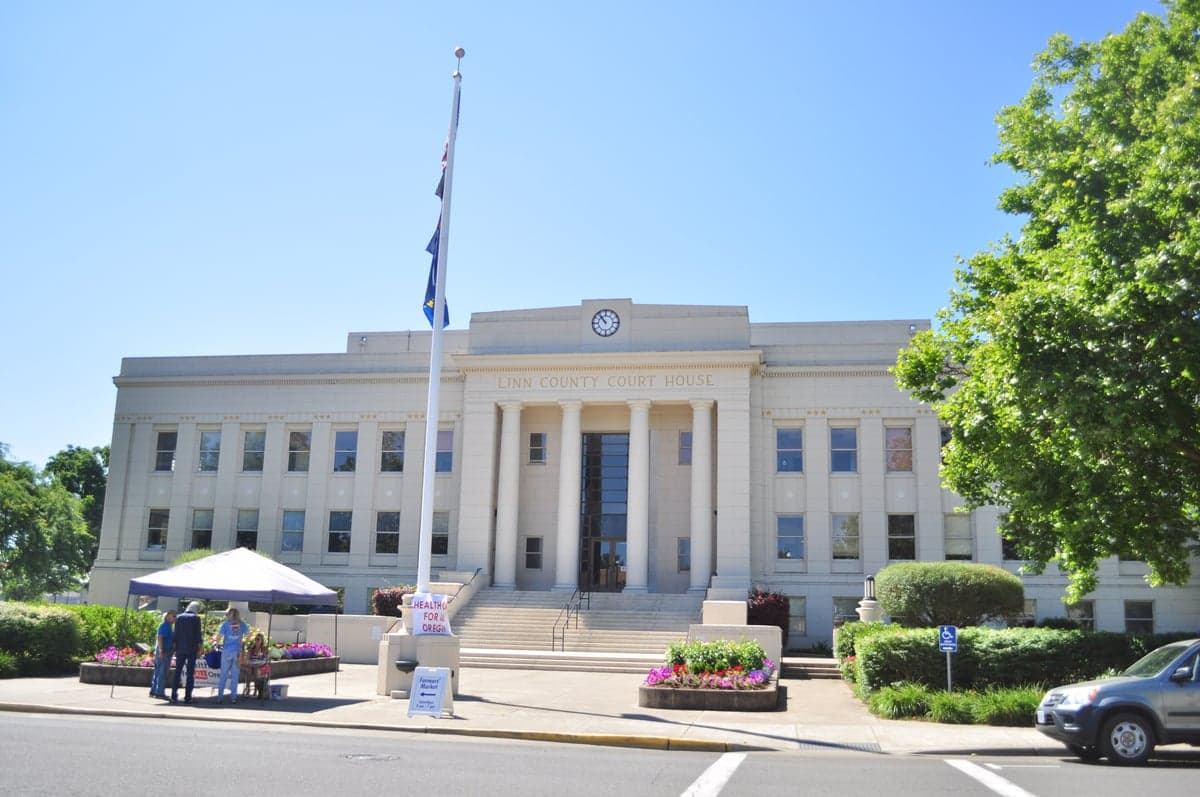
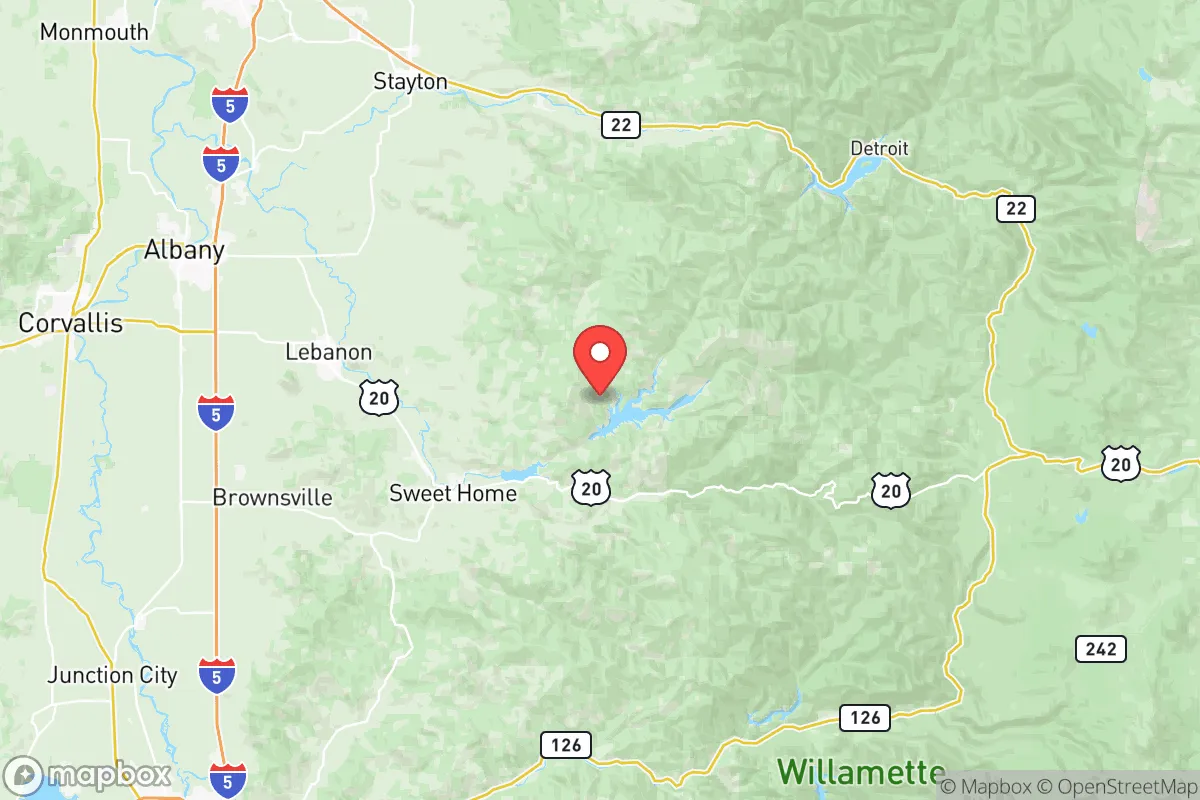
Photo: Wikipedia
Political ClimatePolitical Climate in Linn County
Showing district-level results — no local-only data available.
Local Political AnalysisPolitical Analysis of Linn County
Linn County, Oregon, has long been a quiet bastion of conservative values in a state that’s been drifting further left, and that contrast is only getting sharper. While the county’s Cook Partisan Voting Index (PVI) of D+4 might not scream “red,” it’s a world away from Oregon’s overall D+8 rating, and that gap tells you everything about the cultural tug-of-war happening here. The real story isn’t just the numbers—it’s how the political winds are shifting in places like Albany, Lebanon, and Sweet Home, and what that means for folks who just want to be left alone to live their lives.
How it compares
When you stack Linn County up against the rest of Oregon, the difference is night and day. The state as a whole has been trending hard toward progressive policies—think Portland’s rent control, strict land-use laws, and a growing appetite for taxing everything that moves. Linn County, though, is a different animal. The rural towns like Sweet Home and Brownsville are solidly conservative, with precincts that routinely vote 60-70% Republican. Even in the county seat, Albany, you’ll find a split personality: the older, established neighborhoods lean red, while the newer subdivisions near the hospital and the college have started to shift blue. Lebanon is a good bellwether—it’s got a mix of timber workers, retirees, and a growing healthcare sector, and it’s been holding the line, but you can feel the pressure from the Willamette Valley’s liberal creep. The swing precincts are mostly in the suburban fringe of Albany and along the I-5 corridor, where transplants from the valley are bringing their big-city voting habits with them. That’s the real worry: it’s not that locals are changing their minds, it’s that the people moving in are changing the electorate.
What this means for residents
For those of us who’ve been here a while, the political climate means a constant fight to keep government out of our business. You see it in the school board meetings, where parents are pushing back against critical race theory and gender ideology being pushed into classrooms. You see it in the county commission, where there’s a real battle over land-use regulations that threaten to turn rural property into a bureaucratic nightmare. The state legislature in Salem keeps passing laws that feel like they’re written for Portland, not for Linn County—things like the statewide rent control bill or the new gun storage mandates. It’s exhausting, honestly. The local economy still runs on timber, agriculture, and manufacturing, and every new regulation from the state feels like another nail in the coffin for small businesses and family farms. The sense I get from neighbors is a mix of resignation and defiance: we’ll keep voting our conscience, but we’re also watching the county’s political future with a wary eye.
One of the biggest cultural distinctions here is the deep-seated belief in personal responsibility over government solutions. In Linn County, you’re expected to pull your own weight, and there’s a healthy skepticism of anyone promising to fix your problems with a new program or a tax hike. That’s why you see such strong support for the Second Amendment and property rights—it’s not about being anti-government, it’s about wanting the freedom to live your life without a bureaucrat in Salem telling you how to do it. The shift toward progressive ideology in the state is concerning because it chips away at that independence, one regulation at a time. If the trend continues, I worry that Linn County will become an island of common sense in a sea of overreach, fighting harder and harder just to keep things the way they’ve always been.

State Political ClimatePolitical Climate in Oregon
State Political AnalysisPolitical Environment in the State
Oregon is a politically complex state with a Cook PVI of D+8, meaning it leans Democratic by a significant margin, but that label hides a deep and growing urban-rural chasm. Over the past 20 years, the state has shifted from a purple battleground—where George W. Bush nearly won in 2000—to a solidly blue stronghold driven almost entirely by the Portland metro area, while vast stretches of the state have moved hard right. For a conservative considering relocation, the key takeaway is that Oregon is not one political entity; it’s a tale of two states, and the progressive urban core increasingly dictates policy for everyone else.
Urban vs. rural divide
The political map of Oregon is stark. Multnomah County (Portland) alone delivers roughly 20% of the state’s vote and consistently goes 75-80% Democratic. Washington County (suburban Portland, home to Intel and Nike) and Lane County (Eugene) are also deep blue. These three counties, plus a handful of smaller liberal enclaves like Corvallis and Ashland, decide statewide elections. Meanwhile, the rest of Oregon—eastern and southern counties like Klamath Falls, Grants Pass, Medford, and Pendleton—vote Republican by margins of 20 to 40 points. The divide is so pronounced that Deschutes County (Bend), once a conservative stronghold, has flipped to competitive or even blue-leaning in recent cycles as California transplants flood in. In 2024, Clackamas County, a historically swing suburban county south of Portland, moved further left, cementing the Democratic lock on the Willamette Valley. The rural counties, especially in the east, feel politically and culturally abandoned by Salem and Portland, fueling secession talk and a deep distrust of state government.
Policy environment
Oregon’s policy environment is a case study in progressive governance. The state has no sales tax, which sounds good, but it has one of the highest personal income tax rates in the nation (top bracket around 9.9%) and high property taxes. The regulatory climate is heavy: land use laws are among the strictest in the country, limiting rural development and driving up housing costs. Education policy is dominated by teachers unions; the state has a near-total ban on charter schools and a weak school choice environment. Healthcare is heavily regulated, with a state-run insurance exchange and Medicaid expansion under the Oregon Health Plan. Election laws are among the most liberal: Oregon was the first state to vote entirely by mail (1998), and it has automatic voter registration, same-day registration, and no voter ID requirement. This low-barrier system is praised by progressives but raises concerns about election integrity among conservatives. The state also legalized recreational marijuana in 2014 and decriminalized small amounts of hard drugs in 2020 (Measure 110), though the latter was partially rolled back in 2024 due to public backlash over open drug use and overdoses.
Trajectory & freedom
On the freedom scale, Oregon has moved decisively in the direction of expanded government control over personal choices, with a few notable exceptions. The most alarming trend for conservatives is the erosion of Second Amendment rights: in 2023, the state passed Measure 114, which requires a permit to purchase a firearm, bans magazines over 10 rounds, and mandates a waiting period. It’s currently tied up in court, but the intent is clear. On parental rights, Oregon has some of the most progressive laws in the nation: HB 2002 (2023) allows minors to access abortion and gender-affirming care without parental consent, and schools are not required to notify parents if a child changes their gender identity. Medical autonomy took a hit with strict vaccine mandates for healthcare workers and schoolchildren, though some COVID-era mandates have been relaxed. Property rights are constrained by the aforementioned land use laws and a rising trend of rent control in Portland and other cities. On the positive side for liberty, Oregon has no sales tax, no blue laws (alcohol sales are widespread), and a strong initiative system that allows citizens to bypass the legislature—though that system has been used more by progressives in recent cycles. The overall trajectory is toward less personal freedom, especially for gun owners, parents, and small business owners.
Civil unrest & political movements
Oregon has a long history of political activism, but the last five years have been particularly volatile. The 2020 Portland protests—part of the broader George Floyd demonstrations—were among the most sustained and destructive in the nation, with nightly clashes between protesters and federal officers that lasted for months. The city saw widespread property damage, arson, and a breakdown of public order that led to a significant exodus of residents and businesses. On the right, rural counties have organized around the Greater Idaho movement, which seeks to secede from Oregon and join Idaho. As of 2025, 13 rural counties have passed measures supporting this idea, though it faces steep constitutional hurdles. Immigration politics are a flashpoint: Oregon is a sanctuary state (1987 law, strengthened in 2019), meaning local law enforcement cannot cooperate with federal immigration authorities. This has led to tensions in border counties like Jackson County (Medford), where illegal crossings have increased. Election integrity remains a hot-button issue: the 2020 and 2022 elections saw allegations of ballot harvesting and voter roll irregularities, though no major fraud was proven. The state’s all-mail system, while convenient, creates a persistent trust deficit among conservatives who worry about chain of custody and signature verification.
Projection
Looking ahead 5-10 years, Oregon’s political trajectory is likely to continue its leftward drift, but with growing friction. Demographic trends favor Democrats: the Portland metro area is growing (though slower than in the past), while rural counties are losing population. In-migration from California, while slowing, still brings more progressive voters than conservative ones. However, there are countervailing forces. The housing crisis is pushing some families out of the Willamette Valley into more affordable rural areas, which could shift some counties rightward. The backlash against progressive policies—especially on crime, drugs, and education—is real and could lead to more moderate governance at the state level. The 2024 partial repeal of Measure 110 (drug decriminalization) is a sign that even liberal voters have limits. But don’t expect a conservative renaissance: the state’s political infrastructure, media environment, and cultural institutions are deeply progressive. A new resident moving to Oregon today should expect that in a decade, the state will likely have even stricter gun laws, more expansive transgender rights, and a continued erosion of local control as Salem centralizes power. The best bet for a conservative is to target specific counties—Douglas, Josephine, or Lake County—where local politics still reflect traditional values, but be prepared to fight state-level overreach at every turn.
Bottom line for a new resident: Oregon offers stunning natural beauty and a laid-back lifestyle, but it comes with a heavy political price tag. If you’re a conservative, you’ll be in the minority statewide, and you’ll need to be strategic about where you live—rural areas are your refuge, but they’re increasingly powerless against Salem’s progressive agenda. Your property rights, gun rights, and parental rights will be under constant legal assault. If you’re willing to engage in the fight and can afford the high taxes and housing costs, Oregon can still be a rewarding place to live. But if you’re looking for a state where your values are reflected in state law, you’d be better off looking at Idaho or Texas.
* Values derived from national, state, county, city and local statistics and may differ in a specific area. Last updated: 2026-06-02T03:31:09.000Z
Narrative content on this page is AI-generated and may contain mistakes. Verify any details that matter before acting on them.
ReloMaps may earn a commission from affiliate links at no extra cost to you.

