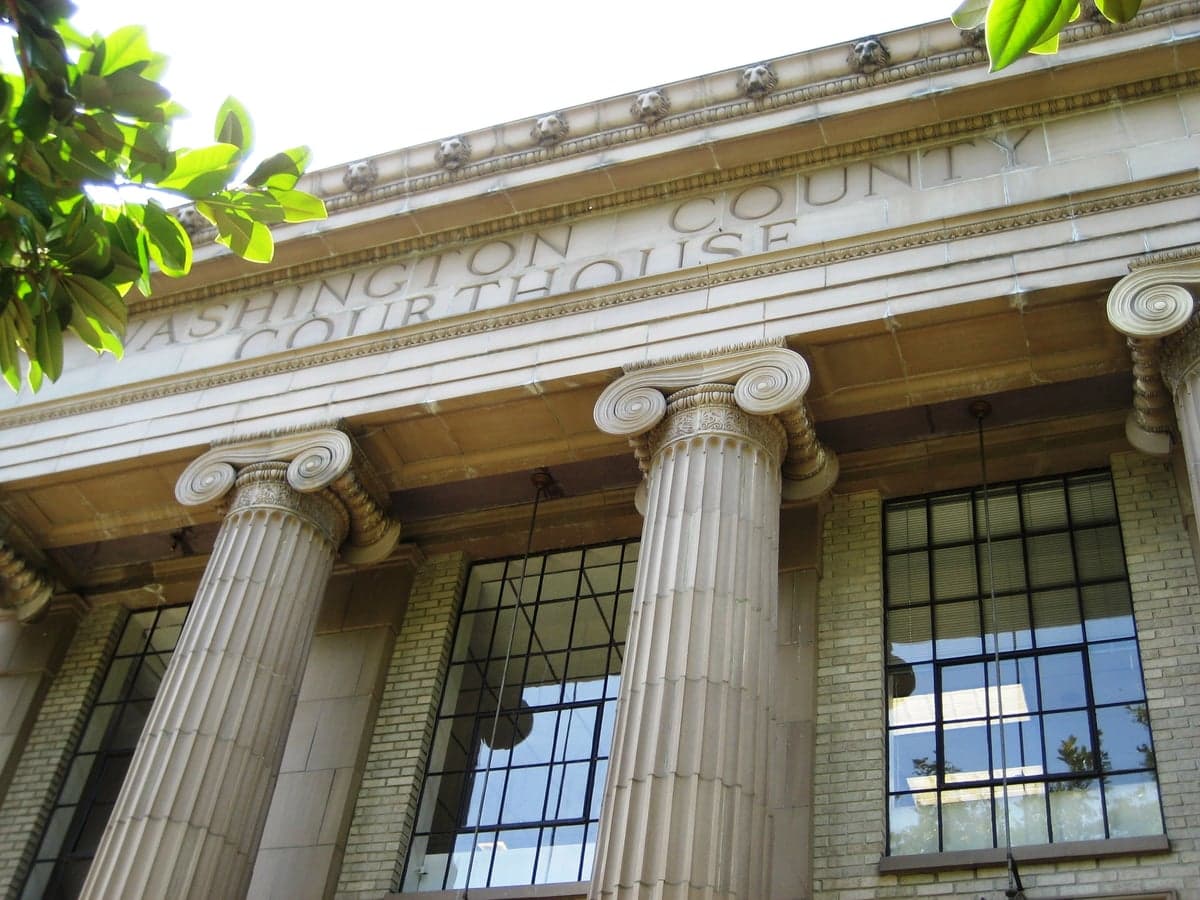
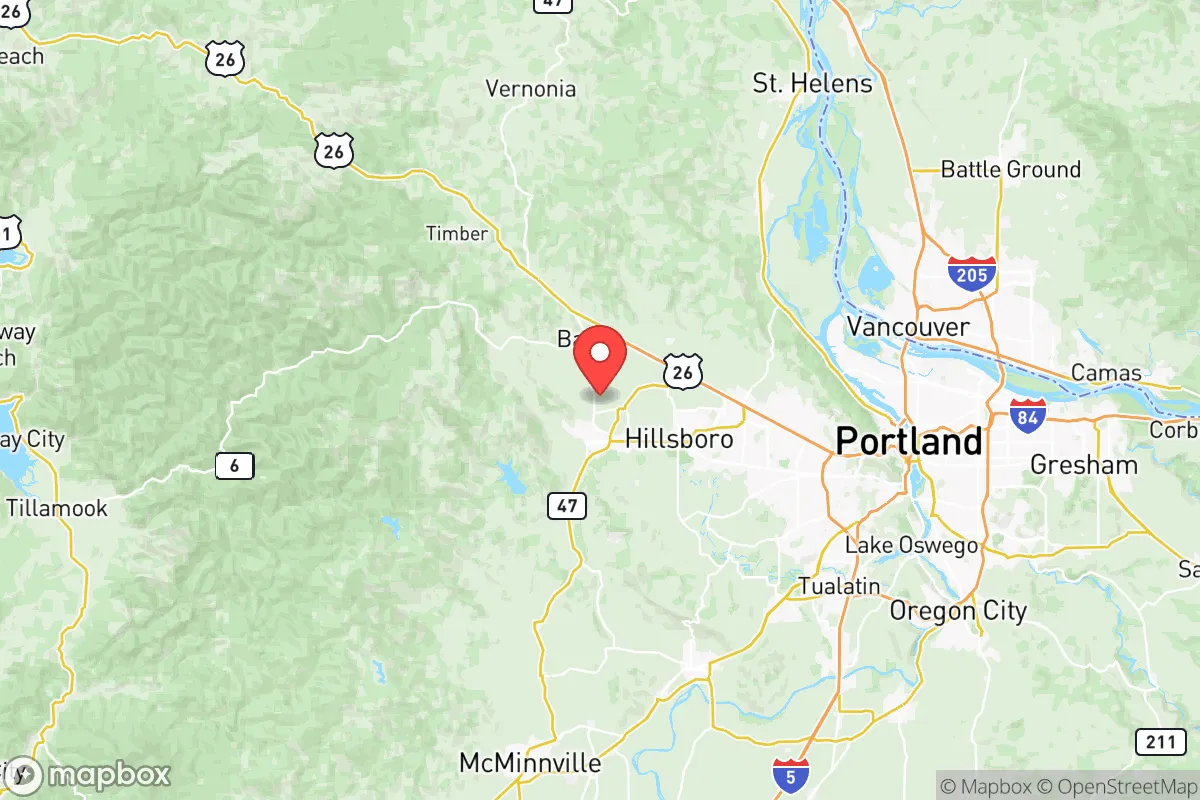
Photo: Wikipedia
Demographics of Washington County
Affluence Level in Washington County
An upper-middle-class area. Household wealth, education levels, and homeownership run ahead of national benchmarks.
People of Washington County
Washington County, Oregon, today is a densely populated suburban powerhouse of over 600,000 residents, characterized by a highly educated workforce (46.7% college-educated) and a significant technology and manufacturing economy anchored by Intel and other Silicon Forest firms. Its population is predominantly white (61.3%) but has become notably diverse, with a large Hispanic community (18.2%) concentrated in Hillsboro and Cornelius, a substantial East/Southeast Asian population (7.5%) centered in Beaverton and Tigard, and a growing Indian-subcontinent community (3.5%) found in high-tech hubs like Hillsboro and Aloha. The county’s identity is a blend of its agricultural Willamette Valley roots, its transformation into a bedroom community for Portland, and its current status as a self-contained economic engine with a distinctly suburban, family-oriented character.
Settlement & growth (pre-1960)
Before American settlement, the area now known as Washington County was the homeland of the Atfalati (Tualatin) band of the Kalapuya people, who lived in villages along the Tualatin River and practiced seasonal burning of the valley floor to maintain oak savannas and camas fields. The first European-Americans arrived in the 1840s via the Oregon Trail, with pioneers like Joseph Gale and Robert Moore claiming Donation Land Claims in what would become Hillsboro, Forest Grove, and Beaverton. These early settlers were predominantly of English, Scots-Irish, and German stock, drawn by the promise of fertile, free land in the Tualatin Valley.
The county’s early economy was almost entirely agricultural, with wheat, oats, and later fruit orchards and dairy farms dominating. The arrival of the railroad in the 1870s connected towns like Hillsboro (the county seat), Tigard, and Tualatin to Portland markets, spurring modest growth. A significant wave of German and Swiss immigrants arrived in the late 19th century, settling in the rural areas around North Plains and Banks, where they established dairy farms and the region’s first commercial nurseries. By 1900, the population was overwhelmingly white, native-born, and Protestant, with a small but established Catholic community centered on St. Mary’s Church in Beaverton.
World War II brought the first major demographic shift. The construction of the Vanport shipyards and the expansion of the Portland area drew workers from across the country, including a small number of Black families who settled in Washington County after the 1948 Vanport flood. However, the county remained overwhelmingly rural and white through the 1950s, with a population of just over 60,000 in 1950. The real transformation began with the post-war suburban boom, as returning GIs and their families sought affordable housing outside Portland, leading to the first large-scale subdivisions in Beaverton and Tigard.
Modern era (post-1965)
The 1965 Hart-Cellar Act had a delayed but profound effect on Washington County. The initial post-1965 immigrants were primarily East/Southeast Asian, with Vietnamese and Korean families arriving in the 1970s and 1980s as refugees and secondary migrants, settling in Beaverton and Aloha. These communities were drawn by affordable housing, good schools, and the growing presence of high-tech employers. By the 1990s, a significant Indian-subcontinent community had formed, concentrated in the high-tech corridors of Hillsboro and Beaverton, with many professionals arriving on H-1B visas to work at Intel, Tektronix, and other Silicon Forest firms.
The most dramatic demographic change, however, has been the growth of the Hispanic population. Beginning in the 1980s, Mexican and Central American immigrants arrived to work in the county’s nursery and agricultural industries, settling in Hillsboro, Cornelius, and Forest Grove. This community has grown steadily through both immigration and natural increase, and today Hispanic residents make up 18.2% of the county’s population, with a strong presence in the western cities and a growing middle class. The 1990s and 2000s also saw an influx of domestic migrants from California, drawn by Oregon’s lower housing costs and the region’s booming tech economy, accelerating suburbanization and pushing development into formerly rural areas like Sherwood and Wilsonville.
Suburbanization has been the defining geographic trend of the modern era. The county’s population has grown from 157,000 in 1970 to over 600,000 today, with most growth occurring in master-planned subdivisions and apartment complexes. Beaverton and Hillsboro have become dense, diverse suburbs with their own downtowns and employment centers, while Tigard, Tualatin, and Sherwood have grown as family-oriented bedroom communities. The racial and ethnic landscape has shifted from nearly 95% white in 1970 to 61.3% white today, with the most diverse areas being Beaverton (where East/Southeast Asian and Indian communities are well-established) and Hillsboro (where Hispanic and tech-worker populations overlap).
The future
Washington County’s population is projected to continue growing, reaching an estimated 700,000 by 2035, driven by both international immigration and domestic in-migration from California and other high-cost states. The Hispanic population is expected to grow to roughly 25% of the total, with increasing geographic dispersion beyond the traditional enclaves in Hillsboro and Cornelius into suburbs like Tigard and Sherwood. The East/Southeast Asian and Indian communities are likely to continue growing, particularly in the high-tech corridor along Highway 26, but may become more assimilated and less geographically concentrated as second-generation professionals move into more affluent neighborhoods.
The county is not homogenizing but rather tribalizing into distinct enclaves based on income and lifestyle. The western cities (Hillsboro, Cornelius, Forest Grove) are becoming more Hispanic and working-class, while the eastern suburbs (Beaverton, Tigard, Tualatin) are diversifying but remain more affluent and white-collar. The rural areas around Banks and North Plains are likely to remain predominantly white and conservative, while the urban core of Beaverton and Hillsboro will continue to become more diverse and politically liberal. The cultural identity of the county is being reshaped by this influx, but the dominant character—educated, suburban, family-focused—remains intact, with new residents largely absorbing into that framework rather than replacing it.
For someone moving in now, Washington County is becoming a more diverse, more expensive, and more politically polarized place than it was a generation ago. The western half offers a more affordable, family-oriented, and increasingly Hispanic character, while the eastern half is denser, more diverse, and more connected to Portland’s economy. The county’s future is one of continued growth and diversification, but the fundamental suburban, educated, and tech-driven identity that defines it today is likely to persist, even as the faces of its residents change.

* Values derived from national, state, county, city and local statistics and may differ in a specific area. Last updated: 2026-05-20T08:20:59.000Z
Narrative content on this page is AI-generated and may contain mistakes. Verify any details that matter before acting on them.
ReloMaps may earn a commission from affiliate links at no extra cost to you.

