
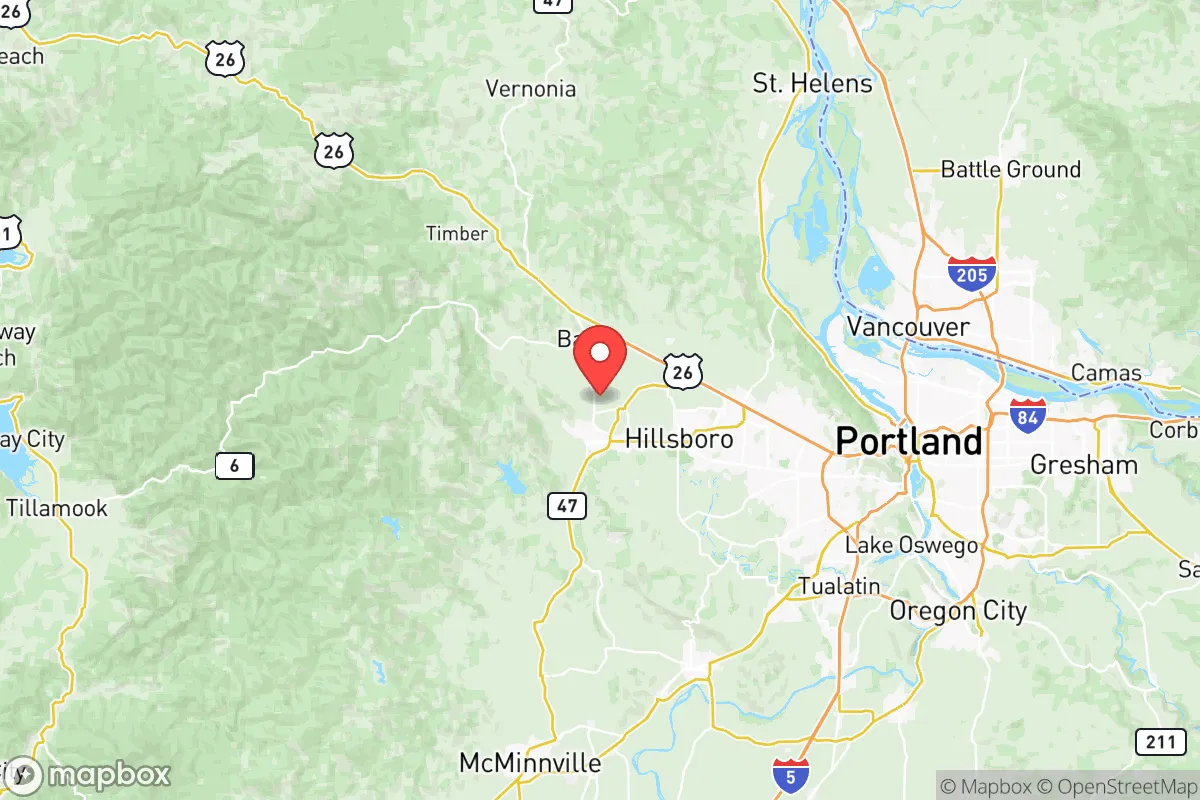
Photo: Wikipedia
Quality of Life in Washington County
A livable area that tracks near national norms for affordability, walkability, and neighborhood health.
What does Quality of Life tell us?
Quality of Life measures an area by evaluating factors like cost of living, nearby amenities, country club access, airport proximity, socioeconomic signals and neighborhood character. For large states, this is a general average — quality of life can vary dramatically between metro areas, suburbs, and rural communities within the same state.
What does this tell us?
Quality of Life measures an area by evaluating factors like cost of living, nearby amenities, country club access, airport proximity, socioeconomic signals and neighborhood character. For large states, this is a general average — quality of life can vary dramatically between metro areas, suburbs, and rural communities within the same state.
Cost of Living
71% above national average
65%
The Real Cost of Living in Washington County for 2026
| Tier | Individual | Family (4) |
|---|---|---|
| Survival | $28k | $53k |
| Comfortable | $109k | $160k |
| Luxury | $173k+ | $268k+ |
| Elite (Top 5%) | $203k+ | $315k+ |
Quality-of-Life Analysis
Washington County, Oregon, offers a broad quality-of-life spectrum that ranges from dense, amenity-rich suburbs of Portland to quiet agricultural crossroads and forested rural hamlets. The county’s western half, anchored by Hillsboro and Beaverton, draws tech workers and families seeking strong schools and short commutes to major employers, while the eastern and southern edges—places like Gaston, Banks, and the unincorporated community of Roy—attract those who want acreage, lower housing costs, and a slower pace. With a cost-of-living index of 171 (well above the U.S. average of 100), the trade-offs between convenience and space are sharply defined by location.
Largest town(s) & population centers
Hillsboro (population ~108,000) and Beaverton (~98,000) are the county’s urban anchors. Daily life here revolves around the region’s dominant employer, Intel, which operates multiple campuses in Hillsboro’s Ronler Acres and Jones Farm areas. Both cities offer walkable downtowns—Beaverton’s Round and Hillsboro’s historic core—with light-rail MAX lines connecting directly to Portland. Tigard (~55,000) and Aloha (a large unincorporated community) fill out the suburban core, with dense retail corridors along Highway 217 and Pacific Highway. Commute times average 24 minutes countywide, but residents in these towns often face 20–30 minute drives to Portland or to the Silicon Forest tech campuses. Median home values here hover near the countywide figure of $558,500, with Beaverton’s desirable school district pushing prices higher in neighborhoods like Cedar Mill and Bethany.
Smaller towns & rural pockets
Venture west of Hillsboro, and the landscape shifts quickly. Forest Grove (population ~25,000) is the largest of the smaller towns, home to Pacific University and a walkable downtown with a farmers’ market; its housing stock is older and more affordable than Hillsboro’s, with median values around $475,000. Further west, Gaston (pop. ~750) and Banks (pop. ~2,000) are true rural service centers, surrounded by nurseries, vineyards, and horse farms. The unincorporated community of Roy, near the Columbia County line, consists of little more than a general store and scattered homes on five-acre lots. These areas lack public transit and most retail amenities, but offer land prices as low as $300,000–$400,000 for a fixer-upper on acreage. North Plains (pop. ~3,500), just off Highway 26, sits at the edge of the Coast Range and serves as a bedroom community for Portland commuters willing to trade a 35-minute drive for a rural feel.
Cost & lifestyle range
The cost spread across Washington County is significant. At the high end, Cedar Mill and Bethany (both unincorporated) feature median home values above $700,000, top-rated schools, and walkable access to parks and shopping. Median rent countywide is $1,773, but in these neighborhoods two-bedroom apartments often exceed $2,200. At the low end, Gaston and Roy offer median home values near $400,000 and rents closer to $1,400, but with few rental options and virtually no public transit. The lifestyle trade-off is stark: a Hillsboro resident can walk to a MAX station, a dozen breweries, and a major hospital, while a Banks resident may drive 20 minutes for a grocery store but enjoy a half-acre lot with no streetlights. The county’s average commute of 24 minutes masks this divide—rural residents often commute 35–45 minutes to jobs in the urban core.
Washington County suits a wide range of preferences, but the fit depends heavily on tolerance for trade-offs. Families and tech professionals who prioritize schools, transit, and amenities will find their match in Beaverton, Hillsboro, or Tigard. Those who value space, privacy, and lower land costs—and can handle longer drives and fewer services—will feel at home in Gaston, Banks, or the unincorporated pockets around Roy. The county’s strength is that both ends of this spectrum exist within a 30-mile drive, allowing residents to shift their lifestyle without leaving the region entirely.

Crime in Washington County
Crime rates similar to the national median for U.S. locations.
Violent CrimeViolent Crime Analysis
Property CrimeProperty Crime Analysis
Crime Analysis
Washington County, Oregon, reports a violent crime rate of 309.1 incidents per 100,000 residents and a property crime rate of 2,110.8 per 100,000, placing it in a middle tier for safety within the Portland metropolitan area. While not the most dangerous county in the state, these figures are elevated compared to national averages, and residents in cities like Beaverton, Hillsboro, and Tigard should be aware of significant neighborhood-level variation. The county's progressive judicial philosophy, particularly in the Washington County District Attorney's office under District Attorney Kevin Barton, has emphasized diversion programs and reduced incarceration for non-violent offenses, a policy that some residents and victims' advocates argue contributes to a revolving-door justice system and higher recidivism rates.
Crime in context
Washington County's violent crime rate of 309.1 per 100,000 is roughly 15% higher than the national average of approximately 270 per 100,000, and its property crime rate of 2,110.8 per 100,000 exceeds the national figure of about 1,954 per 100,000. Compared to neighboring Multnomah County (Portland), which has a violent crime rate near 500 per 100,000, Washington County appears safer, but it lags behind more conservative Clackamas County, where rates are closer to 250 per 100,000. The county's property crime rate is driven heavily by theft and vehicle break-ins in commercial corridors like Tanasbourne (Hillsboro) and the Washington Square area (Tigard). Statewide, Oregon's property crime rate is the second-highest in the nation, and Washington County's figures reflect this broader trend, exacerbated by progressive sentencing reforms that have reduced penalties for theft and drug possession.
What residents experience
Residents in Beaverton and Hillsboro frequently report car prowls, package theft, and shoplifting as daily nuisances, while violent crime—though less common—concentrates in apartment complexes near transit hubs and low-income neighborhoods. The Washington County Sheriff's Office and local police departments have struggled with staffing shortages, leading to slower response times for property crimes. A notable concern is the county's Measure 110 legacy (drug decriminalization, partially rolled back in 2024), which critics say normalized public drug use and associated theft, particularly in downtown Forest Grove and along the MAX light-rail line. Victims of burglary or assault often express frustration with the justice system, as the DA's office frequently offers plea deals that result in probation rather than jail time for repeat offenders. This approach, while intended to reduce incarceration, has left many residents feeling that the system prioritizes offender rehabilitation over public safety and victim restitution.
Neighborhood-level variation
Safety varies dramatically within Washington County. Bethany and Cedar Mill, affluent unincorporated areas near the Portland border, report violent crime rates below 100 per 100,000 and property crime rates roughly half the county average, thanks to higher incomes and private security patrols. In contrast, Aloha and Rock Creek—denser, lower-income suburbs—see rates closer to 400 per 100,000 for violent crime and over 3,000 per 100,000 for property crime. Sherwood and Wilsonville, at the county's southern edge, are generally safer but experience periodic spikes in vehicle theft. For newcomers, choosing a neighborhood with a strong homeowners' association and proximity to Sherwood Police Department or Tualatin Police can mitigate risk, while areas near MAX stations or major retail centers require extra vigilance. The county's progressive policies, including the DA's focus on restorative justice, mean that even in safer enclaves, residents should invest in home security systems and comprehensive insurance.
* Values derived from national, state, county, city and local statistics and may differ in a specific area. Last updated: 2026-05-20T08:20:59.000Z
Narrative content on this page is AI-generated and may contain mistakes. Verify any details that matter before acting on them.
ReloMaps may earn a commission from affiliate links at no extra cost to you.

