 Popular
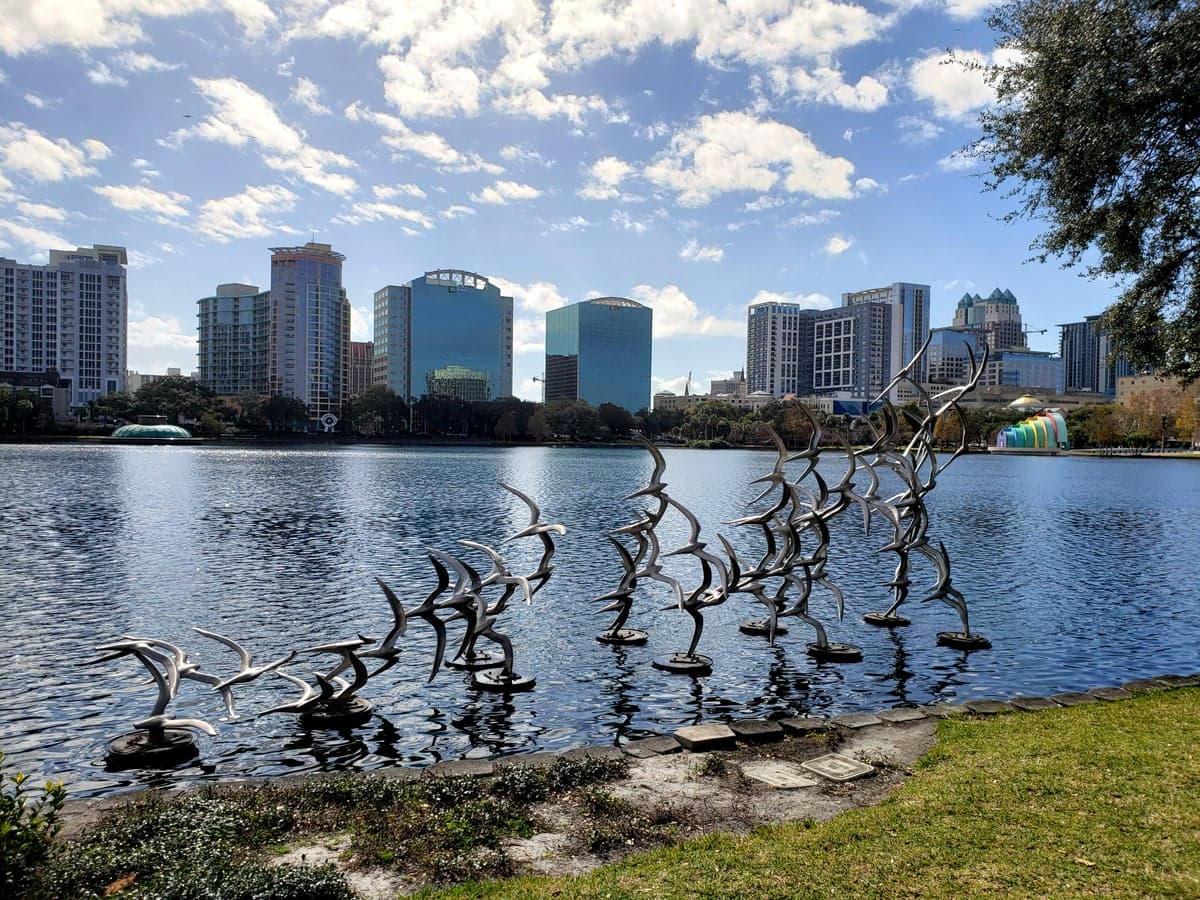
Photo: Wikipedia
Demographics of Orlando, FL
Affluence Level in Orlando, FL
A middle-class area roughly in line with national averages across income, home values, education, and employment.
People of Orlando, FL
Orlando today is a majority-minority city of 311,732 residents, defined by its Hispanic plurality (35.6%) and significant Black (21.7%) and White (32.8%) populations, with a notable East/Southeast Asian community (2.9%) and a smaller Indian-subcontinent population (1.3%). The city’s character is shaped by its tourism-driven economy, a relatively young median age, and a high college attainment rate (42.2%), creating a blend of service-industry workers, tech professionals, and retirees. Distinctive identity markers include a strong Puerto Rican cultural presence, a growing Colombian and Venezuelan influence, and a visible LGBTQ+ community centered in the Thornton Park and Mills 50 districts. The population is dense for a Sun Belt city, with a mix of historic streetcar suburbs, postwar subdivisions, and rapidly densifying urban core neighborhoods.
How the city was settled and grew
Orlando was founded in 1875 as a small citrus and cattle town, drawing its original White settlers from Georgia and the Carolinas after the Second Seminole War. The arrival of the South Florida Railroad in 1880 triggered the first growth wave, with the downtown core around Church Street and Orange Avenue becoming a commercial hub for cotton and citrus. The city’s first Black community formed in the Parramore neighborhood west of downtown, settled by freedmen and their descendants who worked as laborers and domestic workers. By the 1920s, a land boom brought Northern investors and winter tourists, expanding the city northward into College Park, a streetcar suburb of bungalows built for middle-class White families. The Great Depression stalled growth, but World War II brought a new wave: the construction of the Orlando Army Air Base (now Orlando Executive Airport) drew military personnel and defense workers, many of whom stayed after the war. The 1950s saw the rise of Azalea Park and Conway as postwar subdivisions for White families fleeing the urban core, while Parramore remained a segregated Black enclave with its own business district along Church Street.
Modern era (post-1965)
The 1965 Hart-Cellar Act and the 1971 opening of Walt Disney World transformed Orlando’s population. The first major wave of Hispanic migration came from Puerto Rico in the 1970s and 1980s, drawn by service jobs at the theme parks and a lower cost of living than New York or Chicago. These families settled heavily in Azalea Park and the Mills 50 district, creating a Puerto Rican cultural corridor along Colonial Drive (State Road 50). A second Hispanic wave arrived from Colombia, Venezuela, and Mexico in the 1990s and 2000s, spreading into Buenaventura Lakes (technically in Kissimmee but functionally part of Orlando’s metro) and the South Orange Blossom Trail area. The Black population, which had been concentrated in Parramore and the Washington Shores neighborhood, began suburbanizing in the 1990s into Pine Hills and Rio Grande Park, though Parramore remains a historically significant anchor. The East/Southeast Asian community grew after 1980, with Vietnamese and Chinese immigrants settling in Mills 50 and along East Colonial Drive, where Asian grocery stores and restaurants now cluster. The Indian-subcontinent population, though small at 1.3%, is newer—mostly post-2000 tech and medical professionals living in Lake Nona and Baldwin Park. The White population, once a majority, has declined to 32.8% as many native-born Whites moved to suburban Orange and Seminole counties, while a younger, college-educated White cohort has gentrified Thornton Park, Mills 50, and the SoDo district since 2010.
The future
Orlando’s population is trending toward greater Hispanic plurality, with the Hispanic share projected to exceed 40% by 2035, driven by continued Puerto Rican migration and higher birth rates. The Black population is stabilizing around 21-22%, with some out-migration to suburban Osceola County offset by new arrivals from the Caribbean (especially Haiti and Jamaica). The White share will likely continue to shrink as a percentage, though the absolute number of young White professionals moving into the urban core may keep the count steady. The East/Southeast Asian community is growing slowly, primarily through Vietnamese family reunification and Chinese tech workers in Lake Nona’s medical city. The Indian-subcontinent population, while small, is the fastest-growing group by percentage, concentrated in high-income enclaves like Lake Nona and Baldwin Park. The city is not homogenizing; instead, it is tribalizing into distinct enclaves: Puerto Rican Azalea Park, Vietnamese Mills 50, Black Pine Hills, White gentrified Thornton Park, and diverse but stratified Lake Nona. The foreign-born share (14.0%) is below the national average but rising, with most immigrants arriving from Latin America and the Caribbean.
Orlando is becoming a majority-Hispanic city with a strong Black minority and a small but growing Asian and Indian presence, all layered over a shrinking White base. For someone moving in now, this means a city where cultural identity is often tied to neighborhood—choose your enclave carefully—and where the economy remains dominated by tourism and healthcare, with tech growing in Lake Nona. The political lean is increasingly Democratic, driven by Hispanic and Black voters, though the surrounding suburbs remain conservative. The bottom line: Orlando is a dynamic, fragmented city where newcomers can find a community that matches their background, but the overall character is young, diverse, and service-industry driven.

* Values derived from national, state, county, city and local statistics and may differ in a specific area. Last updated: 2026-04-15T23:46:52.000Z
Narrative content on this page is AI-generated and may contain mistakes. Verify any details that matter before acting on them.
ReloMaps may earn a commission from affiliate links at no extra cost to you.

