 Popular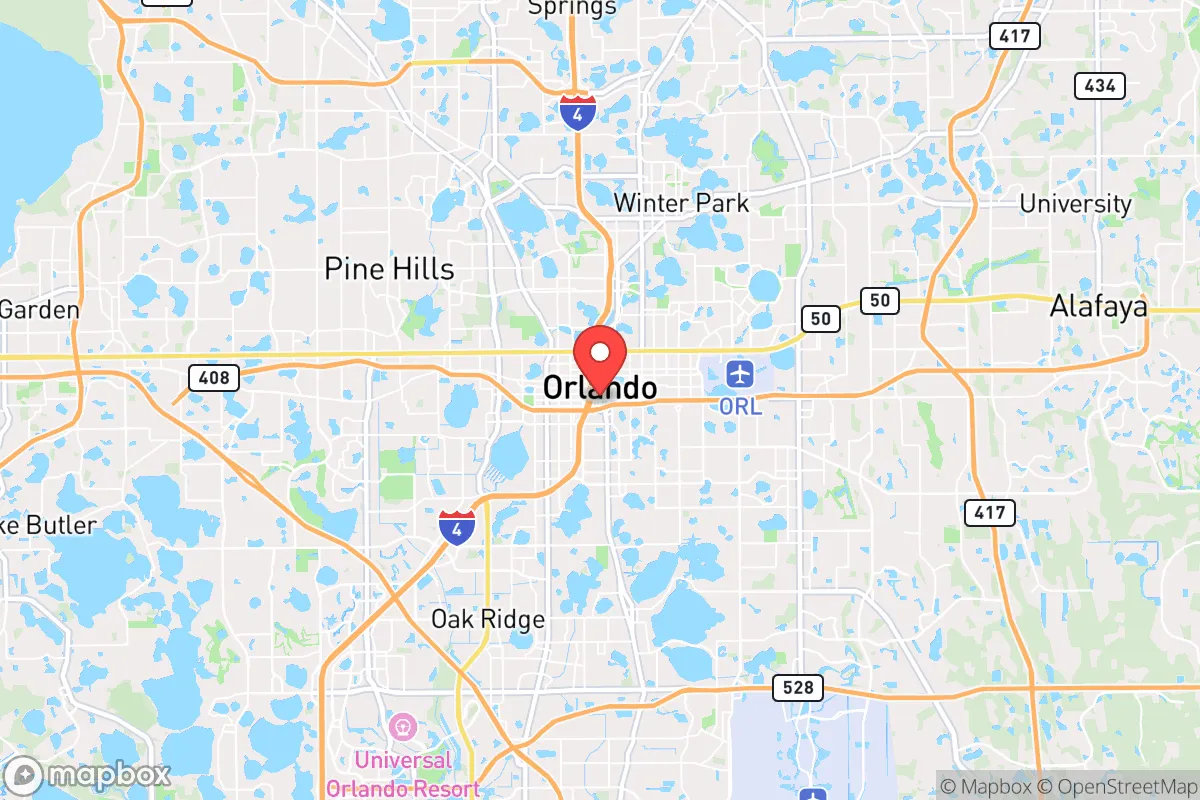
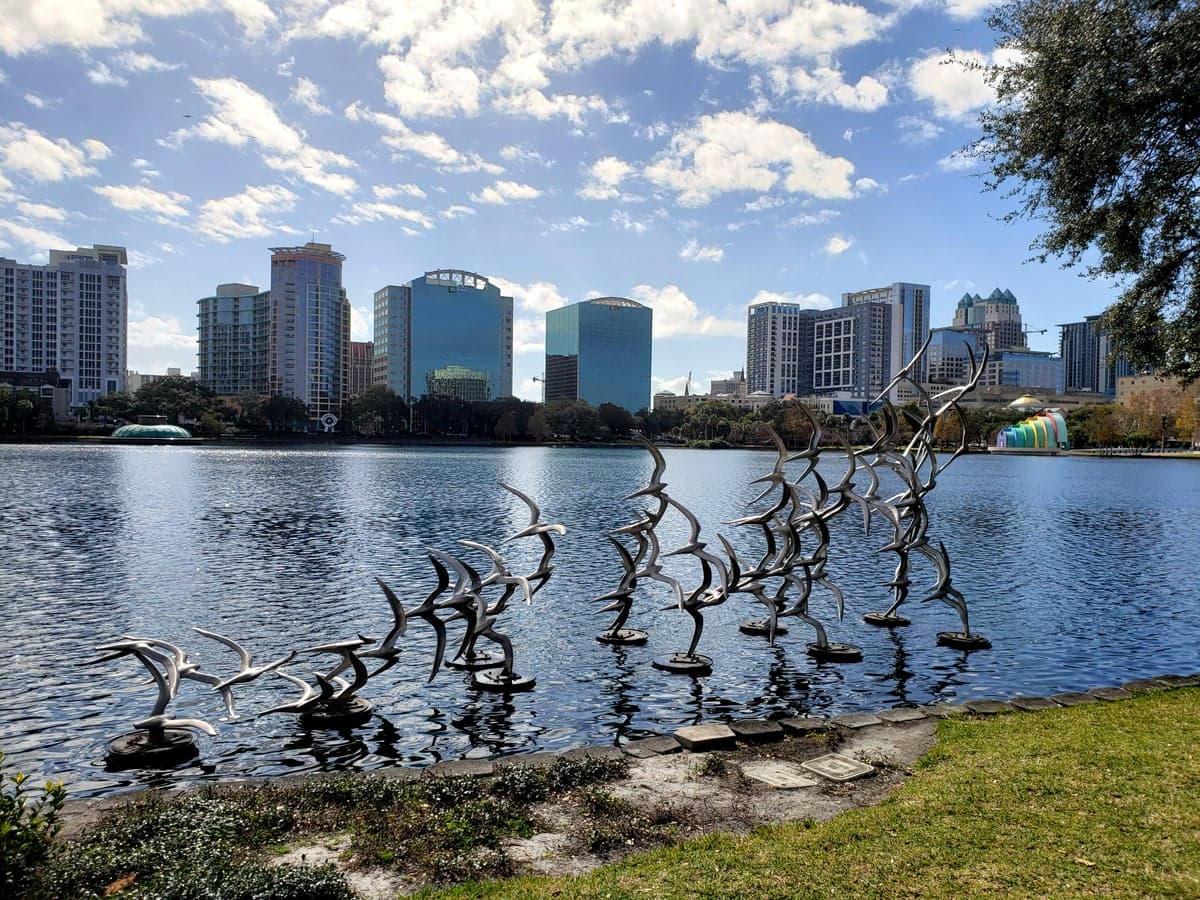
Photo: Wikipedia
Strategic Assessment of Orlando, FL
Multiple tactical vulnerabilities. Population density, target proximity, or disaster risk are likely compounding. A retreat property and exit planning is required.
What does the Strategic Assessment tell us?
Our Strategic Assessment grades tactical survivability of an area. Major population centers, military targets, fallout zones, natural disasters, and border exposure all drive risk — lower exposure means a more defensible position in a crisis.
This is heavily inspired by Joel Skousen's Strategic Relocation book. Highly recommended you checkout the book ($)What does this tell us?
Our Strategic Assessment grades tactical survivability of an area. Major population centers, military targets, fallout zones, natural disasters, and border exposure all drive risk — lower exposure means a more defensible position in a crisis.
This is heavily inspired by Joel Skousen's Strategic Relocation book. Highly recommended you checkout the book ($)Strategic Pillars

Key Distances
Regional Safe Places
Below is our recommended "safe zones" in Florida and the surrounding area based on our strategic heuristics. For most people, it's unrealistic to live in a “safe zone” full-time due to work, family or other personal reasons. They tend to be more rural. However, many of these areas are perfect for second homes and retreat properties that double as a vacation home or even a short-term rental.

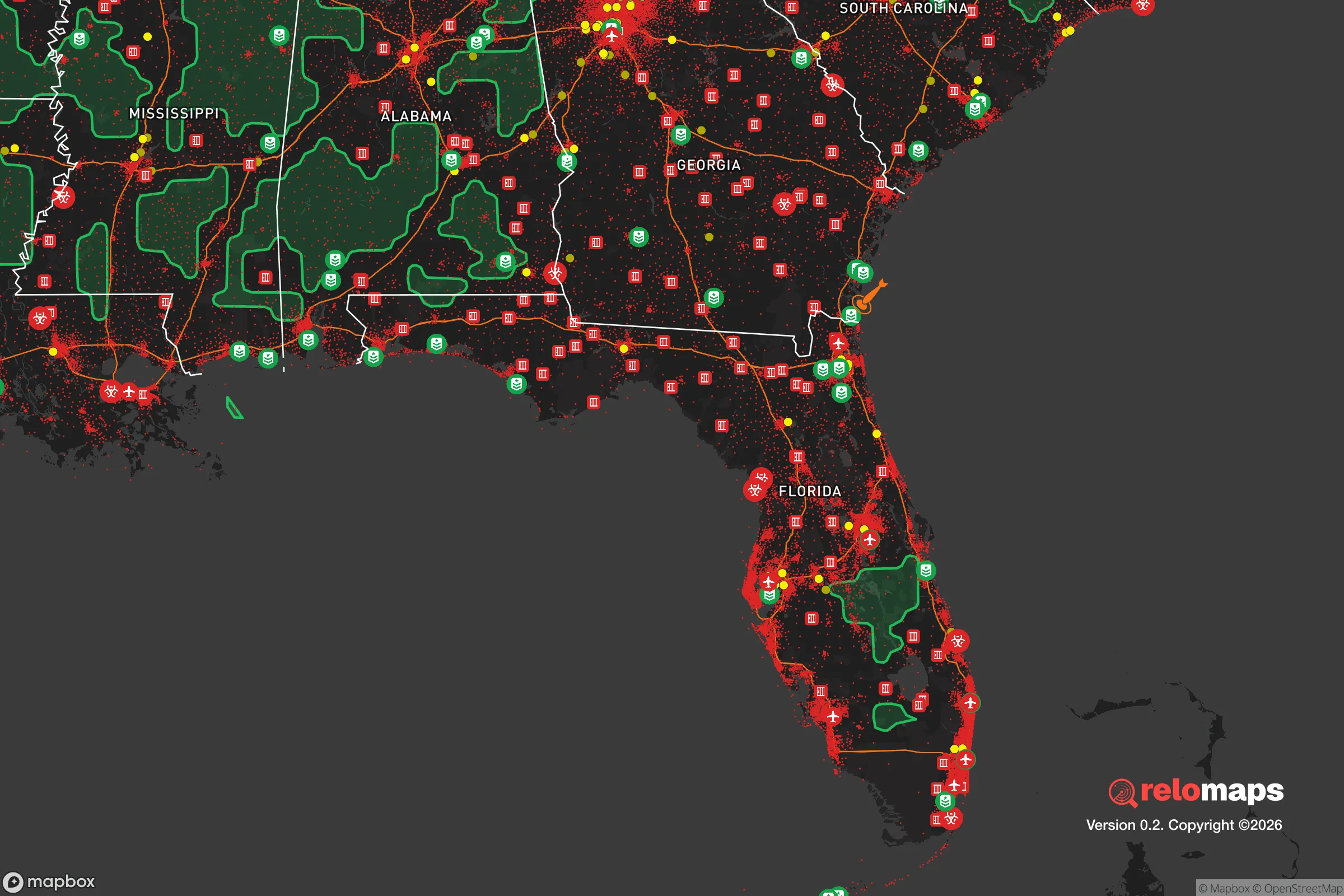


Important Note: For informational purposes only. This does not mean nothing bad ever happens in the green zones. Please use common sense. This is based on public data and modeled with AI. We tried to take a conservative approach but mistakes happen. We update this regularly as new information becomes available.
Solar Generator Recommendations
Backup power matters more here than in safer locations. We've picked three solar generators across budgets and capacity tiers — start with the budget unit if you only need a few essentials, or step up if you want to run a fridge and HVAC for days at a time.

Jackery Portable Power Station Explorer 300
Budget OptionPower on the Go: Weighing only 11 lbs, it's convenient to set up and store with book-sized foldable solar panels

BLUETTI Portable Power Station AC180
Designed for both indoor and outdoor scenarios, AC180 is highly capable as it has a robost capacity and continuous output power.

EF ECOFLOW DELTA Pro Ultra Power Station
Upgraded PickEcoFlow DELTA Pro Ultra is a whole-home energy system designed to grow with your family. Integrated with the Smart Home Panel 2, it scales to meet your evolving energy needs — keeping your home powered, intelligent, and secure through every stage of life.
We earn a commission, at no additional cost to you.
Strategic Assessment Analysis
Orlando, Florida, presents a deeply contradictory picture for the strategic relocator. On one hand, its inland position offers a buffer from the direct hurricane storm surge that devastates coastal cities like Tampa or Miami, and its economy is famously resilient, anchored by tourism and a growing tech sector. On the other hand, it sits at the epicenter of a sprawling, low-lying metropolitan area of over 2.5 million people, making it a prime target for the very civic unrest, infrastructure strain, and mass casualty events that a prepared individual seeks to avoid. This analysis strips away the theme-park veneer to assess Orlando’s viability as a long-term, resilient base of operations in an increasingly unstable world.
Geographic position and natural advantages for long-term stability
Orlando’s primary strategic advantage is its inland location. It is roughly 50 miles from the Atlantic coast and 80 miles from the Gulf of Mexico, which significantly reduces the risk of catastrophic storm surge flooding. While hurricanes still bring damaging winds and torrential rain, the city avoids the total destruction seen in coastal zones. The region sits on a relatively flat, sandy terrain with a high water table, which means flooding is a chronic nuisance rather than a rare catastrophe, but the underlying geology is stable—no earthquake or landslide risks. The climate is subtropical, with a long growing season that theoretically supports local food production, though the sandy soil requires significant amendment. The major natural advantage is the Floridan Aquifer, one of the most productive freshwater sources in the world, providing a deep, reliable water supply that is less vulnerable to surface contamination than many other regions. However, the city’s elevation is uniformly low—most of the metro area sits between 50 and 100 feet above sea level—meaning there is no high ground for retreat or defensible terrain. The flat, open landscape offers little natural cover or chokepoints for security.
Risks, exposures, and proximity to high-value fallout targets
This is where Orlando’s strategic picture darkens considerably. The city is a major population center, a transportation hub, and home to critical infrastructure that makes it a high-probability target for both state and non-state actors in a major conflict or collapse scenario. Orlando International Airport (MCO) is one of the busiest in the nation, and the city is a nexus for I-4, the Florida Turnpike, and multiple rail lines. In a crisis, these arteries would become instant chokepoints or escape routes clogged with fleeing populations. More concerning is the proximity to Cape Canaveral and Patrick Space Force Base, roughly 45 miles east. In a major war or terrorist campaign, these are tier-one targets for kinetic or cyber attack. The fallout from a strike on the Cape could directly impact Orlando depending on wind patterns. Additionally, the city is surrounded by a ring of military installations—MacDill AFB in Tampa, Homestead AFB south of Miami, and Camp Blanding to the north—all of which are potential targets. Orlando itself is home to the Naval Air Warfare Center Training Systems Division, a non-trivial military asset. For the prepper, the sheer density of people is the primary risk. A grid-down event, a pandemic resurgence, or a food shortage would turn the metro area into a humanitarian crisis zone within days. The city’s reliance on tourism means a sudden economic shock would leave hundreds of thousands of service workers unemployed and desperate, a recipe for rapid civil unrest.
Practical resilience for a relocator: food, water, energy, and defensibility
For a single individual or family looking to establish a resilient homestead, Orlando’s urban core is a non-starter. The practical question is whether the outer suburbs or exurbs offer a viable alternative. Water is abundant but requires treatment. The Floridan Aquifer is accessible via private wells, but the water is hard and often contains high levels of sulfur and iron, requiring filtration. Surface water from the many lakes is available but carries biological and chemical risks. Food production is possible year-round, but the sandy soil demands raised beds, composting, and significant irrigation. The long, hot, humid summers make pest management a constant battle. Energy is a major vulnerability. Orlando is served by Duke Energy and Orlando Utilities Commission, both of which rely on a centralized grid that is notoriously fragile during hurricane season. Solar is viable—Florida gets over 230 sunny days per year—but net metering policies have been under political attack, and a grid-down scenario would require battery storage, which is expensive. Defensibility is poor. The flat terrain and dense suburban sprawl mean there is no natural high ground, and the typical home is a concrete-block structure with large windows, offering limited ballistic protection. Neighborhoods are interconnected by a grid of roads with few natural chokepoints, making perimeter security difficult. The best option for a relocator would be a rural property in Osceola or Polk County, west or south of the metro area, where acreage is cheaper and neighbors are farther apart. Even then, the proximity to I-4 and the major population centers means you are never more than 30 minutes from a potential evacuation zone or riot corridor.
The overall strategic picture for Orlando is one of high risk with limited upside for the serious prepper. The city offers a stable water source and a long growing season, but these are outweighed by its status as a dense, flat, infrastructure-heavy target zone. The economic resilience that makes Orlando attractive for a normal relocation—diverse job market, strong real estate, no state income tax—becomes a liability in a collapse scenario, as it concentrates people and resources in a vulnerable area. For the conservative-minded individual concerned with national instability, Orlando is a place to pass through, not to dig in. If you are determined to be in Florida, the better play is the rural Panhandle or the interior of the peninsula north of Ocala, where population density drops and defensible terrain improves. Orlando’s best use is as a logistics hub for pre-positioned supplies, not as a primary residence. The theme parks will be the first to be looted, the highways the first to be blocked, and the lakes the first to be drained. Prepare accordingly, or look elsewhere.

* Values derived from national, state, county, city and local statistics and may differ in a specific area. Last updated: 2026-04-15T23:46:52.000Z
Narrative content on this page is AI-generated and may contain mistakes. Verify any details that matter before acting on them.
ReloMaps may earn a commission from affiliate links at no extra cost to you.

