
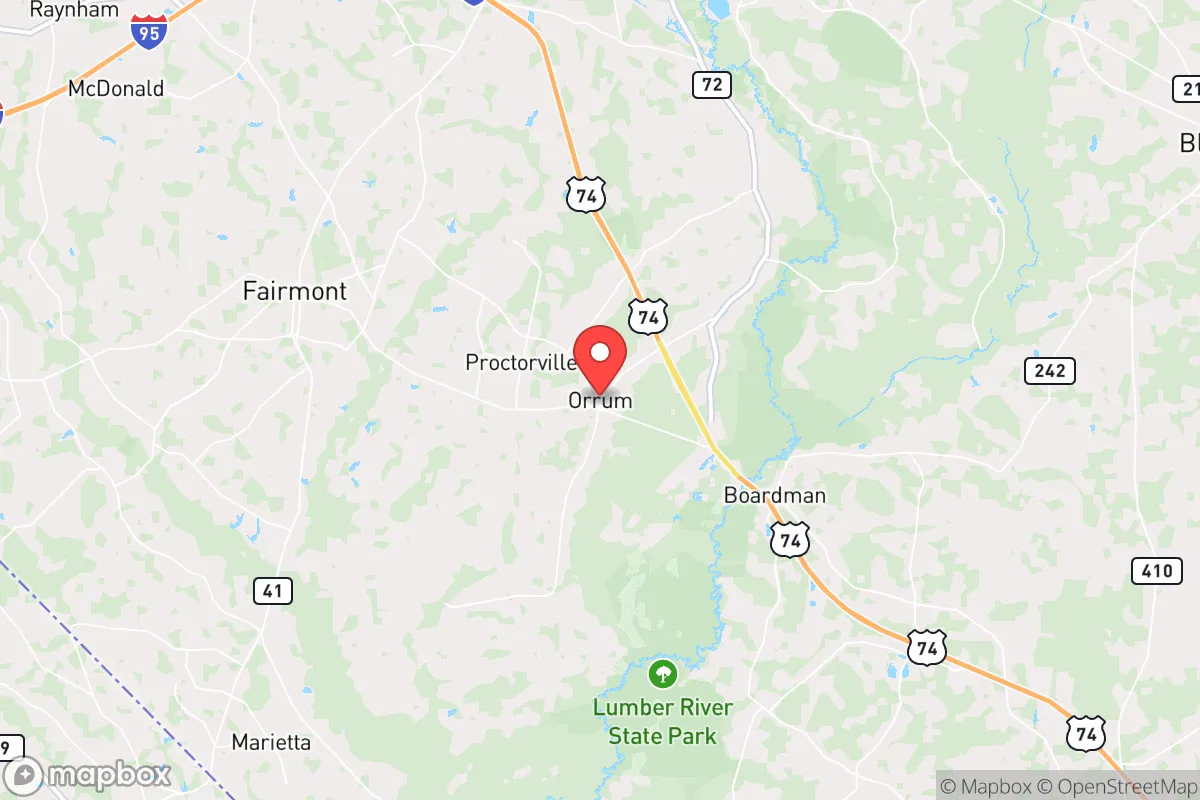
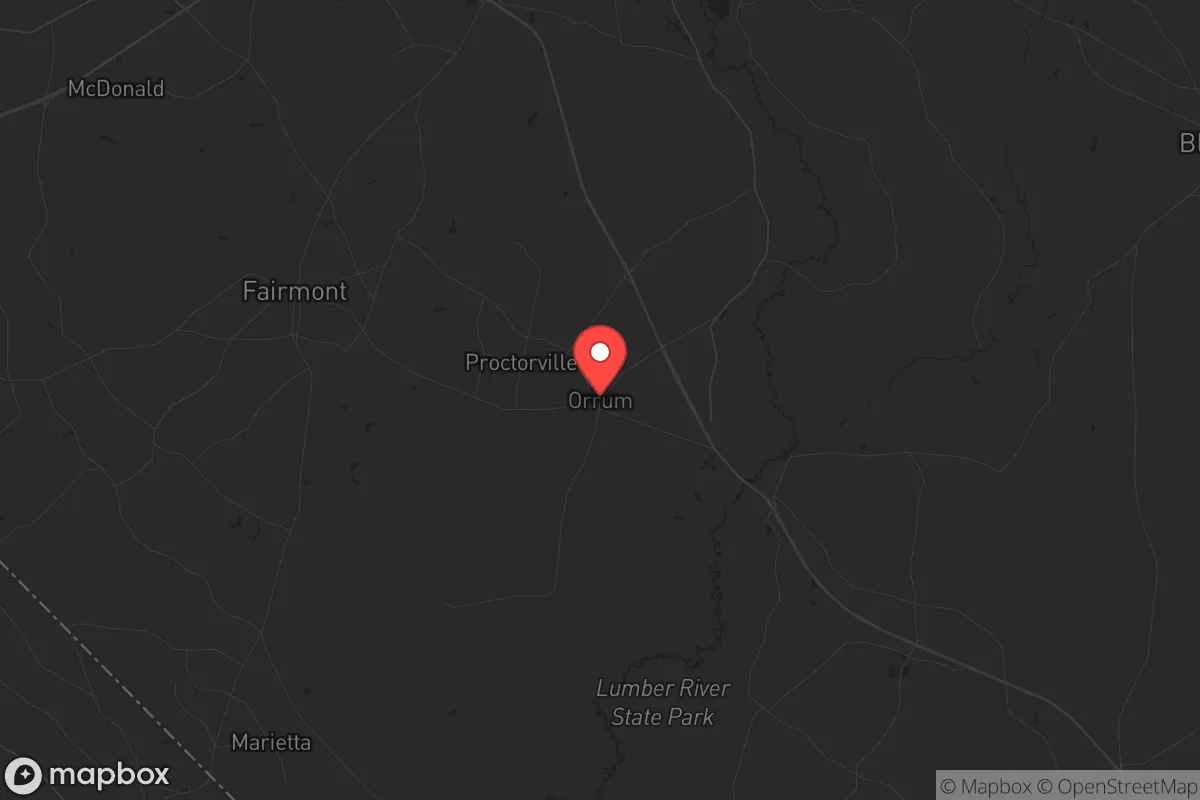
Photo by Parsa Mahmoudi on Unsplash
Strategic Assessment of Orrum, NC
Meaningful friction. Expect exposure to either population pressure, blast zones, or natural disaster risk. Consider buying a retreat property.
What does the Strategic Assessment tell us?
Our Strategic Assessment grades tactical survivability of an area. Major population centers, military targets, fallout zones, natural disasters, and border exposure all drive risk — lower exposure means a more defensible position in a crisis.
This is heavily inspired by Joel Skousen's Strategic Relocation book. Highly recommended you checkout the book ($)What does this tell us?
Our Strategic Assessment grades tactical survivability of an area. Major population centers, military targets, fallout zones, natural disasters, and border exposure all drive risk — lower exposure means a more defensible position in a crisis.
This is heavily inspired by Joel Skousen's Strategic Relocation book. Highly recommended you checkout the book ($)Strategic Pillars

Key Distances
Regional Safe Places
Below is our recommended "safe zones" in North Carolina and the surrounding area based on our strategic heuristics. For most people, it's unrealistic to live in a “safe zone” full-time due to work, family or other personal reasons. They tend to be more rural. However, many of these areas are perfect for second homes and retreat properties that double as a vacation home or even a short-term rental.

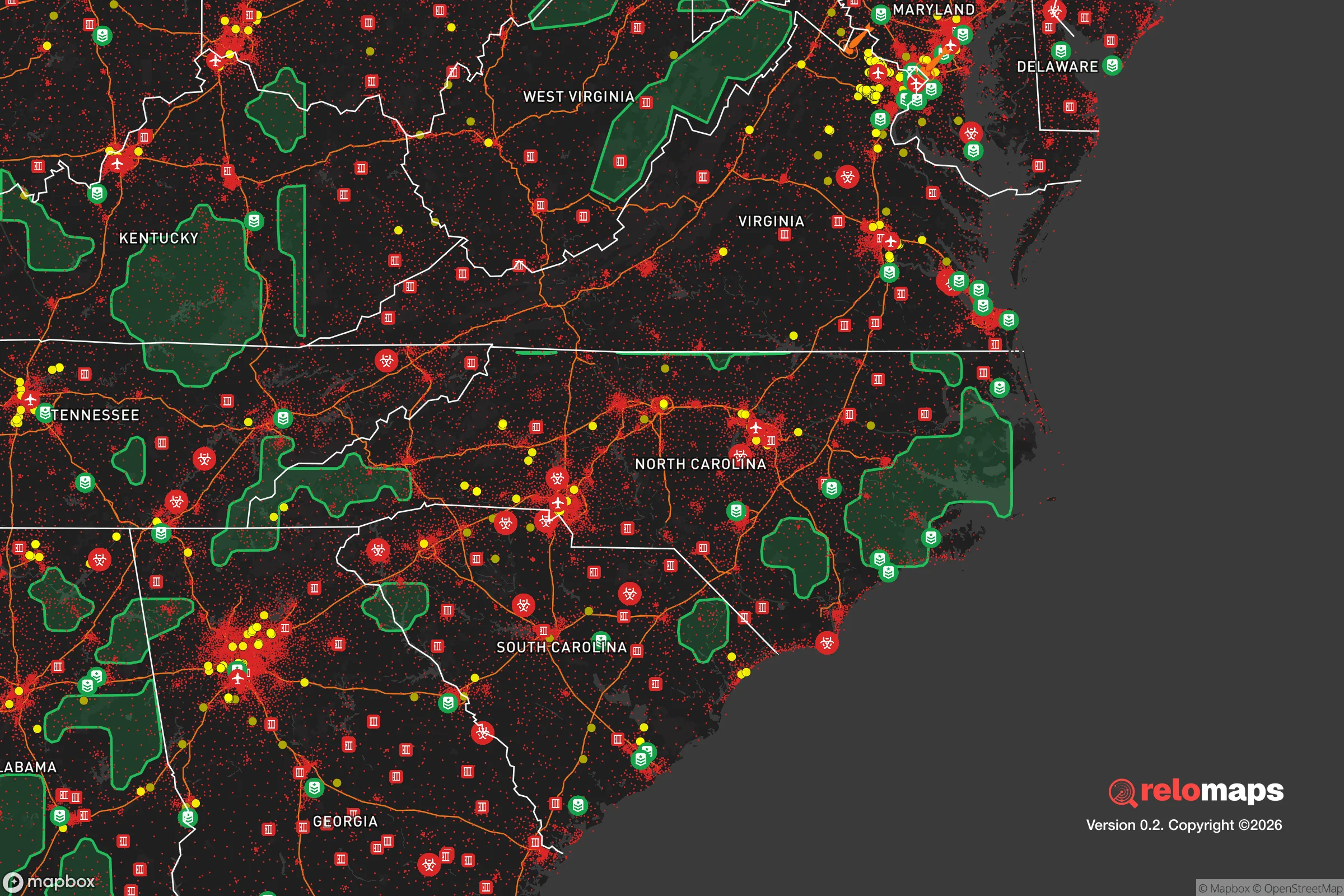


Important Note: For informational purposes only. This does not mean nothing bad ever happens in the green zones. Please use common sense. This is based on public data and modeled with AI. We tried to take a conservative approach but mistakes happen. We update this regularly as new information becomes available.
Solar Generator Recommendations
Backup power matters more here than in safer locations. We've picked three solar generators across budgets and capacity tiers — start with the budget unit if you only need a few essentials, or step up if you want to run a fridge and HVAC for days at a time.

Jackery Portable Power Station Explorer 300
Budget OptionPower on the Go: Weighing only 11 lbs, it's convenient to set up and store with book-sized foldable solar panels

BLUETTI Portable Power Station AC180
Designed for both indoor and outdoor scenarios, AC180 is highly capable as it has a robost capacity and continuous output power.

EF ECOFLOW DELTA Pro Ultra Power Station
Upgraded PickEcoFlow DELTA Pro Ultra is a whole-home energy system designed to grow with your family. Integrated with the Smart Home Panel 2, it scales to meet your evolving energy needs — keeping your home powered, intelligent, and secure through every stage of life.
We earn a commission, at no additional cost to you.
Strategic Assessment Analysis
Orrum, North Carolina, sits in a quiet pocket of Robeson County that offers a surprisingly resilient strategic position for those looking to step back from the chaos of metropolitan life. This unincorporated community of roughly 100 people is not a place you stumble upon—it’s a place you deliberately choose, and for a prepper or survivalist with an eye on long-term stability, that’s the first check in the plus column. The area’s low population density, agricultural backbone, and distance from major urban centers provide a buffer that many relocation targets simply cannot match, though it comes with its own set of trade-offs that demand a clear-eyed assessment.
Geographic position and natural advantages for long-term stability
Orrum’s location in southeastern North Carolina places it roughly 30 miles from the South Carolina border and about 40 miles northwest of the Atlantic coast at Myrtle Beach. That inland position is a double-edged sword—close enough to coastal resources but far enough to avoid the worst of hurricane storm surge and the immediate fallout of a coastal evacuation. The Lumber River, which flows just east of the community, provides a reliable freshwater source, and the surrounding terrain is flat, heavily wooded, and dotted with farmland. This is not mountainous defensible terrain, but the dense pine forests and swamplands offer natural cover and a degree of isolation that makes casual trespass or unwanted attention unlikely. The area’s agricultural capacity is real: Robeson County is one of North Carolina’s top producers of soybeans, corn, and tobacco, meaning local food supply chains are not a hypothetical—they’re operational. For a relocator, that means you’re not dependent on trucked-in groceries from a distant distribution hub; you’re living in a region where the ground itself produces calories. The climate is humid subtropical, with mild winters and long growing seasons, which supports year-round gardening and livestock operations if you have the land and know-how.
Risks, exposures, and proximity to fallout-relevant landmarks
No strategic assessment is honest without addressing the liabilities, and Orrum has several that a serious prepper cannot ignore. The most immediate concern is proximity to Interstate 95, which runs roughly 15 miles to the east. I-95 is a major north-south evacuation corridor, and in any scenario involving a major disaster—hurricane evacuation, civil unrest in the Northeast corridor, or a mass casualty event—that highway becomes a chokepoint of desperation. While Orrum itself is off the main drag, the ripple effects of a clogged I-95 could bring displaced populations, resource competition, and law enforcement diversion into the broader region. Additionally, Robeson County has one of the highest crime rates in North Carolina, with violent crime per capita significantly above state averages. This is not a reflection on Orrum specifically—the community is quiet—but the county-level reality means that local law enforcement resources are stretched thin, and in a breakdown scenario, you cannot rely on rapid response. On the fallout front, the nearest nuclear infrastructure is the Brunswick Nuclear Plant near Southport, about 60 miles southeast. That’s outside the typical 10-mile emergency planning zone, but prevailing winds in a release scenario could carry fallout inland. More concerning is the proximity to Fort Liberty (formerly Fort Bragg), roughly 50 miles northwest. While a military base is not a direct target in most civilian prepper scenarios, it is a concentration of federal assets that could become a focal point during unrest, drawing attention and traffic that spills into surrounding counties. Orrum sits far enough from these landmarks to avoid the worst direct effects, but close enough that a relocator should have a plan for secondary impacts—evacuees, military checkpoints, or supply chain disruptions.
Practical resilience for a relocator: food, water, energy, and defensibility
For the individual or family looking to establish a sustainable foothold, Orrum offers a mix of advantages and gaps that require deliberate preparation. Water is the strongest asset here. The Lumber River and numerous creeks and ponds provide surface water, and the water table in this coastal plain region is shallow—typically 10 to 30 feet down—making well drilling affordable and reliable. A hand pump or solar-powered well setup is a realistic project for a determined relocator. Food production is viable but not automatic. The soil is sandy loam, which drains well but requires amendment for heavy vegetable production; raised beds or a focus on native crops like sweet potatoes, collards, and field peas will yield better results than trying to force a northern-style garden. Livestock—chickens, goats, and even hogs—are common in the area, and the mild winters reduce the need for expensive heated shelters. Energy independence is achievable because the region gets ample sun (roughly 215 sunny days per year) and has no restrictive HOA or zoning that would prevent solar panel installation. A modest off-grid solar setup with battery storage can cover basic needs, and the abundance of firewood from surrounding forests provides a backup heat source. Defensibility is the weak point. The flat, open farmland and sparse tree lines do not offer the natural chokepoints or high ground of a mountain property. A relocator would need to rely on distance from main roads, good fencing, and a low-profile lifestyle rather than terrain advantage. The community itself is small and tight-knit, which cuts both ways: you can build trust with neighbors over time, but newcomers are noticed immediately. That’s a feature, not a bug—in a crisis, knowing who is around you is half the battle.
The overall strategic picture for Orrum is one of calculated trade-offs. It is not a fortress, and it will not shelter you from every storm—literal or figurative. But for a relocator who values affordable land, a long growing season, and genuine distance from the urban core, it offers a foundation that can be built upon with the right mindset and preparation. The risks—proximity to I-95, county-level crime, and the shadow of Fort Liberty—are real but manageable if you plan for them rather than ignore them. This is a place where you can live quietly, grow your own food, and keep your head down while the world around you does what it does. It is not for everyone, but for those who see the writing on the wall and want a plot of ground that gives them options, Orrum deserves a hard look. The key is to arrive with eyes open, a well-stocked pantry, and a willingness to become part of a community that values self-reliance because it has no other choice.

* Values derived from national, state, county, city and local statistics and may differ in a specific area. Last updated: 2026-04-19T01:10:50.000Z
Narrative content on this page is AI-generated and may contain mistakes. Verify any details that matter before acting on them.
ReloMaps may earn a commission from affiliate links at no extra cost to you.

