
Photo by Parsa Mahmoudi on Unsplash
Political ClimatePolitical Climate in Orrum, NC
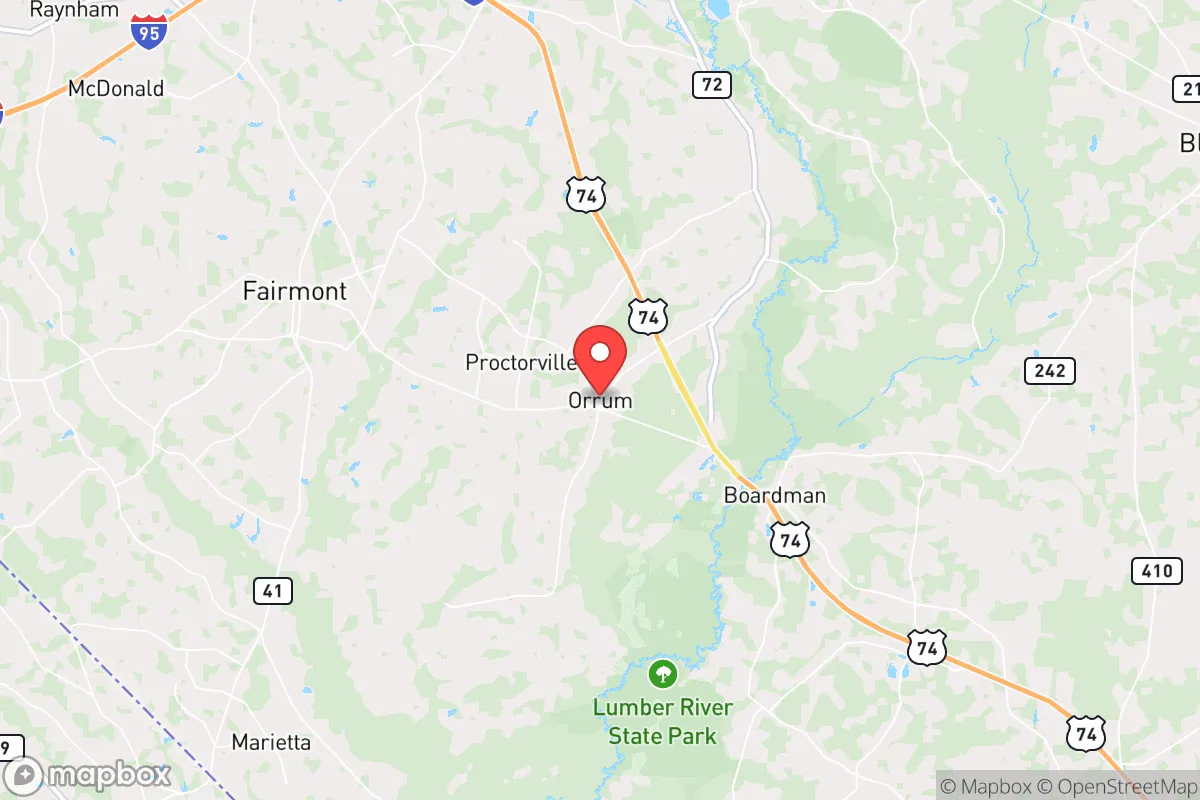
District shown is the primary district for this city’s centroid. Cities may span multiple districts.
Local Political AnalysisPolitical Analysis of Orrum, NC
Orrum, North Carolina, has always been a place where folks value their independence and don't take kindly to being told how to live their lives. The political climate here leans solidly conservative, with a Cook PVI of R+7, meaning the area consistently votes Republican by a comfortable margin. That's not just a number on a map—it reflects a deep-rooted belief in personal responsibility, limited government, and the right to make your own choices without a bureaucrat in Raleigh or Washington sticking their nose in your business. Over the past decade, you've seen that conservative streak hold steady, even as some neighboring towns have started to shift in worrying directions.
How it compares
If you drive just 15 miles east to Lumberton, you'll notice a different political flavor—that city leans more moderate, with a mix of Democratic and Republican voters, and you can feel it in the local ordinances and school board decisions. Head west toward Fairmont, and it's a similar story, with a more progressive tilt that's brought higher taxes and more regulations on small businesses. Orrum, by contrast, has stayed true to its roots. The surrounding Robeson County as a whole is a bit of a patchwork, but Orrum itself remains a conservative stronghold. You won't find the same push for new zoning laws or "equity" initiatives here that you see in places like Pembroke or Red Springs. It's a place where the Second Amendment is still respected, where property rights aren't up for debate, and where the local government keeps its hands off your day-to-day life.
What this means for residents
For folks living in Orrum, the conservative tilt means a lighter touch from the government. You're not dealing with the kind of overreach you hear about in bigger cities—no mask mandates that drag on for years, no heavy-handed business closures, and no school boards pushing controversial curriculum on your kids without a say. Property taxes stay reasonable, and there's a general understanding that your home is your castle. That said, the area isn't immune to outside pressures. As the state as a whole has seen more progressive policies creep in—like expanded Medicaid and stricter environmental regulations on farms—there's a quiet concern among long-time residents that it's only a matter of time before those ideas trickle down to the local level. The good news is that Orrum's community is tight-knit and vocal; if something feels like an overreach, people show up to town hall meetings and make their voices heard.
One thing that sets Orrum apart is its no-nonsense approach to cultural issues. You won't find the same debates over public monuments or school names that dominate headlines in places like Chapel Hill or Asheville. Here, the focus stays on practical matters—keeping roads paved, supporting the volunteer fire department, and making sure the local economy doesn't get strangled by red tape. There's a quiet pride in that, a sense that Orrum is holding the line against the kind of progressive ideology that's reshaped so many other small towns. If you're looking for a place where your freedoms aren't just a talking point but a way of life, this is it. Just keep an eye on the county commission elections—that's where the real battles are fought, and staying involved is the only way to keep things on the right track.

State Political ClimatePolitical Climate in North Carolina
State Political AnalysisPolitical Environment in the State
North Carolina has long been a classic swing state, but over the past 10-20 years it has settled into a reliably red-leaning posture, though with a razor-thin margin that keeps it competitive. The dominant coalition is a mix of rural conservatives, suburban moderates, and a growing exurban population, but the state’s overall partisan lean is roughly R+3 to R+5 in most statewide elections, with Republicans controlling the General Assembly and the governorship flipping between parties. The trajectory since 2010 has been a slow but steady rightward shift on policy, even as the state’s urban centers have become more progressive, creating a tense but stable balance.
Urban vs. rural divide
The political map of North Carolina is a textbook study in the urban-rural split. The major metros—Charlotte (Mecklenburg County), Raleigh-Durham (Wake and Durham Counties), and Greensboro-Winston-Salem (Guilford and Forsyth Counties)—are the Democratic strongholds, driven by transplants, university populations, and tech workers. Mecklenburg County alone delivered about 60% of its vote to Biden in 2020, while Wake County was close behind. In contrast, the rural eastern counties like Robeson, Cumberland, and Pitt are more mixed, but the real red engine is the western and Piedmont exurbs: Iredell (Statesville), Union (Monroe), and Cabarrus (Concord) counties routinely vote 65-70% Republican. The coastal counties like Brunswick and New Hanover (Wilmington) are trending redder as retirees and military families move in. The key takeaway: if you’re looking for a conservative environment, stick to the exurbs and rural areas; the cities are increasingly hostile to traditional values.
Policy environment
North Carolina’s policy environment is a mixed bag, but on balance it leans conservative. The state has a flat income tax rate of 4.5% (down from 7% in 2013), with a scheduled phase-down to 3.99% by 2027—a clear win for fiscal conservatives. There’s no state property tax, and sales tax is capped at 7.5% in most counties. The regulatory posture is business-friendly, with right-to-work laws and a tort reform system that limits lawsuit abuse. On education, the state has a robust school choice program: the Opportunity Scholarship Program provides vouchers for low-income families to attend private schools, and charter schools are plentiful. However, the state’s healthcare landscape is less conservative—Medicaid expansion was finally adopted in 2023 under a Republican-led compromise, which some see as a government overreach. Election laws are a bright spot: voter ID is required (passed in 2018, upheld in 2023), and early voting is generous but not unlimited. The state also has a Republican supermajority in the legislature, meaning Democratic governors (like Roy Cooper until 2024) have been largely sidelined on major policy.
Trajectory & freedom
North Carolina is becoming more free in several key areas, but there are warning signs. On gun rights, the state passed permitless carry (constitutional carry) in 2023, allowing law-abiding citizens to carry concealed without a permit—a major expansion of Second Amendment freedom. Parental rights were strengthened with the 2023 Parents’ Bill of Rights, which requires schools to notify parents about curriculum changes and prohibits instruction on gender identity and sexuality in K-4 classrooms. On medical autonomy, the state banned nearly all abortions after 12 weeks in 2023, with exceptions for rape, incest, and fetal anomalies—a significant restriction that aligns with conservative values. However, property rights took a hit with the 2023 expansion of eminent domain for a private pipeline project (the Mountain Valley Pipeline), which angered many rural landowners. The state also saw a push to restrict local governments from defunding police, which passed in 2021. Overall, the trajectory is positive for personal liberty, but the legislature’s willingness to use eminent domain for corporate projects is a red flag for property rights advocates.
Civil unrest & political movements
North Carolina has seen its share of political flashpoints, but the level of civil unrest is lower than in many blue states. The 2020 protests in Charlotte and Raleigh over George Floyd’s death were large but mostly peaceful, though there were isolated incidents of looting and arson in Charlotte’s South End. The state has a strong organized conservative movement, with groups like the John Locke Foundation and the North Carolina Family Policy Council driving policy. Immigration politics are relatively quiet—the state has no sanctuary cities, and local law enforcement cooperates with ICE. However, the 2023 controversy over the “Parents’ Bill of Rights” sparked protests from progressive groups in Durham and Chapel Hill, where school boards have been more activist. Election integrity remains a hot topic: the 2020 election was close (Biden won by 1.3 points), and the state’s Republican-led legislature passed a series of election reforms in 2023, including stricter absentee ballot rules and a ban on private funding of elections (like the Zuckerberg-funded grants from 2020). There’s no serious secession or nullification rhetoric, but the state’s rural counties have discussed forming a “Coalition of Western Counties” to push back against urban overreach.
Projection
Over the next 5-10 years, North Carolina is likely to remain a red-leaning swing state, but the margin could narrow as more transplants from blue states move into the Charlotte and Raleigh metros. The in-migration is heavily from New York, New Jersey, and California, and while many of these newcomers are conservative-leaning (seeking lower taxes and better schools), they also bring cultural baggage that could shift the suburbs leftward. The state’s rural areas will continue to vote heavily Republican, but their population share is shrinking. The key battleground will be the exurbs: places like Johnston County (south of Raleigh) and Stokes County (north of Winston-Salem) are growing fast and trending red. Expect the legislature to remain Republican-controlled through at least 2030 due to gerrymandering, but the governorship could flip back to a Democrat in 2028 if the urban vote consolidates. The biggest risk for conservatives is that the state’s economic growth (led by tech and finance) will attract more progressive transplants, slowly eroding the Republican edge. For now, though, North Carolina is a safe bet for someone looking for a state that respects personal freedom, low taxes, and traditional values—just keep an eye on the suburbs.
For a new resident, the bottom line is this: North Carolina offers a strong conservative policy environment with low taxes, school choice, and gun rights, but you’ll need to pick your location carefully. The cities are increasingly progressive, but the exurbs and rural areas are solidly red. If you’re moving for freedom, aim for the counties west of I-95 and north of Charlotte—places like Mooresville, Hickory, or Wilmington—and get involved in local politics to keep the state on the right track. The trajectory is positive, but it’s not guaranteed—your vote and your voice matter here more than in most states.
* Values derived from national, state, county, city and local statistics and may differ in a specific area. Last updated: 2026-04-19T01:10:50.000Z
Narrative content on this page is AI-generated and may contain mistakes. Verify any details that matter before acting on them.
ReloMaps may earn a commission from affiliate links at no extra cost to you.

