
Photo by Parsa Mahmoudi on Unsplash
Personal Sovereignty in Orrum, NC
Viable for self-reliance. Generally workable, though some barriers may limit total independence.
What does Personal Sovereignty tell us?
Personal Sovereignty measures your capacity for self-reliance and independence with minimal government friction. Higher scores mean fewer barriers between you and the way you want to live... but it assumes you have the space you need and good neighbors.
What does this tell us?
Personal Sovereignty measures your capacity for self-reliance and independence with minimal government friction. Higher scores mean fewer barriers between you and the way you want to live... but it assumes you have the space you need and good neighbors.
State Policy
Energy independence: Importer (15% of energy produced in-state)
Personal Liberty
Homesteading

Personal Liberty Analysis
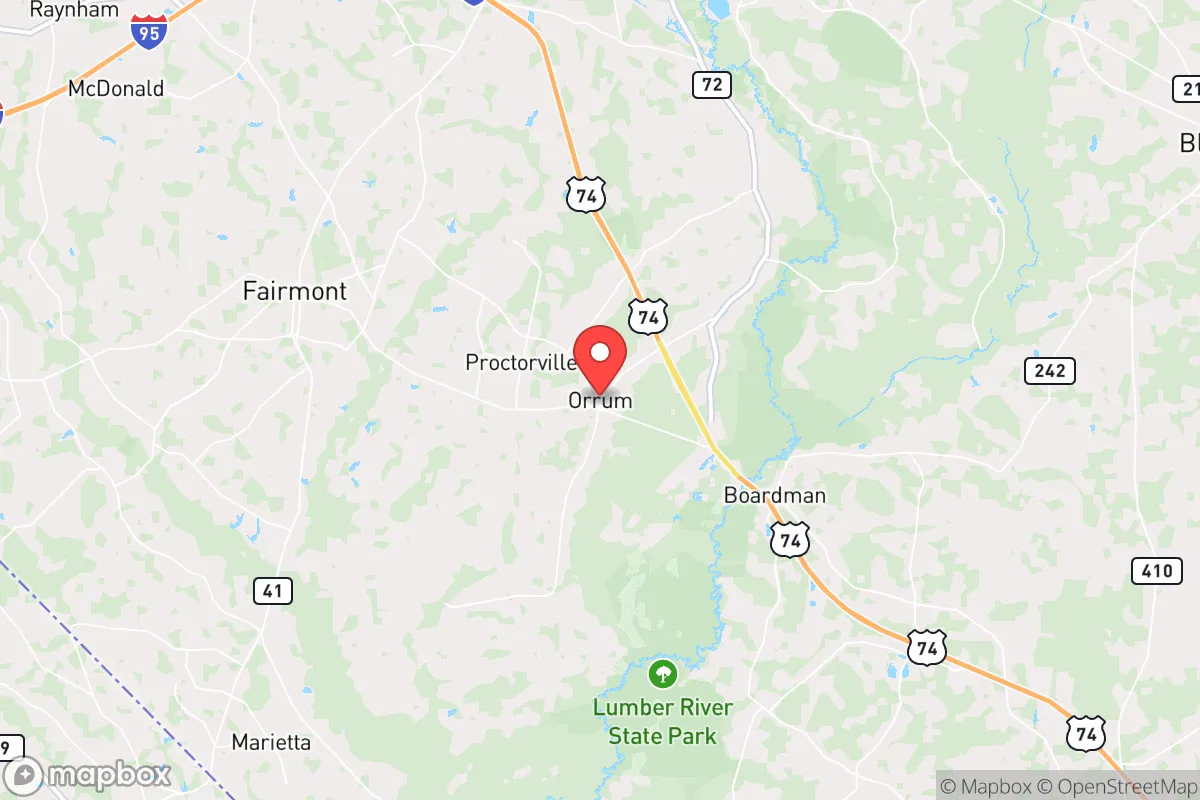
Orrum, North Carolina, offers a personal sovereignty environment that is markedly stronger than what you will find in most of the country, largely because it sits in a state that has actively pushed back against federal overreach and maintains a deep-seated culture of self-reliance. Located in rural Robeson County, this small town is far from the regulatory heavy hand of Raleigh or the coastal elite bubbles, meaning your day-to-day life is governed more by common sense and neighborly agreements than by bureaucratic edicts. For a single individual or a parent looking to secure a future where your decisions are your own, Orrum represents a place where the state is still a distant, manageable presence rather than an intrusive overlord. The trade-off is that you must be self-sufficient—emergency services are slower, infrastructure is basic, and the community expects you to handle your own problems, which is precisely the point for those with a survivalist or prepper mindset.
Tax burden and regulatory posture: How North Carolina’s fiscal policies protect your wallet and your choices
North Carolina’s tax and regulatory environment is a major asset for anyone prioritizing personal sovereignty. The state has a flat individual income tax rate of 4.5% as of 2026, down from higher rates a decade ago, and there is a clear legislative trajectory toward further reduction. Property taxes in Robeson County are among the lowest in the state, with an effective rate around 0.65% of assessed value, meaning a modest home in Orrum will cost you a few hundred dollars annually in county taxes—not a significant burden on your ability to save, invest, or stockpile supplies. There is no state-level property tax, and the county’s revenue needs are minimal, which keeps the government lean. Sales tax is 7% (6.75% state plus a local option), but essential items like groceries and prescription drugs are exempt. Critically, North Carolina is a right-to-work state with minimal business licensing requirements for small-scale operations, so if you want to start a side hustle selling firewood, eggs, or handcrafted goods from your property, you can do so without drowning in red tape. The regulatory posture here is one of tolerance: the state does not actively seek to control your economic choices, and local enforcement in rural areas like Orrum is often lax unless you draw attention to yourself. This is a stark contrast to states like California or New York, where every aspect of daily life is subject to fees, permits, and inspections.
Self-defense and gun law specifics: What the Second Sanctuary movement means for your right to keep and bear arms
North Carolina is a strong Second Amendment state, and Robeson County has declared itself a Second Amendment Sanctuary, meaning local law enforcement is instructed not to enforce any federal gun laws that infringe on the right to keep and bear arms. This is not just symbolic—it has real teeth. You can carry a concealed firearm without a permit as of 2023 (permitless carry for anyone 18 or older who can legally possess a firearm), and there is no state-level assault weapons ban, no magazine capacity limit, and no universal background check requirement for private sales. Stand your ground laws are fully in effect: you have no duty to retreat before using deadly force if you are lawfully present and believe it is necessary to prevent death or great bodily harm. Castle doctrine protections extend to your home, vehicle, and workplace. For a prepper, this means you can build an armory without fear of state confiscation, and you can train with the same equipment you would rely on in a grid-down scenario. The local sheriff’s office in Robeson County is known for being pro-Second Amendment, and the culture in Orrum is such that open carry is unremarkable. If you are moving from a state with restrictive gun laws, this alone can feel like a liberation. The only caveat is that you must still comply with federal law regarding NFA items (suppressors, short-barreled rifles) if you want to stay fully legal, but the state does not add its own restrictions on top of federal ones.
Self-reliance and homesteading viability: Lot sizes, zoning, and off-grid feasibility in rural Robeson County
Orrum’s rural character makes it a prime location for homesteading and off-grid living. Most residential lots in the unincorporated areas around town are 1 to 5 acres, with larger parcels of 10 to 50 acres available at prices that would be laughable in more populated regions—expect to pay $2,000 to $5,000 per acre for raw land. Zoning is minimal: Robeson County has no countywide zoning ordinance for most rural areas, meaning you can build a shop, keep livestock, or set up a greenhouse without applying for variances or dealing with a planning board. There are no restrictions on rainwater collection, composting toilets, or solar panel installation at the county level, and the state has net metering policies that allow you to sell excess power back to the grid if you choose to remain connected. Well water and septic systems are the norm, so you are not dependent on municipal utilities. For a prepper, this is the ideal setup: you can dig a well, install a solar array with battery storage, and raise chickens and goats without anyone telling you it is a nuisance. The only real limitation is that you must comply with state building codes if you are constructing a new dwelling, but those codes are not onerous for a simple, sturdy structure. Firewood is abundant from the surrounding pine forests, and the climate allows for year-round gardening with a little planning. If your goal is to reduce your dependence on the supply chain and the grid, Orrum gives you the legal and practical space to do it.
Personal liberties: Parental rights, medical autonomy, speech, and property protections
North Carolina has been a battleground for personal liberties, and the current legal landscape is favorable for those who value parental rights and medical autonomy. The state has a Parents’ Bill of Rights law that affirms your authority to direct your child’s upbringing, education, and healthcare, including the right to opt out of any school curriculum or medical treatment you find objectionable. Homeschooling is straightforward: you register with the state as a “non-public school,” submit a simple notice of intent, and are subject to minimal oversight—no standardized testing requirements for parents who choose to teach their own children. On medical autonomy, North Carolina does not have a state-level vaccine mandate for adults, and while COVID-era restrictions were imposed, they have been largely repealed, and the legislature has passed laws limiting the governor’s emergency powers to prevent future overreach. Speech protections are robust: there is no hate speech law that criminalizes political or religious expression, and the state has a strong tradition of protecting property rights through eminent domain reform. Your property cannot be taken for private economic development, and you have the right to defend it against trespass or seizure. The only area where the state still exerts significant control is in environmental regulations for large-scale development, but for a single individual or family living on a few acres, those rules are irrelevant. The overall message is clear: in Orrum, you are trusted to make your own decisions about your health, your children, and your land, and the government is not looking for ways to second-guess you.
Compared to other areas of the country, Orrum offers a level of personal sovereignty that is increasingly rare. The combination of low taxes, minimal zoning, strong gun rights, and a legal framework that respects parental and medical autonomy puts it in the top tier of American communities for those who value freedom over convenience. You will not have the amenities of a big city, but you will have the peace of mind that comes from knowing your life is your own. For a single individual or a parent with a survivalist mindset, this is not just a relocation option—it is a strategic move to secure your autonomy while it is still possible. The state is not perfect, and federal overreach remains a threat, but Orrum sits in a county and a state that are actively fighting to preserve the liberties that make self-reliant living viable. If you are looking for a place where you can breathe, build, and prepare without interference, this is it.

* Values derived from national, state, county, city and local statistics and may differ in a specific area. Last updated: 2026-04-19T01:10:50.000Z
Narrative content on this page is AI-generated and may contain mistakes. Verify any details that matter before acting on them.
ReloMaps may earn a commission from affiliate links at no extra cost to you.

