Photo: Wikipedia
Political ClimatePolitical Climate in Owasso, OK
District shown is the primary district for this city’s centroid. Cities may span multiple districts.
Local Political AnalysisPolitical Analysis of Owasso, OK
Owasso leans heavily Republican, with a Cook PVI of R+11 that puts it among the most conservative suburbs in the Tulsa metro. That number isn't just a statistic—it reflects a community that has consistently voted for limited-government candidates and pushed back against state-level overreach, especially on issues like property rights, school choice, and Second Amendment protections. Over the past decade, the political trajectory here has been steady, not radical; Owasso hasn't swung left like some suburban enclaves in other states, but it has seen a slow trickle of newcomers from blue states who bring different voting habits. So far, the local culture has absorbed them without shifting the overall lean, but I'd be lying if I said there wasn't a quiet concern about whether that will hold as the city grows.
How it compares
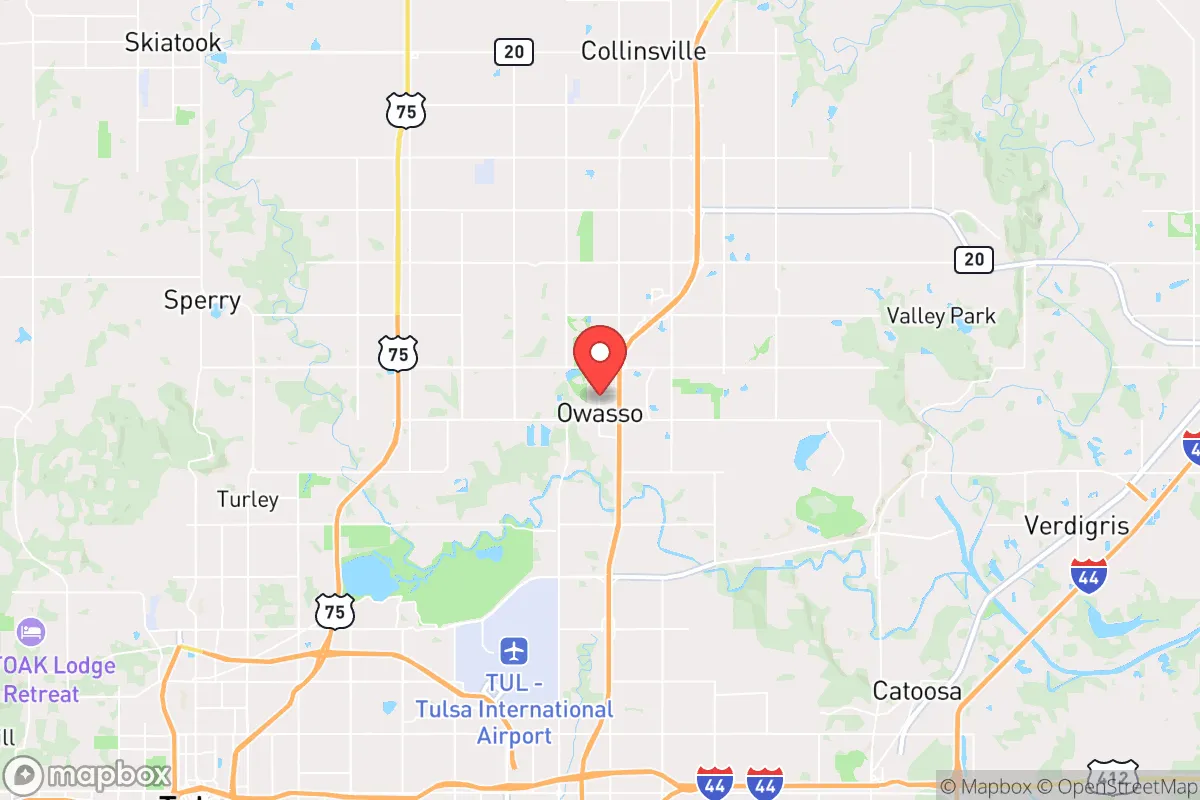
Drive ten miles south into Tulsa proper, and you'll feel the difference immediately. Tulsa County as a whole is more purple—it voted for Trump in 2024 but by a narrower margin than Owasso, and the city council has a few progressive members who've pushed for things like sanctuary city policies and defunding police studies. That's not happening in Owasso. To the north, Collinsville and Skiatook are even more conservative, but they lack Owasso's economic base and school system, which attract families who might otherwise lean moderate. The real contrast is with Broken Arrow, Owasso's larger neighbor to the southeast: Broken Arrow is also R+ territory, but its politics feel more corporate and establishment-friendly, whereas Owasso retains a stronger grassroots, "leave us alone" vibe. If you're worried about government creep into personal freedoms, Owasso is one of the safer bets in the region.
What this means for residents
For daily life, the conservative tilt means local officials generally stay out of your business. Zoning disputes are handled with a light touch, property taxes remain among the lowest in the state for a city of this size, and there's no serious talk of income taxes or new business regulations that would strangle the small shops along 76th Street North. The school board has held the line on parental rights and curriculum transparency, which is a big deal for families who don't want the government dictating what their kids learn about history or identity. On the flip side, if you're hoping for expanded public transit or aggressive climate policies, you'll be disappointed—Owasso prioritizes low taxes and individual choice over collective programs. That trade-off feels right to most residents, but it's worth knowing going in.
One cultural distinction that sets Owasso apart is its strong sense of local identity without being insular. The city has its own police force, fire department, and school district, so you're not at the mercy of Tulsa County's broader politics for services. There's also a noticeable skepticism of federal mandates—during the COVID years, Owasso businesses largely stayed open, and mask mandates were never enforced with the zeal seen in other parts of the metro. That independent streak is baked into the community's DNA. Looking ahead, the biggest risk isn't a sudden leftward shift; it's that rapid growth could dilute the conservative culture if new arrivals don't share the same values. For now, though, Owasso remains a place where personal freedom and local control still mean something.

State Political ClimatePolitical Climate in Oklahoma
State Political AnalysisPolitical Environment in the State
Oklahoma has long been one of the most reliably conservative states in the country, with a deep-rooted Republican lean that has only solidified over the past two decades. The state hasn’t voted for a Democratic presidential candidate since 1964, and in 2024, Donald Trump carried it by a massive 34-point margin. The dominant coalition is a mix of rural traditionalists, evangelical Christians, and a growing number of fiscally conservative suburbanites, all united by a strong preference for limited government, gun rights, and cultural conservatism. Over the last 10-20 years, the shift has been unmistakable: once-competitive rural counties like Pushmataha and McCurtain have become deep red, while the only blue holdouts are shrinking to a few urban pockets in Oklahoma City and Tulsa.
Urban vs. rural divide
The political map of Oklahoma is a study in contrasts. The vast rural expanse—places like Enid, Woodward, and Lawton—votes overwhelmingly Republican, often by 70-80% margins. These areas are the backbone of the state’s conservative identity, driven by agriculture, energy, and a strong sense of local autonomy. The two major metros, Oklahoma City and Tulsa, are more nuanced. Oklahoma City’s core has a small but vocal liberal presence, particularly in areas like the Plaza District and Midtown, but the surrounding suburbs—Edmond, Yukon, and Mustang—are reliably red. Tulsa’s Brookside and Cherry Street neighborhoods lean left, but the city’s southern and eastern suburbs, like Broken Arrow and Bixby, are deeply conservative. The real story is the rural-to-suburban shift: as people move from farms to the outskirts of OKC and Tulsa, they bring their conservative values with them, reinforcing the state’s overall lean.
Policy environment
Oklahoma’s policy environment is a dream for those seeking limited government. There is no state income tax on retirement income, and the top marginal income tax rate was cut to 4.75% in 2024, with plans to drop it further to 3.99% by 2027. The state is a right-to-work state, meaning union membership is optional, and it has some of the weakest occupational licensing requirements in the nation, making it easier to start a business. On education, Oklahoma has embraced school choice aggressively: the Oklahoma Parental Choice Tax Credit Act (2023) provides up to $7,500 per child for private school expenses, and the state has one of the highest charter school enrollment rates in the country. Healthcare is a mixed bag—the state did expand Medicaid under a 2020 ballot initiative, but it also passed a law in 2022 banning gender-affirming care for minors. Election laws are strict: voter ID is required, and the state has purged inactive voters from rolls, which conservatives see as protecting integrity but critics call suppression.
Trajectory & freedom
Oklahoma is moving decisively toward more personal freedom, especially in areas that matter most to conservatives. The Second Amendment Sanctuary State Act (2021) prohibits state enforcement of any future federal gun bans, and permitless carry was signed into law in 2019. On parental rights, the Parents’ Bill of Rights (2022) requires schools to notify parents of any medical or mental health services offered to their children, and it bans classroom instruction on sexual orientation or gender identity in grades K-5. Medical autonomy took a hit with the near-total abortion ban (SB 612, 2022), which protects unborn life but has no exceptions for rape or incest—a point of debate even among conservatives. Property rights are strong: the state has no statewide zoning mandates, and counties like Canadian County have fought off attempts to impose county-level planning restrictions. The trajectory is clear: Oklahoma is doubling down on individual liberty, with the only real friction coming from federal overreach on energy regulations and environmental rules.
Civil unrest & political movements
Oklahoma has seen relatively little civil unrest compared to coastal states, but there are flashpoints. The 2020 George Floyd protests in Oklahoma City and Tulsa were largely peaceful, though Tulsa saw some property damage and a heavy police presence. The left-leaning activist scene is small but organized, centered around groups like Oklahoma Policy Institute and Take Control Oklahoma, which push for Medicaid expansion and criminal justice reform. On the right, the Oklahoma Second Amendment Association is highly active, and the Oklahoma Conservative Political Action Committee has been instrumental in primarying moderate Republicans. Immigration politics are muted—Oklahoma is not a border state, but Governor Kevin Stitt sent National Guard troops to Texas in 2023. There is no sanctuary city movement; in fact, Oklahoma City passed a resolution in 2024 affirming cooperation with federal immigration authorities. Election integrity remains a hot topic: the state’s Voter ID law and paper ballot mandate (2022) are seen as gold standards by conservatives, though some rural counties like Adair have complained about poll closures.
Projection
Over the next 5-10 years, Oklahoma will likely become even more conservative, driven by two forces: in-migration from blue states and the continued exodus of young progressives to places like Austin or Denver. The state’s low cost of living and tax-friendly policies are attracting families from California and Illinois, particularly to suburbs like Edmond and Bixby. These newcomers tend to be fiscally conservative but socially moderate, which could create tension with the state’s more hardline evangelical base. However, the political infrastructure is so deeply red that any moderation will be slow. Expect more tax cuts, further school choice expansion, and continued resistance to federal mandates on energy and environmental issues. The only wild card is the Tribal Nations—the Cherokee Nation and Choctaw Nation have significant political and economic power, and their push for sovereignty could create friction with state government, especially on issues like gaming compacts and jurisdiction.
For a new resident, the bottom line is this: Oklahoma offers a high degree of personal freedom, low taxes, and a culture that respects traditional values. You won’t find the political chaos of a swing state or the overreach of a deep blue one. The schools are increasingly choice-friendly, the gun laws are among the best in the nation, and your vote actually counts in a primary. Just be prepared for the summer heat and the occasional tornado—and know that your neighbors will likely share your belief that government should stay out of your life. If you’re looking for a place where the political climate matches your values, Oklahoma is about as solid as it gets.
* Values derived from national, state, county, city and local statistics and may differ in a specific area. Last updated: 2026-04-19T08:21:21.000Z
Narrative content on this page is AI-generated and may contain mistakes. Verify any details that matter before acting on them.
ReloMaps may earn a commission from affiliate links at no extra cost to you.

