Photo: Wikipedia
Demographics of Owatonna, MN
Affluence Level in Owatonna, MN
A middle-class area roughly in line with national averages across income, home values, education, and employment.
People of Owatonna, MN
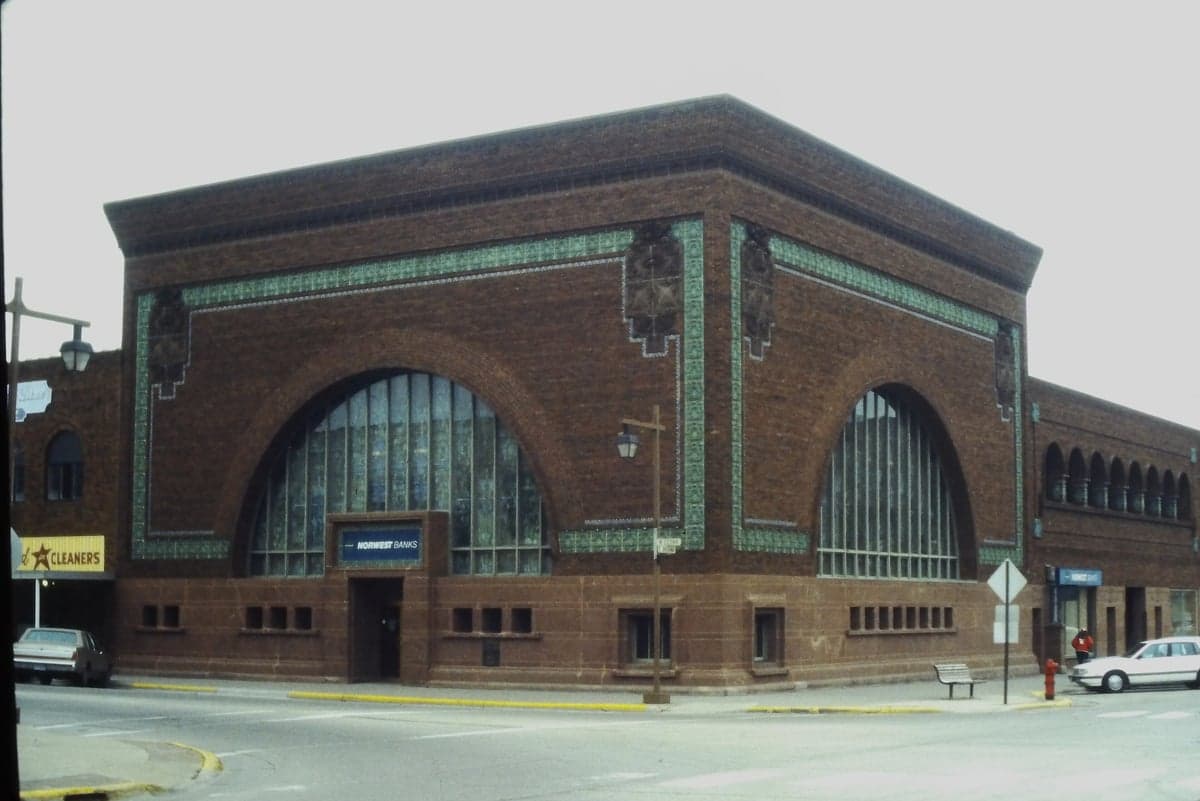
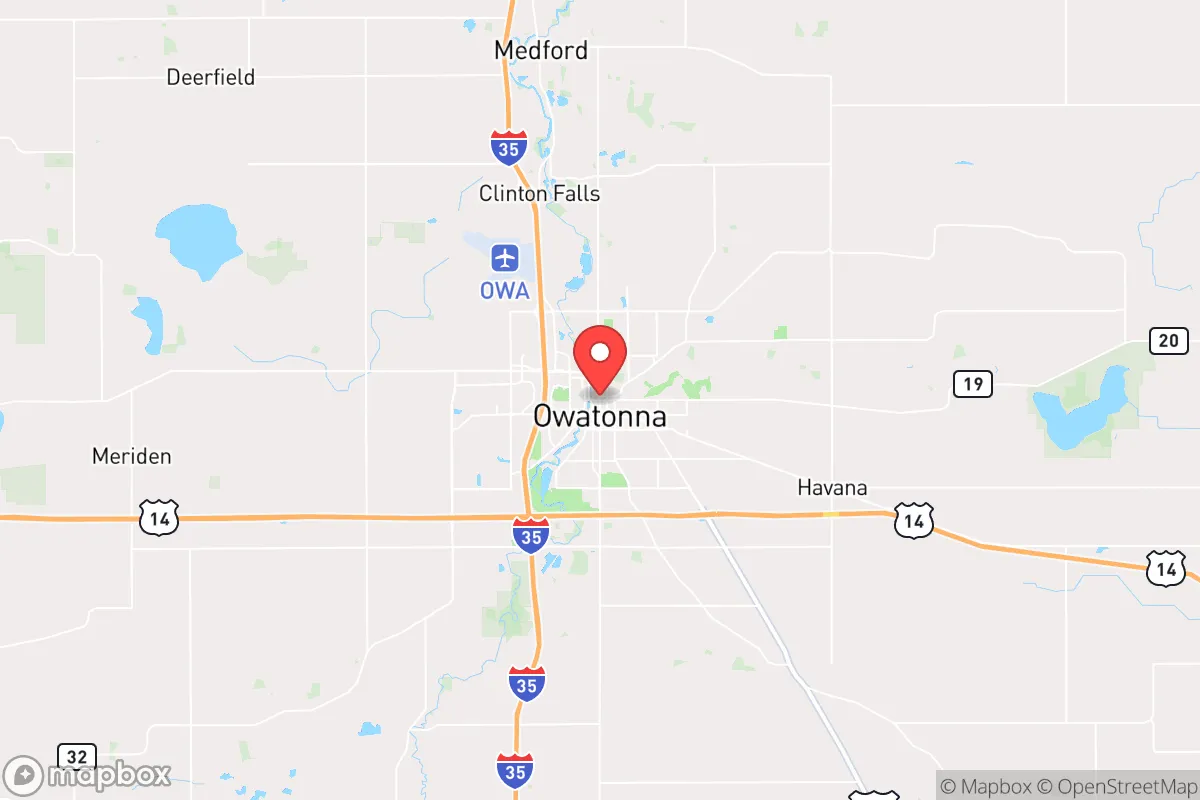
The people of Owatonna, Minnesota, today number 26,462, forming a community that is 83.2% white, with a notable Hispanic population of 8.3% and a Black population of 4.6%. The city is characterized by a relatively low foreign-born share of 2.9% and a college-educated rate of 32.3%, reflecting a stable, largely native-born workforce rooted in manufacturing and agriculture. Distinctive identity markers include a strong sense of civic pride centered on the historic Steele County Courthouse and a reputation as a family-oriented, affordable alternative to the Twin Cities metro area, located about 60 miles south.
How the city was settled and grew
Owatonna’s settlement began in the 1850s, driven by the promise of fertile farmland and the construction of the Minnesota Central Railroad, which reached the area in 1856. The original population was overwhelmingly of Yankee and German stock, with later waves of Scandinavian immigrants—primarily Swedes and Norwegians—arriving in the 1870s and 1880s to work the land and staff the growing milling and dairy industries. These early settlers built the Downtown Historic District, centered around the 1891 Steele County Courthouse, which remains the city’s architectural and civic anchor. The West Hills neighborhood, developed in the early 20th century, became home to many of the city’s business owners and professionals, while the East Side, near the railroad tracks, housed the working-class families who staffed the local flour mills and the Owatonna Canning Company. By 1900, the population had reached roughly 3,000, and the city’s identity as a stable, industrious community was firmly established.
Modern era (post-1965)
Following the 1965 Hart-Cellar Act, Owatonna saw only modest immigration, with the foreign-born share remaining low at 2.9% today. The most significant demographic shift came from domestic in-migration, particularly from rural Minnesota and the Upper Midwest, as the city’s manufacturing base expanded. The arrival of Viracon (a major glass fabricator) and Federal-Mogul (an auto parts manufacturer) in the 1970s and 1980s drew a new wave of workers, many of whom settled in the Northeast Owatonna area, a post-war suburban development of single-family homes. The Hispanic population, now 8.3%, began growing in the 1990s, primarily through labor recruitment for food processing and agricultural work; these families concentrated in the Southwest Owatonna neighborhood, near the industrial parks and the Steele County Fairgrounds. The Black population, at 4.6%, is a more recent arrival, largely tied to service-sector and manufacturing jobs, and is dispersed across the city with no single dominant enclave. East/Southeast Asian residents (0.6%) and Indian subcontinent residents (0.0%) remain negligible, reflecting the city’s limited draw for high-skilled immigration.
The future
Owatonna’s population is projected to grow slowly, likely reaching 28,000–30,000 by 2040, driven by natural increase and continued domestic in-migration from the Twin Cities exurbs. The city is not homogenizing into a single cultural bloc; rather, it is experiencing a mild tribalization, with the Hispanic community consolidating in Southwest Owatonna and the white majority remaining dominant in the older neighborhoods like West Hills and the East Side. The immigrant communities—primarily Hispanic and Black—are growing slowly but steadily, with little sign of rapid assimilation into the broader white cultural fabric; Spanish-language signage and ethnic grocery stores are increasingly visible in the southwest corridor. For a newcomer, this means moving into a city that is still overwhelmingly white and native-born, but with a visible and growing Hispanic presence that is geographically concentrated. The next decade will likely see continued suburban-style development on the city’s fringes, particularly near Interstate 35, while the core neighborhoods remain stable and family-oriented.
Owatonna is becoming a slightly more diverse, slowly growing exurb that retains a strong manufacturing and agricultural identity. For a conservative-leaning individual or family, this means a community with low crime, good schools, and a predictable social fabric, but one where the Hispanic population is carving out a distinct, growing presence in the southwest. The city’s future is one of gradual change, not rapid transformation, making it a stable choice for those seeking a traditional Midwestern lifestyle with modest demographic evolution.

* Values derived from national, state, county, city and local statistics and may differ in a specific area. Last updated: 2026-10-10T16:28:36.000Z
Narrative content on this page is AI-generated and may contain mistakes. Verify any details that matter before acting on them.
ReloMaps may earn a commission from affiliate links at no extra cost to you.

