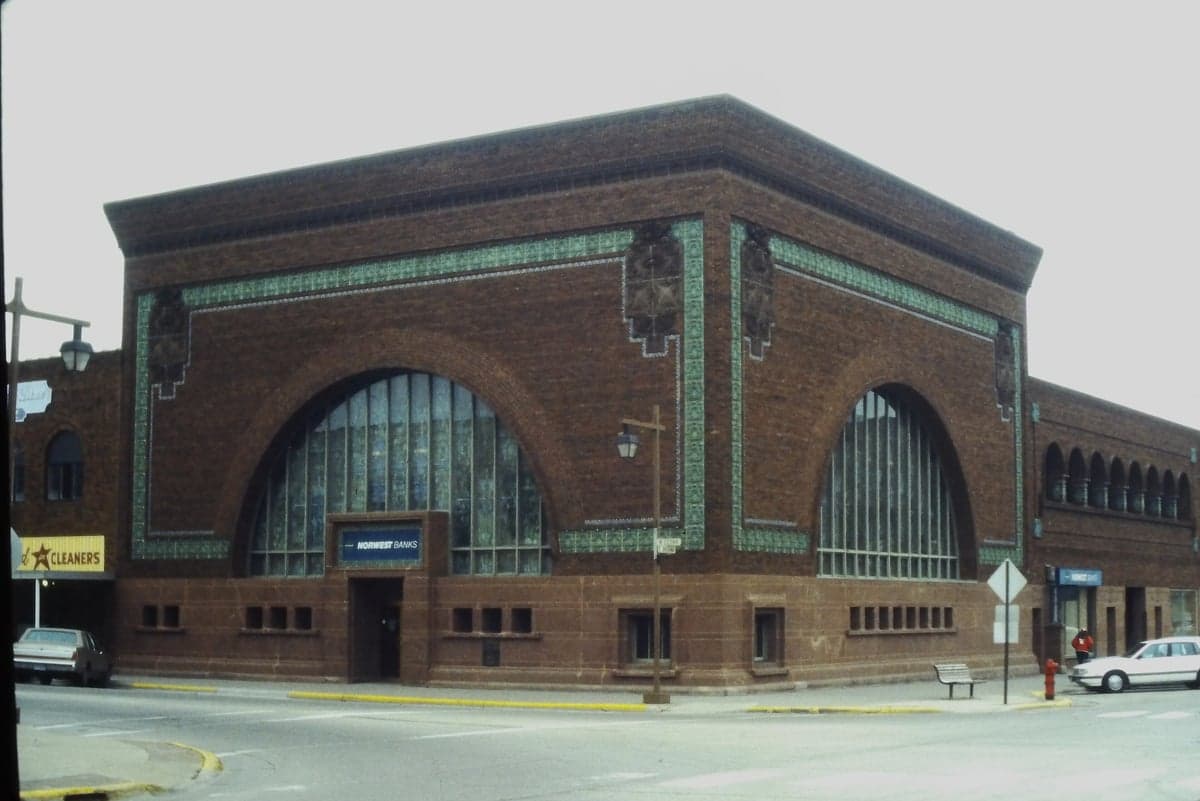
Photo: Wikipedia
Quality of Life in Owatonna, MN
A high quality of life with strong walkability, manageable living costs, healthy neighborhood signals, and solid amenity access.
What does Quality of Life tell us?
Quality of Life blends cost of living, nearby amenities, socioeconomic signals, and neighborhood character. City-level scores represent the whole municipality; individual neighborhoods can differ.
What does this tell us?
Quality of Life blends cost of living, nearby amenities, socioeconomic signals, and neighborhood character. City-level scores represent the whole municipality; individual neighborhoods can differ.
Cost of Living
15% below national average
The Real Cost of Living in Owatonna, MN for 2026
| Tier | Individual | Family (4) |
|---|---|---|
| Survival | $16k | $30k |
| Comfortable | $46k | $67k |
| Luxury | $127k+ | $197k+ |
| Elite (Top 5%) | $150k+ | $232k+ |
121%
The Area Signal
A metric tracking the socioeconomic signals of the area.
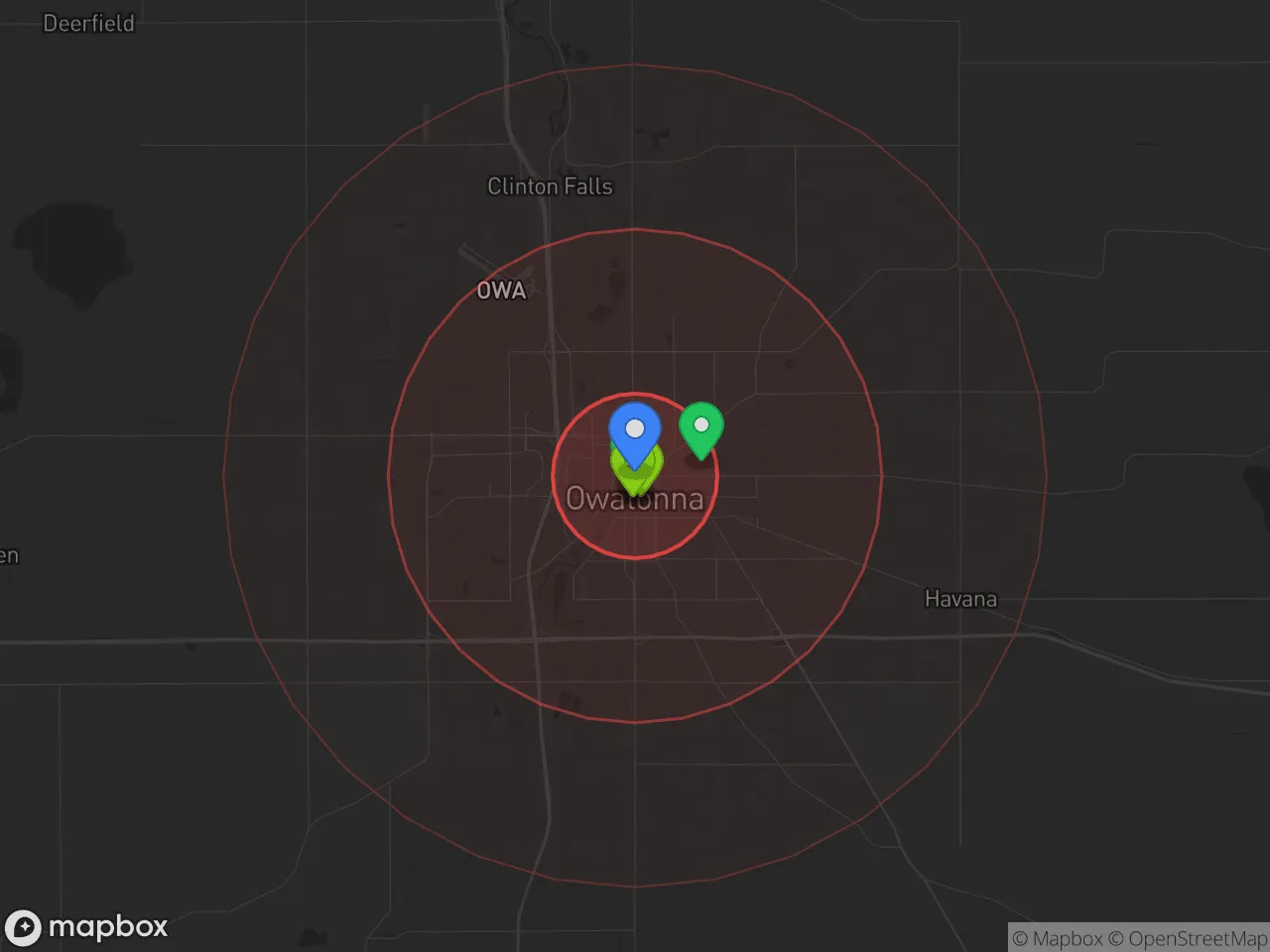
Hobbies
Explore the areaGroceries
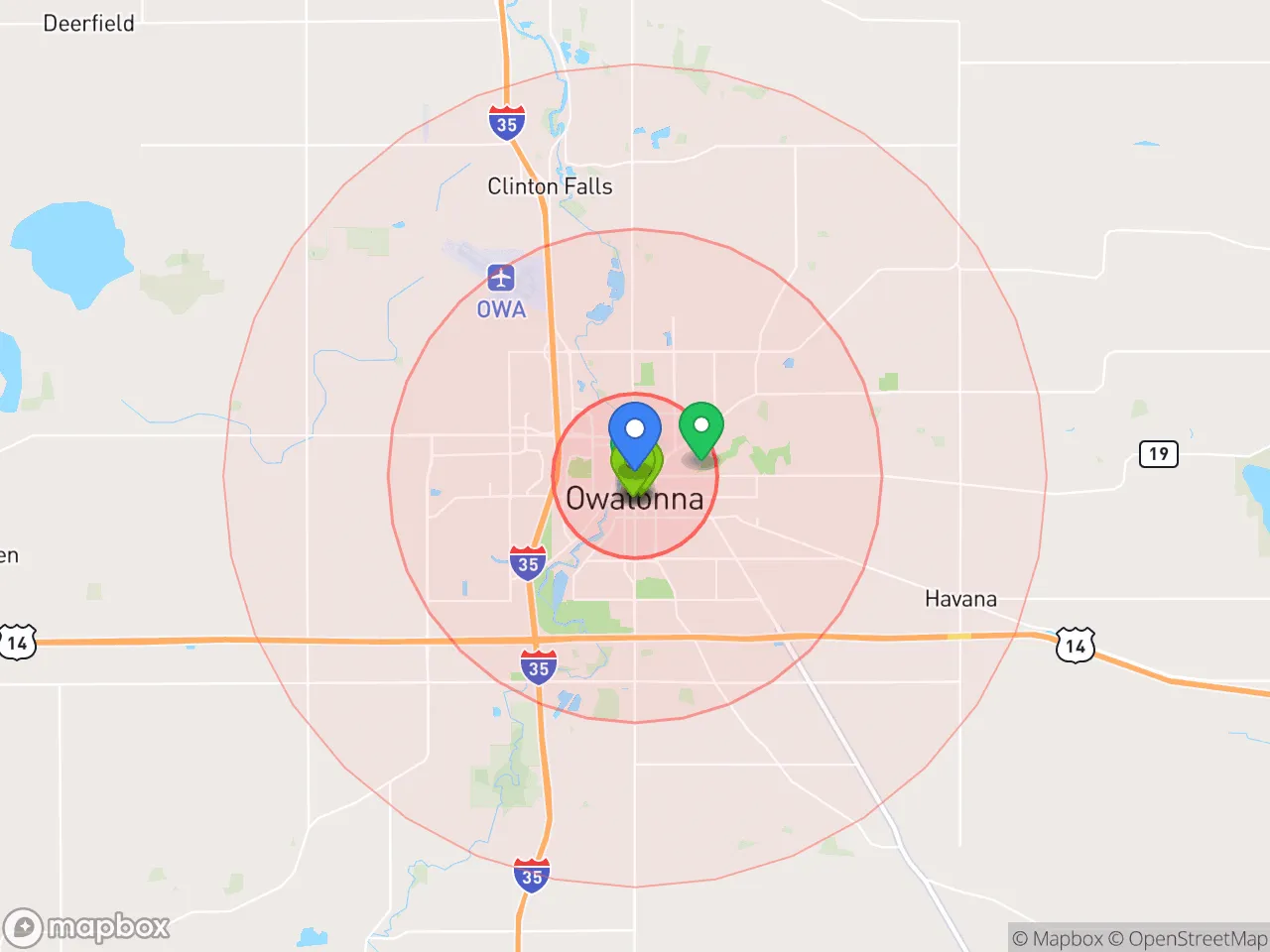
4 within 10 miles
Gas
12 within 10 miles
Hospital
4 within 20 miles
Airport
JFK — John F. Kennedy Memorial
Post Office
USPS — Owatonna, MN
Critical Amenities
Quality-of-Life Analysis
Owatonna offers a quality of life defined by strong community ties, a robust local economy, and a cost of living that significantly undercuts the national average, attracting a mix of young families, skilled tradespeople, and retirees seeking a quieter pace. The city’s affluence is modest but stable, anchored by a diverse manufacturing base and a historic downtown, rather than by a single dominant industry. Residents here tend to value practical comforts—good schools, safe neighborhoods, and short commutes—over urban excitement, making it a place where daily life is predictable and family-oriented.
Cost of living and housing affordability compared to the Twin Cities
With a cost of living index of 85 (15% below the U.S. average), Owatonna is notably more affordable than the Twin Cities metro, where the index typically hovers around 105–110. The median home value sits at $234,600, roughly half of what a comparable home would cost in the Minneapolis suburbs, while the median rent of $1,010 is about $400 less per month than in the metro area. This affordability gap is the primary draw for remote workers and commuters, though the average commute of just 17.6 minutes means most residents work locally—at employers like Viracon (architectural glass), Wenger Corporation (music equipment), or Owens Corning (insulation). Property taxes in Steele County are moderate, averaging around 1.1% of assessed value, which is competitive with outlying metro counties like Scott or Dakota.
Schools, amenities, and the daily rhythm of life
Daily life in Owatonna revolves around the Owatonna Public Schools district (ISD 761), which serves roughly 4,500 students and consistently earns above-average ratings for academic proficiency, particularly at Wilson Elementary and Owatonna High School. The city’s amenities punch above its weight for a population of 26,000: the Owatonna Arts Center hosts rotating exhibits, the West Hills Golf Course offers affordable public play, and the Owatonna YMCA is a central hub for fitness and youth programs. The historic downtown, anchored by the Steele County History Center and the restored Paramount Theatre, hosts a weekly farmers market from May through October. For outdoor recreation, Kaplan’s Woods Park provides 3 miles of hiking trails along the Straight River, and Lake Kohlmier offers fishing and a swimming beach. The rhythm is slow and predictable—most errands are a 5-minute drive, and traffic congestion is virtually nonexistent outside of the I-35 corridor during peak hours.
Who thrives best in Owatonna’s environment
Owatonna is best suited for families seeking a low-stress, affordable environment with strong schools, and for professionals in manufacturing, healthcare (the Owatonna Hospital is part of Mayo Clinic Health System), or remote work who value a short commute and a tight-knit community. Retirees on fixed incomes benefit from the low housing costs and the walkable downtown core. However, those seeking diverse nightlife, high-end dining, or a fast-paced urban atmosphere will find the city limiting—the nearest major entertainment and job hub is Minneapolis, 60 miles north. For anyone prioritizing financial stability, safety, and a slower tempo, Owatonna delivers a quality of life that is both practical and quietly fulfilling.

Crime in Owatonna, MN
Lower crime rates than 83% of comparable U.S. locations.
Violent CrimeViolent Crime Analysis
Property CrimeProperty Crime Analysis
Crime Analysis
Owatonna, Minnesota, reports a violent crime rate of 198.7 incidents per 100,000 residents and a property crime rate of 614.7 per 100,000, placing it in a moderate safety tier for a city of its size in southern Minnesota. While these figures are below the national average for violent crime, they are elevated compared to many smaller, more rural communities in Steele County. The city’s overall safety picture is shaped by its role as a regional retail and employment hub, which draws transient traffic and associated property crime, while violent incidents remain relatively infrequent and often concentrated in specific areas.
Crime in context
Owatonna’s violent crime rate of 198.7 per 100,000 is roughly 43% lower than the national average of approximately 380 per 100,000, but it is higher than the statewide Minnesota average of about 280 per 100,000. The property crime rate of 614.7 per 100,000 sits below the national average of roughly 1,950 per 100,000, but is notably higher than the Minnesota state average of approximately 1,700 per 100,000. This pattern—violent crime below national norms but property crime closer to state levels—is typical for a city that serves as a commercial center for a largely rural county. Readers should note that Steele County as a whole reports lower crime rates than Owatonna itself, indicating that the city’s density and commercial activity drive its higher figures.
What residents experience
Residents most commonly encounter property crimes such as theft from vehicles, shoplifting, and burglary, particularly near the retail corridors along Interstate 35 and around the Owatonna Outlets mall. Violent crime is rare in daily life, with most incidents involving domestic disputes or acquaintance-based assaults rather than random stranger attacks. The Owatonna Police Department maintains a visible presence and participates in community policing initiatives, which contributes to a sense of safety in residential neighborhoods. However, the city’s proximity to the Twin Cities metro area—about 60 miles south—means it occasionally experiences spillover crime from larger urban centers, including stolen vehicles and drug-related offenses.
Neighborhood-level variation is notable. The area around the Steele County Fairgrounds and the downtown core near Cedar Avenue and Hoffman Drive see higher concentrations of property crime and police calls. In contrast, the newer subdivisions on the city’s west side and the rural outskirts of town report significantly lower incident rates. Prospective residents should examine specific block-level data for their target neighborhood, as the difference between a quiet cul-de-sac and a busy commercial corridor can be substantial. Overall, Owatonna offers a relatively safe environment for families and retirees, provided standard precautions like locking vehicles and securing homes are observed.
* Values derived from national, state, county, city and local statistics and may differ in a specific area. Last updated: 2026-10-10T16:28:36.000Z
Narrative content on this page is AI-generated and may contain mistakes. Verify any details that matter before acting on them.
ReloMaps may earn a commission from affiliate links at no extra cost to you.

