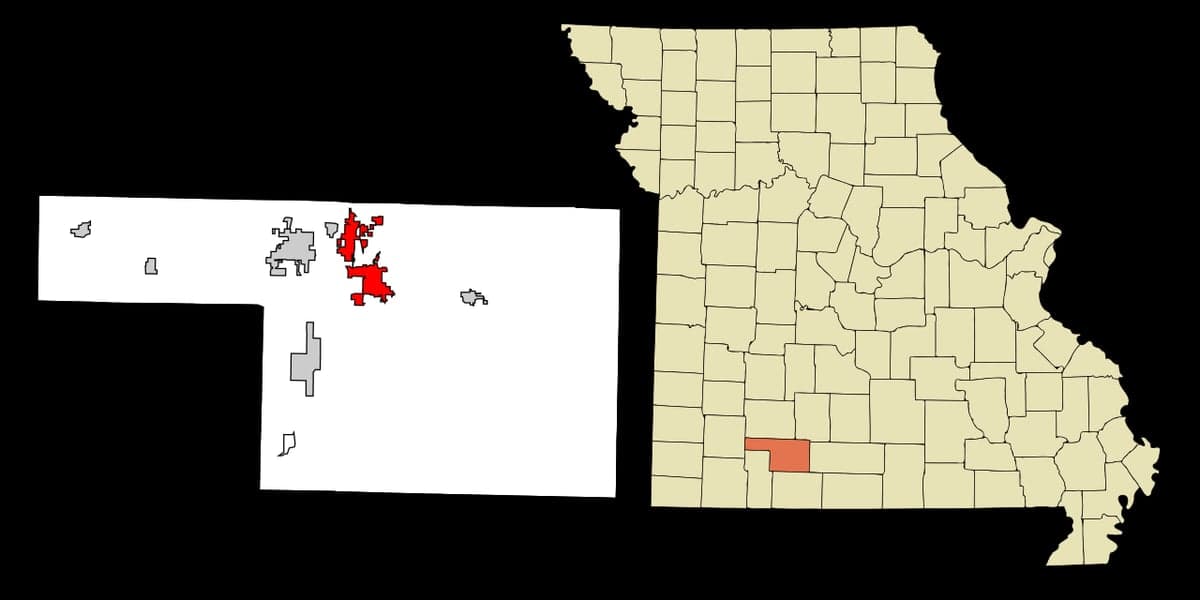
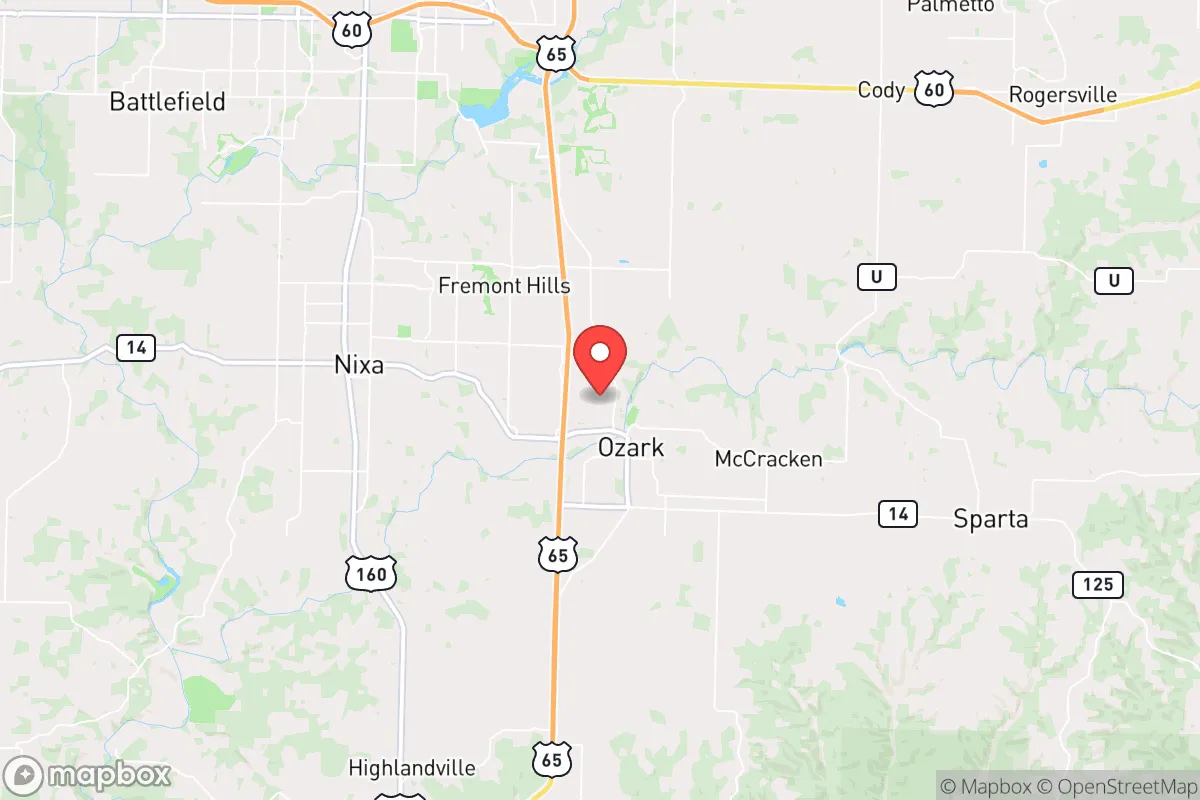
Photo: Wikipedia
Quality of Life in Ozark, MO
A high quality of life with strong walkability, manageable living costs, healthy neighborhood signals, and solid amenity access.
What does Quality of Life tell us?
Quality of Life blends cost of living, nearby amenities, socioeconomic signals, and neighborhood character. City-level scores represent the whole municipality; individual neighborhoods can differ.
What does this tell us?
Quality of Life blends cost of living, nearby amenities, socioeconomic signals, and neighborhood character. City-level scores represent the whole municipality; individual neighborhoods can differ.
Cost of Living
16% below national average
The Real Cost of Living in Ozark, MO for 2026
| Tier | Individual | Family (4) |
|---|---|---|
| Survival | $16k | $30k |
| Comfortable | $45k | $66k |
| Luxury | $100k+ | $155k+ |
| Elite (Top 5%) | $117k+ | $182k+ |
105%
The Area Signal
A metric tracking the socioeconomic signals of the area.
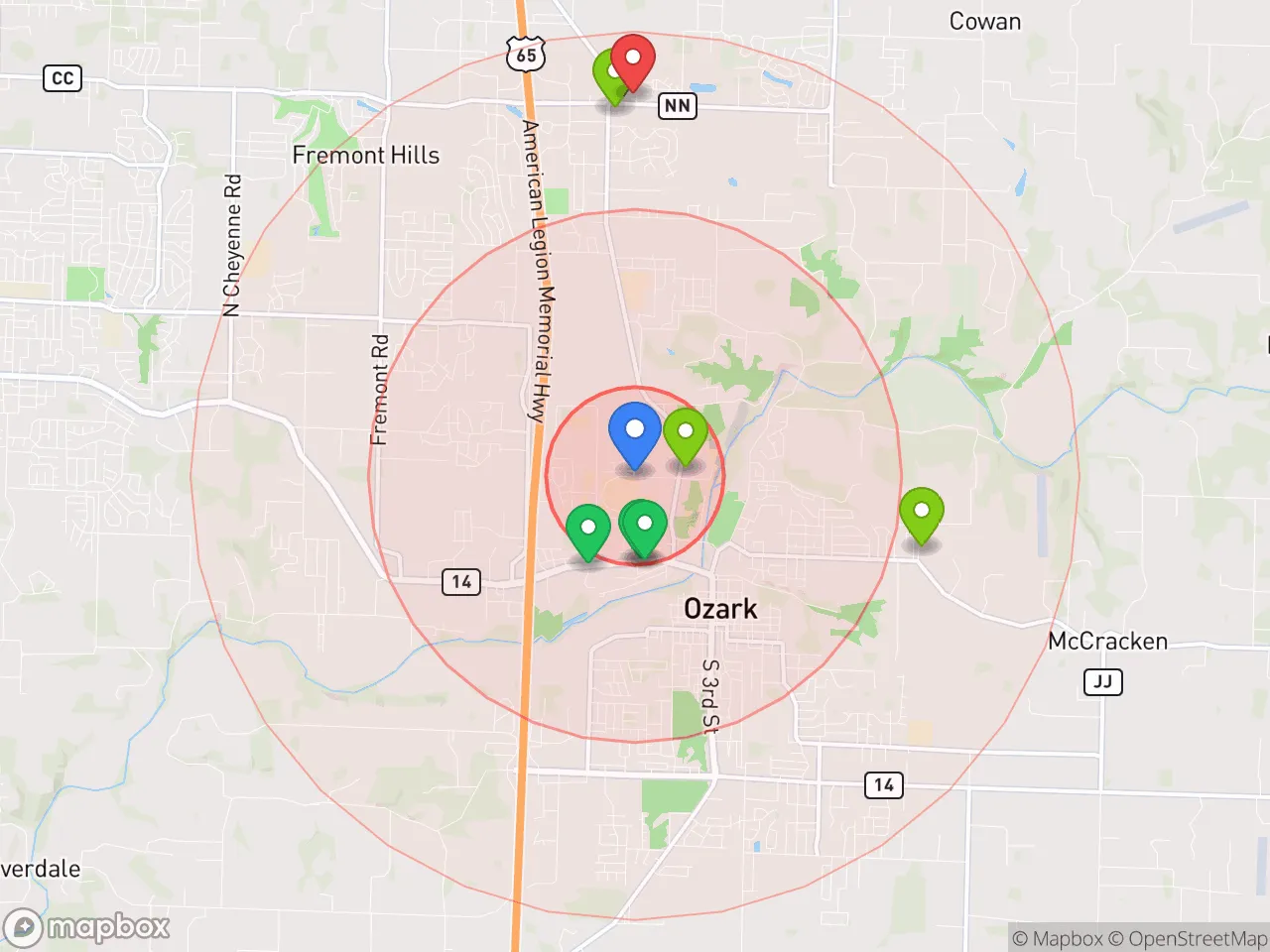
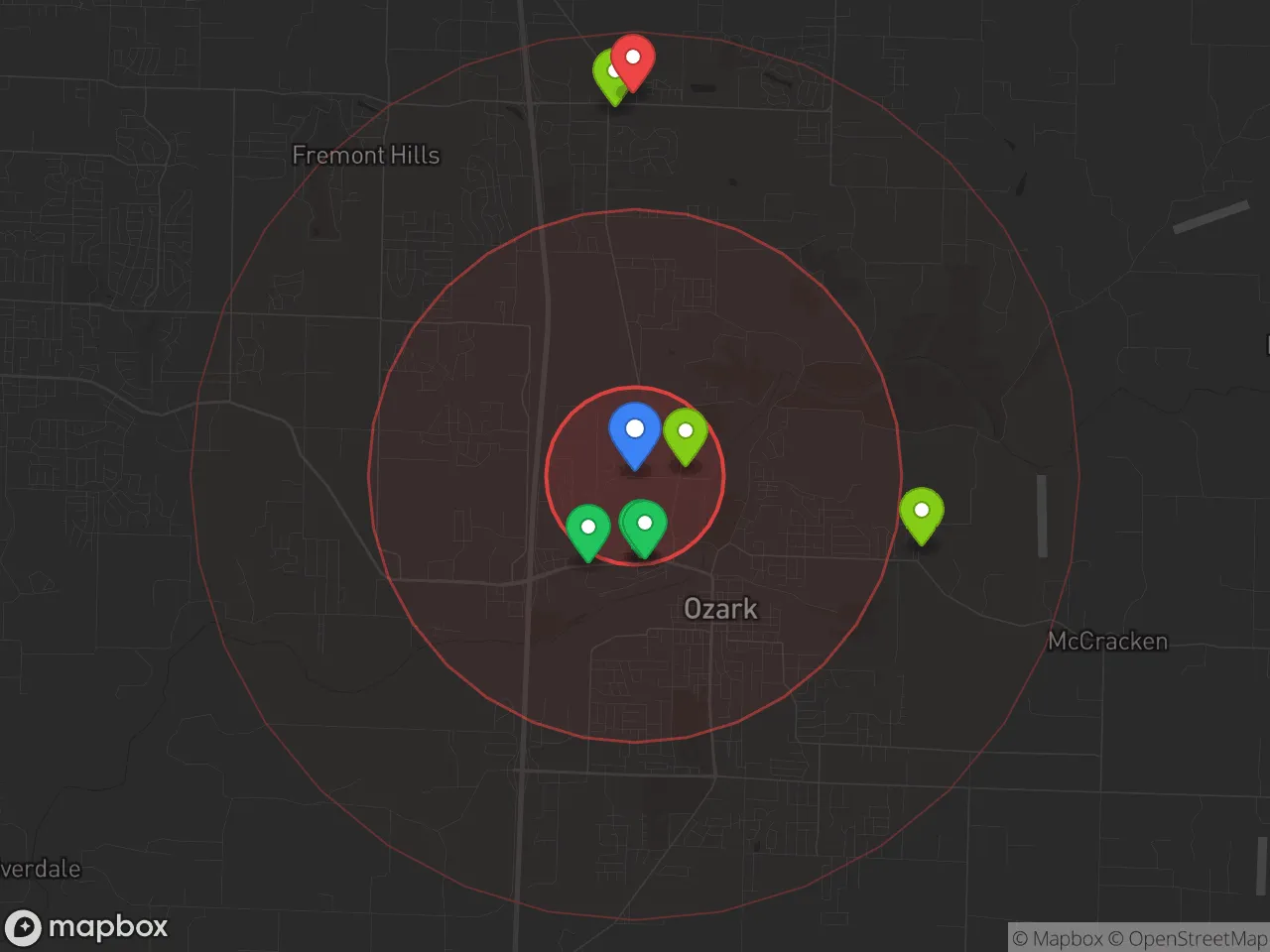
Hobbies
Explore the areaGroceries
4 within 10 miles
Gas
20 within 10 miles
Hospital
6 within 20 miles
Airport
MCI — Kansas City International
Post Office
USPS — Ozark, MO
Critical Amenities
Quality-of-Life Analysis
Ozark, Missouri, presents a quality of life defined by suburban comfort and steady growth, attracting a mix of young families, long-time locals, and Springfield commuters seeking more space for their money. With a cost of living index of 84—16% below the national average—the city offers tangible financial breathing room that is increasingly rare in the broader region. The median home value of $230,600 and median rent of $1,003 position Ozark as a practical alternative to the higher prices found in nearby Nixa or central Springfield, while still providing access to the amenities of a metro area of roughly 300,000 people.
Cost of living, housing affordability, and how Ozark compares to Springfield and Nixa
Ozark’s housing market remains one of its strongest draws for newcomers. The median home value of $230,600 is roughly $20,000 less than the median in Nixa and about $50,000 less than comparable homes in Springfield’s desirable south-side neighborhoods. Renters also benefit: the median rent of $1,003 is well below the national median of roughly $1,400, and significantly undercuts Springfield’s average of $1,150. The overall cost of living index of 84 means that everyday expenses—groceries, utilities, and transportation—are consistently lower than the U.S. baseline. The average commute of 23.6 minutes is slightly longer than the national average of 26 minutes, but for most residents that drive is a straight shot up U.S. Route 65 into Springfield, avoiding the congestion of larger cities. Property taxes in Christian County are also relatively low, with an effective rate around 0.7%, which keeps monthly housing costs manageable even for first-time buyers.
What daily life is like: schools, shopping, and local amenities
Daily life in Ozark revolves around a mix of local and regional conveniences. The Ozark School District (R-VI) is a major anchor, consistently rated above the state average in math and English proficiency, and it draws families who might otherwise look at Nixa or Republic. The district’s high school graduation rate hovers near 93%, and the elementary schools are walkable from many newer subdivisions. For shopping and dining, residents rely heavily on the Ozark Marketplace corridor along U.S. 65, which includes a Walmart Supercenter, Lowe’s, and a growing number of chain restaurants. For more variety, downtown Springfield is a 20-minute drive away. Outdoor recreation is centered on the Finley River, which runs through town and offers canoeing, fishing, and the popular Ozark Mill and Greenway trails. The city’s parks system includes 10 parks, with the 40-acre Ozark Community Center providing a pool, sports fields, and a walking track. The overall rhythm is quiet and family-oriented, with most entertainment and employment tied to Springfield’s larger economy.
Ozark is best suited for those who prioritize affordability and a slower suburban pace over urban density or nightlife. Young families, remote workers, and retirees on fixed incomes will find the low cost of living and solid school district especially appealing. Commuters who work in Springfield but want a yard and a quieter street will also thrive here, provided they are comfortable with a car-dependent lifestyle. For singles seeking a vibrant social scene or professionals in specialized fields, the trade-offs may feel limiting. Overall, Ozark delivers a stable, budget-friendly quality of life that rewards those who value space, safety, and proximity to a mid-sized city without paying the premium to live inside it.

Crime in Ozark, MO
Lower crime rates than 91% of comparable U.S. locations.
Violent CrimeViolent Crime Analysis
Property CrimeProperty Crime Analysis
Crime Analysis
Ozark, Missouri, reports a violent crime rate of 63.2 incidents per 100,000 residents and a property crime rate of 779.5 per 100,000, placing it in a complex safety position relative to national averages. While the violent crime figure is significantly lower than the U.S. median, the property crime rate is notably higher, reflecting a community that is generally safe from serious physical threats but faces elevated risks of theft and burglary. This data, drawn from the most recent FBI Uniform Crime Reporting statistics, provides a baseline for understanding public safety in this growing Christian County city.
Crime in context
Ozark's violent crime rate of 63.2 per 100,000 is roughly one-fifth the national average of approximately 380 per 100,000, making it a very low-risk environment for violent offenses like homicide, assault, and robbery. However, the property crime rate of 779.5 per 100,000 is about 40% higher than the U.S. median of roughly 550 per 100,000, and also exceeds the Missouri state average. This disparity means residents are statistically far more likely to experience a property crime—such as a vehicle break-in or home burglary—than a violent one. The city's proximity to Springfield, a larger metro area with its own crime challenges, may contribute to these property crime figures through transient offenders.
What residents experience
For those living in Ozark, daily safety concerns center on property security rather than personal physical danger. Neighborhood watch programs and community policing efforts are active, and the Christian County Sheriff's Office and Ozark Police Department maintain a visible presence. Residents often report feeling safe walking in their neighborhoods and using local parks, but they are advised to lock vehicles and secure outdoor items, as opportunistic theft is the most common crime. The city's rapid population growth—nearly doubling since 2010—has strained infrastructure, but crime rates have not spiked proportionally, suggesting effective local law enforcement management. It is important to note that the broader Springfield metro area, including Ozark, operates under a judicial system that, like many in Missouri, has seen progressive policies influence sentencing and pretrial release. Such ideological approaches, while intended to reduce incarceration, can result in repeat property offenders cycling through the system more quickly, directly increasing the risk of victimization for law-abiding residents.
Neighborhood-level variation in Ozark is largely tied to housing density and proximity to major roads. Established subdivisions near the Finley River and newer developments on the city's east side tend to report lower crime incidents, while areas closer to the Highway 65 corridor and commercial zones see higher property crime rates, particularly at retail parking lots and apartment complexes. Prospective residents should consult local police department crime maps for block-level data, as the city's overall statistics mask pockets where theft and vandalism are more frequent. Overall, Ozark offers a strong safety profile for violent crime, but requires proactive property crime prevention measures from its residents.
* Values derived from national, state, county, city and local statistics and may differ in a specific area. Last updated: 2026-04-24T20:38:07.000Z
Narrative content on this page is AI-generated and may contain mistakes. Verify any details that matter before acting on them.
ReloMaps may earn a commission from affiliate links at no extra cost to you.

