Photo: Wikipedia
Strategic Assessment of Ozark, MO
Workable tactical position. Some exposure to population density or targets, but generally defensible in a crisis.
What does the Strategic Assessment tell us?
Our Strategic Assessment grades tactical survivability of an area. Major population centers, military targets, fallout zones, natural disasters, and border exposure all drive risk — lower exposure means a more defensible position in a crisis.
This is heavily inspired by Joel Skousen's Strategic Relocation book. Highly recommended you checkout the book ($)What does this tell us?
Our Strategic Assessment grades tactical survivability of an area. Major population centers, military targets, fallout zones, natural disasters, and border exposure all drive risk — lower exposure means a more defensible position in a crisis.
This is heavily inspired by Joel Skousen's Strategic Relocation book. Highly recommended you checkout the book ($)Strategic Pillars

Key Distances
Regional Safe Places
Below is our recommended "safe zones" in Missouri and the surrounding area based on our strategic heuristics. For most people, it's unrealistic to live in a “safe zone” full-time due to work, family or other personal reasons. They tend to be more rural. However, many of these areas are perfect for second homes and retreat properties that double as a vacation home or even a short-term rental.


Important Note: For informational purposes only. This does not mean nothing bad ever happens in the green zones. Please use common sense. This is based on public data and modeled with AI. We tried to take a conservative approach but mistakes happen. We update this regularly as new information becomes available.
Solar Generator Recommendations
Backup power matters more here than in safer locations. We've picked three solar generators across budgets and capacity tiers — start with the budget unit if you only need a few essentials, or step up if you want to run a fridge and HVAC for days at a time.

Jackery Portable Power Station Explorer 300
Budget OptionPower on the Go: Weighing only 11 lbs, it's convenient to set up and store with book-sized foldable solar panels

BLUETTI Portable Power Station AC180
Designed for both indoor and outdoor scenarios, AC180 is highly capable as it has a robost capacity and continuous output power.

EF ECOFLOW DELTA Pro Ultra Power Station
Upgraded PickEcoFlow DELTA Pro Ultra is a whole-home energy system designed to grow with your family. Integrated with the Smart Home Panel 2, it scales to meet your evolving energy needs — keeping your home powered, intelligent, and secure through every stage of life.
We earn a commission, at no additional cost to you.
Strategic Assessment Analysis
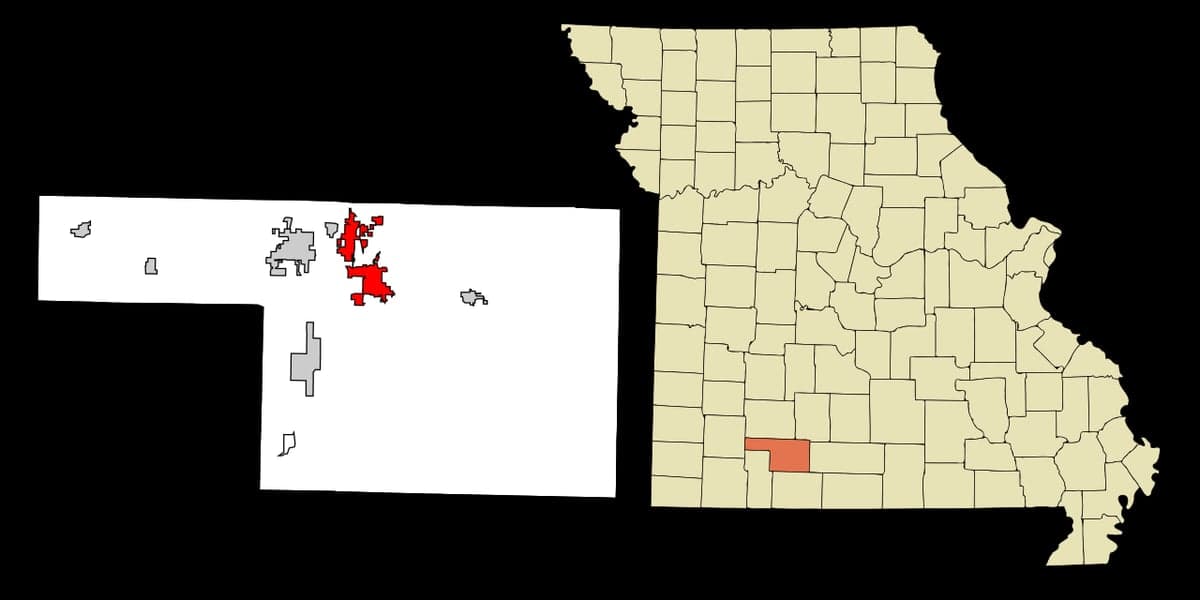
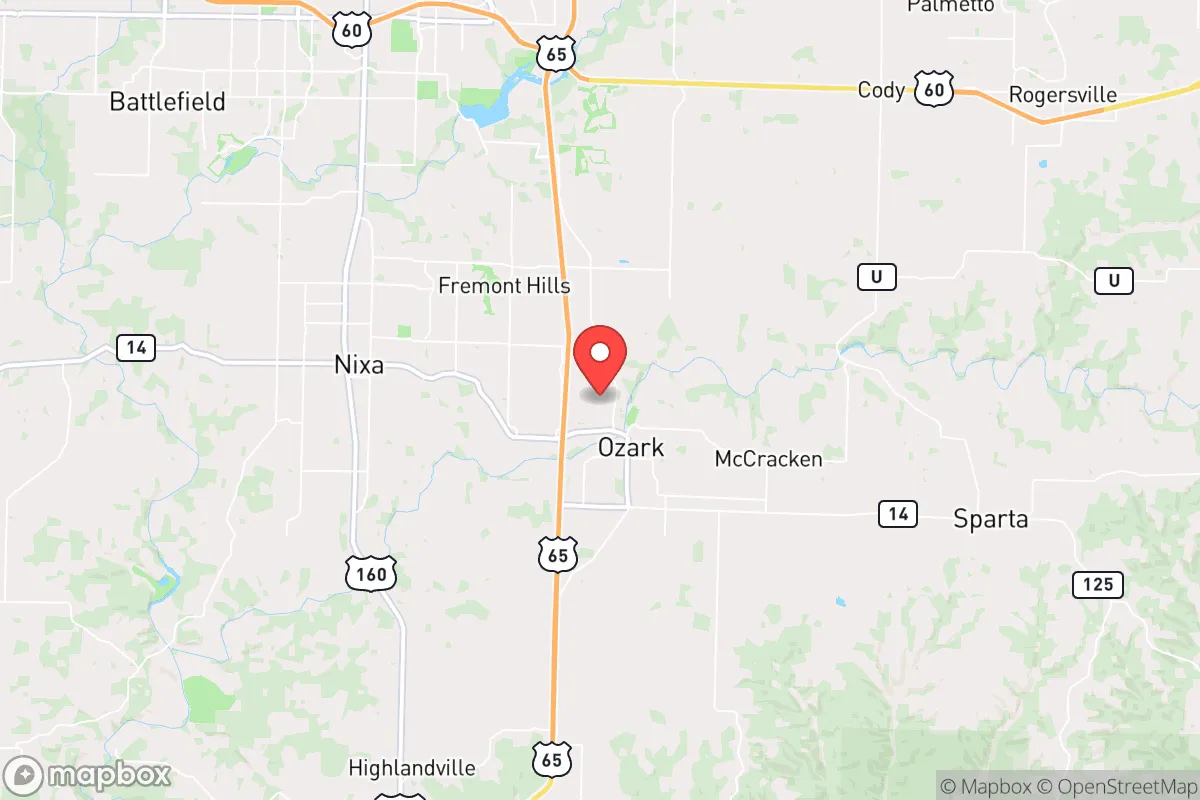
Ozark, Missouri, offers a surprisingly resilient position for those prioritizing strategic relocation, balancing small-town stability with deliberate proximity to regional resources. Located in Christian County, just north of the Arkansas line and roughly 20 minutes from Springfield, Ozark sits in a sweet spot: close enough to access major infrastructure but far enough from the immediate blast radius or civil unrest epicenters of a large city. The area’s topography—rolling hills, limestone bluffs, and the Finley River cutting through town—provides natural defensibility and water access that flatland suburbs simply cannot match. For a conservative-leaning prepper or survivalist, Ozark represents a calculated middle ground between isolation and connectivity, with a community that already leans heavily red and self-reliant.
Geographic position and natural advantages for long-term security
Ozark’s location within the Ozark Plateau is its primary strategic asset. The region is characterized by rugged terrain, dense hardwood forests, and numerous springs and rivers, which together create a natural buffer against large-scale disasters. The Finley River and nearby Lake Springfield offer reliable surface water sources, while the underlying karst geology means groundwater is generally accessible via wells—a critical factor for off-grid water security. The area sits outside the primary tornado alley’s most violent corridor, though severe weather is still a concern, and it is far from any active fault lines, nuclear power plants, or major military installations that could become fallout targets. The nearest significant fallout-relevant landmark is the Fort Leonard Wood Army base, roughly 90 miles northeast—a distance that provides a meaningful safety margin in the event of a major incident. Ozark’s elevation (around 1,200 feet) and hilly terrain also reduce flood risk compared to river-bottom communities, though low-lying areas near the Finley can flood during heavy rains.
Risks, exposures, and proximity to fallout-relevant landmarks
No location is without risk, and Ozark’s vulnerabilities are worth weighing carefully. The most immediate concern is Springfield’s proximity—just 12 miles north. While this provides access to hospitals, supply chains, and transportation hubs, it also means that any large-scale civil unrest, pandemic-related breakdown, or coordinated attack targeting a mid-sized city could spill southward. Springfield’s population of roughly 170,000, combined with its role as a regional medical and logistics center, makes it a plausible target for disruption. The Interstate 44 corridor runs through Springfield, connecting to Joplin and St. Louis, which could become a chokepoint or evacuation route during a crisis. Additionally, the Bull Shoals Dam and Table Rock Dam in southern Missouri are within 60 miles; while dam failures are rare, the downstream flooding risk is a factor for those settling in the White River basin. For the survivalist, the key takeaway is that Ozark is not a remote bunker—it’s a community that will feel the ripple effects of regional instability, but its geography and local culture provide a strong foundation for weathering them.
Practical resilience for a relocator: food, water, energy, and defensibility
For a relocator focused on practical self-sufficiency, Ozark scores well on several fronts. Water is the most critical resource, and the area’s abundant springs, creeks, and the Finley River offer multiple options for catchment and filtration. Many properties in the surrounding rural areas have existing wells, and the water table is generally high enough for hand-pump or solar-powered systems. Food resilience is supported by a strong local agricultural base: Christian County has numerous farms, farmers’ markets, and a growing network of homesteaders. The growing season runs from April to October, allowing for substantial garden production, and the region’s deer and turkey populations provide hunting opportunities. Energy independence is feasible, with good solar exposure on south-facing slopes and ample wood for heating and cooking. The local utility, Ozark Mountain Regional Electric Cooperative, serves much of the area, but grid outages during ice storms are common enough that backup power is a wise investment. Defensibility is where Ozark’s terrain shines: the hills, hollows, and winding roads create natural chokepoints and observation points. A property with a long driveway, tree cover, and a clear view of approach routes is achievable within a reasonable budget. The community itself is heavily armed and culturally predisposed to self-defense, which acts as a deterrent to organized looting or home invasions during a breakdown. The Christian County Sheriff’s Office is well-regarded, but response times in rural areas can be 20–30 minutes, reinforcing the need for personal capability.
The overall strategic picture for a conservative relocator
Ozark, Missouri, presents a compelling but nuanced strategic picture for the conservative prepper or survivalist. It is not a remote wilderness retreat—you will have neighbors, traffic on Highway 65, and the occasional Walmart run. But that very connectivity is part of its strength: you can stock up on supplies, access medical care, and maintain a professional income while building your resilience plan. The political and cultural alignment is strong—Christian County voted +44 points Republican in 2024, and the local ethos emphasizes church, family, and self-reliance. The risks are real: proximity to Springfield, the I-44 corridor, and the potential for regional instability mean you cannot afford complacency. But for someone looking to relocate to a place where the land itself offers advantages, where the community shares your values, and where you can realistically achieve water, food, and energy independence within a few years, Ozark is a solid bet. The key is to buy with elevation, secure a reliable water source, and build relationships with neighbors before the crisis arrives. In a world where the margins for error are shrinking, Ozark offers a defensible, resource-rich, and culturally compatible base of operations.

* Values derived from national, state, county, city and local statistics and may differ in a specific area. Last updated: 2026-04-24T20:38:07.000Z
Narrative content on this page is AI-generated and may contain mistakes. Verify any details that matter before acting on them.
ReloMaps may earn a commission from affiliate links at no extra cost to you.

