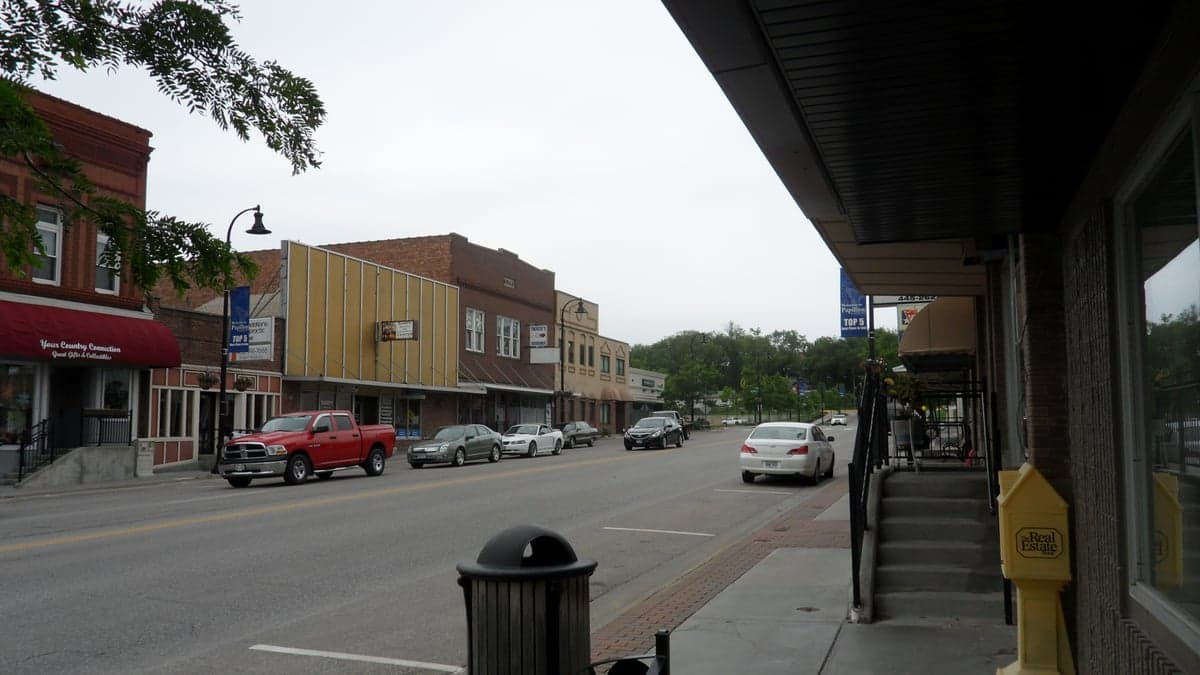
Photo: Wikipedia
Political ClimatePolitical Climate in Papillion, NE
District shown is the primary district for this city’s centroid. Cities may span multiple districts.
Local Political AnalysisPolitical Analysis of Papillion, NE
Papillion has long been a solidly conservative community, and that hasn't changed much even as the Omaha metro area has grown and shifted. The Cook PVI rating of R+6 tells you the basics—this is a place where Republican candidates reliably win, but it's not a deep-red stronghold like some rural Nebraska counties. What you notice on the ground is that the political lean here is more about a quiet, practical conservatism than loud, ideological battles. People tend to vote for lower taxes, sensible regulation, and local control, and they're generally skeptical of government overreach into personal freedoms and rights. That said, there's been a subtle drift in the last decade—some newer residents from Omaha or Lincoln bring more progressive ideas, and you see it in local school board races and city council discussions. It's not a wave, but it's a trickle that has some longtime locals watching closely.
How it compares
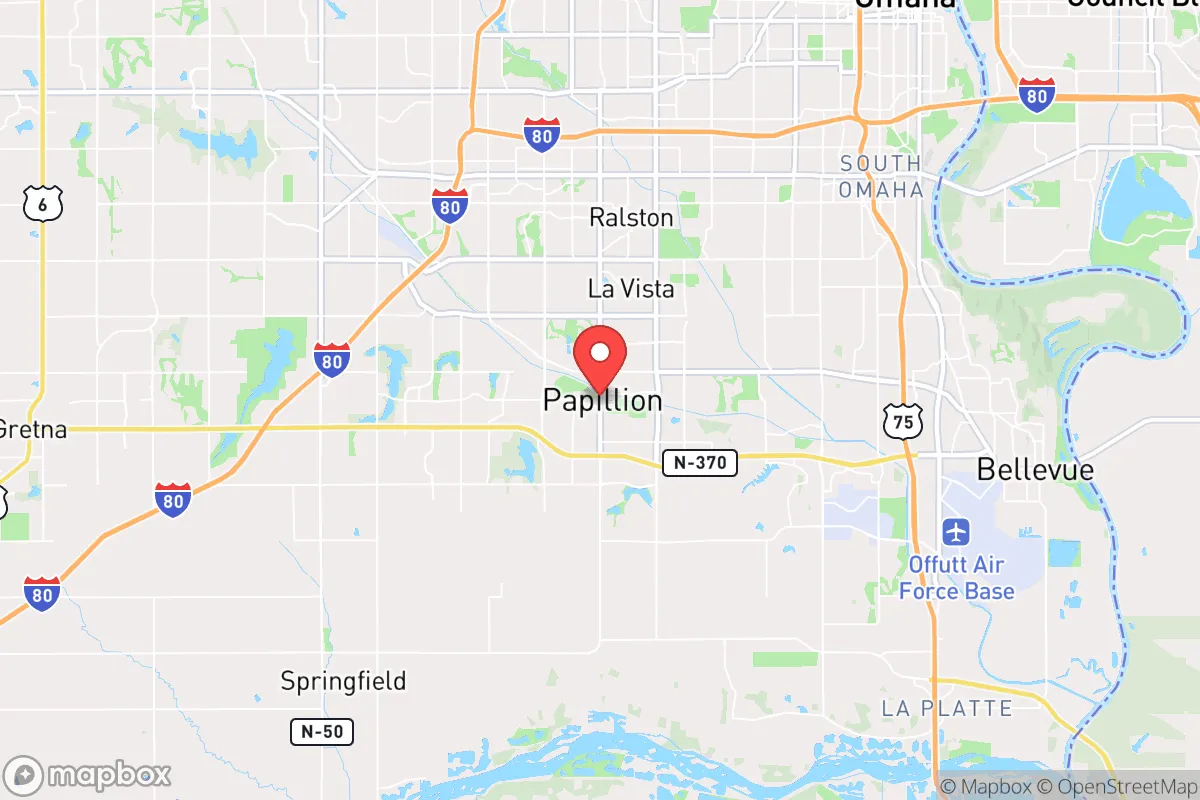
Papillion sits in Sarpy County, which is the most reliably Republican county in the Omaha metro area. Drive ten minutes north into Omaha's Douglas County, and you're in a blue-leaning area that voted for Biden in 2020. Head west to Gretna or south to Bellevue, and you'll find similar conservative leanings, but Papillion tends to be a bit more moderate than its rural neighbors like Springfield or Louisville. The contrast with Lincoln, about 50 miles away, is stark—Lincoln is a blue island in a red state, with a much more progressive city council and a university-driven culture. Papillion, by contrast, has kept its focus on family-friendly policies, low crime, and a business climate that doesn't overburden small shops with red tape. The R+6 rating means it's not a lock for every Republican candidate—a moderate Democrat could compete here—but the default assumption is that conservative values hold the line.
What this means for residents
For someone living here, the political climate translates into a few concrete things. First, you're not dealing with the kind of progressive policy experiments you see in larger cities—no talk of defunding police or rent control, and the local government tends to stay out of your business when it comes to property rights or how you run your household. Second, taxes are kept in check. Sarpy County's property tax rates are competitive, and there's a general resistance to new bond measures unless they're clearly necessary for schools or infrastructure. Third, the school board and city council elections matter a lot. These are the places where you see the quiet tug-of-war between traditional values and the newer, more progressive voices. If you're concerned about government overreach into personal freedoms—whether that's vaccine mandates, zoning restrictions, or curriculum decisions—Papillion still feels like a place where you have a say. But you have to stay engaged, because the shift is real, even if it's slow.
Culturally, Papillion has a few distinctions that set it apart. The city has a strong sense of community events—the Papillion Days festival, the farmers market, and the local sports leagues—that reinforce a neighborly, small-town feel even as the population has grown past 20,000. There's also a notable military presence thanks to Offutt Air Force Base in nearby Bellevue, which brings in families from all over the country and tends to reinforce a patriotic, service-oriented mindset. Policy-wise, the city has kept its zoning laws fairly straightforward, avoiding the kind of overregulation that can stifle small businesses or home-based enterprises. The long-term concern for many residents is whether the progressive drift seen in Omaha will eventually cross the river into Sarpy County. For now, Papillion remains a place where you can live your life without the government looking over your shoulder, but keeping it that way requires paying attention to local elections and speaking up when the balance starts to tip.

State Political ClimatePolitical Climate in Nebraska
State Political AnalysisPolitical Environment in the State
Nebraska has long been a reliably conservative state, but its political landscape is more layered than the simple "red state" label suggests. The state has voted Republican in every presidential election since 1968, and in 2024, Donald Trump carried it by a comfortable 19-point margin. However, the past 10-20 years have seen a subtle but real shift: the Omaha metro area has drifted leftward, while the rest of the state has hardened its conservative stance, creating a growing urban-rural fissure that defines Nebraska politics today.
Urban vs. rural divide
The political map of Nebraska is a study in contrasts. The eastern third of the state, anchored by Omaha (Douglas County) and Lincoln (Lancaster County), is where the state's Democratic votes are concentrated. Omaha's 2nd Congressional District has become a genuine swing seat, flipping between parties in recent cycles—it went for Joe Biden in 2020 and for Trump in 2024, but by a much narrower margin than the rest of the state. Lincoln, home to the University of Nebraska, has also trended left, though it remains more moderate than Omaha. Drive west of the I-80 corridor, and the picture flips dramatically. Scottsbluff, North Platte, and Grand Island are deeply conservative, with rural counties routinely voting 75-80% Republican. The Sandhills region and the Panhandle are among the most reliably red areas in the entire country. A notable exception is Bellevue, a suburb of Omaha that leans conservative but is more moderate than the rural west, reflecting the military and defense contractor presence at Offutt Air Force Base.
Policy environment
Nebraska's policy environment is broadly favorable for conservative-leaning residents. The state has a unicameral, nonpartisan legislature, which sounds good on paper but in practice means party discipline is weaker, and individual senators have outsized influence. The tax structure is relatively low: no state income tax on Social Security benefits, a flat state income tax rate of 5.84% (with a scheduled reduction to 5.5% by 2027), and property taxes that are moderate but a perennial complaint among homeowners. The state has a right-to-work law and is generally business-friendly, with minimal regulatory red tape compared to coastal states. On education, Nebraska has a mix of traditional public schools and a growing charter school presence, though the latter is still limited compared to states like Arizona or Florida. School choice advocates have made incremental gains, but the powerful teachers' union in Omaha and Lincoln has blocked major reforms. Healthcare policy is a mixed bag: Nebraska expanded Medicaid under the Affordable Care Act in 2020 via a ballot initiative, which was a rare progressive victory. Election laws are solid: voter ID is required, and the state has a clean voter roll system, though there have been minor controversies over mail-in ballot processing in Douglas County.
Trajectory & freedom
On the freedom front, Nebraska has been a mixed bag over the past decade. The good news: constitutional carry was signed into law in 2023, allowing law-abiding citizens to carry a concealed firearm without a permit—a major win for Second Amendment advocates. The state also passed a parental bill of rights in 2023, requiring schools to notify parents about curriculum changes and medical services, which has been a flashpoint in the culture war. On the concerning side, the legislature has repeatedly failed to pass meaningful property tax relief, and the state's death penalty was abolished in 2015, though it was reinstated by the legislature in 2016 after a veto override. More recently, the Nebraska Medical Cannabis Act was placed on the 2024 ballot and passed, legalizing medical marijuana—a sign that even in a red state, voters are willing to buck the party line on certain issues. The biggest red flag for conservatives is the growing influence of Omaha and Lincoln's progressive activism, which has pushed the state toward more government intervention in areas like housing and environmental regulation.
Civil unrest & political movements
Nebraska has not seen the kind of large-scale civil unrest seen in Portland or Seattle, but there have been notable flashpoints. In 2020, Omaha experienced several nights of protests following the George Floyd killing, with some property damage and a heavy police presence. The Black Lives Matter movement has a visible but small presence in Lincoln and Omaha. On the right, the Nebraska Republican Party has been split between establishment conservatives and a more populist, Trump-aligned wing, with the latter gaining ground in recent primaries. Immigration politics are relatively quiet, as Nebraska is not a border state, but there have been localized tensions in Grand Island and Lexington, where meatpacking plants have drawn a significant immigrant workforce. There is no sanctuary city policy anywhere in the state, and local law enforcement generally cooperates with federal immigration authorities. Election integrity has been a hot topic since 2020, with some rural counties pushing for hand-counting of ballots, though the legislature has not adopted any major changes. The most visible political movement in recent years has been the school choice and parental rights activism, which has drawn large crowds to the state capitol in Lincoln.
Projection
Looking ahead 5-10 years, Nebraska is likely to remain a conservative state, but the urban-rural divide will deepen. Omaha and Lincoln will continue to grow, attracting younger, more diverse populations that lean left, while the rural counties will shrink and become even more conservative. This means the 2nd Congressional District will remain a battleground, and the state legislature will see more close votes on cultural issues. The biggest wild card is in-migration: Nebraska is not a top destination for out-of-state movers compared to Texas or Florida, but the Lincoln and Omaha suburbs are seeing steady growth from people fleeing high-cost states like California and Illinois. These newcomers tend to be more moderate than the native rural population, which could slowly shift the state's center of gravity. However, the state's low population growth and aging demographics mean that the rural conservative base will retain outsized influence in state government for the foreseeable future.
Bottom line for a new resident: If you're moving to Nebraska, you'll find a state that is broadly conservative but not uniformly so. The rural areas offer a high degree of personal freedom, low crime, and a strong sense of community, but you'll need to drive for most services. The cities offer more amenities but come with higher taxes, more government regulation, and a growing progressive presence. For a conservative-leaning individual or family, the best bet is to target the suburbs of Omaha (like Papillion or Gretna) or the smaller cities like Kearney or Norfolk, where you get a balance of conservative values and access to jobs and schools. Just be prepared for property taxes that never seem to go down and a state government that, while friendly to business, can be frustratingly slow to act on the issues that matter most to you.
* Values derived from national, state, county, city and local statistics and may differ in a specific area. Last updated: 2026-05-03T20:29:05.000Z
Narrative content on this page is AI-generated and may contain mistakes. Verify any details that matter before acting on them.
ReloMaps may earn a commission from affiliate links at no extra cost to you.

