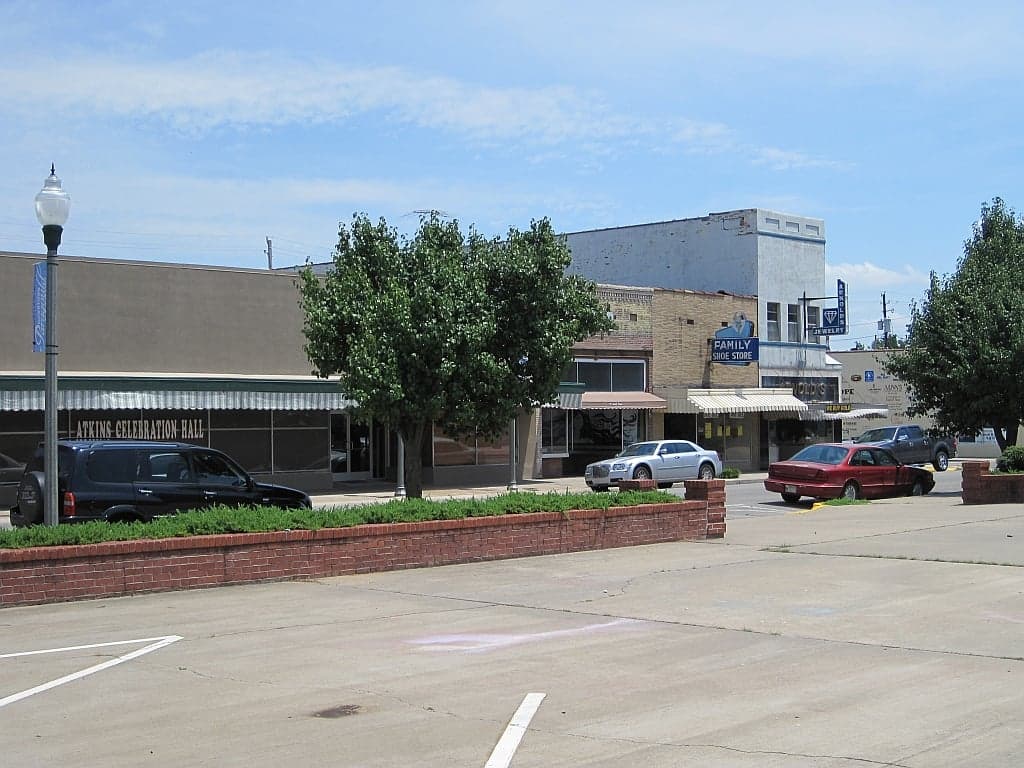
Photo: Wikipedia
Political ClimatePolitical Climate in Paragould, AR
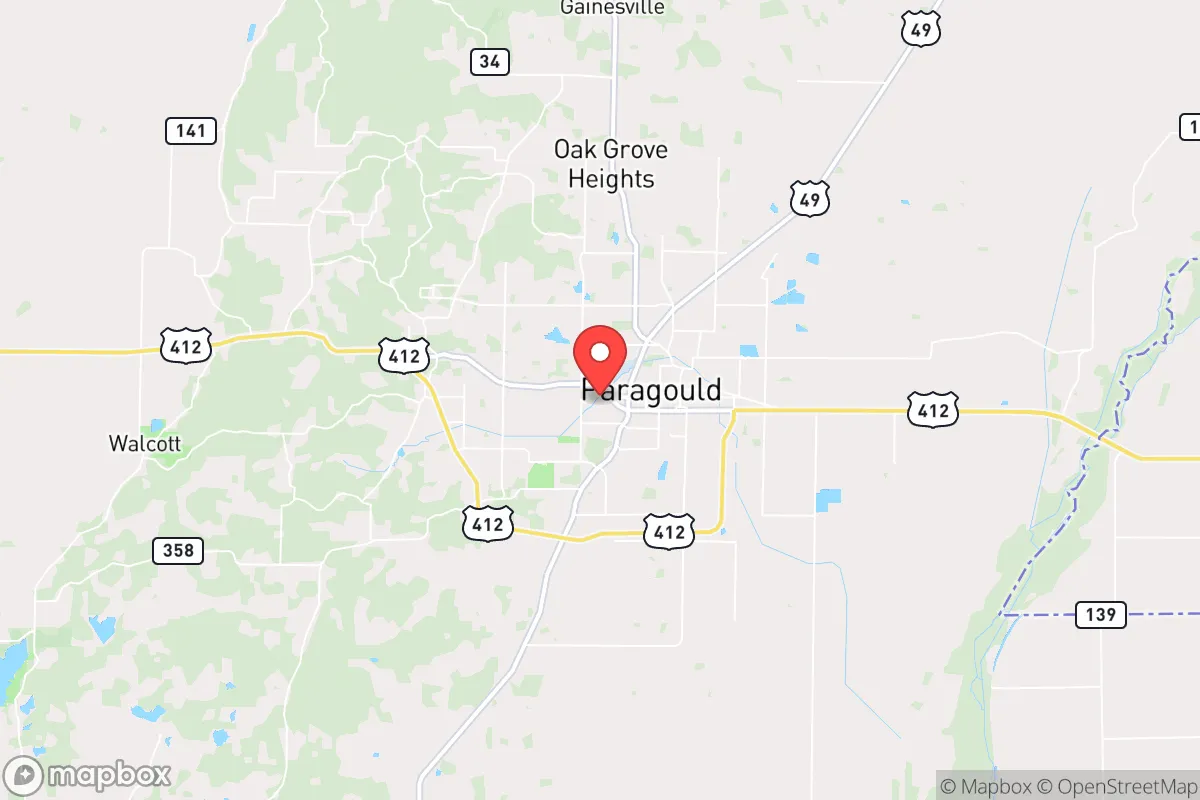
District shown is the primary district for this city’s centroid. Cities may span multiple districts.
Local Political AnalysisPolitical Analysis of Paragould, AR
Paragould is about as solidly conservative as it gets in northeast Arkansas, and that’s not changing anytime soon. The Cook PVI of R+23 tells you the story: this area votes Republican by a massive margin, and it’s been that way for decades. You don’t see the kind of political flip-flopping you get in some parts of the country; folks here tend to vote their values, and those values lean heavily toward limited government, personal responsibility, and traditional social norms. The trajectory is steady, too—if anything, the surrounding rural areas have gotten redder as national politics have polarized, and Paragould has followed suit.
How it compares
If you drive 30 minutes south to Jonesboro, you’ll notice a different vibe. Jonesboro is more of a college town with Arkansas State University, and while it’s still conservative overall, it’s got a bit more of a mixed bag politically—you’ll see more independent and even some progressive-leaning folks there, especially among younger faculty and students. Paragould, by contrast, feels like the heart of the old-school conservative base. Head west toward Pocahontas or north into Missouri’s Bootheel, and you’re in similar territory—deep red, with a strong emphasis on gun rights, low taxes, and a general distrust of federal overreach. The real contrast is with places like Fayetteville or Little Rock, where you see more progressive activism and government expansion. Paragould residents tend to look at those cities and shake their heads, worried about the direction of things.
What this means for residents
For the people living here, the political climate translates into a pretty straightforward daily life. You don’t have to worry about your local government pushing heavy-handed mandates or trying to micromanage how you run your business or raise your kids. The city council and county officials are generally pro-business and pro-Second Amendment, and there’s a strong sense that the government should stay out of your personal affairs. That said, there’s been a little bit of a shift in recent years—some younger families moving in from out of state have brought more moderate views, and you’ll occasionally see a local school board race or city council election where a more progressive candidate tries to make inroads. So far, those efforts haven’t gained much traction, but it’s something to keep an eye on. If you’re someone who values personal freedoms and doesn’t want to see the kind of government overreach you hear about in blue states, Paragould is a safe bet.
Culturally, Paragould is still very much a church-going, family-first community. You won’t find a lot of the social experimentation you see in bigger cities, and most folks are fine with that. The local policy reflects that: zoning laws are minimal, taxes are low, and there’s no appetite for things like sanctuary city status or radical environmental regulations. The biggest concern among long-time residents is that as the area grows—and it is growing, slowly—there’s a risk of importing the kind of progressive ideology that’s been creeping into other parts of the state. For now, though, Paragould remains a place where you can live your life the way you see fit, without a lot of interference from the government. That’s the way it’s always been, and most folks here aim to keep it that way.

State Political ClimatePolitical Climate in Arkansas
State Political AnalysisPolitical Environment in the State
Arkansas has been a reliably red state for decades, but the political climate here is more nuanced than a simple party label suggests. The state leans solidly Republican at the presidential and state levels, with Donald Trump winning by over 27 points in 2024, but the real story is the slow, steady shift in the northwest corner and the stubborn hold of the old-guard Democratic machine in the Delta. Over the last 20 years, the state has moved from a competitive, moderate-Democrat stronghold to a deeply conservative one, driven by the explosive growth of the Fayetteville-Springdale-Rogers corridor and the exodus of rural voters from the Democratic Party.
Urban vs. rural divide
The political map of Arkansas is a study in contrasts. The Northwest Arkansas metro—anchored by Fayetteville, Bentonville, and Rogers—is the state’s economic engine and its most politically dynamic region. Fayetteville, home to the University of Arkansas, is a blue island in a red sea, voting for Democrats by wide margins. But the surrounding suburbs of Bentonville and Rogers, fueled by the Walmart headquarters and a flood of out-of-state corporate transplants, are increasingly trending purple, with a growing number of moderate Republicans and even some left-leaning professionals. Meanwhile, the Little Rock metro area is a tale of two cities: the city proper is reliably Democratic, but the surrounding counties of Saline and Faulkner (home to Conway) are deeply red. The Delta region in eastern Arkansas—places like Pine Bluff, Helena-West Helena, and Jonesboro—is a Democratic stronghold on paper, but turnout is low and the population is shrinking. The rural, white-majority counties in the Ozarks and the southern timberlands are the bedrock of the state’s conservative majority, often voting 80%+ Republican. The divide isn’t just about party; it’s about culture. A new resident in Bentonville will find a very different political conversation than someone in Texarkana or Hot Springs.
Policy environment
Arkansas’s policy environment is aggressively conservative, but with a populist streak that sometimes surprises outsiders. The state has a flat income tax that was recently cut to 4.4%, with a goal of reaching 3.9% by 2027, and a sales tax that varies by locality but averages around 9.5%. Property taxes are low, and there is no estate tax. The regulatory posture is business-friendly, especially for manufacturing and agriculture, but the state has a mixed record on occupational licensing reform. On education, the LEARNS Act of 2023 was a landmark piece of legislation that created a universal school voucher program, expanded charter schools, and banned “critical race theory” and “indoctrination” in public schools. This was a major win for school choice advocates. Healthcare is a battleground: the state expanded Medicaid under the “private option” model, which has been a lifeline for rural hospitals, but the legislature has repeatedly tried to impose work requirements and other restrictions. Election laws have tightened, with a voter ID requirement and restrictions on absentee ballot drop boxes, though the state has avoided the most extreme measures seen in other Southern states. The state’s “Right to Work” status and lack of collective bargaining for public employees are deeply entrenched.
Trajectory & freedom
On the whole, Arkansas is becoming more free in the areas that matter most to conservatives, but there are warning signs. The LEARNS Act expanded parental rights and school choice significantly. The state passed a near-total abortion ban (trigger law) in 2019, which took effect after Dobbs. Gun rights are strong: permitless carry was enacted in 2021, and the state has a “stand your ground” law. Medical marijuana is legal, but the program is tightly controlled and there is no movement toward recreational legalization. Property rights are generally respected, though there have been fights over eminent domain for pipeline projects. The biggest concern for freedom-minded residents is the growing influence of corporate interests in the northwest, particularly from Walmart and Tyson Foods, which have pushed for certain “diversity, equity, and inclusion” (DEI) initiatives in the private sector. The state legislature has pushed back with bills banning DEI mandates in public universities and state contracts, but the cultural pressure in Bentonville is real. Another flashpoint is the Arkansas State Police’s use of “no-knock” warrants, which was restricted after the death of a suspect in 2022, but remains a concern for civil libertarians. The state also passed a law in 2023 banning “gender-affirming care” for minors, which was a major victory for parental rights advocates.
Civil unrest & political movements
Arkansas is not a hotbed of civil unrest, but there have been notable flashpoints. The Black Lives Matter protests in Little Rock in 2020 were relatively small and largely peaceful, but they did lead to some property damage and a lasting tension between the city’s progressive mayor and the state’s Republican governor. The “Walmart effect” has also created a unique political dynamic: the company’s headquarters in Bentonville has become a magnet for progressive activists and corporate DEI consultants, leading to a small but vocal left-leaning activist community in an otherwise conservative region. Immigration politics are less visible here than in border states, but there is a growing Hispanic population in northwest Arkansas, and the state has passed laws requiring E-Verify and penalizing sanctuary cities (of which there are none). Election integrity is a live issue: after the 2020 election, the state legislature created a special election integrity unit within the Attorney General’s office, and there have been ongoing debates about the security of electronic voting machines. The most visible political movement is the “Parents’ Bill of Rights” movement, which was instrumental in passing the LEARNS Act and continues to organize around school board elections. You won’t see daily protests, but you will see a lot of yard signs and a lot of passionate debate at local coffee shops in Fayetteville.
Projection
Over the next 5-10 years, Arkansas will likely become more Republican at the state level, but the internal dynamics will shift. The northwest corridor will continue to grow, bringing in more out-of-state transplants from California, Texas, and the Midwest. Many of these newcomers are conservative, but they are often more moderate on social issues and more focused on economic growth and quality of life. This could create a tension between the “old guard” rural conservatives and the “new guard” suburban conservatives. The Delta will continue to lose population and political influence, making the state even more uniformly red. The biggest wildcard is the impact of the LEARNS Act: if school choice leads to a flourishing of new private and charter schools, it could accelerate the migration of families to the northwest and further entrench the region’s political power. On the other hand, if the state’s healthcare system continues to struggle (rural hospital closures are a real threat), it could create a backlash against the current leadership. Expect the state to remain a leader in school choice, gun rights, and tax cuts, but also expect more fights over corporate influence and the role of the state in regulating private businesses.
For a new resident, the bottom line is this: Arkansas offers a high degree of personal freedom in the traditional conservative sense—low taxes, strong gun rights, school choice, and a government that is generally not intrusive in your daily life. But you should be aware that the political culture varies dramatically by location. If you move to Bentonville, you’ll find a vibrant, growing community with a corporate-influenced conservatism that is more focused on economic growth than cultural battles. If you move to Conway or Cabot, you’ll find a more traditional, church-centered, small-town conservatism. And if you move to Fayetteville, you’ll find a blue island where progressive politics are the norm. The state is trending in a direction that favors conservative values, but the devil is in the details—and the zip code.
* Values derived from national, state, county, city and local statistics and may differ in a specific area. Last updated: 2026-04-30T02:32:53.000Z
Narrative content on this page is AI-generated and may contain mistakes. Verify any details that matter before acting on them.
ReloMaps may earn a commission from affiliate links at no extra cost to you.

