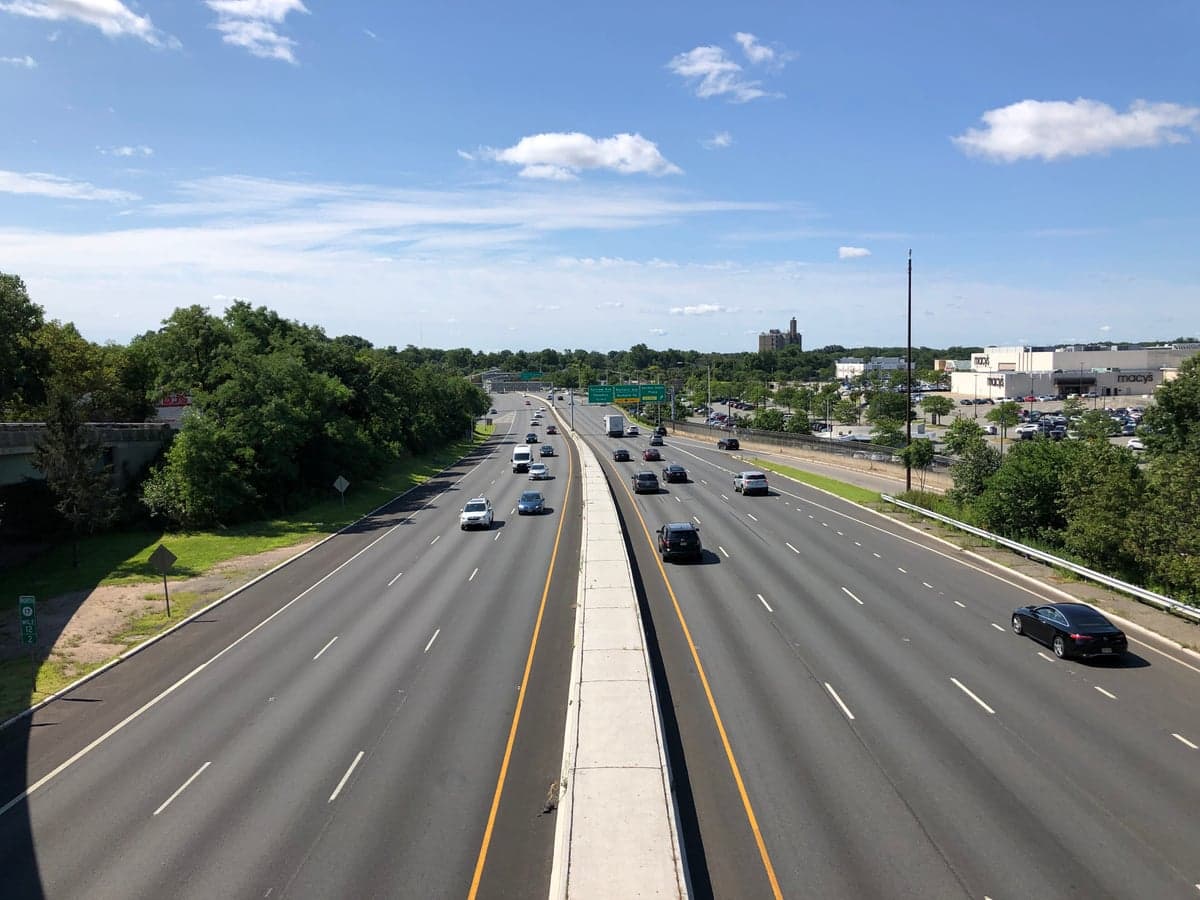
Photo: Wikipedia
Demographics of Paramus, NJ
Affluence Level in Paramus, NJ
An upper-middle-class area. Household wealth, education levels, and homeownership run ahead of national benchmarks.
People of Paramus, NJ
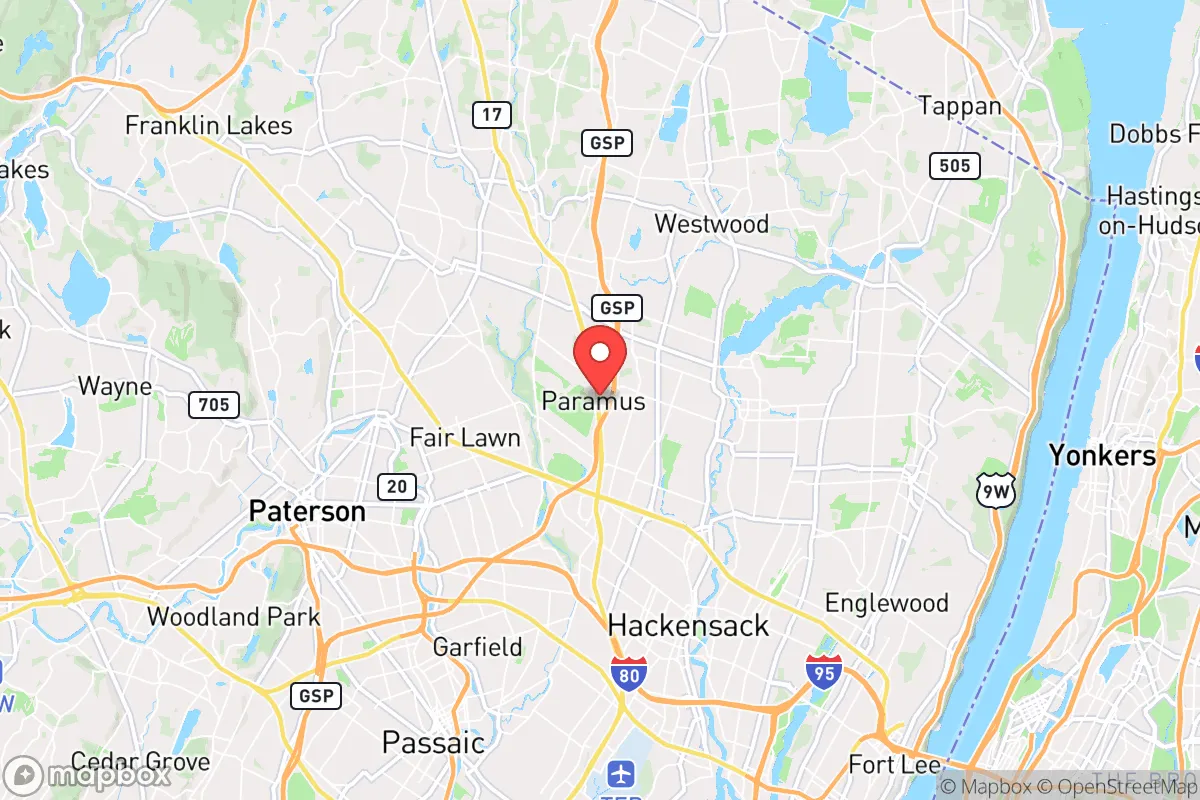
Paramus, New Jersey, is a densely settled borough of roughly 26,500 residents that has transformed from a quiet Dutch farming hamlet into a major retail and commercial hub. Its population today is notably diverse, with a white majority (56.1%) alongside significant East/Southeast Asian (12.1%) and Indian-subcontinent (11.4%) communities, a growing Hispanic population (13.2%), and a small Black population (3.9%). The borough is highly educated—over half of adults hold a college degree—and its foreign-born share (5.6%) is lower than many neighboring Bergen County towns, reflecting a population that is largely established and native-born. Paramus is distinctive for its blend of suburban family life, intense commercial activity along Route 17 and the Garden State Parkway, and a strong sense of local identity rooted in its historic neighborhoods.
How the city was settled and grew
Paramus was originally settled in the early 18th century by Dutch and English farmers who were drawn to the fertile lowlands along the Saddle River. The name itself is derived from the Lenape word for "pleasant land," and the area remained a sparsely populated agricultural community through the 19th century. The arrival of the railroad in the mid-1800s bypassed Paramus proper, so growth was slow compared to nearby Hackensack or Ridgewood. The first significant wave of development came in the 1920s and 1930s, when middle-class families—many of German and Irish descent—began building homes in what are now the Midland Park and Ridgewood Avenue corridors, drawn by cheap land and the promise of suburban living. The post-World War II boom accelerated this trend dramatically. The construction of the Garden State Parkway in the 1950s opened Paramus to commuters, and large tracts of farmland were subdivided into single-family subdivisions. The Fairview and North Paramus neighborhoods filled with Italian and Jewish families moving out of Newark and Jersey City, seeking newer homes and better schools. By 1960, the population had surged past 20,000, and the borough's identity as a bedroom suburb was firmly established.
Modern era (post-1965)
The 1965 Hart-Cellar Act reshaped Paramus's demographics, though the changes were gradual. The first non-European arrivals were small numbers of Korean and Chinese families who settled in the West Paramus area near the Garden State Parkway, drawn by the borough's excellent public schools and proximity to Asian-owned businesses in nearby Fort Lee and Palisades Park. By the 1990s, a second wave of East/Southeast Asian immigrants—primarily from Korea and the Philippines—had established a visible presence, particularly in the South Paramus neighborhoods around Spring Valley Road. Simultaneously, Indian-subcontinent families began arriving in significant numbers, clustering in the Central Paramus district near the Paramus Park Mall. This group, largely composed of professionals in IT, medicine, and finance, now makes up 11.4% of the population. The Hispanic population, at 13.2%, is more dispersed but has a notable concentration in the East Paramus area near Route 4, with many families of Colombian, Dominican, and Mexican heritage. The Black population remains small at 3.9%, with no single neighborhood concentration. Throughout this period, the white population has declined from over 90% in 1970 to 56.1% today, though Paramus has avoided the rapid racial turnover seen in some neighboring towns, maintaining a stable, multi-ethnic character.
The future
Paramus's demographic trajectory points toward continued diversification, but at a slower pace than in the past. The East/Southeast Asian and Indian-subcontinent communities are both growing steadily, driven by in-migration from other parts of Bergen County and by natural increase, but the borough's high housing costs—median home values exceed $600,000—limit the influx of lower-income immigrants. The Hispanic population is likely to grow modestly, as families move outward from denser urban centers like Paterson and Hackensack. The white population is projected to continue its gradual decline, though it will remain the largest single group for the foreseeable future. The borough is not tribalizing into distinct ethnic enclaves; rather, neighborhoods like West Paramus and Central Paramus are becoming more mixed, with Korean, Indian, and white families living side by side. The biggest wildcard is the ongoing commercial development along Route 17, which could attract more young professionals and empty-nesters to new luxury apartments, potentially slowing the outflow of white residents. Overall, Paramus is becoming a more diverse, stable, and educated community, but one where the cost of entry is high and the pace of change is measured.
For someone moving in now, Paramus offers a well-established, family-oriented suburb with strong schools, low crime, and a population that is increasingly diverse but still predominantly native-born and English-speaking. The borough is not a gateway for new immigrants but rather a destination for established professionals—both white and non-white—who value safety, convenience, and community stability. The future points toward gradual diversification, not rapid transformation, making Paramus a reliable choice for conservative-leaning families seeking a predictable, high-quality suburban environment.

* Values derived from national, state, county, city and local statistics and may differ in a specific area. Last updated: 2026-05-01T09:31:25.000Z
Narrative content on this page is AI-generated and may contain mistakes. Verify any details that matter before acting on them.
ReloMaps may earn a commission from affiliate links at no extra cost to you.

