


Quality of Life in Paris, TX
A high quality of life with strong walkability, manageable living costs, healthy neighborhood signals, and solid amenity access.
What does Quality of Life tell us?
Quality of Life blends cost of living, nearby amenities, socioeconomic signals, and neighborhood character. City-level scores represent the whole municipality; individual neighborhoods can differ.
What does this tell us?
Quality of Life blends cost of living, nearby amenities, socioeconomic signals, and neighborhood character. City-level scores represent the whole municipality; individual neighborhoods can differ.
Cost of Living
35% below national average
The Real Cost of Living in Paris, TX for 2026
| Tier | Individual | Family (4) |
|---|---|---|
| Survival | $14k | $27k |
| Comfortable | $25k | $37k |
| Luxury | $81k+ | $125k+ |
| Elite (Top 5%) | $95k+ | $147k+ |
124%
The Area Signal
A metric tracking the socioeconomic signals of the area.
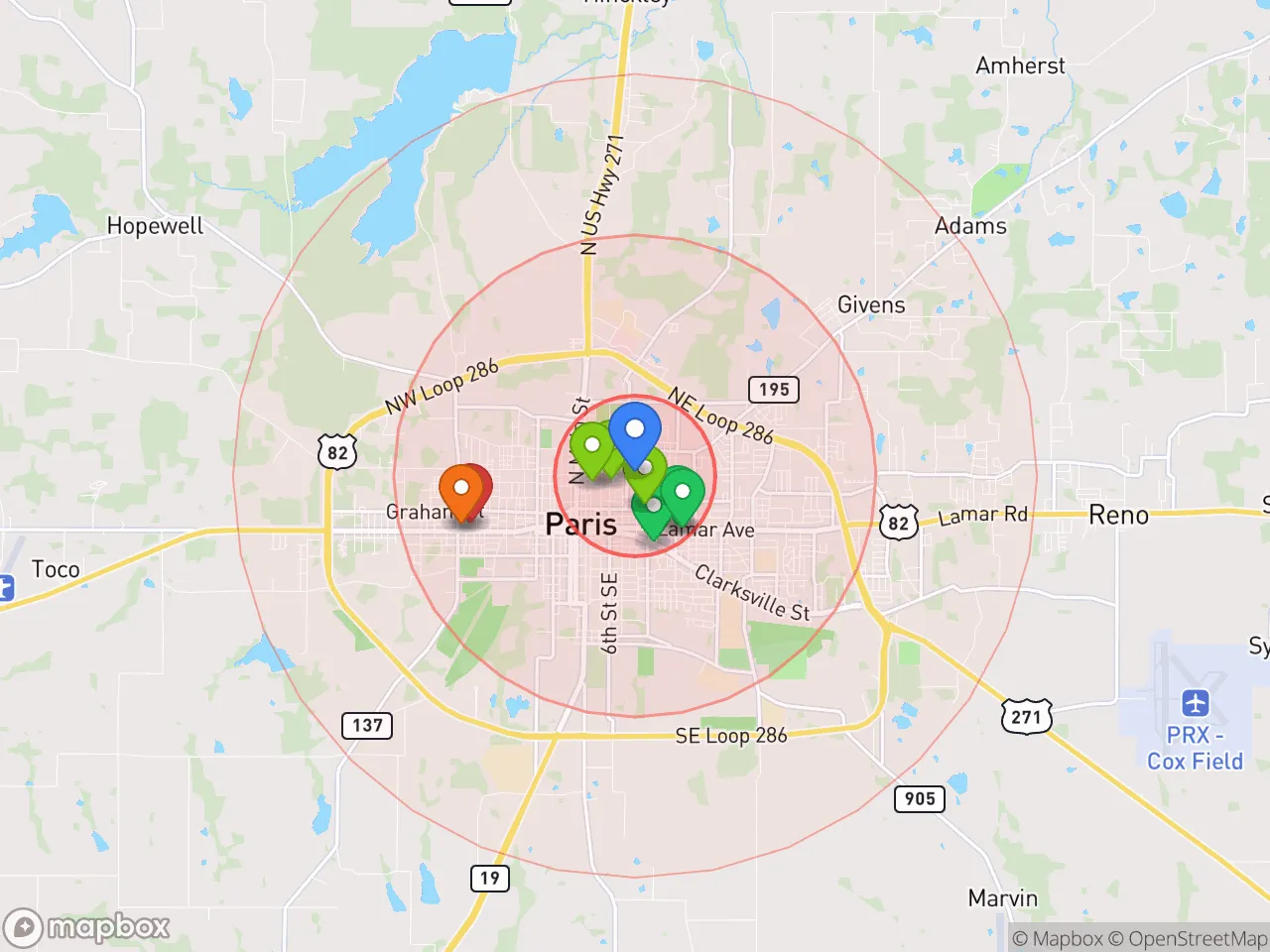
Hobbies
Explore the areaGroceries
4 within 10 miles
Gas
20 within 10 miles
Hospital
2 within 20 miles
Airport
DFW — Dallas/Fort Worth International
Post Office
USPS — Powderly, TX
Critical Amenities
Quality-of-Life Analysis
Paris, Texas, offers a cost of living that is 35% below the national average, making it one of the most affordable small cities in the Lone Star State. With a median home value of $128,300 and a median rent of $903, the area attracts a mix of retirees, young families, and workers in manufacturing and healthcare who prioritize financial breathing room over urban amenities. The population is predominantly working-class and middle-income, with a slower pace of life that contrasts sharply with the Dallas-Fort Worth metroplex, located about 90 miles to the southwest.
Cost of living, housing, and how Paris compares to nearby cities
Paris’s cost-of-living index of 65 (where 100 equals the U.S. average) makes it significantly cheaper than the Texas state average of 93 and far more affordable than Dallas (index 103). The median home value of $128,300 is roughly one-third of the Dallas median, and the median rent of $903 is about $400 less per month than in the metroplex. The average commute of just 16.4 minutes is a major draw—well below the national average of 26 minutes—meaning residents spend far less time in traffic and more time at home. Property taxes in Lamar County are around 1.5% of assessed value, which is moderate for Texas, and utilities are generally lower than in larger cities. For comparison, nearby cities like Sulphur Springs and Mount Pleasant have similar affordability, but Paris offers a slightly larger selection of housing stock, including historic homes near downtown and newer subdivisions on the outskirts.
What daily life is like: amenities, schools, and local rhythm
Daily life in Paris revolves around a compact downtown with local diners, antique shops, and the iconic Sam Bell Maxey House. The Paris Independent School District serves most of the city, with Paris High School offering a range of vocational and dual-credit programs through Paris Junior College, which also provides associate degrees and workforce training. Groceries and everyday shopping are concentrated along Lamar Avenue and Loop 286, with a Walmart Supercenter, Brookshire’s, and several dollar stores. For healthcare, Paris Regional Medical Center is a 200-bed facility that handles most emergencies and specialist care, though complex cases often require a drive to Plano or Dallas. The local rhythm is unhurried: residents frequent the Paris Farmers Market on Saturdays, attend rodeos at the Lamar County Fairgrounds, and gather at the 1,200-acre Pat Mayse Lake for fishing and boating. Nightlife is limited to a handful of bars and a bowling alley, and the nearest major airport (DFW) is a 90-minute drive.
Who thrives in Paris, Texas—and who might struggle
Paris is best suited for people who value low costs, short commutes, and a tight-knit community over cultural diversity, career advancement, or urban excitement. Retirees on fixed incomes, remote workers who need a quiet home base, and families seeking affordable homeownership will find the math works in their favor. However, professionals in tech, finance, or creative fields may feel constrained by the limited job market—the largest employers are the hospital, the school district, and manufacturing plants like Campbell Soup Company and Kimberly-Clark. Those accustomed to walkable neighborhoods, robust public transit, or a wide range of dining and entertainment options will likely find Paris too slow. For anyone willing to trade convenience for cost savings and a simpler lifestyle, Paris delivers a stable, low-stress quality of life that is increasingly rare in Texas.

Crime in Paris, TX
Generally safer than 62% of comparable U.S. locations.
Violent CrimeViolent Crime Analysis
Property CrimeProperty Crime Analysis
Crime Analysis
Paris, Texas, reports a violent crime rate of 413.2 per 100,000 residents and a property crime rate of 2,018.1 per 100,000, placing it above national averages for both categories. While not among the most dangerous cities in the state, these figures indicate that crime is a tangible concern for residents and prospective movers. The city’s location in Lamar County, away from the immediate orbit of a major progressive metro area, means its justice system is not subject to the same liberal prosecutorial trends seen in large urban centers, which can be a mitigating factor for public safety.
Crime in context
Paris’s violent crime rate of 413.2 per 100,000 is roughly 18% higher than the national average of approximately 350 per 100,000, though it remains below the Texas state average of around 450 per 100,000. The property crime rate of 2,018.1 per 100,000 significantly exceeds both the national average (about 1,950) and the Texas average (roughly 2,300). These numbers place Paris in a moderate-risk tier among similar-sized East Texas communities. The city does not benefit from the lower crime rates often seen in affluent Dallas suburbs, but it also avoids the elevated violent crime statistics of larger, more progressive jurisdictions where lenient sentencing policies have been linked to higher recidivism and reduced victim protections.
What residents experience
Residents report that property crime—particularly theft from vehicles and burglary—is the most common safety issue encountered in daily life. The city’s police department maintains a visible presence in commercial corridors like Lamar Avenue and around the downtown square, but response times can vary in outlying residential areas. Violent incidents, while less frequent, are often concentrated in specific pockets rather than distributed evenly across the city. The local judiciary in Lamar County is generally regarded as conservative, emphasizing accountability and victim rights, which contrasts sharply with the progressive district attorney offices in cities like Houston or Dallas that have drawn criticism for reducing charges and releasing repeat offenders. This local legal environment provides a measure of reassurance for residents concerned about systemic leniency.
Neighborhood-level variation is notable in Paris. Areas north of the railroad tracks and near the historic downtown tend to see higher police activity and occasional property crime, while newer subdivisions on the south and west sides of town, such as those around Pine Mill Road, report fewer incidents. The city’s relatively compact size means that no neighborhood is entirely insulated from crime, but the absence of a large, progressive urban justice system helps maintain a baseline of enforcement that many residents find acceptable for a community of this size.
* Values derived from national, state, county, city and local statistics and may differ in a specific area. Last updated: 2026-04-21T21:03:49.000Z
Narrative content on this page is AI-generated and may contain mistakes. Verify any details that matter before acting on them.
ReloMaps may earn a commission from affiliate links at no extra cost to you.

