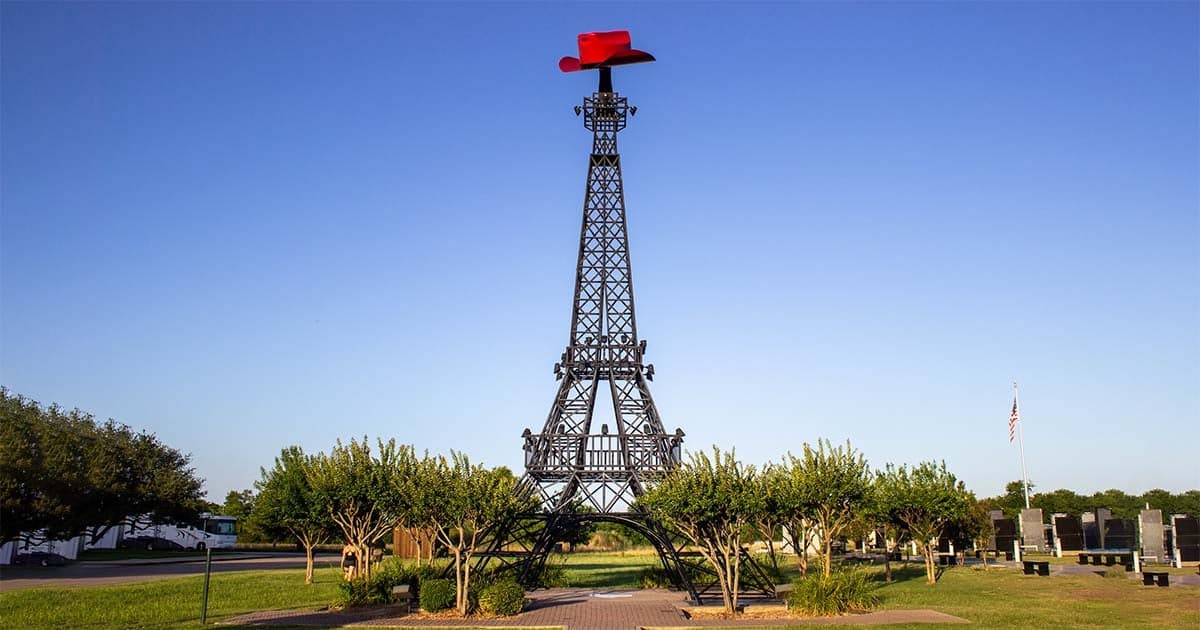
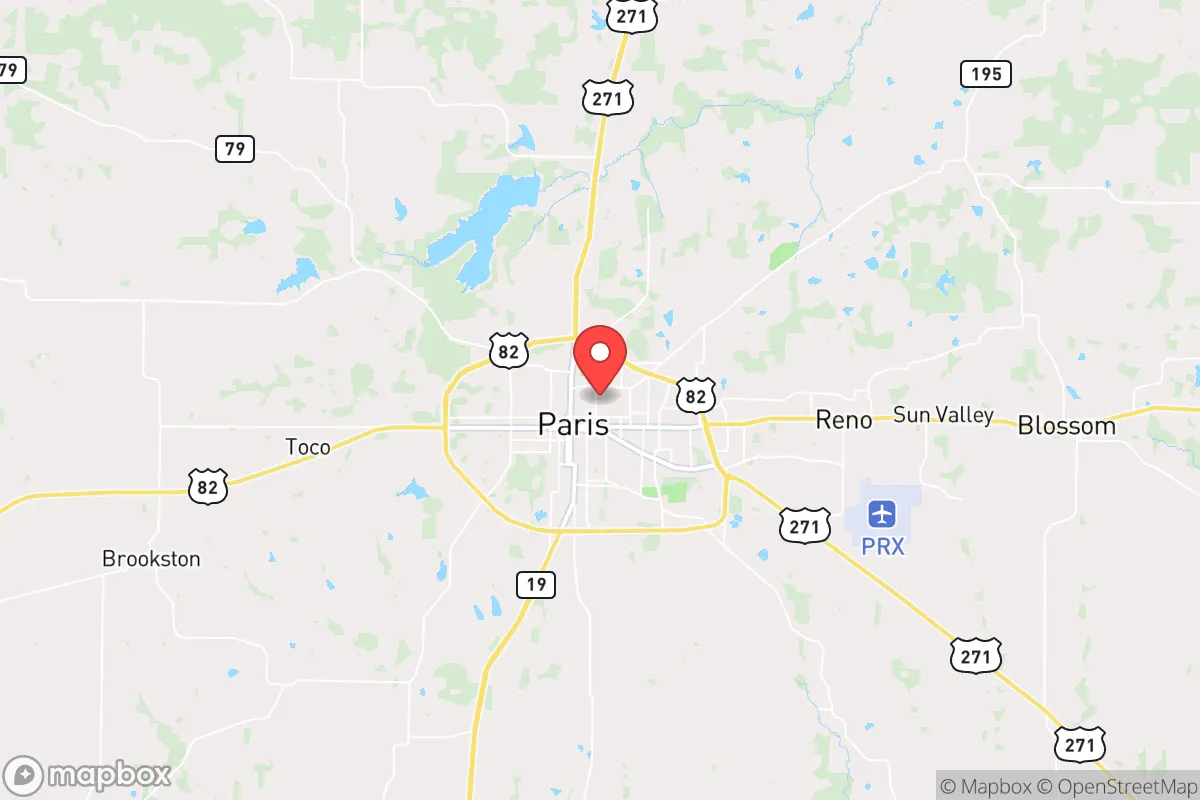
Strategic Assessment of Paris, TX
Workable tactical position. Some exposure to population density or targets, but generally defensible in a crisis.
What does the Strategic Assessment tell us?
Our Strategic Assessment grades tactical survivability of an area. Major population centers, military targets, fallout zones, natural disasters, and border exposure all drive risk — lower exposure means a more defensible position in a crisis.
This is heavily inspired by Joel Skousen's Strategic Relocation book. Highly recommended you checkout the book ($)What does this tell us?
Our Strategic Assessment grades tactical survivability of an area. Major population centers, military targets, fallout zones, natural disasters, and border exposure all drive risk — lower exposure means a more defensible position in a crisis.
This is heavily inspired by Joel Skousen's Strategic Relocation book. Highly recommended you checkout the book ($)Strategic Pillars

Key Distances
Regional Safe Places
Below is our recommended "safe zones" in Texas and the surrounding area based on our strategic heuristics. For most people, it's unrealistic to live in a “safe zone” full-time due to work, family or other personal reasons. They tend to be more rural. However, many of these areas are perfect for second homes and retreat properties that double as a vacation home or even a short-term rental.

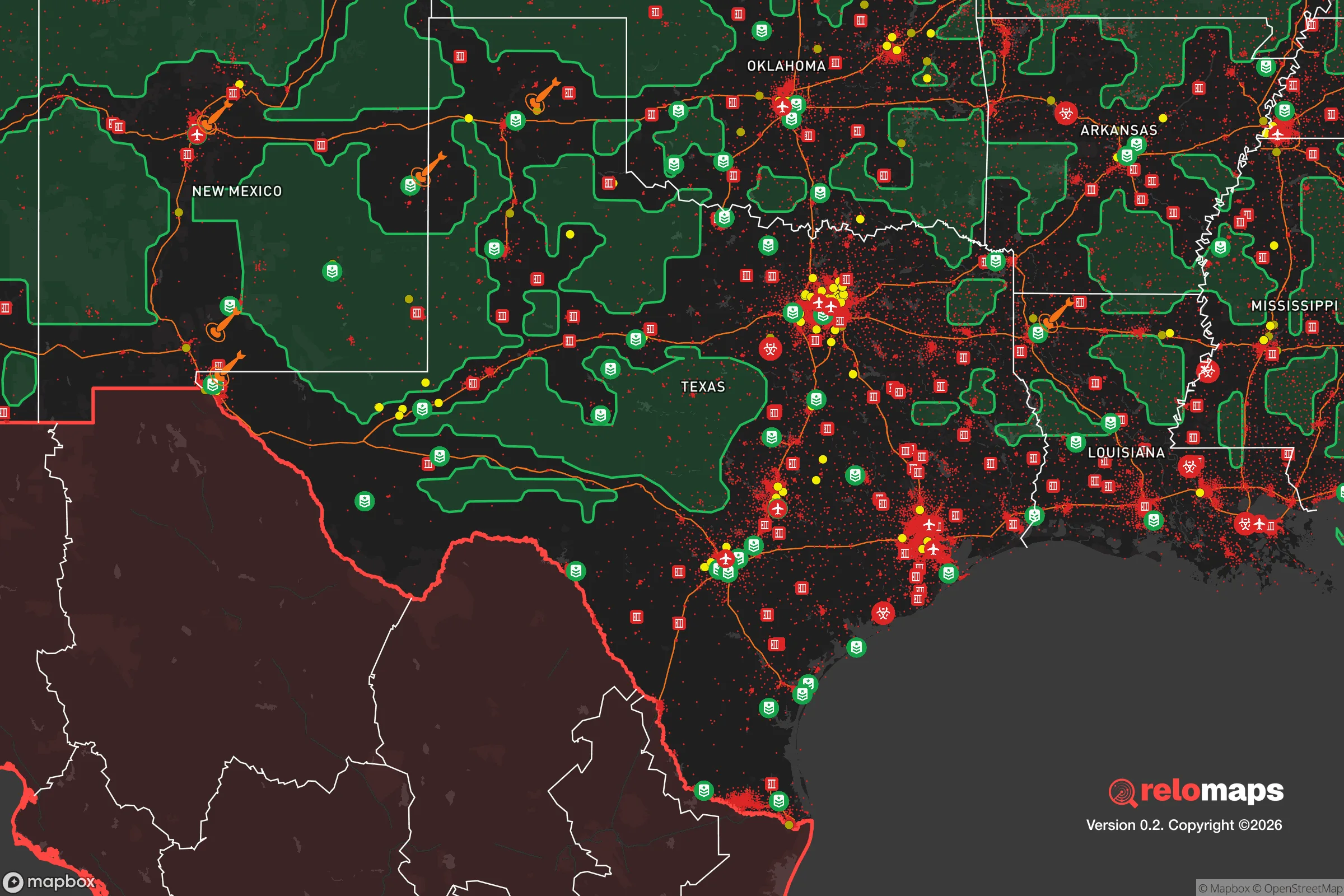


Important Note: For informational purposes only. This does not mean nothing bad ever happens in the green zones. Please use common sense. This is based on public data and modeled with AI. We tried to take a conservative approach but mistakes happen. We update this regularly as new information becomes available.
Solar Generator Recommendations
Backup power matters more here than in safer locations. We've picked three solar generators across budgets and capacity tiers — start with the budget unit if you only need a few essentials, or step up if you want to run a fridge and HVAC for days at a time.

Jackery Portable Power Station Explorer 300
Budget OptionPower on the Go: Weighing only 11 lbs, it's convenient to set up and store with book-sized foldable solar panels

BLUETTI Portable Power Station AC180
Designed for both indoor and outdoor scenarios, AC180 is highly capable as it has a robost capacity and continuous output power.

EF ECOFLOW DELTA Pro Ultra Power Station
Upgraded PickEcoFlow DELTA Pro Ultra is a whole-home energy system designed to grow with your family. Integrated with the Smart Home Panel 2, it scales to meet your evolving energy needs — keeping your home powered, intelligent, and secure through every stage of life.
We earn a commission, at no additional cost to you.
Strategic Assessment Analysis
Paris, Texas, offers a compelling blend of geographic isolation and logistical connectivity that makes it a serious candidate for those prioritizing long-term resilience and self-sufficiency. Situated roughly 100 miles northeast of Dallas and 20 miles south of the Oklahoma border, this town of about 25,000 sits far enough from major metropolitan centers to avoid the immediate chaos of a cascading urban collapse, yet close enough to access critical supply routes if they remain functional. The area’s agricultural foundation, low population density, and relative obscurity on the national stage provide a quiet buffer against the kind of mass casualty events and civic unrest that increasingly plague larger cities. For a conservative-leaning relocator—whether a single individual or a parent—Paris represents a strategic foothold in the Red River Valley, where the pace of life is slow, the politics are reliably red, and the land still offers room to breathe and prepare.
Geographic position and natural advantages for long-term security
Paris sits in Lamar County, a region defined by gently rolling plains, rich blackland soil, and a network of creeks and rivers that feed into the Red River. This is not mountainous terrain, but the flat-to-rolling landscape offers practical advantages: clear lines of sight, manageable land for farming or livestock, and fewer natural barriers that could complicate movement or supply runs. The area’s position near the Oklahoma border creates a natural fallback corridor—if conditions deteriorate in Texas, relocating north into less populated parts of Oklahoma is a viable option. The Red River itself, while not a major water source for the town, provides a geographic boundary that can serve as a natural chokepoint for monitoring movement from the north. Paris is also far from any major military installations, nuclear power plants, or high-value infrastructure targets that might draw attention during a national crisis. The nearest significant fallout-relevant landmark is the Comanche Peak Nuclear Power Plant near Glen Rose, about 150 miles southwest—well outside any plausible danger zone. This distance from strategic targets is a key advantage: Paris is unlikely to be a primary or secondary objective in any large-scale conflict, leaving it as a quiet pocket of stability while the coasts and major cities face the brunt of disruption.
Risks, exposures, and proximity to fallout-relevant landmarks
While Paris avoids the worst-case scenarios tied to major urban centers, it is not without risks. The town’s proximity to Interstate 30, which runs from Dallas to Little Rock, means that a mass evacuation from the Dallas-Fort Worth metroplex could funnel tens of thousands of people through the area within hours. If a major disaster—whether natural, economic, or civil—triggers a panic-driven exodus, Paris could see a sudden influx of desperate, unprepared urbanites. The town’s infrastructure is not built to absorb that kind of population surge. Water supply, medical facilities, and food stores would be strained quickly. Additionally, the area is prone to severe weather, including tornadoes and flash flooding, which could compound challenges during a crisis. The nearest major fallout danger—aside from the aforementioned nuclear plant—is the potential for a dirty bomb or industrial accident along the I-30 corridor, though this is speculative. More concretely, Paris sits within a region that has experienced significant drought cycles, which could impact local agriculture and water availability over the long term. For a prepper, the key takeaway is that Paris is not a fortress—it is a low-risk, moderate-reward location that requires proactive planning to mitigate the secondary effects of nearby urban collapse.
Practical resilience for a relocator: food, water, energy, and defensibility
For someone serious about self-sufficiency, Paris offers a solid foundation. The surrounding farmland is some of the most productive in Texas, with corn, soybeans, wheat, and cotton as staples. Local farmers’ markets and co-ops exist, but a relocator should plan to establish their own garden or small livestock operation—chickens, goats, or even a few head of cattle—to ensure food security independent of supply chains. Water is the more immediate concern: Paris draws its municipal water from Lake Crook and Pat Mayse Lake, both of which are subject to drought and demand. A well on private property is a must for any serious prepper, and the water table in Lamar County is generally accessible at depths of 100-300 feet. Energy infrastructure is typical for rural Texas: electricity comes from the ERCOT grid, which has proven unreliable during winter storms (see 2021). Solar panels with battery backup are a wise investment, and natural gas generators are common among locals. Defensibility is moderate—the town’s layout is spread out, with many homes on acreage that provide natural standoff from roads and neighbors. Rural properties with long driveways, fences, and clear sightlines are available at prices far below national averages. The local culture is heavily armed and self-reliant; gun ownership is the norm, and the sheriff’s office is responsive but not overbearing. For a single individual or a family, the ability to blend into a community that values preparedness—without drawing unwanted attention—is a significant asset.
Overall, Paris, Texas, presents a strategic option for those who want to be far enough from the fray to survive the initial shock of a national crisis, but close enough to a major metro area to access resources if the situation stabilizes. It is not a bug-out location for the ultra-wealthy or the off-grid purist—it is a working-class town with a conservative ethos, affordable land, and a population that largely minds its own business. The risks are real but manageable: weather, potential refugee surges, and the fragility of the Texas power grid are the main concerns. For a relocator willing to invest in a well, solar power, and a garden, Paris offers a realistic path to long-term resilience without the isolation of the deep wilderness. It is a place where you can prepare in peace, raise a family away from the chaos, and still have a fighting chance if the world outside goes sideways. If you are looking for a base of operations that balances security with practicality, Paris deserves a hard look.

* Values derived from national, state, county, city and local statistics and may differ in a specific area. Last updated: 2026-04-21T21:03:49.000Z
Narrative content on this page is AI-generated and may contain mistakes. Verify any details that matter before acting on them.
ReloMaps may earn a commission from affiliate links at no extra cost to you.

