
Political ClimatePolitical Climate in Paris, TX
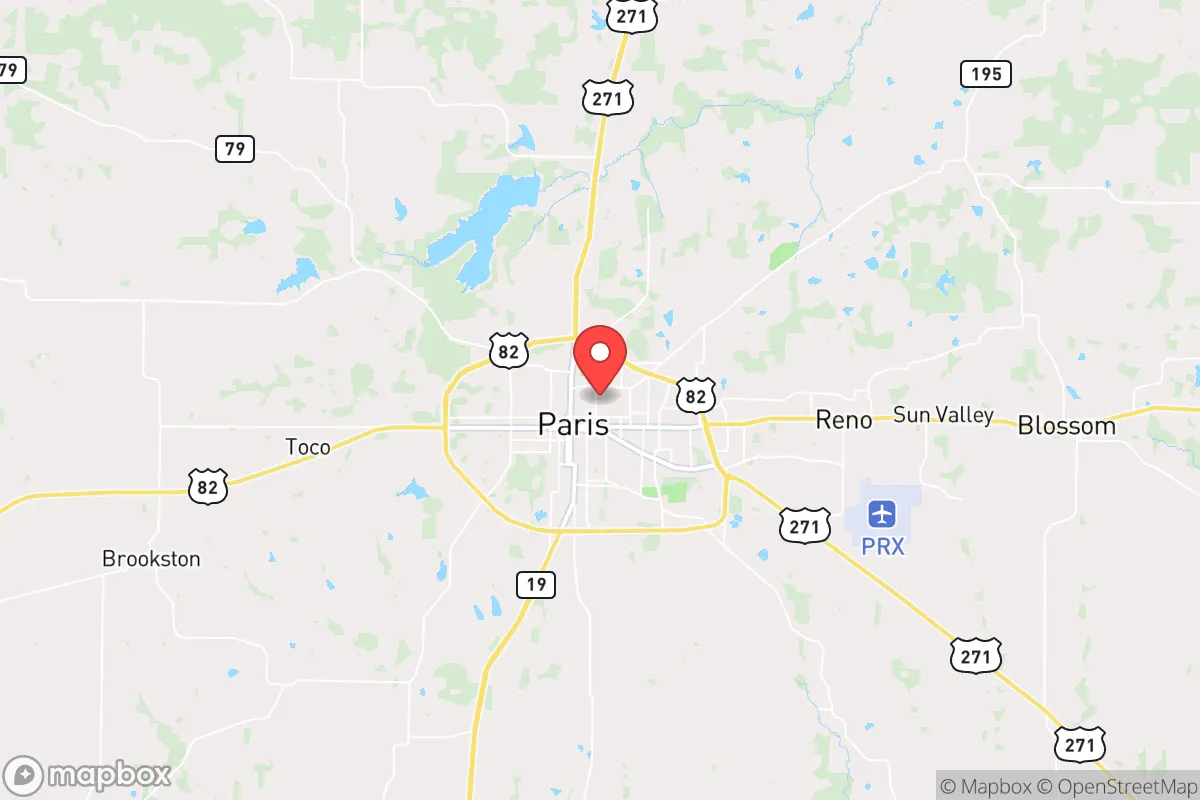
District shown is the primary district for this city’s centroid. Cities may span multiple districts.
Local Political AnalysisPolitical Analysis of Paris, TX
Paris, Texas, sits solidly in the red, with a Cook PVI of R+16 that reflects a deep, generational conservative tilt. This isn't a purple area that flips back and forth; it's a place where Republican candidates regularly carry the county by 20 points or more, and where the local culture and politics have long been built around traditional values, limited government, and personal responsibility. The political lean here is stable and rooted, not trending toward the center, and most folks I know see that as a good thing—a bulwark against the kind of progressive overreach you see in bigger cities.
How it compares
Drive an hour south to Greenville or an hour west to Sherman, and you'll find similar conservative strongholds, though Paris feels a bit more insulated and self-reliant. The real contrast is with places like Dallas or Austin, where the political machine has pushed hard on things like mask mandates, vaccine passports, and zoning overrides that feel like government getting way too cozy with your personal choices. Even nearby towns like Mount Pleasant or Sulphur Springs lean conservative, but Paris has a distinct "leave us alone" vibe—less influenced by the suburban sprawl creeping up from the Metroplex. The R+16 rating isn't just a number; it means local elections here rarely see the kind of progressive activism that's reshaping other parts of the state, and that's a relief for anyone who values their Second Amendment rights or doesn't want a city council telling them what to do with their property.
What this means for residents
For daily life, this political climate means fewer headaches over government overreach. You won't see the kind of heavy-handed regulations that have choked small businesses in blue cities—no surprise business license fees, no strict noise ordinances that kill live music, and no push to defund the local police. Property taxes are a concern everywhere in Texas, but Paris keeps its local government lean, and there's a strong cultural expectation that officials stay out of your personal affairs. The school board here hasn't been taken over by progressive curriculum battles; it's still focused on basics and local control. If you're worried about the direction of the country, Paris feels like a place where common sense still holds sway, and where your vote actually counts for something. The downside? If you lean left, you'll feel isolated, but for most residents, that's a feature, not a bug.
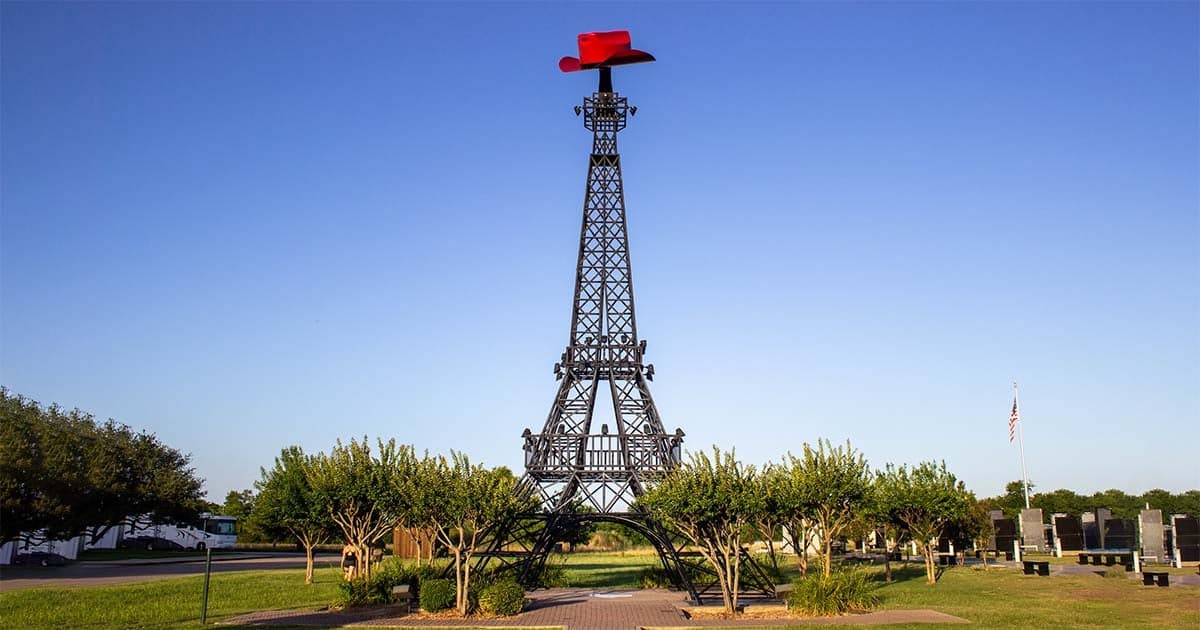
Culturally, Paris has a few distinctions that set it apart. The city is famously home to the "World's Largest Cowboy Boots" and a strong rodeo tradition, which ties into a broader rural identity that resists the coastal cultural drift. There's a palpable skepticism of federal programs and a preference for local charity over government handouts—churches and civic groups handle a lot of the social safety net here. The biggest concern I hear from longtime residents is that as more people move in from blue states, they bring their voting habits with them. So far, Paris has held the line, but the trajectory depends on keeping that R+16 margin intact. If you value personal freedom and a government that stays in its lane, this is still one of the best places in Texas to call home.

State Political ClimatePolitical Climate in Texas
State Political AnalysisPolitical Environment in the State
Texas remains a solidly Republican state, but the margin has tightened from a 16-point presidential win in 2012 to a 14-point win in 2024, driven by explosive growth in the blue-leaning metros of Austin, Dallas, Houston, and San Antonio. The dominant coalition is still conservative—pro-business, low-tax, and culturally traditional—but the 10-20 year arc shows a slow, steady purple shift as suburban voters, particularly in Collin County and Fort Bend County, drift leftward. For a conservative relocating here, the state still feels like a red fortress, but the cracks are widening faster than many locals admit.
Urban vs. rural divide
The political map of Texas is a tale of two worlds. The vast rural expanse—from the Panhandle down through West Texas and into the Hill Country—votes Republican by 30-50 points. Lubbock and Midland-Odessa are deep red strongholds, with Lubbock County giving Trump 72% in 2024. Meanwhile, the big cities are blue islands: Harris County (Houston) went +15 for Biden in 2020 and stayed blue in 2024, while Dallas County and Bexar County (San Antonio) are reliably Democratic. The real battleground is the suburbs. Collin County, once a GOP fortress north of Dallas, flipped from +22 R in 2012 to just +6 R in 2024. Fort Bend County, southwest of Houston, went from +18 R in 2012 to +8 D in 2024. The fastest-growing suburbs—like Frisco, McKinney, and Kyle—are where the political future of Texas is being decided, and they are trending left, especially among college-educated women and Asian-American voters.
Policy environment
Texas has no state income tax, a constitutional cap on property tax growth (Proposition 4, 2023), and a regulatory climate that is among the most business-friendly in the nation. The state legislature, controlled by Republicans, passed permitless carry in 2021 (HB 1927) and a near-total abortion ban (SB 8, 2021) with no exceptions for rape or incest. Education policy is a flashpoint: the 2023 school voucher bill (SB 8) failed in the House, but Governor Abbott has made it a priority for 2025, and the Texas Education Agency has aggressively expanded charter schools. Healthcare remains a sore spot—Texas has the highest uninsured rate in the country at 16.6%, and the state has refused Medicaid expansion under the ACA. Election laws tightened in 2021 with SB 1, which banned drive-through voting, restricted mail-in ballot access, and empowered partisan poll watchers. For a conservative, the policy environment is largely aligned with limited government, but the property tax burden—even with the cap—remains high due to skyrocketing home values.
Trajectory & freedom
On balance, Texas has become more free in several key areas over the last decade. The 2021 permitless carry law expanded gun rights significantly, and the 2023 law banning COVID-19 vaccine mandates (SB 7) was a strong statement against federal overreach. Parental rights were bolstered by the 2023 law requiring school libraries to notify parents of all materials checked out by their children (HB 900). However, there are worrying trends. The 2023 law criminalizing gender-affirming care for minors (SB 14) was a win for traditional values, but it also opened the door to state intervention in private medical decisions—a double-edged sword for limited-government advocates. Property rights took a hit with the 2023 law allowing the state to seize land for border wall construction (SB 3), which alarmed some libertarians. The biggest freedom concern is the rapid growth of government spending: the state budget grew from $209 billion in 2019 to $321 billion in 2023, outpacing population growth. For a new resident, Texas still offers more personal liberty than California or New York, but the state is not immune to the creeping expansion of government power.
Civil unrest & political movements
Texas has seen its share of political flashpoints. The 2020 Black Lives Matter protests in Austin were among the largest in the country, with the city council later defunding the police by $150 million—a decision partially reversed in 2023 after a spike in violent crime. The border crisis has fueled a powerful grassroots movement: the 2023 "Operation Lone Star" deployment of state troopers and National Guard to the border, along with the busing of migrants to New York and Chicago, has made immigration the top issue for many conservatives. Election integrity remains a live controversy—the 2020 audit of four counties (Harris, Dallas, Tarrant, Collin) found no widespread fraud, but the 2021 SB 1 law was passed anyway, and activists on both sides continue to litigate voting access. Secession rhetoric is mostly fringe, but the Texas Nationalist Movement has gained some traction online, and a 2023 poll showed 18% of Texans support independence. For a new resident, the most visible political movement is the pro-life activism around pregnancy centers and the annual March for Life in Austin, which draws tens of thousands.
Projection
Over the next 5-10 years, Texas will likely continue its slow shift toward purple, but it will not flip blue anytime soon. The key driver is in-migration: the state added 4 million people between 2010 and 2020, and most of those new residents came from blue states like California and New York. However, many of those movers are conservatives fleeing high taxes and crime, so the net effect is not a straight blue shift. The suburbs will be the decisive battleground—if Collin County and Fort Bend County continue trending left, the GOP will need to run up bigger margins in rural areas to stay competitive. The 2026 gubernatorial election will be a bellwether: if Abbott wins by less than 10 points, the state will be considered a swing state by 2030. For a conservative moving in now, expect a decade of political trench warfare over school vouchers, property taxes, and abortion, but the overall environment will remain far more aligned with traditional values than any coastal state.
For a new resident, the bottom line is this: Texas still delivers on the core promises of low taxes, limited regulation, and cultural conservatism, but the political landscape is shifting under your feet. The state is not the solid red fortress it was in the 1990s, but it is also not California. If you value gun rights, parental control over education, and a business-friendly climate, Texas is still your best bet. Just be prepared for a fight—the left is pouring money into the suburbs, and the next decade will determine whether Texas stays red or turns purple.
* Values derived from national, state, county, city and local statistics and may differ in a specific area. Last updated: 2026-04-21T21:03:49.000Z
Narrative content on this page is AI-generated and may contain mistakes. Verify any details that matter before acting on them.
ReloMaps may earn a commission from affiliate links at no extra cost to you.

