Photo: Wikipedia
Demographics of Peachtree Corners, GA
Historical data isn't available for Peachtree Corners, GA. Trends shown are for Gwinnett County, GA.
Affluence Level in Peachtree Corners, GA
An upper-middle-class area. Household wealth, education levels, and homeownership run ahead of national benchmarks.
People of Peachtree Corners, GA
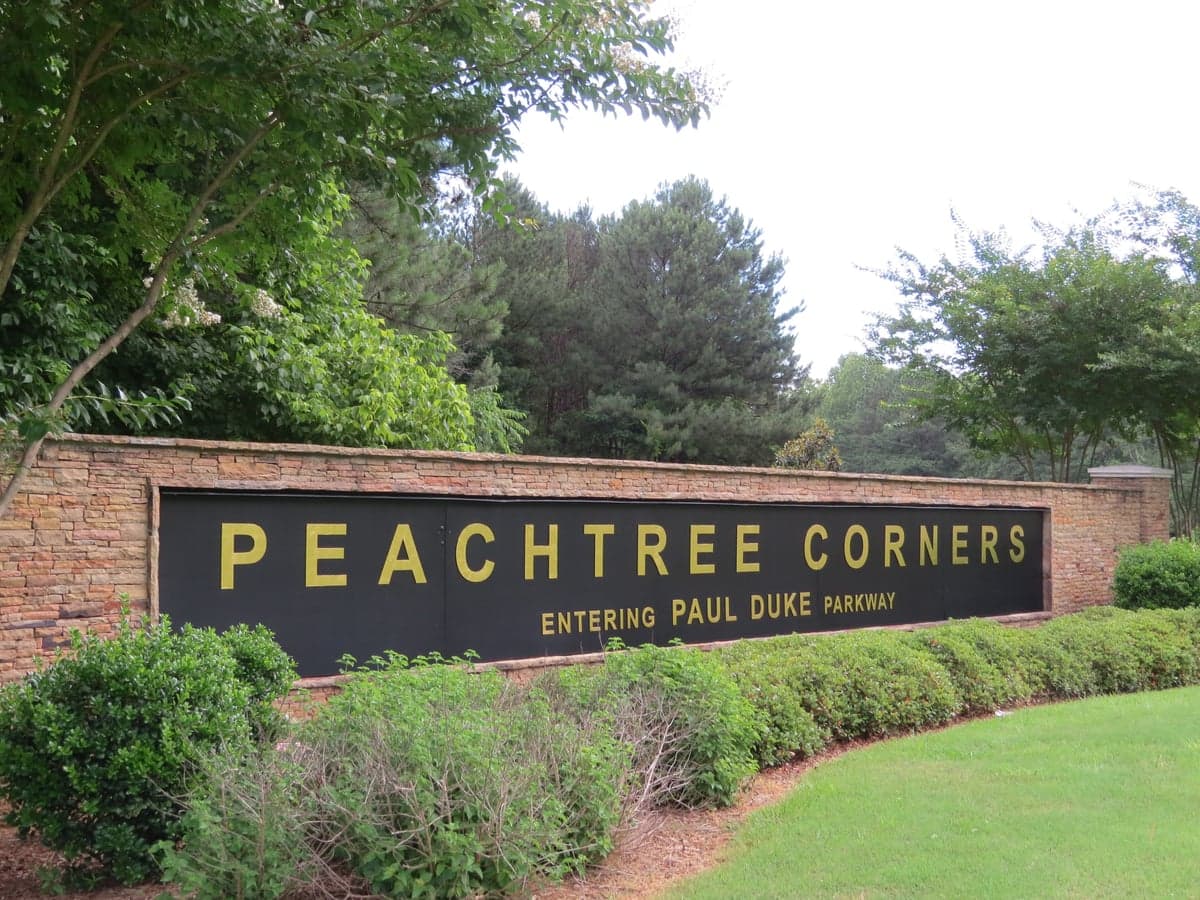
Peachtree Corners today is a diverse, upwardly mobile suburb of 42,184 residents where no single racial or ethnic group holds a majority. The city is characterized by a highly educated workforce—52.7% of adults hold a bachelor’s degree or higher—and a population that is 46.1% White, 23.7% Black, 17.7% Hispanic, 6.0% East/Southeast Asian, and 2.5% Indian (subcontinent). Its distinctive identity is that of a planned, tech-oriented edge city that has attracted a mix of corporate transferees, immigrant professionals, and families seeking good schools and newer housing stock, all within the northern arc of metro Atlanta.
How the city was settled and grew
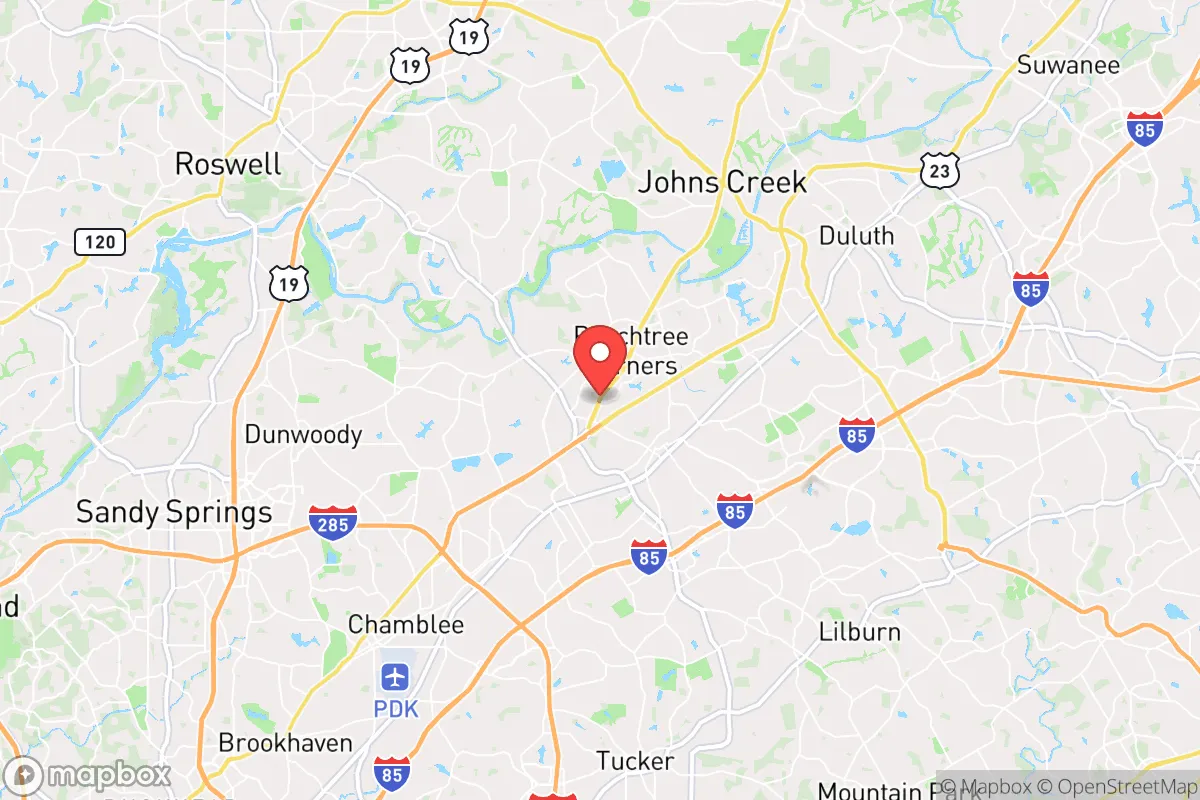
Peachtree Corners is a post-1900, largely post-1950s suburb. Unlike older Georgia towns, it has no colonial or antebellum settlement history. The area was originally part of the 1821 Creek cession and remained rural farmland through the early 20th century, with a sparse population of White tenant farmers and sharecroppers. The first significant growth came after World War II, when the construction of the Peachtree Industrial Boulevard corridor (Georgia 141) opened the area to suburban development. The city itself was not incorporated until 2012, but the population center that became Peachtree Corners grew rapidly in the 1960s and 1970s as a classic Sun Belt bedroom community. The earliest subdivisions—such as Spalding Corners and Briarcliff Woods—were built for White middle-class families moving from Atlanta and the Northeast. These neighborhoods remain predominantly White and older in housing stock, with many original owners still in residence.
Modern era (post-1965)
The 1965 Hart-Cellar Act and subsequent immigration waves reshaped Peachtree Corners beginning in the 1980s. The city’s location near the Georgia Tech Research Institute and the growing technology corridor along Peachtree Industrial Boulevard drew a wave of East/Southeast Asian professionals, particularly from China, Korea, and Vietnam. These families concentrated in newer subdivisions like Hampton Forest and River Plantation, where larger homes and top-rated Norcross-area schools were key draws. The 1990s and 2000s saw significant Black in-migration, both from within metro Atlanta and from other states, as Peachtree Corners became a stable, middle-to-upper-middle-class alternative to older DeKalb County suburbs. Black residents are dispersed across the city but have a notable presence in neighborhoods like Thornhill and Peachtree Station. Hispanic growth accelerated after 2000, driven by construction and service-sector employment in the broader Gwinnett County economy. The Hispanic population, now 17.7%, is concentrated in the city’s more affordable apartment complexes and townhome communities near the Peachtree Corners Circle corridor. The Indian-subcontinent population (2.5%) is a smaller but growing professional cohort, many employed in IT and engineering firms along the Technology Park axis, and they tend to settle in newer infill developments like The Forum on Peachtree Parkway area. Notably, the White share has declined from an estimated 70% in 1990 to 46.1% today, reflecting the city’s transformation into a majority-minority suburb.
The future
Peachtree Corners is not homogenizing; rather, it is becoming more ethnically diverse and economically stratified by neighborhood. The East/Southeast Asian and Indian populations are growing steadily, driven by continued tech-sector employment and the city’s reputation for strong schools (Norcross High School and Paul Duke STEM High School). The Hispanic population is plateauing as Gwinnett County’s overall Hispanic growth rate slows, but it remains a stable, family-oriented segment. The Black population is likely to hold steady or increase slightly as Atlanta’s northern suburbs continue to attract Black professionals seeking newer housing and lower crime rates than the city core. The White population is aging in place in the older subdivisions, with younger White families increasingly choosing newer exurban developments farther out. The city’s future demographic trajectory points toward a tri-ethnic mix of White, Black, and Hispanic residents, with a growing Asian and Indian professional class. The city is likely to remain a high-amenity, high-cost suburb where neighborhood choice is increasingly tied to income and school attendance zones rather than ethnic clustering.
For someone moving in now, Peachtree Corners offers a stable, diverse, and well-educated community with strong public schools and a growing tech economy. The city is becoming a mature, multi-ethnic suburb where property values are supported by demand from professionals of all backgrounds. New arrivals should expect a place that is neither a melting pot nor a collection of isolated enclaves, but a functional, middle-to-upper-middle-class suburb where diversity is the norm and the primary dividing line is housing price, not ethnicity.

* Values derived from national, state, county, city and local statistics and may differ in a specific area. Last updated: 2026-05-04T02:49:12.000Z
Narrative content on this page is AI-generated and may contain mistakes. Verify any details that matter before acting on them.
ReloMaps may earn a commission from affiliate links at no extra cost to you.

